 Global Fashion Trends
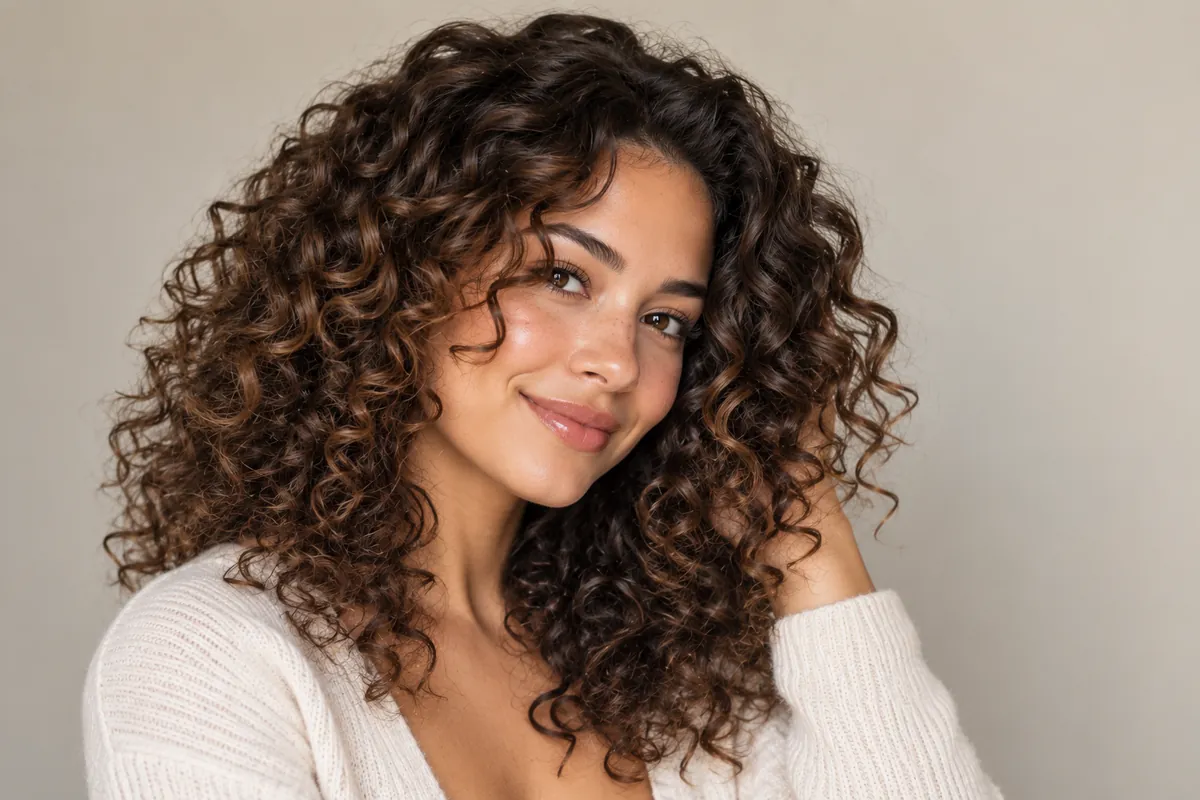
How to Style Curly Hair: A Complete, Real-World Guide
This guide shows how to style curly hair at all lengths and gives the full general curly routine; it does not focus on one length, one curl pattern, or one product line.
Curly hair rewards a completely different approach from straight hair: it needs more moisture, more structure, and gentler handling. Straight-hair advice often fails on curls for a straightforward reason: the shape of the strand changes how oil travels down it, how water moves through it, and how easily it tangles. What follows is a practical routine that works for most curly hair, with places to adjust it for your own pattern, texture, and length.
This guide walks through curl type, the routine, washing, drying, and nighttime care. It also covers common mistakes and answers frequently asked questions. If you are just starting out with curly hair, the advice here is meant to give you a stable starting point, not a rigid set of rules.
How to Style Curly Hair: The Core Principles That Make It Work
Curly hair styles best when it’s detangled wet, not dry. It also needs moisture before definition and needs to be left alone once it’s set. This is true for most patterns, from loose waves to tight coils, and it’s worth remembering throughout this guide.
The biggest mindset shift for people new to curly hair is that less manipulation usually means better definition. Touching curls repeatedly while they dry, brushing them dry, or washing too often can break up curls and add frizz. Curly hair tends to look better and behave better when you put it through a short routine and then leave it to set.
Start with a pattern-first mindset. Choose the routine that suits the curl’s shape, porosity, and density, not just its length. This distinction matters because two people with hair of the same length can have very different routines if their patterns are different. The key is to observe what your own curls do, rather than copying a routine that is designed for someone else’s pattern.
Keep the routine consistent for a while before you change it. Curls respond to changes over days, not hours. Try a routine for two or three washes before deciding whether it is working for you. If you change everything at once, you won’t know which change made the difference. A consistent routine makes it easier to identify what is helping and what is not.
Know Your Curl Type and What It Actually Means for Your Routine
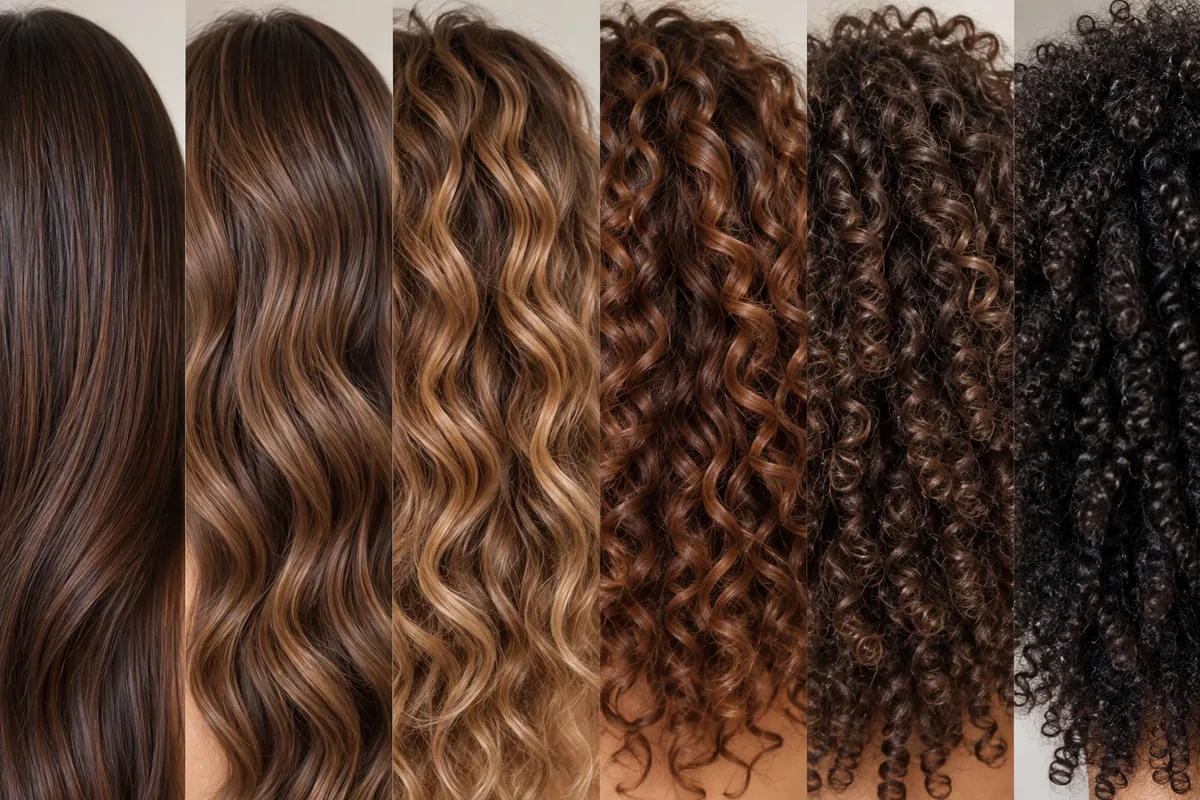
Curl classification typically runs from type 2 (wavy) through type 3 (curly) to type 4 (coily), with subtypes A, B, and C indicating how tight the pattern is. Some hair has more than one pattern, and texture—fine, medium, or coarse—is a separate trait from curl shape.
Knowing your general type helps narrow down your options. It can tell you whether you are likely to need more hold, more moisture, or lighter products. But remember, curl type isn’t the whole picture. Shorter cuts often require a different approach to short curly hair, whilmen’s curly hair often needs a simpler routine focused on basic care. Both still follow the principles in this guide.
How Do You Know Your Curl Type?
The clearest way to identify curl type is to look at how your hair behaves when it is soaking wet. This method works because the wet pattern is the truest reflection of curl type. Wavy hair forms loose, S-shaped patterns, while curly hair forms distinct loops and spirals. Coily hair forms tight, springy curls that can shrink significantly when dry. The best way to identify your type is to look at your hair after washing, while it is still wet.
It is best to identify your curl type after washing, when your hair is still wet. It is easy to get confused if you look at your hair after it has dried, as it can change shape. If you look at your hair when it is wet, you will see the most accurate representation of your curl type. Most people have more than one pattern, so you can expect to see variation across your head.
Washing and Product Application for Curly Hair
Curly hair generally does best with sulfate-free, moisturizing cleansers, because regular shampoos can strip away the oils that keep curls soft. Less frequent washing often suits curly hair better, since washing too often can strip those oils and leave hair dry and frizzy. Look for shampoos that are gentle on the scalp, and consider alternating a stronger cleansing wash with a moisturizing one. How often you wash should depend on your scalp and lifestyle, not a set schedule.
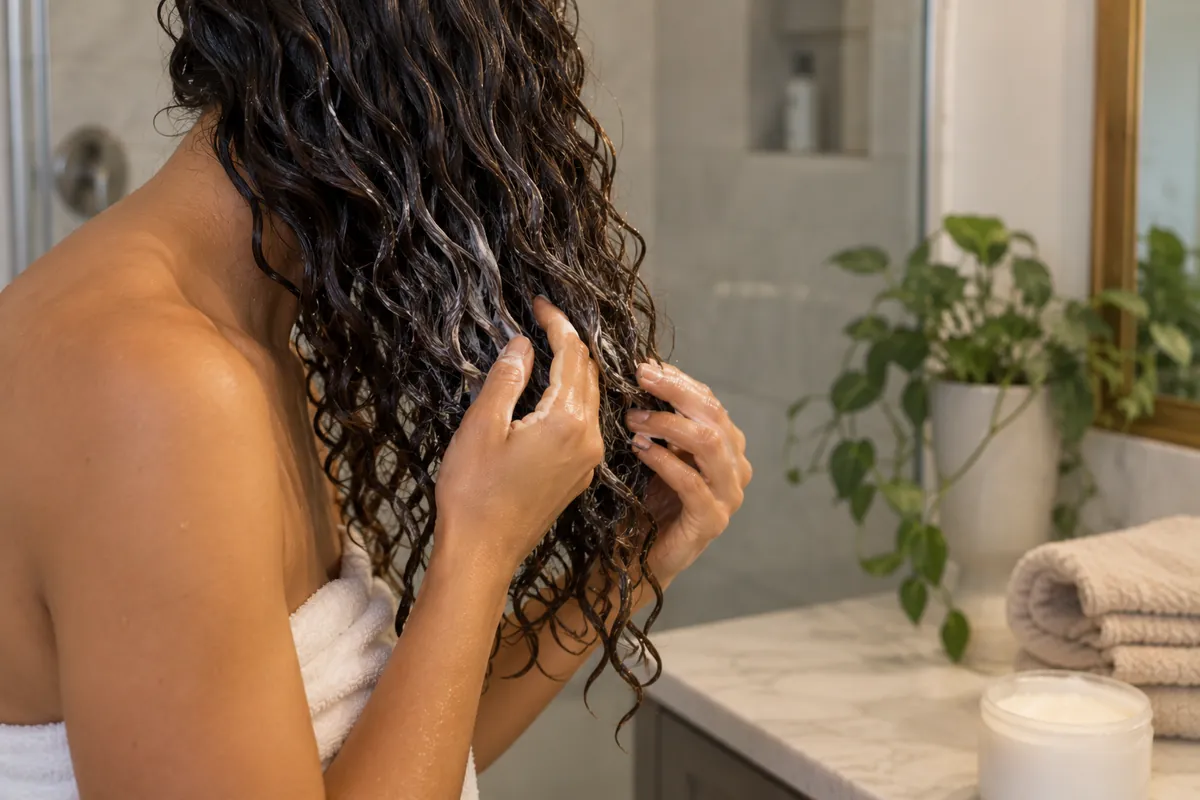
Product application while hair is soaking wet usually gives the best definition, as the product distributes evenly. Applying product to soaking wet hair also helps to set the curl pattern before drying. Use a leave-in conditioner first, followed by a curl cream or gel. Apply in sections, then scrunch upward to encourage the curl pattern. Make sure to distribute the product evenly throughout the hair.
What Is the “Curly Girl Method” and Do You Need It?
The curly girl method is a popular approach to curly hair care that avoids sulfates, silicones, and heat styling. It encourages you to wash with conditioner, use products with no silicones or sulfates, and dry hair naturally. It was developed as a response to the problems that many people have with curly hair, and it is often recommended for people with curly hair.
You don’t need to follow it exactly. You can take the parts of the method that suit you and ignore the parts that don’t. What matters is the core principles, not the specific rules. If you find that certain products work well for you, you don’t need to stop using them just because they aren’t part of the method. The goal is to find a routine that works for you and your hair.
Drying Techniques That Actually Preserve Definition
Drying matters because wet curls are fragile: remove excess water gently, then diffuse on low heat or air-dry, and do not touch the curls until they are fully dry.
How curls dry has an enormous impact on their definition and frizz level. Most frizz starts during drying, not during styling, so this is a stage worth getting right. Air-drying works for looser patterns, while diffusing works better for tighter patterns. Whatever method you use, the goal is to preserve the curl pattern that you set when you applied products.
Plopping involves wrapping wet curls in a cotton t-shirt or microfiber towel for a short while. This method can help curls dry faster while preserving their shape. Plopping is also useful for removing excess water without disturbing the curl pattern.
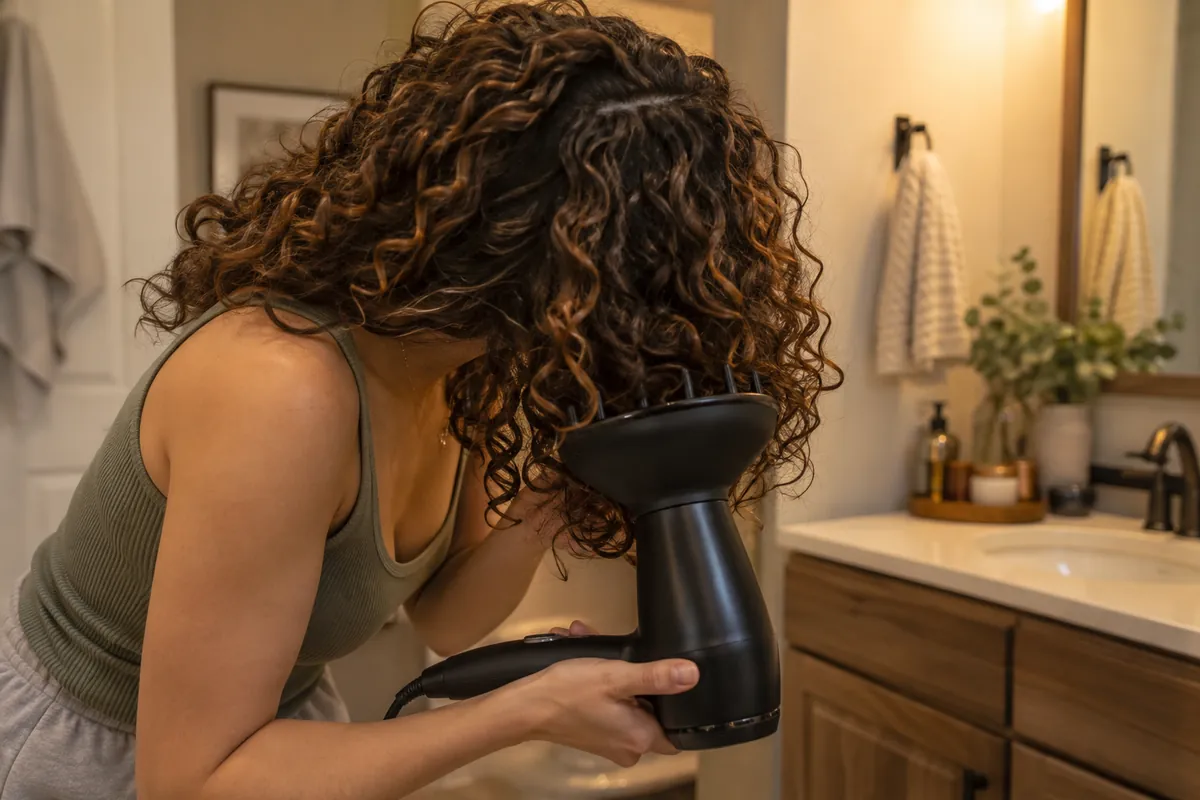
Diffusing with a blow dryer is another way to dry curls. A diffuser attaches to the end of a blow dryer and spreads the air over a larger area. This can help dry curls faster without disturbing the pattern. Use low heat and keep the diffuser close to your scalp, moving it slowly to dry the curls evenly.
The praying hands technique involves smoothing products between your palms and gently pressing them onto the hair. This can help to distribute products evenly and smooth down flyaways. It is useful for applying products that are thicker, such as curl creams and gels.
Scrunching, whether done with your hands or with a t-shirt, helps encourage the curl pattern and can improve definition. Scrunching after applying products can help to set the pattern, and scrunching after drying can help to break up any product cast. Scrunching is a simple technique that can make a noticeable difference in the way curls look.
Why Does Curly Hair Need a Diffuser Instead of a Regular Dryer?
A diffuser holds curls in place while drying, and it helps limit frizz by distributing airflow more evenly than a bare nozzle. This is useful because direct airflow from a blow dryer can disturb the curl pattern and cause frizz. A diffuser can help to dry curls evenly, and it is a useful tool for anyone with curly hair.
The technique is to cup sections of curls into the diffuser and hold them in place for a short while at a time, using low heat and avoiding constant movement. This allows the curls to dry without being disturbed, and it helps to preserve their shape. It is best to start with the roots and work your way down, using low heat and avoiding the temptation to move the diffuser around too much.
Protecting Curls Overnight and Refreshing the Next Day
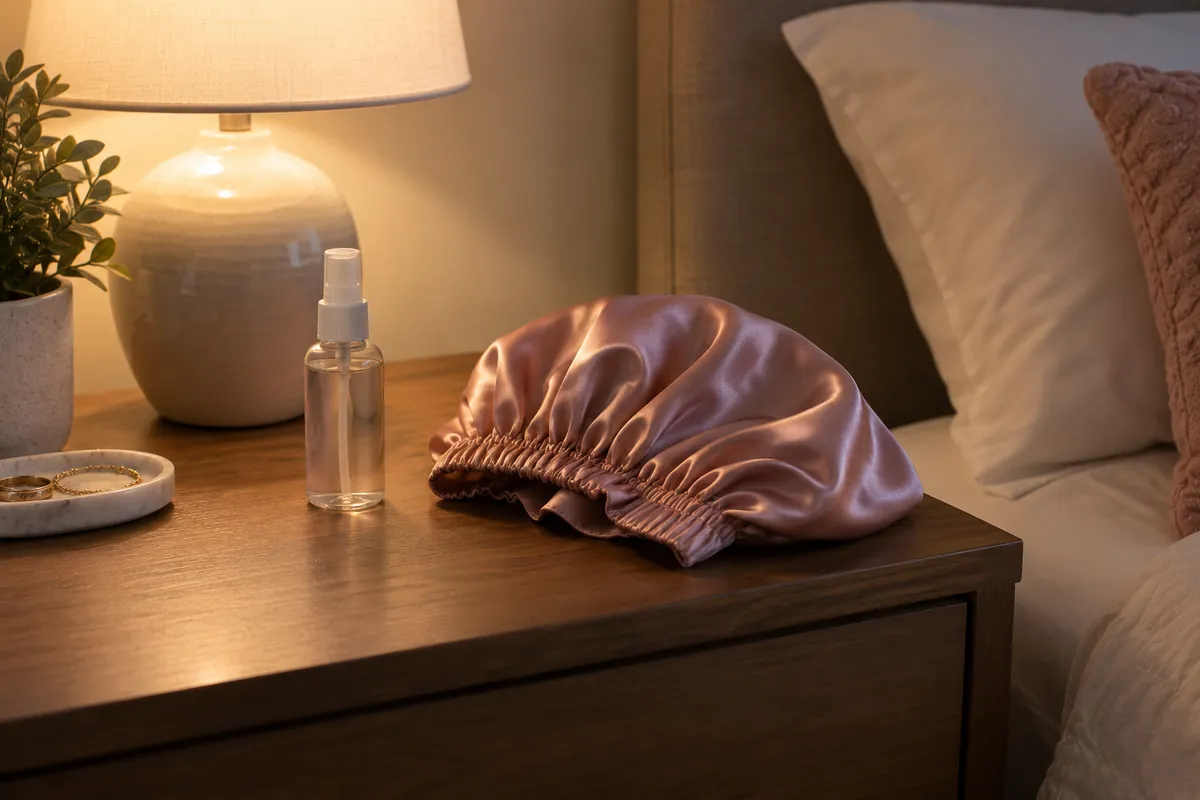
Protect curls overnight with a silk or satin bonnet or pillowcase, gather hair loosely on top of the head, and refresh in the morning with water and a little leave-in conditioner instead of rewashing.
What happens between wash days matters just as much as the wash itself. Curl patterns can flatten overnight, and hair can tangle while you sleep. A good nighttime routine can help to preserve the curl pattern and make the next day’s styling easier. If you want to keep your curls looking good between washes, you need to protect them at night.
A silk or satin bonnet, or a silk pillowcase, can help reduce friction and preserve curl pattern through the night. Another way to preserve curls is to gather hair loosely on top of the head before bed, a method sometimes called the pineapple. This can help to keep curls from flattening while you sleep.
Refreshing curls between wash days generally allows most people to stretch out their routine between washes, although results vary. It is a simple process that involves adding a little moisture back into the hair and reshaping the curls. The key is to add just enough moisture to revive the curls without making them wet again.
How Do You Refresh Curls Without Washing?
Refreshing curls between washes typically involves lightly misting hair with water, then applying a small amount of leave-in conditioner or curl cream to the sections that have lost definition. Once the curls are slightly damp, scrunch them gently upward. This will help revive the curl pattern without washing your hair. For tighter patterns, you can twist sections of hair to encourage the curl pattern to return.
Common Curly Hair Mistakes to Avoid
The main mistakes are brushing dry curls, rubbing them dry with a regular towel, using products that are too light, and ignoring the balance between protein and moisture.
A few recurring habits undermine curl definition, and most of them are easy to correct. Brushing dry curls, using too much product, or ignoring your hair’s protein-moisture balance can all lead to frizz and a loss of definition. The following list covers the most common mistakes people make with curly hair.
Brushing dry curls is probably the single biggest mistake people make with curly hair. Brushing dry curls breaks up the curl pattern and causes frizz, leaving hair looking undefined and hard to manage. Instead, detangle wet or damp hair with a wide-tooth comb or your fingers.
Rubbing hair dry with a standard towel roughs up the cuticle, creating frizz and disrupting curl pattern. Use a microfiber towel or cotton t-shirt to blot away excess water gently instead. This helps preserve the curl pattern and prevents frizz.
Using product that’s too light for your curl pattern will leave curls limp and undefined. Heavier products can help to provide definition and hold, but you need to use the right amount. If you use too much product, it can weigh your hair down and leave it feeling greasy.
Skipping the protein-moisture balance can lead to curls that are either too limp or too brittle. If your hair is limp and won’t hold a curl, it may need more protein. If it is dry and brittle, it may need more moisture. Pay attention to what your hair is telling you, and adjust the products you use accordingly.
Frequently Asked Questions
The short answers below cover shampoo, timing, cutting, humidity, straightening, curl pattern, porosity, second-day curls, gel, and switching between curly and straight styles.
1. Can you use regular shampoo on curly hair?
Regular shampoo with strong sulfates can strip curly hair and cause dryness and frizz. Curly hair generally does better with sulfate-free shampoos. While regular shampoo won’t damage your hair overnight, it is better to use products that are designed for curly hair.
2. How long does it typically take to find a routine that works?
Finding a routine that works takes trial and error, because the result depends on curl type, product choice, and how your hair responds to each combination. Board-certified dermatologists make the same point: trial and error are often needed to find the best routine for curly hair, so do not get discouraged if the first combination is not the one.
3. Does curly hair need to be cut differently?
Yes, curly hair is often cut dry rather than wet, because the length and shape can change significantly when wet. Cutting dry helps the stylist see how the curls fall naturally and avoid cutting too much. This is especially important for shorter cuts, where the difference between wet and dry length is more noticeable.
4. Why does the same curly hair routine sometimes not work?
Humidity levels shift curl behavior significantly. On humid days, curls may become frizzy, while on dry days they may become flat. You may need to adjust your products or techniques depending on the weather. This is normal, and it is worth having a few different products on hand to adjust your routine as needed.
5. Can curly hair be straightened without damage?
Occasional straightening with proper heat protectant and moderate temperatures causes minimal lasting damage, but the risk of dryness and breakage increases if you straighten frequently. A good habit is to leave a few days between sessions and to condition your hair well between them. Dermatologists recommend using the lowest heat setting and limiting hot tools to once a week or less.
6. Is it normal for curl pattern to look different in different parts of the head?
Yes, it’s extremely common for curl pattern to vary across the head. The top layer may be looser, while the underneath layers may be tighter. Some people have multiple patterns in their hair, and that’s perfectly normal. It is also normal for the pattern to change over time.
7. Does hair porosity change how curly hair responds to products?
Yes, low porosity curls often benefit from lighter, water-based products that absorb easily, while high porosity curls often need heavier creams and butters to hold moisture. Porosity affects how well your hair absorbs and retains moisture, so it can influence which products work best. Testing your porosity can help you choose the right products.
8. Why do curls sometimes look great on wash day but fall flat on day two?
Natural oils, friction from pillows or clothing, and movement during sleep can all cause curls to flatten or llose definition.n. Curls falling flat on day two is a common problem, and it can be frustrating. Using a silk pillowcase or bonnet and refreshing your curls in the morning can help to preserve the pattern.
9. Is gel necessary for defined curls, or are there other options?
Gel isn’t strictly necessary, but it typically provides the best definition for most curl types. Creams can provide definition and moisture, while mousses can offer lighter hold. Which product you choose depends on your curl pattern, your hair’s porosity, and the look you want to achieve.
10. Can curly hair be styled straight and then go back to curly?
Yes, curly hair that’s been temporarily straightened usually returns to its curl pattern after washing, as long as it hasn’t been damaged. If you straighten your hair regularly, you may find that it takes longer for the curls to return. This is because heat styling can cause damage to the hair, making it harder for the curls to spring back.
11. How often should you wash curly hair?
About once or twice a week for most curls. Tighter curls can go longer — the American Academy of Dermatology says dry, textured, curly or thick hair should be shampooed when needed, at least once every two to three weeks.