 Global Fashion Trends
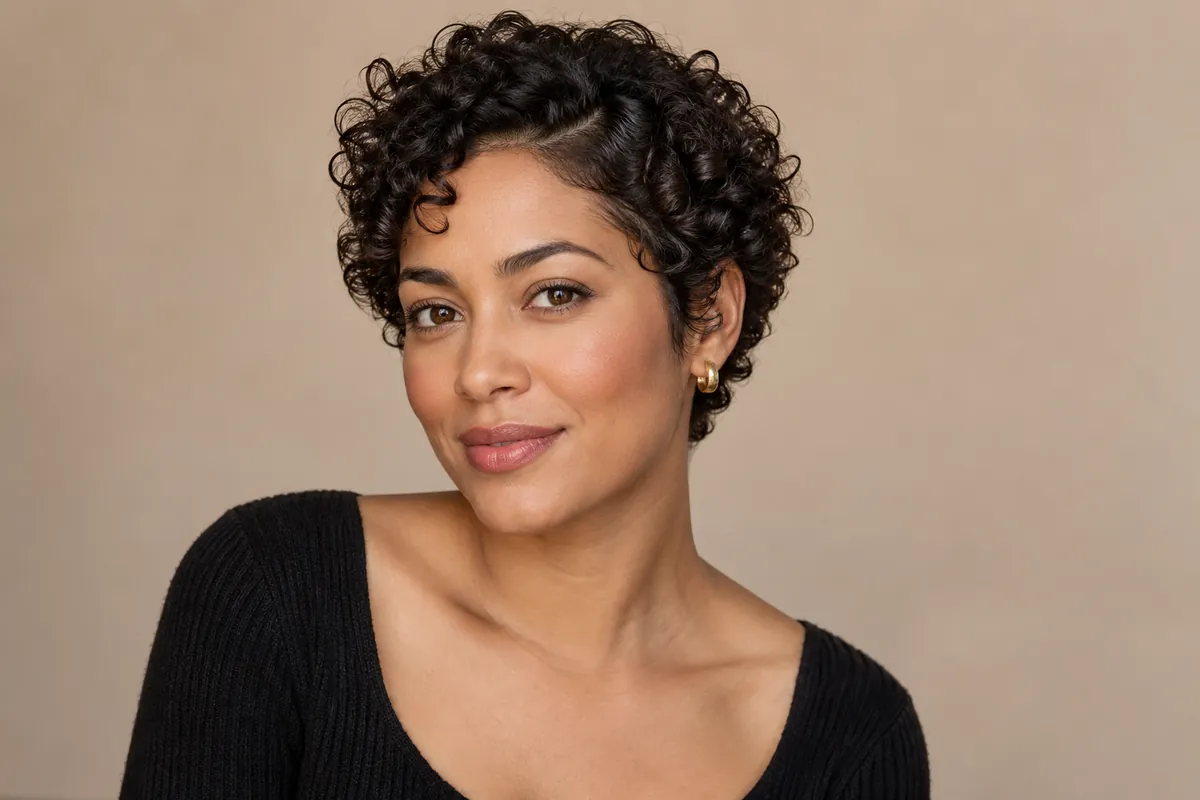
How to Style Short Curly Hair: Cuts & Care for Short Lengths
This guide explains how to style short curly hair, focusing on short-length issues such as shrinkage, triangle shape, using less product, and short plopping; it does not repeat the full general routine. For that general routine, see our general curly hair guide.
Short curly hair sits at an interesting intersection. Everything that makes curly hair its own styling category, the wet application, the gentle drying, the product layering, still applies. But short length changes the math in ways that catch a lot of people off guard the first time they chop their curls into a shorter cut. Curls that used to elongate and hang under their own weight suddenly spring up tighter and rounder. A technique that worked beautifully at shoulder length can produce a completely different, sometimes frustrating, result once there’s less length and weight involved.
This guide explains how to style short curly hair by focusing on what changes when curly hair goes short: the cut itself, how curls behave differently at shorter lengths, product amounts, drying technique, and the specific habit of avoiding that classic triangular, overly poofy shape that short curly cuts are especially prone to without the right approach.
How to Style Short Curly Hair: What’s Actually Different
Short curly hair needs a precise, curl-specific cut as its foundation, noticeably less product than the same curl type would need at a longer length, and drying techniques that account for curls springing up and outward rather than being weighed down by length. Without adjusting for these differences, short curly cuts are especially prone to looking wider at the sides than at the top, the classic triangle shape most curly-haired people are trying to avoid.
The core principle carries over from styling curly hair generally: apply product to soaking wet hair, dry gently without disrupting curl clumps, and avoid touching hair once it’s set. What shifts with shorter length is calibration. Less hair means less product, gentler handling since there’s less weight to protect curls from gravity, and a cut that actively works with how curls will sit once they spring up to their shortest, most shrunken length. The same broad principles, washing only when needed, keeping curls moisturized, and detangling wet, are the ones dermatologists recommend for curly hair in general; see the American Academy of Dermatology’s curly hair care tips.
Getting the Cut Right Is Half the Battle
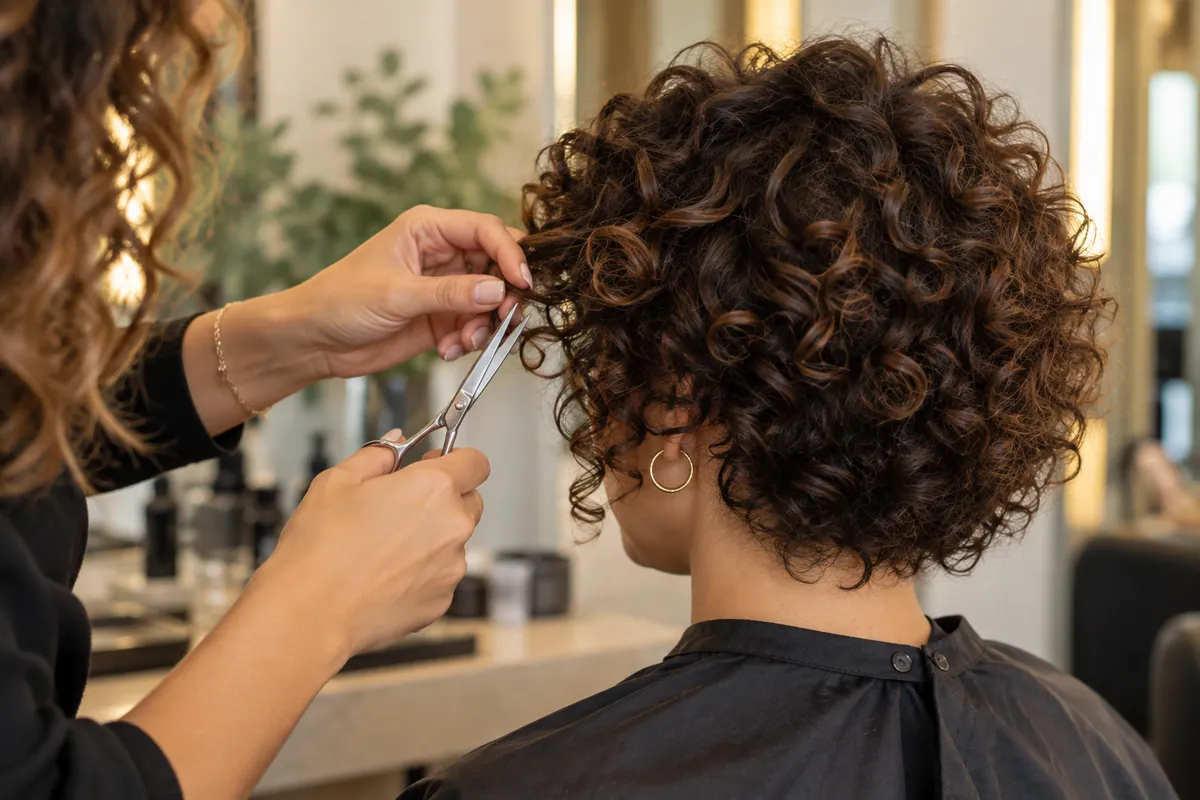
A cut designed specifically for curls, sometimes done curl by curl while hair is dry rather than following a standard wet-cutting approach, matters enormously at short lengths. Curls shrink significantly once fully dry, and a stylist who cuts curly hair wet without accounting for that shrinkage often ends up with an uneven, unpredictable shape once curls spring back up.
Shape and weight distribution deserve real attention at short lengths specifically. A cut that’s too heavy at the sides and too light on top creates or worsens the triangular silhouette that short curly cuts are prone to, while removing some weight through the sides and building slightly more length or layering through the crown generally helps curls fall into a rounder, more balanced overall shape.
How Often Should Short Curly Hair Be Trimmed to Maintain Shape?
Short curly cuts generally hold their shape best with regular trims, since curl shrinkage means growth becomes visually noticeable faster on short hair than it would on longer curls where extra length simply adds to overall curl pattern rather than changing the cut’s silhouette. Waiting too long between trims on a short curly cut often results in the shape losing its intended balance well before the hair looks obviously overgrown.
Why Short Curls Behave Differently Than Long Curls
Longer curls have weight working in their favor. Gravity pulls the length down, which naturally elongates curl pattern somewhat and helps hair lay closer to the head and shoulders rather than springing outward. Short curls don’t have that same weight advantage, which means the same natural curl pattern can look noticeably tighter, rounder, and more voluminous simply because there’s nothing pulling it down and out.
This isn’t a flaw in the hair itself. It’s just physics. Shrinkage, the difference between a curl’s stretched-out length and its natural, coiled resting length, becomes much more visually significant on short hair, since a curl that shrinks up several inches barely changes the overall silhouette on longer hair but can dramatically shorten and round out the shape on a short cut.
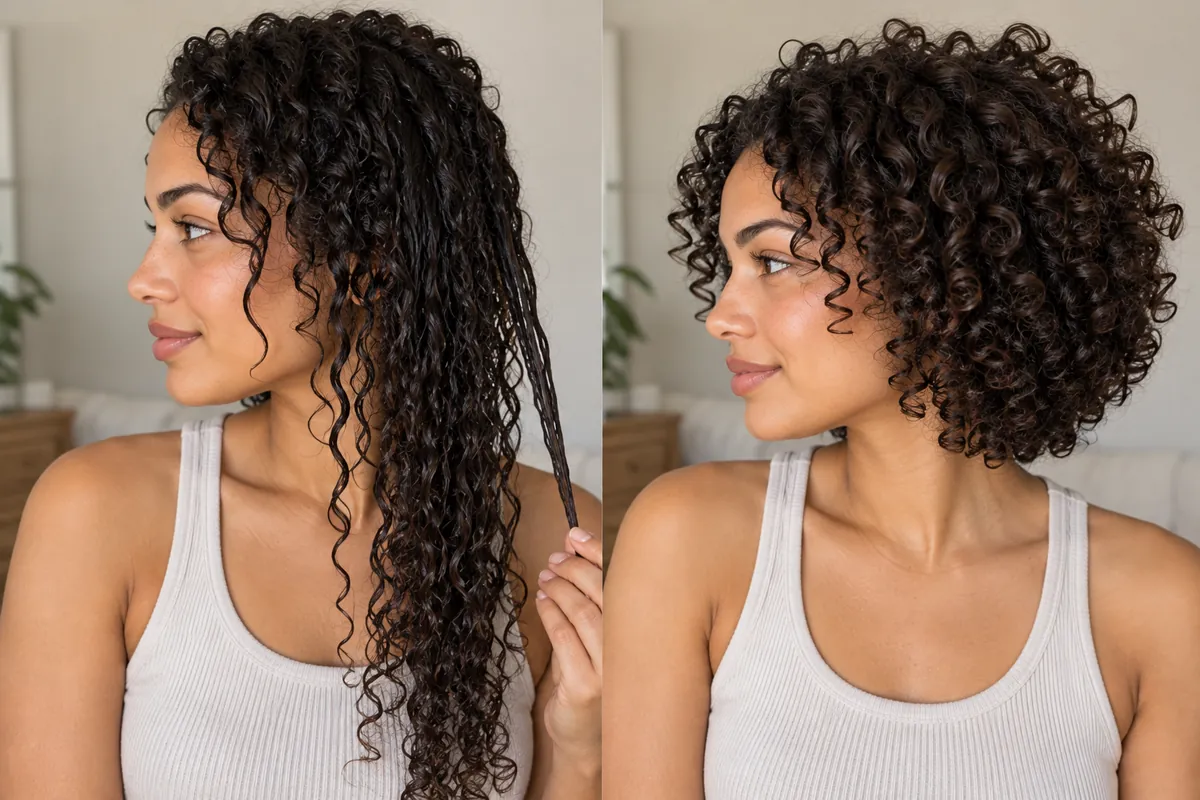
Why Does Short Curly Hair Look Bigger and Rounder Than Longer Curls?
Short curly hair looks bigger and rounder mainly because there’s less length and weight to pull curls downward and elongate their natural pattern, letting them spring up and outward instead. The same curl type that lies relatively flat and elongated at a longer length can appear noticeably fuller and more compact once cut short, simply because gravity has less hair to work with.
Product and Application Adjustments for Short Curly Hair
Product amount needs real recalibration on short curly hair. Using the same quantity of leave-in, cream, or gel that worked at a longer length almost always results in overloaded, weighed-down curls on shorter hair, since there’s simply less hair to distribute that product across.
A lighter hand generally works better here, applying product in smaller amounts and building up gradually if more hold or definition is needed, rather than starting with a heavy application and hoping it distributes evenly. Focusing product specifically where it’s needed most, often the crown and any longer top sections, while using an even lighter touch around the shorter sides, helps prevent the sides from getting weighed down while the top still gets enough product to hold shape and definition.
Lightweight gels and creams, rather than heavier, richer formulas, often work better on short curly hair overall, since heavier products can flatten curls and reduce the volume and bounce that typically look best on shorter cuts.
Drying and Styling Techniques for Short Curls
Diffusing still works well on short curly hair, though the technique benefits from a gentler touch than longer curls might need, since there’s less hair weight to protect from the direct heat and movement of a diffuser bowl. Cupping smaller sections and holding them briefly in the diffuser, rather than aggressively scrunching larger amounts of hair at once, tends to produce cleaner, more controlled results on shorter lengths.
Finger coiling individual curls, wrapping small sections around a finger while product is still wet, works particularly well on very short curly hair, since it gives you direct control over shaping tight ringlets that might otherwise spring into a less defined pattern on their own. This technique takes more time than simply scrunching product through the whole head, but it produces noticeably more polished, intentional-looking definition on short lengths specifically.
Plopping can still work on short curly hair, though the technique often needs adjusting, sometimes using a smaller towel or a gentler wrap, since there’s less length for the fabric to actually hold and support the way it does on longer curls.
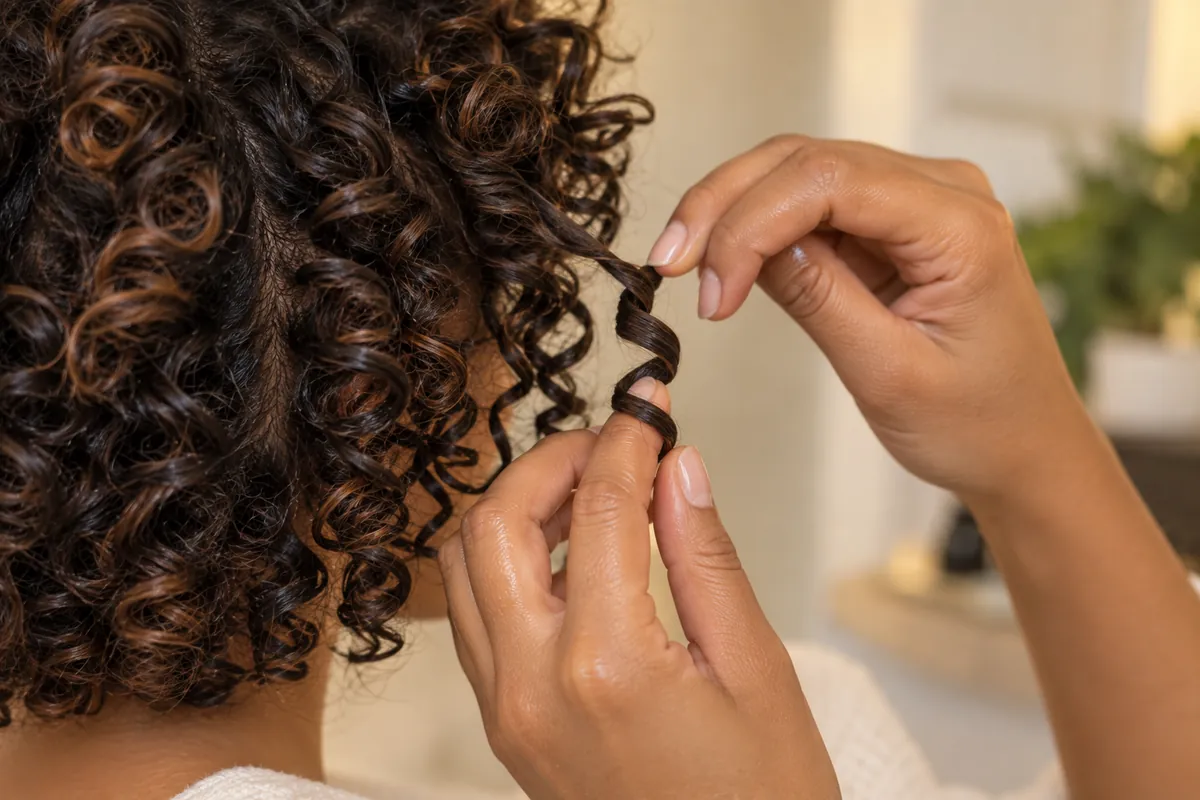
Can You Diffuse Very Short Curly Hair the Same Way as Long Curly Hair?
Diffusing works on very short curly hair, but it generally benefits from a gentler, more controlled approach than longer curls need, cupping smaller sections and holding them briefly against the scalp rather than aggressively scrunching larger amounts of hair. Since short curls have less weight protecting them from the diffuser’s direct heat and movement, a lighter touch typically produces cleaner definition without disrupting curl pattern the way a more vigorous technique might.
Avoiding the Poofy Triangle Shape
The triangle shape is fixed by removing weight from the sides, keeping length at the crown, and scrunching curls downward rather than lifting them outward. This is probably the single most common concern for anyone with short curly hair, and it usually comes down to a combination of cut, product weight, and drying technique rather than any single fix.
Starting with a cut that removes appropriate weight from the sides while maintaining enough length and layering through the crown prevents a lot of the triangle problem before styling even begins. Product distribution matters just as much, since heavier product concentrated at the sides while the top gets less can actually reverse the intended balance, weighing down the sides while the crown stays relatively light and prone to extra poof.
Scrunching hair gently downward and inward, rather than lifting and separating curls outward during styling, also helps encourage a rounder, more contained shape rather than one that flares out at the widest point. Once curls are fully dry, resisting the urge to touch, fluff, or separate them further usually preserves the shape better than any amount of mid-day adjusting.
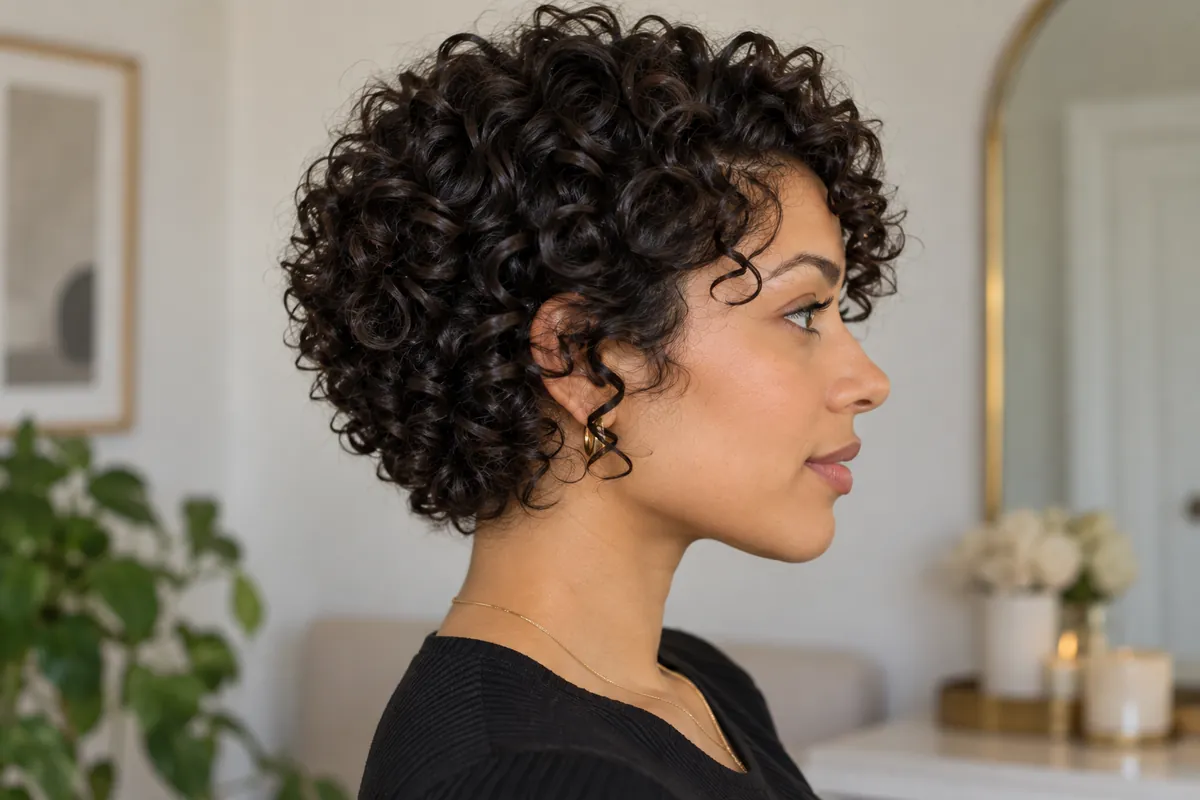
How Do You Keep Short Curly Hair From Looking Triangular or Poofy?
Preventing the triangular shape on short curly hair starts with a cut that removes weight from the sides while preserving enough length through the crown, combined with even, appropriately light product distribution and gentle, downward-scrunching drying technique rather than aggressive lifting or separating. Avoiding touching curls once they’ve set, and getting regular trims to maintain the intended balance as hair grows, both help preserve that shape between styling sessions.
Frequently Asked Questions
1. Is it harder to maintain short curly hair than long curly hair?
Short curly hair generally requires more precise, curl-specific cutting and more frequent trims to maintain shape, but the actual day-to-day washing and styling routine isn’t necessarily more difficult, and some people find shorter curls quicker to style overall since there’s simply less hair to work with.
2. Can you get a “curly pixie” cut with any curl type?
Yes, curly pixie cuts can work across a range of curl types, though the specific technique and amount of layering a stylist uses often needs to be adjusted based on curl tightness and density to achieve a balanced, well-shaped result rather than one fixed approach for every curl pattern.
3. Does short curly hair need less conditioning than long curly hair?
Not necessarily, since curl type and porosity drive moisture needs more than length does, though the total amount of conditioner used will naturally be less on short hair simply because there’s less hair overall to coat and condition.
4. Why does short curly hair sometimes look uneven right after a haircut?
Curls settle into their true shape over the first several days after a cut, since factors like leftover cutting product, styling on freshly cut ends, and curls still adjusting after being trimmed can all affect how even the shape initially looks before it fully settles.
5. Can you do a twist-out on very short natural hair?
Yes, twist-outs can work on short natural hair, though smaller, more numerous twists are typically needed to achieve defined results on shorter lengths, and the resulting texture often appears looser or less tightly coiled once unraveled compared to how the same twist would look on longer hair.
6. Is it normal for short curly hair to shrink up significantly more than expected?
Yes, shrinkage is a completely normal part of curly and coily hair, and it often becomes more visually dramatic on short cuts since there’s less overall length for the shrinkage to be absorbed into, making the difference between wet, stretched hair and fully dried, sprung-up curls especially noticeable.
7. Should you use a different pillowcase for short curly hair than long curly hair?
The same recommendation applies regardless of length, since silk or satin pillowcases reduce friction and frizz for any curl type, though short curly hair may benefit even more from this protection given how visible and disruptive even minor overnight frizz can be on a shorter cut.
8. Can you still achieve volume at the crown with short curly hair, or does it always look flat?
Short curly hair can absolutely achieve crown volume, often more easily than longer hair since there’s less weight pulling curls downward, and techniques like root clipping while hair dries or applying a small amount of root-lifting product can further enhance volume where it’s wanted.
9. Does humidity affect short curly hair differently than long curly hair?
Humidity affects curl pattern regardless of length, though the visual impact can be more noticeable on short hair since there’s less length available to absorb frizz and extra volume, making short curly cuts sometimes appear to react more dramatically to humid conditions.
10. Is it worth growing out short curly hair slightly before getting a curl-specific cut?
Growing hair out slightly before a curl-specific cut can give a stylist more material to work with in shaping curls precisely, though it’s not strictly necessary, and many stylists can still create a well-balanced, curl-appropriate shape working with shorter starting lengths depending on the specific style being pursued.