

Copper Hair Color at Home: Shades, Formulas & How-To
Copper hair is the shade everyone screenshots but nobody quite knows how to ask for at the salon – and it is one of the hardest colors to get right at home, because the line between glowing copper and flat orange is about ten minutes of processing time. If your hair is currently brown, blonde, or grown-out balayage and you want that rich, lit-from-within copper, this guide gives you everything: the shade gallery, how to match copper to your skin tone, exact at-home formulas with developer volumes and timing, and the maintenance routine that keeps copper from fading to straw in two weeks.
Copper hair color is a warm red-orange hair shade ranging from bright ginger copper to deep auburn copper, achieved at home with permanent or demi-permanent dye in copper tones (typically level 6-8 with copper or copper-gold reflects), 10 or 20 volume developer depending on your starting level, and 25-45 minutes of processing time. The best at-home results come from starting hair at level 6 or lighter; darker hair needs a lightening step first. Expect the color to fade faster than browns – plan a color-depositing conditioner and root touch-ups every 4-6 weeks to keep it rich.

What Are the Different Copper Hair Shades?
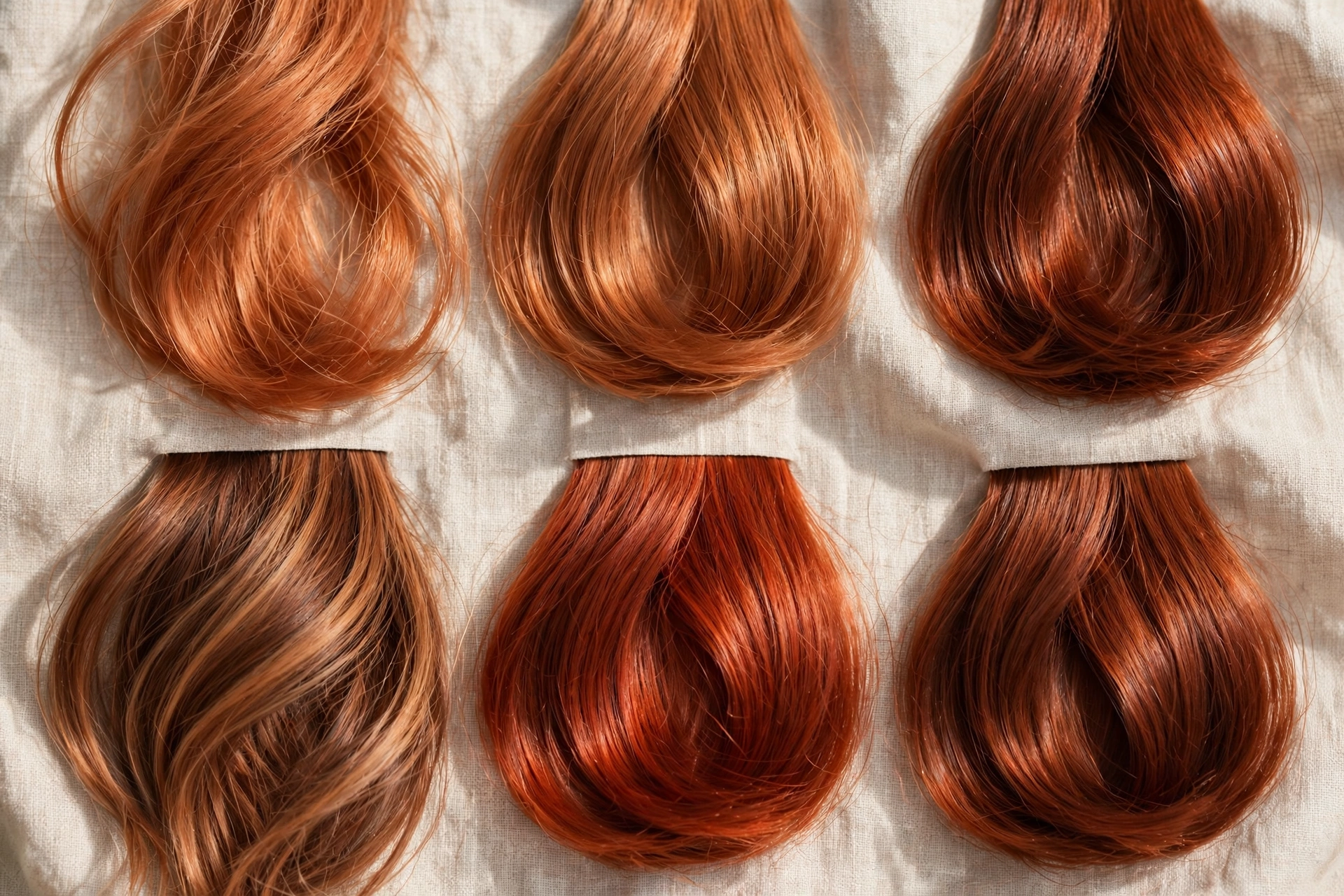
Copper is not one color – it is a family, and picking the right member matters more than anything else in this guide. Copper shades sit between red and orange on the color spectrum, and they are described by two things: depth (how light or dark, on the 1-10 hair level scale) and reflect (the tone mixed in, like copper, copper-gold, or copper-red). Here are the six shades worth knowing.
Ginger Copper
The brightest, most orange copper – think classic redhead, around level 7-8 with strong copper reflect. Ginger copper suits fair to medium skin with warm or neutral undertones and looks most natural on people with some warmth in their complexion already. At home, this shade needs the lightest starting base; dark hair must be pre-lightened to at least level 7 or the result goes muddy. This is the shade that fades fastest, so budget for a copper-depositing conditioner from day one.
Classic Copper
The balanced middle of the family: rich orange-red at level 6-7, vivid but wearable. Classic copper flatters the widest range of skin tones, especially medium complexions with warm or neutral undertones. It is also the most forgiving shade to apply at home because it has enough depth to cover minor unevenness in your starting color. If you are dyeing copper for the first time, start here.
Deep Auburn Copper
The darkest copper, sitting at level 5-6 with copper-red reflects – closer to auburn with visible orange warmth in sunlight. Deep auburn copper is the best copper for people with medium to deep skin tones, and it is the easiest copper to achieve from dark brown hair because it requires the least lift. This shade also fades the slowest of the coppers, making it the lowest-maintenance entry point into the color family.
Copper Balayage
Copper painted through the mid-lengths and ends over a deeper natural base, with soft, blended transitions rather than a harsh line. Copper balayage gives you the copper glow with much lower maintenance – roots grow out invisibly and you can go 8-12 weeks between touch-ups. At home, use the freehand painting technique with a paddle brush, keeping the color 2-3 inches away from the roots and feathering upward. This is the best copper option if you want the trend without the upkeep.
Copper Blonde
The lightest copper, around level 8-9 with copper-gold reflects – strawberry blonde’s bolder cousin. Copper blonde suits fair skin with warm undertones and light eyes, but it washes out deeper complexions. This shade requires the most lift (dark hair needs bleaching to level 8-9 first) and the most maintenance, with toning every 3-4 weeks to stop it going brassy-yellow. Only choose this one if you are committed to the upkeep.
Oxidized Copper
The trendy, muted version: copper with a slightly dusty, desaturated finish, like aged copper metal. Pinterest’s 2026 trend data shows searches for “oxidized copper hair” up 517 percent, making it one of the fastest-growing hair color searches. Oxidized copper suits cool and neutral undertones better than bright coppers do, and the muted tone fades more gracefully. Achieve it by choosing a copper shade one level deeper than your target and adding a drop of ash or natural tone to the formula, or by letting a bright copper fade for two weeks and then toning.
Which Copper Shade Suits Your Skin Tone?
Match copper to your undertone, not your surface skin color. Check your veins in natural light: greenish veins suggest warm undertones, bluish-purple suggests cool undertones, and a mix suggests neutral. Gold jewelry flatters warm undertones, silver flatters cool ones. This five-minute check matters because copper is an inherently warm color – the wrong copper on the wrong undertone looks harsh instead of harmonious.
Warm undertones have the most options: ginger copper, classic copper, and copper blonde all glow on warm skin. Neutral undertones can wear classic copper and deep auburn copper beautifully, and can handle ginger copper if the shade is not too bright. Cool undertones should lean toward deep auburn copper or oxidized copper – the redder, deeper, or more muted coppers sit better against cool skin than bright orange ginger shades do. Very deep cool skin tones look stunning with deep auburn copper because the richness of the color echoes the depth of the complexion.
Eye color is your second clue. Green and hazel eyes pop dramatically against any copper, which is why copper is the classic recommendation for green-eyed clients. Brown eyes warm up beautifully with classic and deep auburn copper. Blue eyes create a striking contrast with copper – the complementary color pairing makes both the eyes and the hair look more vivid, and this combination photographs exceptionally well.
Before you commit to a full head, do two tests. First, hold copper fabric or a copper-toned scarf against your face in daylight and photograph it – the camera reveals clashes your mirror hides. Second, do a strand test: apply your chosen formula to a small hidden section of hair and process fully. The strand test shows you the true result on your hair, which can differ from the box photo by a full level depending on your starting color. Our guide to choosing the best hair color for your skin tone goes deeper into undertone matching if you want to get this exactly right.

How Do You Dye Your Hair Copper at Home? (Step-by-Step)
You can get salon-quality copper at home if you get three things right: the formula, the developer volume, and the timing. This walkthrough assumes you are using professional or salon-quality tube color plus developer rather than box dye, because tube color lets you control the exact shade and developer – but box dye notes are included where they differ.
Step 1: Assess your starting level
Determine your current hair level honestly, in daylight. Virgin medium brown is around level 5, dark blonde is level 6-7, light brown is level 5-6. Previously colored hair is trickier – permanent dark dye sits in the hair and copper applied over it will go darker and duller than expected, while previously bleached hair grabs copper fast and can go too bright. If your hair is darker than level 6 and you want ginger or classic copper, you need to lighten first; deep auburn copper can work over level 5 hair with 20 volume developer.
Step 2: Choose your formula
For professional tube color, the standard copper formulas are: 7/4 or 7.4 (medium blonde copper) for classic copper on level 6-7 hair; 6/4 or 6.4 (dark blonde copper) for deep auburn copper on level 5-6 hair; 8/4 or 8.43 (light blonde copper-gold) for ginger copper on level 7-8 hair. The number before the slash is the depth level, the number after is the reflect – 4 means copper, 43 means copper-gold, 45 means copper-red. For extra vibrancy on resistant hair, add a booster or intensifier: 1-2 inches of copper intensifier per tube of color.
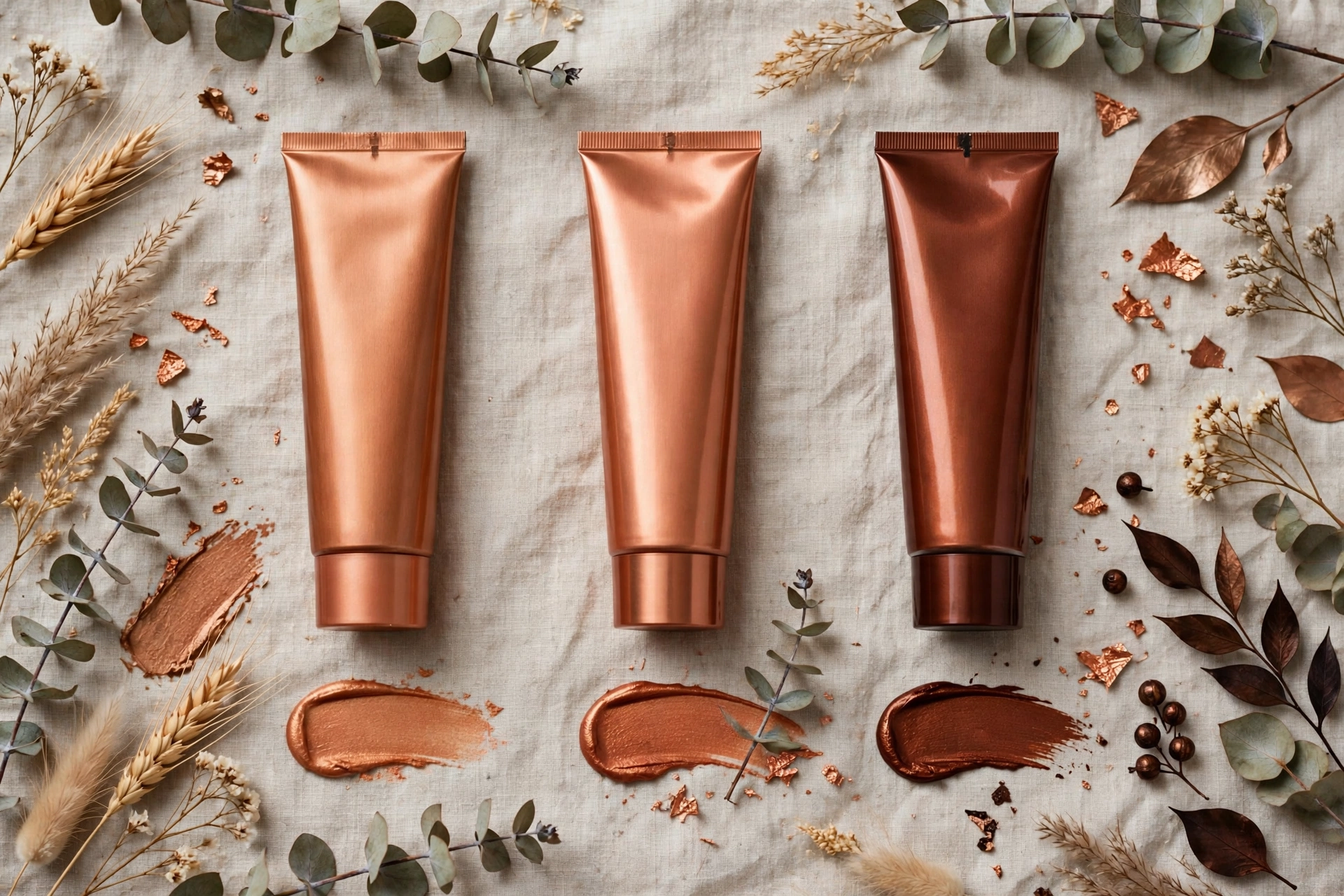
For box dye, choose a shade labeled copper, auburn, or reddish-gold one level lighter than your target, since box dyes process darker than the box shows.
Step 3: Pick your developer volume
Developer volume controls how much lift you get. 10 volume deposits color with minimal lift – use it when your hair is already at or near your target level, for refreshing faded copper, or for demi-permanent formulas. 20 volume lifts 1-2 levels while depositing – this is the workhorse for most at-home copper jobs, taking level 5-6 hair to copper in one step. 30 volume lifts 2-3 levels but causes significantly more damage; only use it if your hair is healthy, virgin, and you need real lift, and never on previously bleached or fragile hair. Never use 40 volume at home – the damage risk is not worth it. Mix color and developer at the ratio on your tube, usually 1:1 or 1:1.5, measured with a scale or marked applicator bottle for accuracy.
Step 4: Prep and section
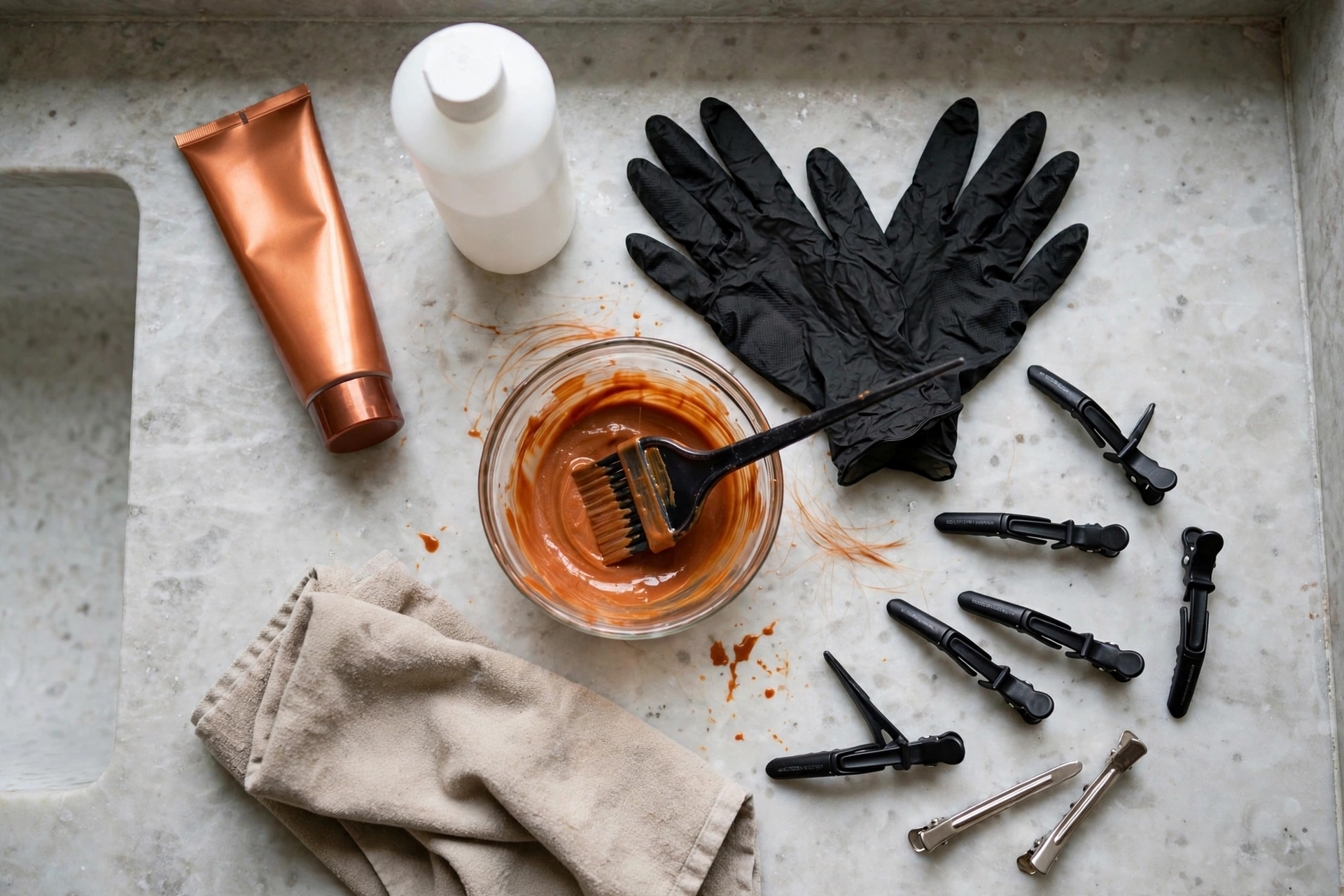
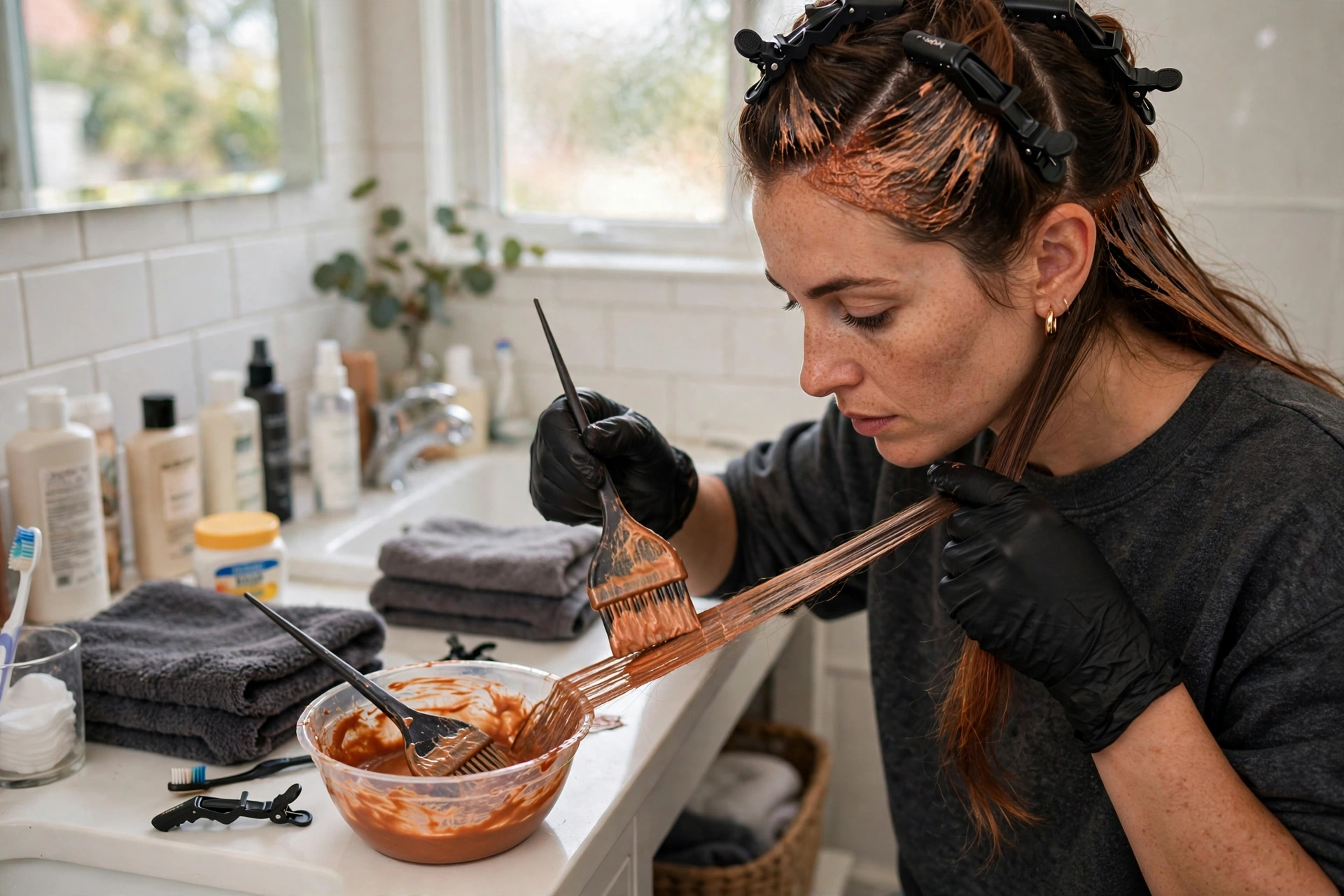
Do not wash your hair for 24-48 hours before coloring; natural oils protect the scalp. Detangle fully, then divide hair into four quadrants with clips – two front, two back. Put on gloves, apply a barrier cream (petroleum jelly works) along your hairline and ears, and wear an old shirt. Lay out your mixed color, brush, a timer, and a damp cloth for drips. Set a timer the moment you start applying – processing time counts from first application, not from when you finish.
Step 5: Apply
Start at the back sections where hair is thickest and processes slowest, working in quarter-inch subsections. Apply generously – skimping causes patchy copper. For virgin hair, apply to mid-lengths and ends first, wait 15 minutes, then apply to roots, because roots process faster from scalp heat and applying everywhere at once gives you hot roots (brighter roots than ends). For previously colored hair, apply roots to ends in one pass since previously colored lengths need less processing. Work quickly but thoroughly; aim to finish application within 15-20 minutes so processing stays even.
Step 6: Process with correct timing
Standard processing is 30-45 minutes at room temperature for permanent color with 20 volume. Check at 25 minutes by wiping a small section: if it is not coppery enough, give it 10 more minutes. Resistant gray or coarse hair may need the full 45 minutes. Do not exceed 45 minutes with 20 volume – extra time does not add more color, it only adds damage. Covering hair with a plastic cap traps gentle heat and helps even processing, but do not apply external heat (no blow dryer on the cap) unless your color line specifically instructs it. For box dye, follow the box timing exactly, usually 25-35 minutes.
Step 7: Rinse, tone if needed, and condition
Rinse with lukewarm water until it runs nearly clear, then shampoo once with a sulfate-free, color-safe shampoo and follow with a deep conditioner or mask for 5-10 minutes. If your copper came out too bright or orange, a demi-permanent toner in a slightly deeper or more muted copper (or a copper-brown) applied for 10-15 minutes will settle it. If it came out too dark, it will fade noticeably in the first 3-4 washes – do not panic and do not re-dye immediately. Finish with a cool water rinse to seal the cuticle.
What Will Copper Look Like on My Hair? (Before and After)
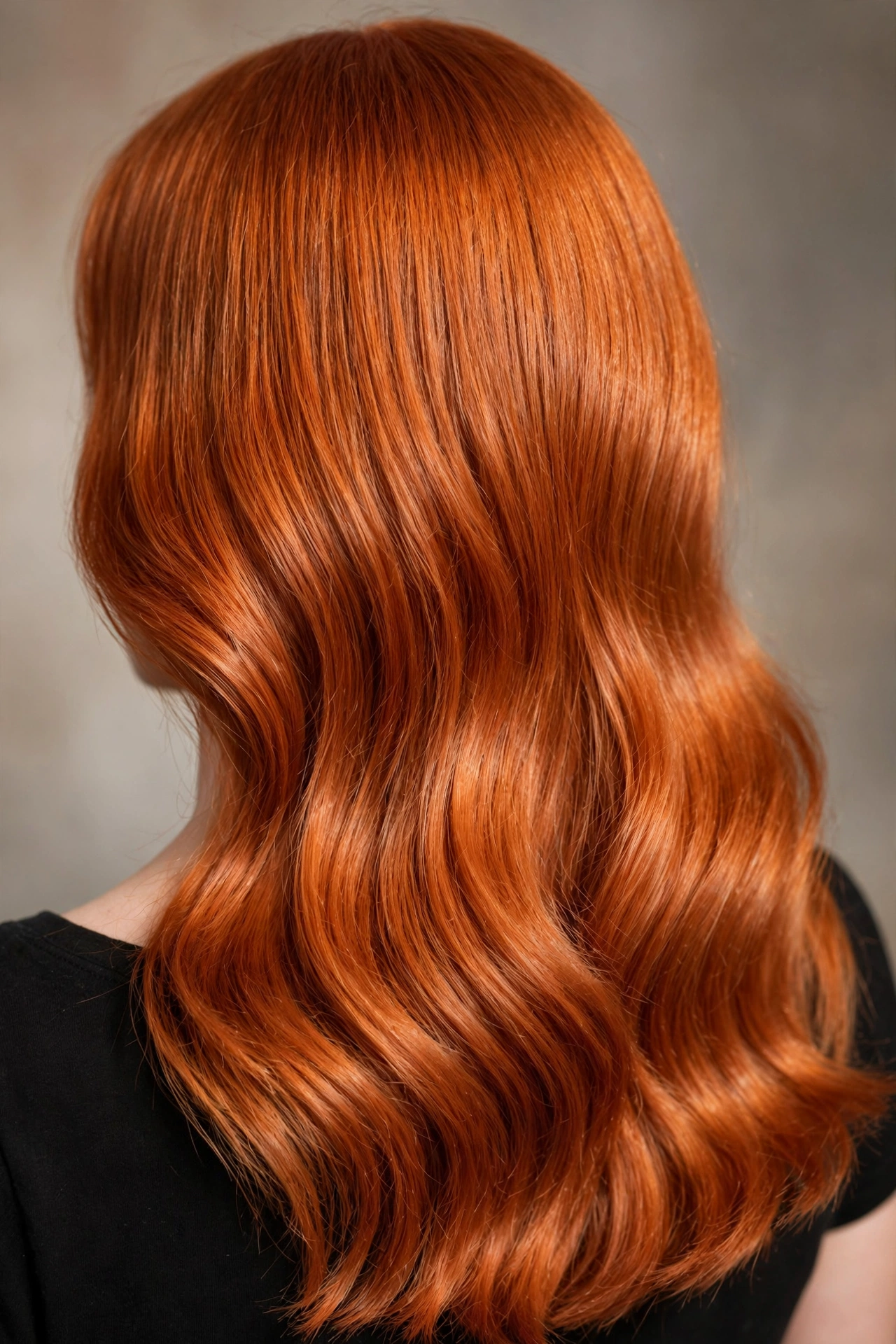
Set realistic expectations based on your starting point. Virgin medium brown (level 5) with 20 volume and a 6/4 formula gives deep auburn copper in one session – rich, dimensional, with visible copper glow in sunlight. Virgin dark blonde (level 6-7) with 20 volume and 7/4 gives classic copper in one session, the most predictable result in this guide. Previously colored dark brown will go deeper and less vibrant than the box shows; expect a copper-tinted dark auburn rather than bright copper, and know that a second session after 4 weeks builds more vibrancy. Bleached or highlighted blonde (level 8-10) grabs copper aggressively – use a demi-permanent copper or dilute your formula, process for 20-25 minutes, and expect a brighter result than intended on the first try.
The biggest surprise for first-timers is how much copper changes in different light. Indoor lighting shows the red-brown depth; direct sunlight reveals the full orange-copper fire. Photograph your result in both before judging it.

The second surprise is the first wash: copper always looks slightly too bright for the first 2-3 washes, then settles into its true shade as the surface color molecules rinse away. Judge your final color after one week, not on day one.
If the result is wrong, do not re-dye the same day. Too bright: wait two weeks, wash with a clarifying shampoo twice, and tone with a deeper copper-brown demi. Too dark: wash 3-4 times with clarifying shampoo over a week and it will lift noticeably. Uneven: spot-apply formula only to the lighter sections for 15-20 minutes to even things out. Truly disastrous results (rare with the strand test done first) are a salon color-correction job – a colorist can fix in one appointment what months of home experiments cannot.

How Do You Maintain Copper Hair So It Does Not Fade?
Copper fades faster than any other color family except fashion shades, because copper pigment molecules are large and wash out easily. Expect visible fading within 2-3 weeks if you do nothing, and plan your routine around slowing that down. Wash hair 2-3 times per week maximum with lukewarm water – hot water opens the cuticle and releases color faster. Always use sulfate-free, color-safe shampoo and conditioner; sulfates strip copper aggressively. A guide to how long hair color lasts breaks down fade timelines by color type if you want to compare copper against other shades.
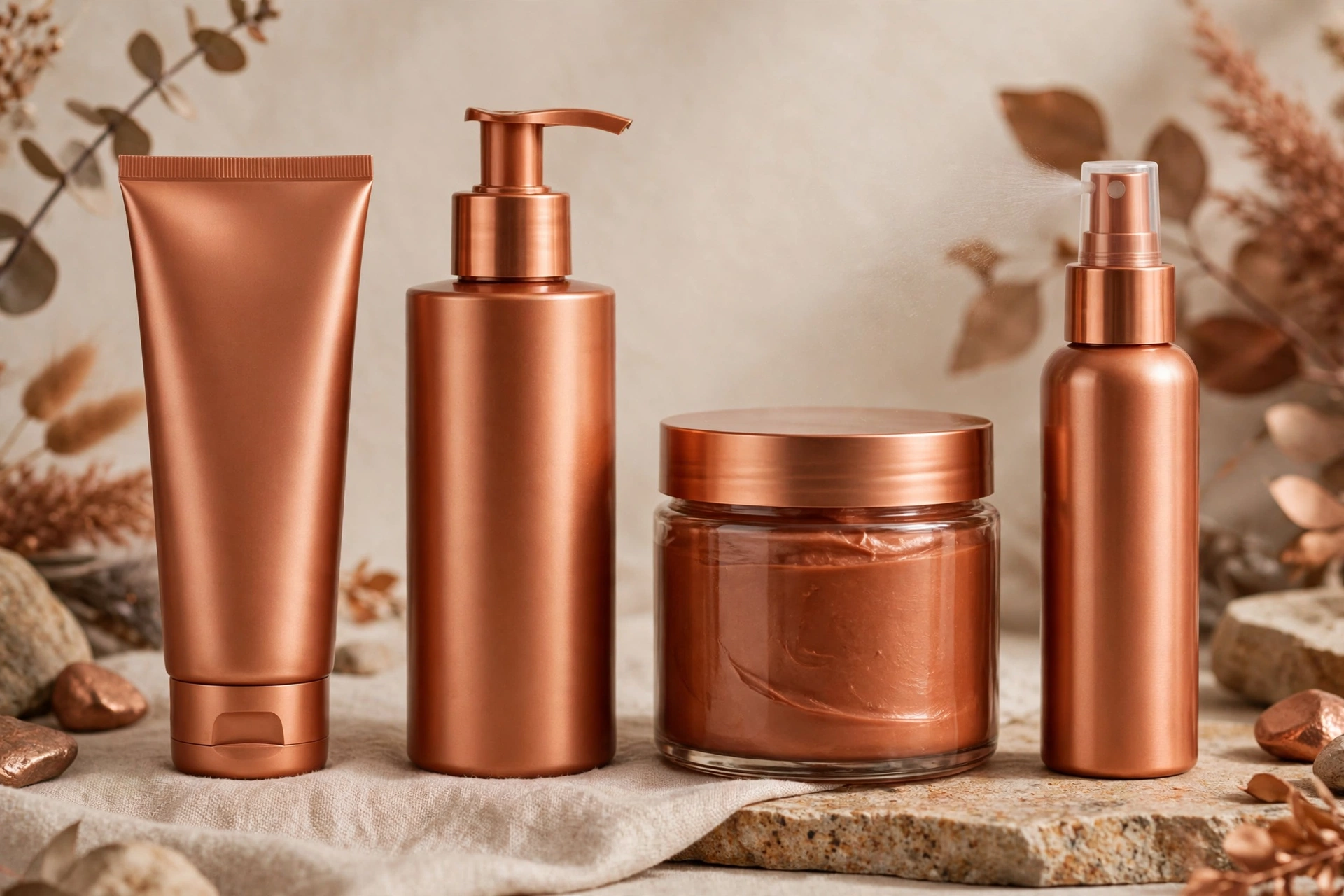
Your most powerful maintenance tool is a copper color-depositing conditioner or mask, used once a week in place of regular conditioner. These deposit a sheer layer of copper pigment with each use and can extend a fresh dye job by 3-4 weeks. Keep one in copper (not red, not auburn – copper) and leave it on for 5-10 minutes. Between full dye sessions, a demi-permanent copper gloss every 4-6 weeks refreshes vibrancy without the damage of permanent color – this is the single best habit for long-term copper wearers.
Protect copper from its three biggest enemies: sun, chlorine, and heat. UV light fades copper fast – wear a hat in strong sun or use a UV-protectant hair spray, even in winter. Chlorine strips and discolors copper, so wet your hair with clean water and apply leave-in conditioner before swimming, and rinse immediately after. Heat styling accelerates fade, so keep hot tools at or below 350 F (175 C), always use heat protectant, and let hair air-dry when you can. Deep condition weekly with a mask, because healthy, sealed cuticles hold color dramatically longer than dry, porous ones.
Plan your touch-up schedule: roots every 4-6 weeks for solid copper (apply to regrowth only, then pull through the lengths for the last 10 minutes to refresh), and full gloss refreshes every 6-8 weeks. Copper balayage wearers can stretch to 10-12 weeks. Mark it on your calendar – copper rewards consistency, and letting it fade completely before re-dyeing means starting from scratch each time instead of maintaining.
Will Dyeing Your Hair Copper Damage It?
Any permanent color causes some degree of cuticle disruption – that is how the color gets in. But copper is one of the less damaging color choices when done right, because most copper applications use 20 volume or lower and do not require aggressive bleaching unless you are going from dark hair to light copper. The damage risk climbs steeply when you pre-lighten dark hair to reach ginger or copper blonde shades; bleaching is the most damaging step in any color process, not the copper dye itself.
Minimize damage with four habits. First, never overlap permanent color onto previously colored lengths during root touch-ups – apply to regrowth only. Second, do a deep conditioning treatment 2-3 days before coloring and again immediately after. Third, space full color sessions at least 4 weeks apart to let hair recover. Fourth, if your hair is already fragile, bleached, or breaking, choose demi-permanent copper instead of permanent – it deposits without lifting and causes minimal damage. Healthline’s guide to hair dye damage explains how dye affects the hair fiber and which habits minimize harm, and our own article on whether coloring damages hair covers the warning signs that mean you should pause and repair before your next session.
Watch for the signals that your hair needs a break: excessive tangling when wet, stretchy or gummy texture, breakage at the crown, and color that fades within days (a sign of over-porous, damaged cuticles that cannot hold pigment). If you see these, stop coloring for 6-8 weeks, do weekly protein-moisture balancing treatments, trim the worst ends, and only resume with demi-permanent formulas. Copper on healthy hair looks ten times better than copper on damaged hair – the shine is the whole point of the color.
One more reality check on fade: red and copper tones lose vibrancy faster than browns or blacks because their pigment molecules are larger and less stable – WebMD’s colored hair protection guide notes this is why redheads need the most diligent maintenance routine of any color family. Accept that copper is a high-maintenance color and build the routine in from day one rather than fighting the fade after the fact. For the full at-home process refresher, our step-by-step guide to coloring your hair at home covers the general techniques that apply to every shade.
How Much Does Copper Hair Cost at Home vs. the Salon?
At-home copper is one of the best value color transformations in beauty. A professional tube of color ($10-15) plus developer ($5-8) plus basic supplies you likely own (bowl, brush, gloves, clips) puts a single all-over copper application at $20-30. Add a copper color-depositing conditioner ($15-25, lasts 2-3 months) and a deep conditioning mask ($10-15), and your first three months of copper cost roughly $50-70 total. Box dye is even cheaper at $10-15 per application, though you trade formula control for the savings.
Salon copper starts around $120-200 for a single-process color at a mid-range salon and climbs to $250-400+ for copper balayage or color corrections at high-end salons, with root touch-ups every 4-6 weeks at $80-150 each. Over a year, salon copper easily runs $800-1,500, while diligent at-home copper runs $150-250. The break-even point is fast – but be honest about your skill level. If your hair needs significant lightening, has multiple old colors layered in it, or you want balayage placement, one salon session to establish the color followed by at-home maintenance is often the smartest money: you get professional placement once, then maintain it yourself for a year.
Where not to save money: developer quality and your toning products. Cheap, harsh developers cause more damage for the same lift, and a good copper-depositing conditioner is the product that actually determines how your color looks in week four. Where you can save: applicator bottles, mixing bowls, clips, and barrier cream all have perfectly good drugstore versions. And always buy one extra tube of color beyond what you think you need for long or thick hair – running out mid-application causes the patchy results that send people to the salon for a $200 fix.
Frequently Asked Questions
1. What is the best copper hair color for beginners to try at home?
Classic copper (around level 6-7 with copper reflect) is the best first copper. It flatters the widest range of skin tones, applies evenly over the most common starting levels, and has enough depth to hide minor application unevenness. Deep auburn copper is the second-best choice, especially if your hair is dark brown and you want to avoid pre-lightening.
2. What developer volume should I use for copper hair dye?
Use 10 volume when your hair is already at your target level or you are refreshing faded copper. Use 20 volume for most at-home copper jobs – it lifts 1-2 levels while depositing color, which handles the common jump from medium brown to copper. Reserve 30 volume for healthy virgin hair that needs 2-3 levels of lift, and never use 40 volume at home.
3. How long does copper hair color last?
Permanent copper lasts 4-6 weeks before roots need touching up, but visible vibrancy fades within 2-3 weeks without maintenance. With a copper color-depositing conditioner used weekly, lukewarm washing 2-3 times per week, and a demi-permanent gloss every 4-6 weeks, you can keep copper looking fresh for the full 6 weeks between sessions.
4. Do I need to bleach my hair before dyeing it copper?
Only if your hair is darker than level 6 and you want a light copper (ginger or copper blonde). Medium brown hair can go deep auburn copper with 20 volume and no bleach. Dark blonde to light brown hair can reach classic copper without bleach. Bleaching is only mandatory for the lightest coppers on dark hair – and it is the step that causes the most damage, so avoid it if a deeper copper will satisfy you.
5. Why did my copper hair turn out too orange?
Copper over very light or porous hair grabs bright and orange because there is no underlying depth to anchor it. Fix it by toning with a demi-permanent copper-brown or deep auburn shade for 10-15 minutes, which adds depth without removing the copper glow. Next time, choose a formula one level deeper, process for less time, or fill porous bleached hair with a gold protein filler before applying copper.
6. How do I keep copper hair from fading so fast?
Wash 2-3 times weekly with lukewarm water and sulfate-free color-safe products, use a copper color-depositing conditioner weekly, protect from sun and chlorine, and refresh with a demi-permanent copper gloss every 4-6 weeks. Heat styling below 350 F with protectant also slows fade. These five habits together can double the vibrant life of your copper.
7. What is the difference between copper and auburn hair color?
Copper leans orange – it is a red-orange shade with visible warmth and brightness. Auburn leans red-brown – deeper, more burgundy, with the warmth sitting underneath rather than on the surface. Deep auburn copper sits exactly between them. If you want people to notice the warmth from across the room, choose copper; if you want richness that reveals itself up close, choose auburn.
8. Can I dye my hair copper over box-dyed dark brown hair?
You can, but expect a deeper, less vibrant result than the box photo – permanent dye cannot lift previous permanent color, so the copper will sit on top of the dark base as a copper-tinted dark auburn. For brighter copper over box-dyed hair, you need a color remover or lightening step first, ideally done with a week of deep conditioning between steps to protect the hair.
9. Is copper hair color high maintenance?
Yes, copper is one of the higher-maintenance colors, alongside other reds and fashion shades. Budget for root touch-ups every 4-6 weeks, a color-depositing conditioner, and more careful washing habits than brown or black require. Copper balayage is the exception – the blended grow-out stretches maintenance to 10-12 weeks and is the best low-commitment way to wear the trend.
10. What colors go well with copper hair for makeup and clothes?
Copper hair glows against deep greens, navy, warm browns, cream, and black – these shades make the copper look richer by contrast. For makeup, bronze and warm gold eyeshadows harmonize beautifully, and terracotta or warm nude lips complement without competing. Avoid orange-toned blush or lipstick worn right against the hair, which can make the whole look read as one flat orange note.