Cherry Cola Brunette: How to Get It at Home
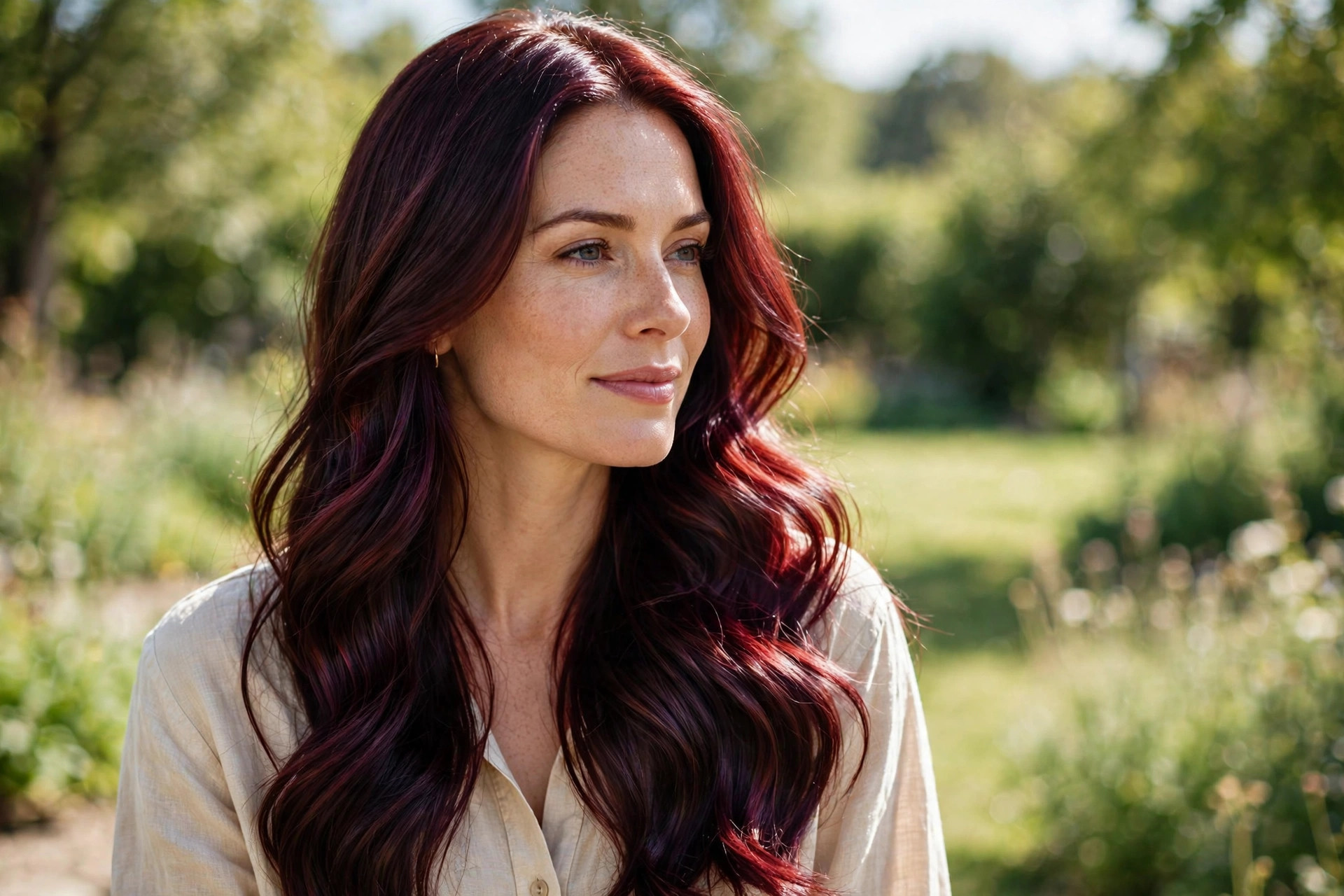
There is a hair color all over your feed that looks like dark cherry soda poured over brunette – deep, glossy brown with a red-violet glow that shows up in sunlight and looks almost black indoors. That is cherry cola hair, and it has become one of the most requested brunette shades of the season because it gives dark hair visible dimension without going full red. If you are a brunette who wants richness and shine with an edge, this is your shade – and it is very achievable at home. This guide covers the exact formulas, the full step-by-step process, who the shade suits, and the maintenance routine that keeps the cherry glow alive.
Cherry cola hair is a red-violet brunette shade: a dark brown base (around level 4-5) infused with cherry-red and violet reflects that create a cola-like glow in the light. At home, achieve it with a permanent or demi-permanent dye in a dark red-violet brown shade (look for “cherry,” “burgundy,” or “red violet” on a level 4-5 base) and 10 or 20 volume developer, processing 30-40 minutes. It suits most brunettes without pre-lightening, flatters warm and neutral skin tones especially well, and needs color-safe care plus a red-depositing conditioner to fight the fast fade of red tones. Total at-home cost runs $20-40 for permanent color plus maintenance products, versus $120-200 at a salon.
What Is Cherry Cola Hair Color?
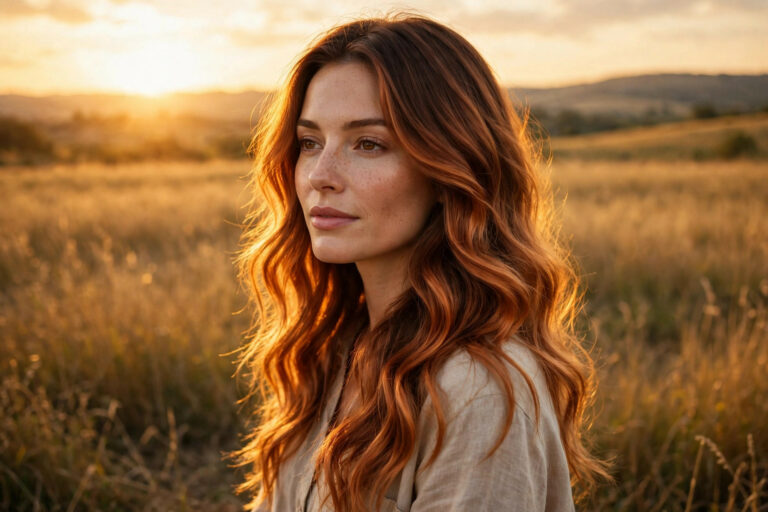
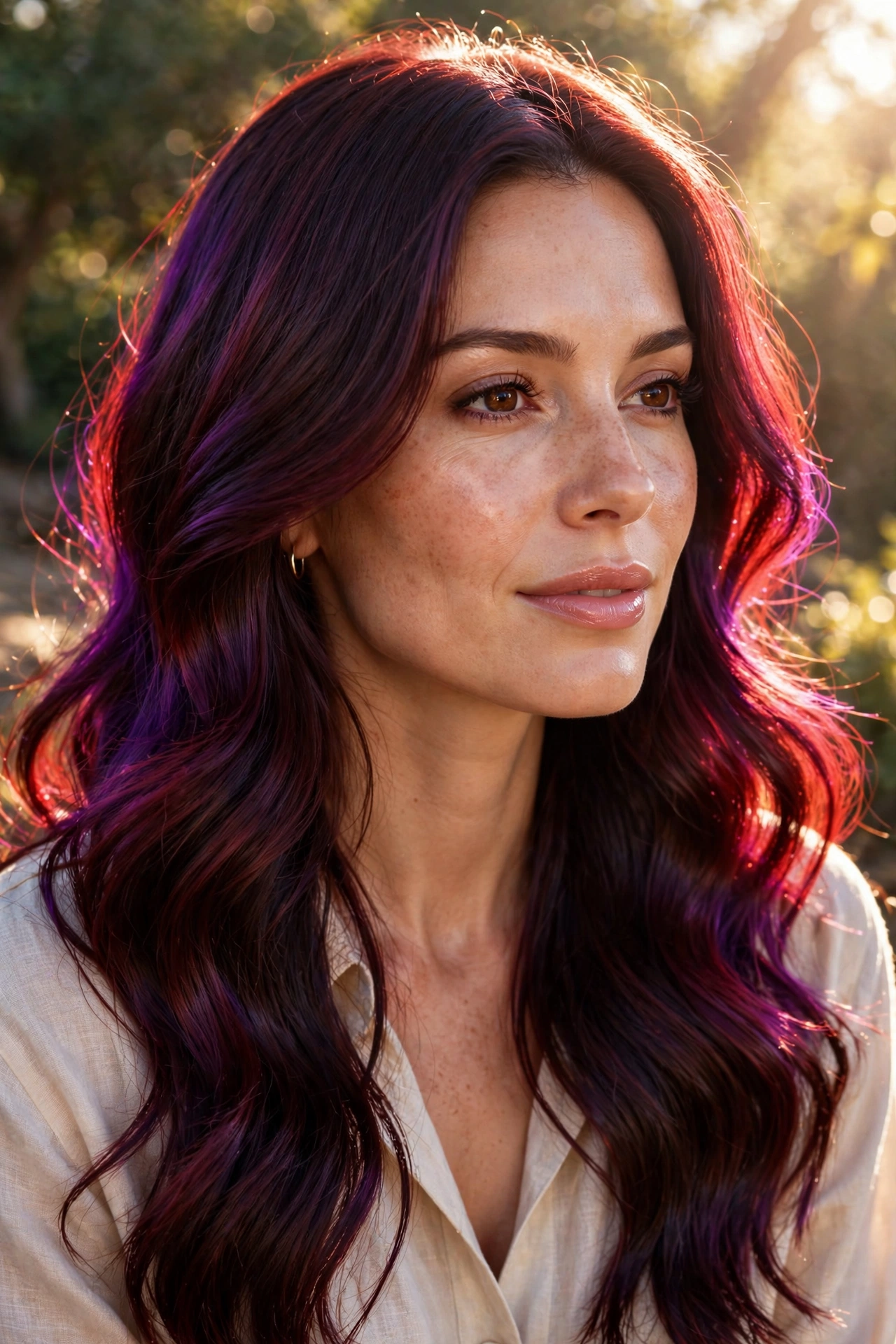
Cherry cola hair gets its name from the drink: dark, almost black at first glance, but glowing deep red when light hits it. Technically it is a level 4-5 brunette (dark brown) with strong red-violet reflects – the violet keeps it from going orange or brassy, which is what separates cherry cola from auburn or plain red-brown. Indoors it reads as a rich, expensive-looking dark brunette; in sunlight the cherry tones ignite. That dual personality is the whole appeal.
The trend has serious momentum. Pinterest’s autumn 2026 beauty trend report found searches for “cherry cola brunette hair” up 788 percent, putting it among the fastest-growing hair color searches alongside mocha balayage and soft copper blonde (reported in Pinterest’s autumn beauty trend report). It sits in a broader movement toward richer, more dimensional brunettes – color that looks like an upgrade to your natural hair rather than a departure from it. Unlike bright coppers or fashion reds, cherry cola works in conservative offices and on camera, which is why its audience is so broad.
Part of the appeal is the commitment level. Cherry cola asks less of you than almost any other trend shade: no bleaching for most brunettes, regrowth that blends softly because the base stays dark, and a fade path that simply returns you to brown rather than to an awkward in-between stage. It is the rare trend color you can try for the holidays and quietly grow out by spring with no correction appointment. That low-risk profile is exactly why it has crossed from trend-chasers to mainstream – it is a way to participate in the red-hair moment without the maintenance contract that copper demands.
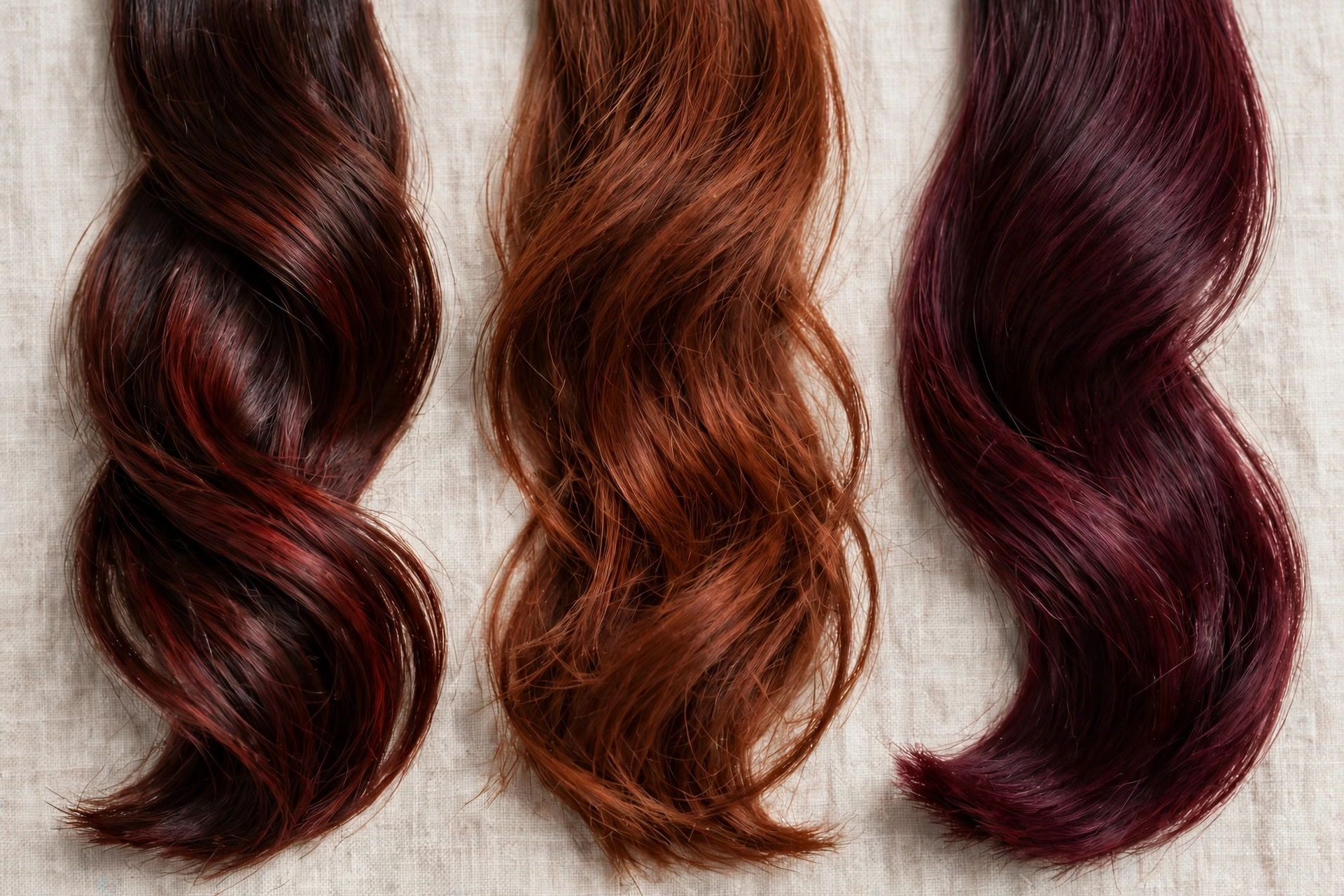
Do not confuse cherry cola with its neighbors. Auburn is red-brown without the violet depth and reads warmer and lighter. Burgundy or wine hair is more purple and more obviously fashion-colored. Black cherry (the nail shade’s cousin) is darker with less visible red. Cherry cola’s signature is balance: dark enough to be low-commitment, red enough to be interesting, violet enough to stay cool-toned rather than brassy.
If you are deciding between brown shades generally, our brown vs. brunette hair guide sorts out the terminology so you can describe exactly what you want.
Who Does Cherry Cola Hair Suit?
Cherry cola is unusually democratic for a trend shade. It suits natural brunettes best because the dark base is already there – you are adding tone, not fighting your starting level, which means less damage and more predictable results. Natural level 3-5 hair (dark brown to medium brown) is the ideal canvas. Darker, near-black hair (level 2-3) can take cherry cola with 20 volume developer, though the red will be subtler. Previously colored dark hair works too, as long as it is not black box dye, which blocks new color from showing.
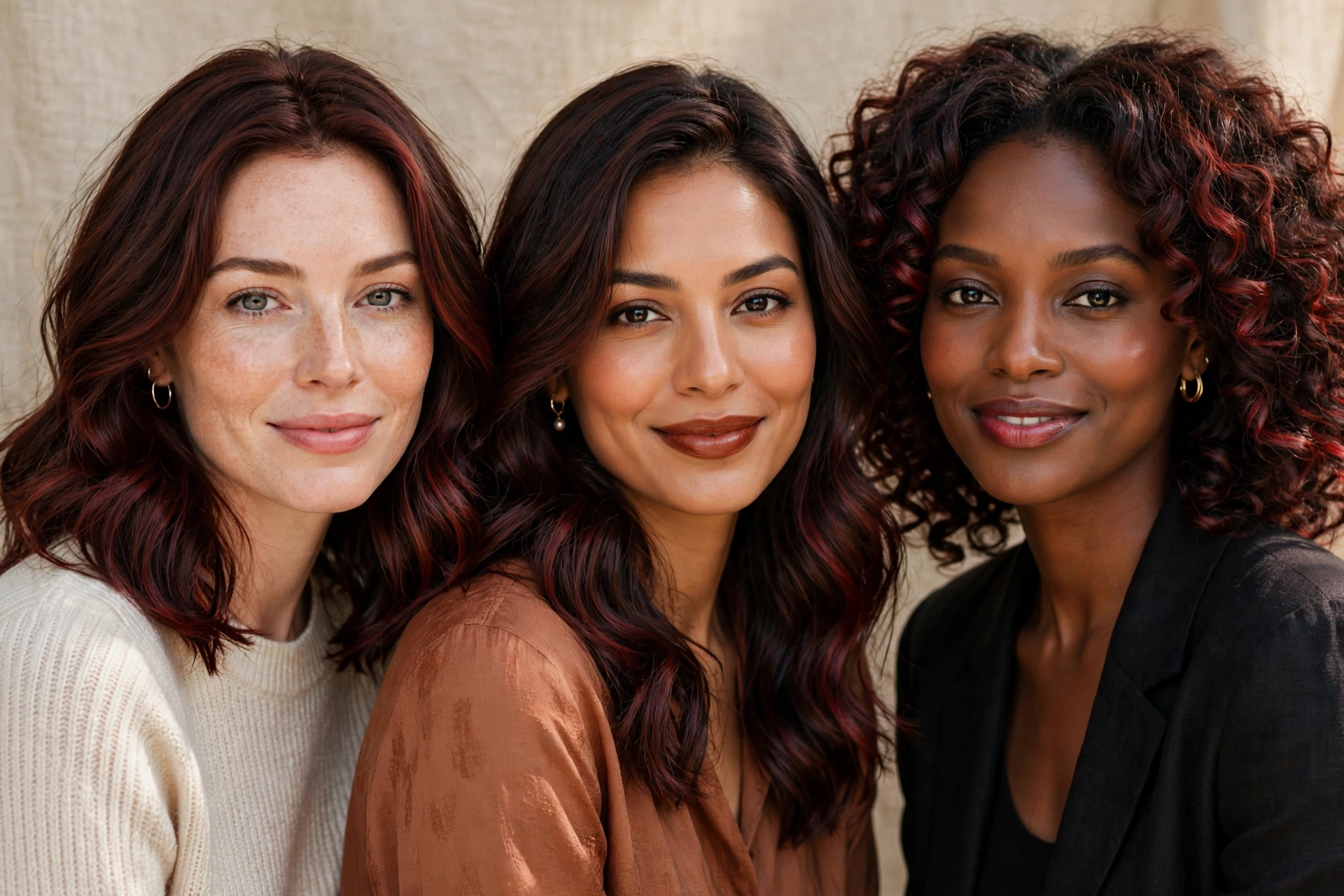
Skin tone matching is forgiving here. Warm and neutral undertones glow with cherry cola – the red-violet reflects echo the warmth in the skin. Cool undertones can wear it well too, because the violet in the formula keeps the shade from clashing; choose a version with stronger violet and less orange-red reflect if you are cool-toned. Fair skin gets a striking Snow-White-style contrast that looks dramatic and beautiful; medium and deep skin tones get richness and warmth that photographs gorgeously. Green and hazel eyes pop against the red tones, while brown eyes gain depth and warmth.
The shade is less ideal in two cases. If your hair is currently bleached blonde (level 8+), cherry cola will grab very dark and flat unless you fill the hair first with a warm protein filler – blonde-to-dark-red transitions need that intermediate step or the result looks muddy. And if you have more than 50 percent gray, cherry cola covers gray but the red fades from gray hair faster than from pigmented hair, so expect more frequent glossing. In both cases a strand test is non-negotiable: apply your formula to a hidden section, process fully, and evaluate in daylight before committing your whole head.
Hair length and texture play a supporting role. Long hair shows cherry cola’s dimension best – the length gives light more surface to play across, and the color gradient from roots to ends reads clearly. On very short pixie cuts, cherry cola still works but reads as a single rich tone rather than a dimensional shade; adding a slightly lighter cherry gloss on top layers restores some dimension. Curly and coily hair shows the color beautifully because each curl catches light differently, but porous curls grab red dye fast – process 5 minutes less than the box says and check early. Fine, straight hair gets the glossiest, most reflective result, which is ideal for this shine-dependent shade.
What Formula Do You Need for Cherry Cola Hair?
The formula is simpler than copper because you are usually not lifting – just depositing tone onto a dark base. For professional tube color, look for shades labeled 4/5 (light brown red-violet), 4/6 or 5/6 (red-violet reflects), 5/56 or 4/56 (red-violet intensified), or brand equivalents like “dark cherry,” “black cherry,” “burgundy brown,” or “red violet brown.” The key numbers: depth at level 4-5, with both red (5) and violet (6) reflects present. A formula with only red reflect and no violet will pull brassy-orange on brunette hair – the violet is what keeps cherry cola cool and cola-like.
Developer choice: 10 volume when your hair is already at level 4-5 and you only need to deposit tone – this is the gentlest option and the right pick for refreshing faded cherry cola. 20 volume when you need slight lift plus deposit, such as taking level 3 hair to cherry cola or covering resistant gray. Do not use 30 volume for this shade; the extra lift pushes the color toward orange-red and away from the deep cola effect, plus it adds unnecessary damage. Mix at the ratio specified on your tube, typically 1:1.
For box dye, choose a shade labeled cherry, black cherry, burgundy, or “dark red brown” in a level 4-5 depth – and buy one level lighter than you think you want if your hair is porous or previously colored, since box dye processes darker. Demi-permanent formulas (no ammonia, 10 volume or lower) are excellent for cherry cola refreshes and for first-timers who want to test the shade with less commitment; demi lasts 4-6 weeks and fades gracefully rather than leaving a harsh regrowth line. If your hair is currently a lighter brown and you want to go cherry cola, fill first: apply a red protein filler or a demi-permanent copper for 15 minutes, rinse, then apply the cherry cola formula – this prevents the hollow, flat result that happens when dark red goes over light hair without a warm foundation.
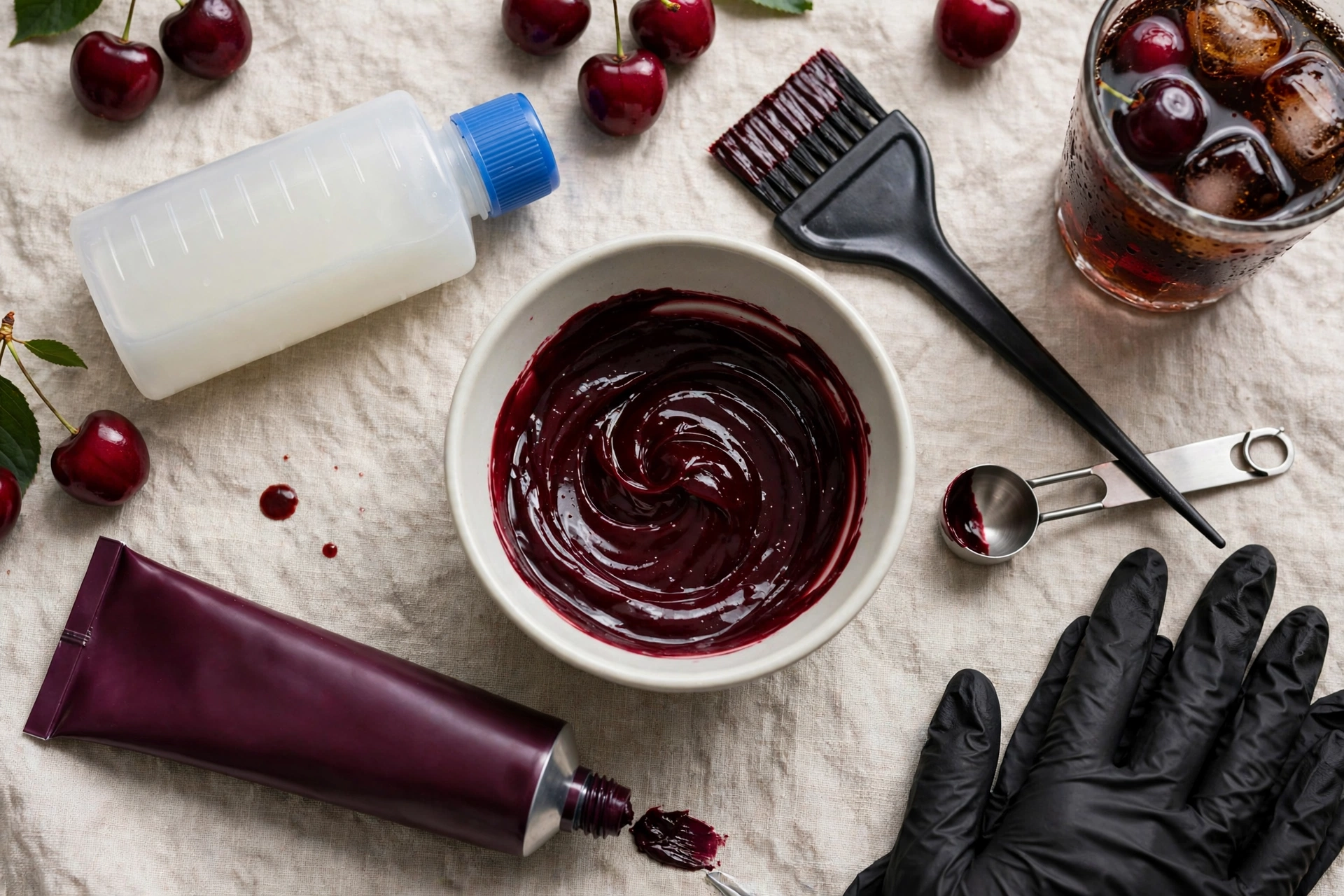
How Do You Dye Cherry Cola Hair at Home? (Step-by-Step)
Cherry cola is one of the more forgiving at-home colors because the dark base hides minor unevenness. Budget 60-90 minutes total including prep and processing.
Step 1: Prep
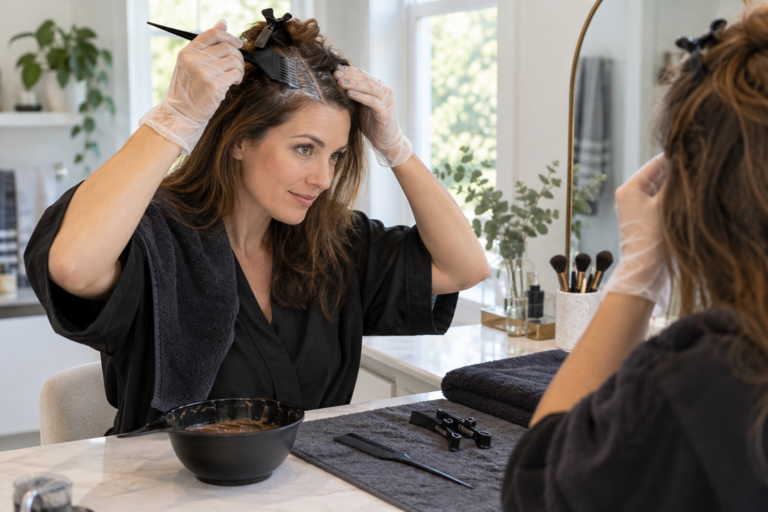
Do not wash for 24-48 hours before coloring. Detangle, divide into four sections with clips, apply barrier cream along the hairline and ears, and put on gloves and an old shirt. Cherry cola dye stains skin, counters, and towels aggressively – lay down old towels on every surface and keep a damp cloth handy for drips. Mix your color and developer in a bowl (not the bottle, so you can see the consistency) and set a timer.
Step 2: Strand test
Non-negotiable for red-violet shades. Apply mixed formula to a quarter-inch hidden section, process the full time, rinse, and dry. Evaluate in daylight: too dark means choose a level lighter or process 5 minutes less; too bright or orange means you need more violet in the formula. The strand test takes 45 minutes and saves you from weeks of regret. Test behind your ear or at the nape where hair is most representative of your overall texture – the fine hair at your temples processes differently and gives a misleading result.
Step 3: Apply roots to ends
Unlike lightening, cherry cola applies roots to ends in one pass on previously colored or virgin dark hair – the color is depositing, not lifting, so hot roots are less of a risk. Start at the back sections, work in quarter-inch subsections, and saturate generously; red-violet pigments need full saturation for even tone. If you are refreshing faded cherry cola, apply to regrowth first, wait 20 minutes, then pull through the lengths for the final 10-15 minutes to avoid over-darkening the ends. Use the tint brush to push color into the hair rather than just painting the surface – saturation is what prevents the patchy, uneven red that marks a rushed application. Check your hairline and part line twice; these high-visibility areas show missed spots immediately on dark red shades.
Step 4: Process 30-40 minutes
Cover with a plastic cap to keep the color moist and processing evenly. Check at 30 minutes by wiping a small section – cherry cola should look slightly darker wet than your target, since it lightens a touch as it dries and over the first washes. Do not exceed 45 minutes; extra time darkens without adding vibrancy. For demi-permanent refresh formulas, 20-25 minutes is usually enough. If your bathroom is cold, processing slows down – a warm (not hot) room gives the most predictable timing, and sitting under a hooded dryer on low for the last 10 minutes can help stubborn gray coverage.
Step 5: Rinse and seal
Rinse with lukewarm water until it runs mostly clear – the first rinse will look alarmingly red in the water, which is normal. Shampoo once with sulfate-free color-safe shampoo, then deep condition for 5-10 minutes. Finish with a cool rinse. Do not shampoo again for 48 hours to let the color fully settle.
Expect the first 2-3 washes to release extra color; wash dark loads separately for the first week to avoid staining light fabrics and towels.
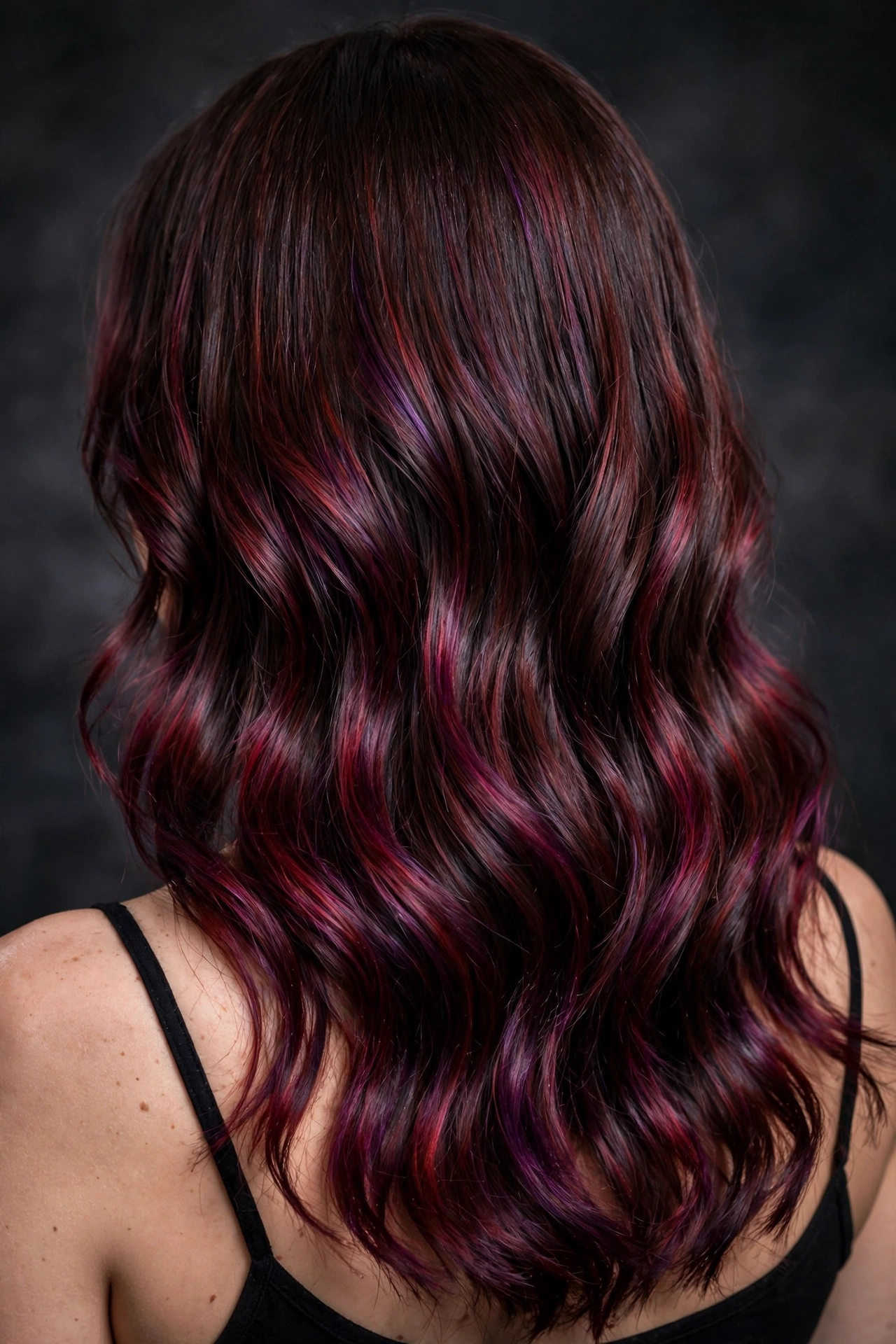
How Do You Keep Cherry Cola Hair From Fading?
Red tones fade faster than any other color family because red pigment molecules are larger and less stable in the hair shaft – this is well documented in hair color science, and WebMD’s colored hair protection guide specifically notes that reds need the most diligent maintenance routine. Cherry cola’s violet tones fade first (usually within 2 weeks), leaving the red, which then softens toward brown over 4-6 weeks. Your maintenance goal is to keep replacing the violet-red tone faster than it washes out.
The routine: wash 2-3 times per week maximum with lukewarm water and sulfate-free, color-safe shampoo. Use a red or burgundy color-depositing conditioner once a week – this is the highest-impact product for cherry cola, replacing faded tone with every use. Refresh with a demi-permanent cherry or red-violet gloss every 4-6 weeks; this takes 20 minutes at home and restores the cola glow without the commitment of permanent color. Protect from sun with a UV spray or hat, since UV breaks down red pigments rapidly, and wet hair with clean water plus leave-in conditioner before swimming to block chlorine.
Heat discipline matters more for reds than for browns: keep hot tools at or below 350 F (175 C), always use heat protectant, and air-dry when possible. Deep condition weekly to keep cuticles sealed – porous, damaged cuticles leak red pigment in days. Our guide to how long hair color lasts compares fade timelines across shades so you can see exactly where cherry cola sits. Plan root touch-ups every 4-6 weeks, applying to regrowth only and pulling through for the last 10 minutes.
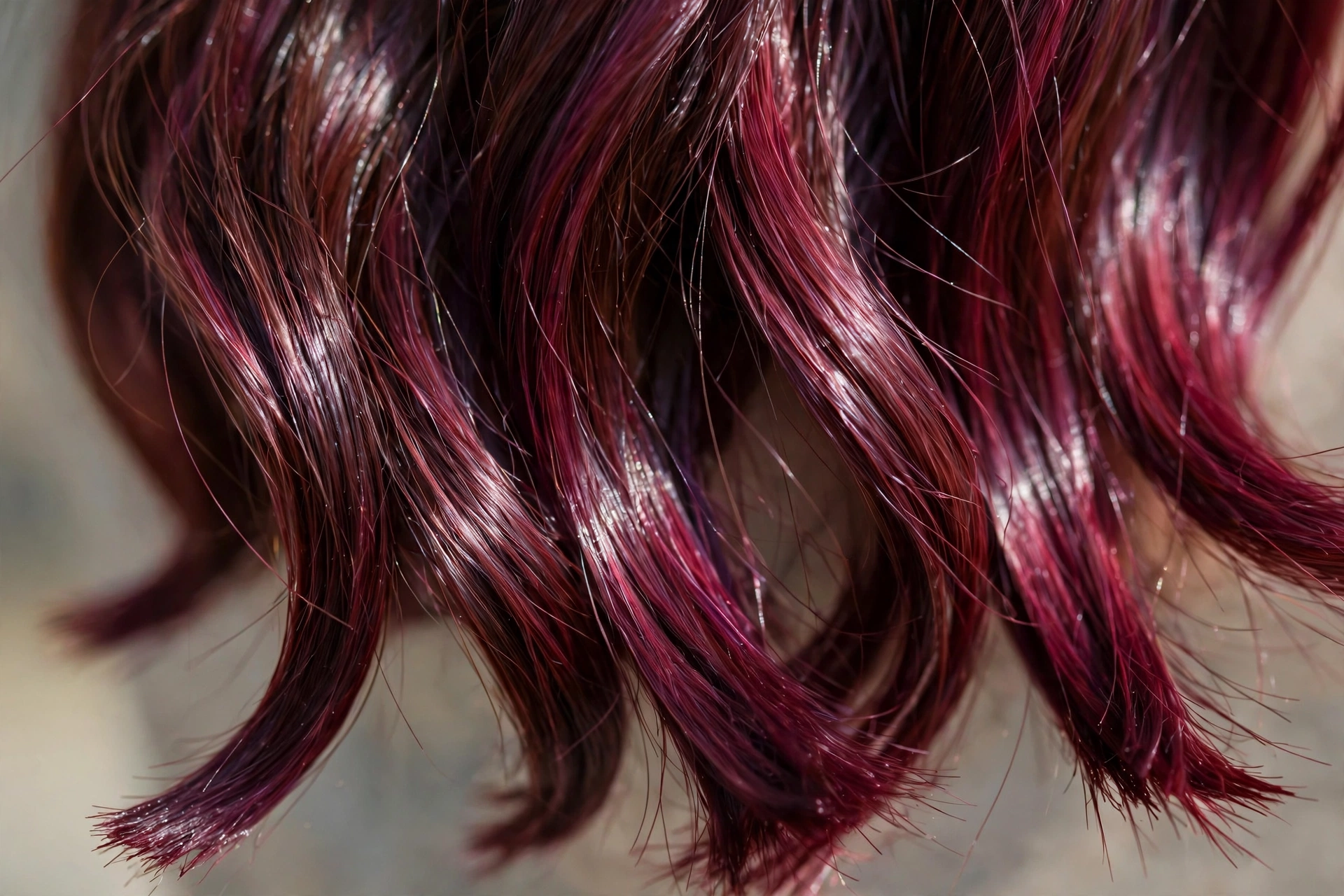
With consistent maintenance, cherry cola stays rich for the full cycle; without it, you will be back to plain brown in a month.
For the general at-home coloring techniques that apply beyond this shade – sectioning, timing, and troubleshooting – our complete guide to coloring your hair at home is the companion read. And if the color goes wrong, do not re-dye immediately: too dark will fade with clarifying washes over a week, too bright can be toned with a deeper violet-brown demi, and uneven sections can be spot-treated. Patience fixes most cherry cola problems better than more chemicals.
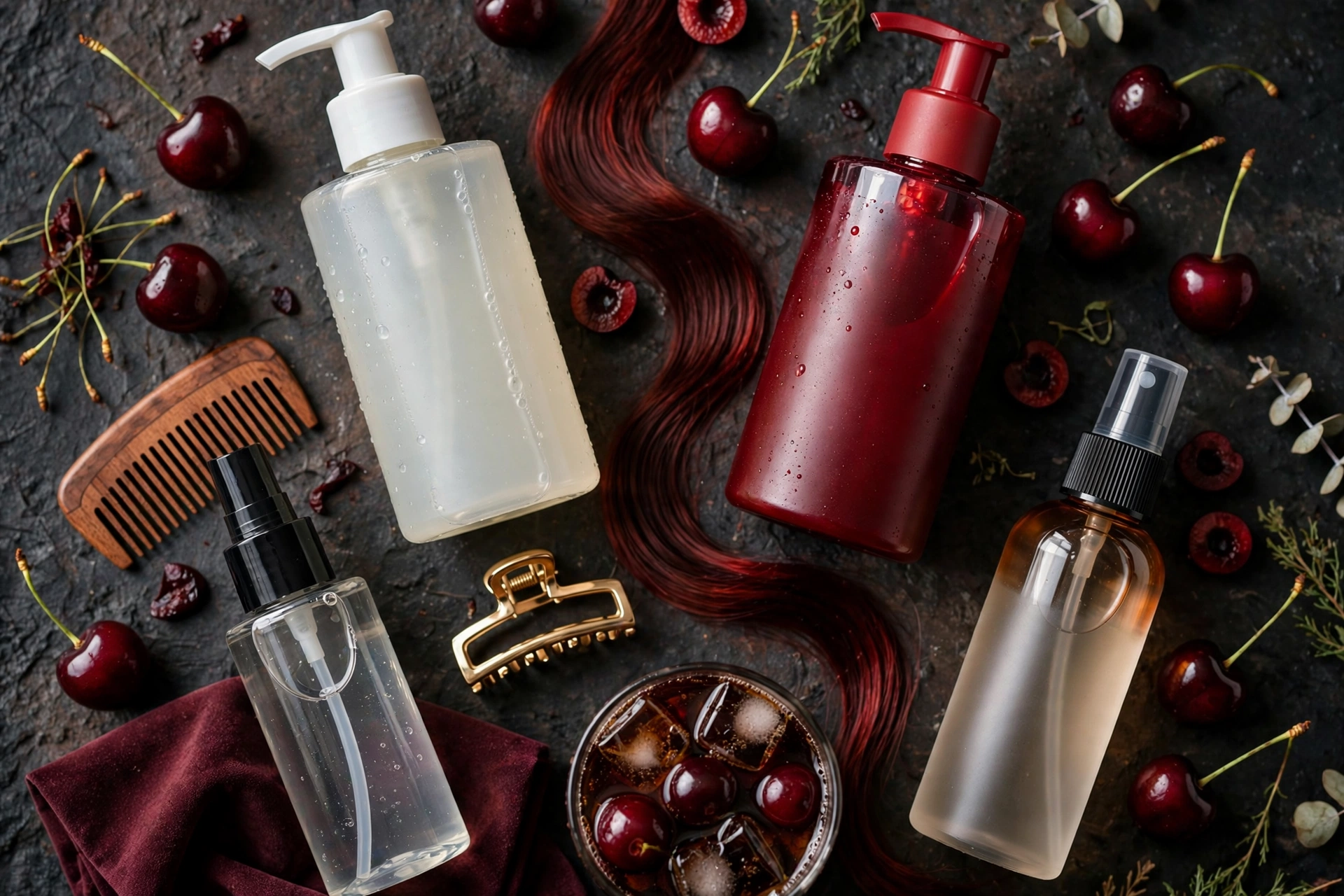
How Do You Style Cherry Cola Hair to Show Off the Color?
Cherry cola’s magic is light-reactive, so styling choices determine how much of the red-violet dimension people actually see. Shine is everything: the glossier your hair, the more the cherry tones read. A smoothing blowout with a round brush is the single best style for this color – the aligned cuticles reflect light evenly and the red glows. Use a heat protectant, blow-dry in sections with the nozzle pointing down the hair shaft, and finish with a lightweight shine serum on the mid-lengths and ends. Avoid heavy oils, which can dull the reflect.
Waves and curls create beautiful dimension because each curve catches light differently, making the cherry tones flicker through the brown base. Loose waves with a 1.25-inch curling iron, brushed out for softness, show off cherry cola better than tight curls. For straight styles, a flat iron pass at 350 F or below gives the glass-like finish that makes the color look expensive. Updos are surprisingly flattering too – a sleek low bun or polished ponytail concentrates the color into a glossy mass where the red-violet depth reads clearly, and twisting sections before pinning creates ridges that catch the light.
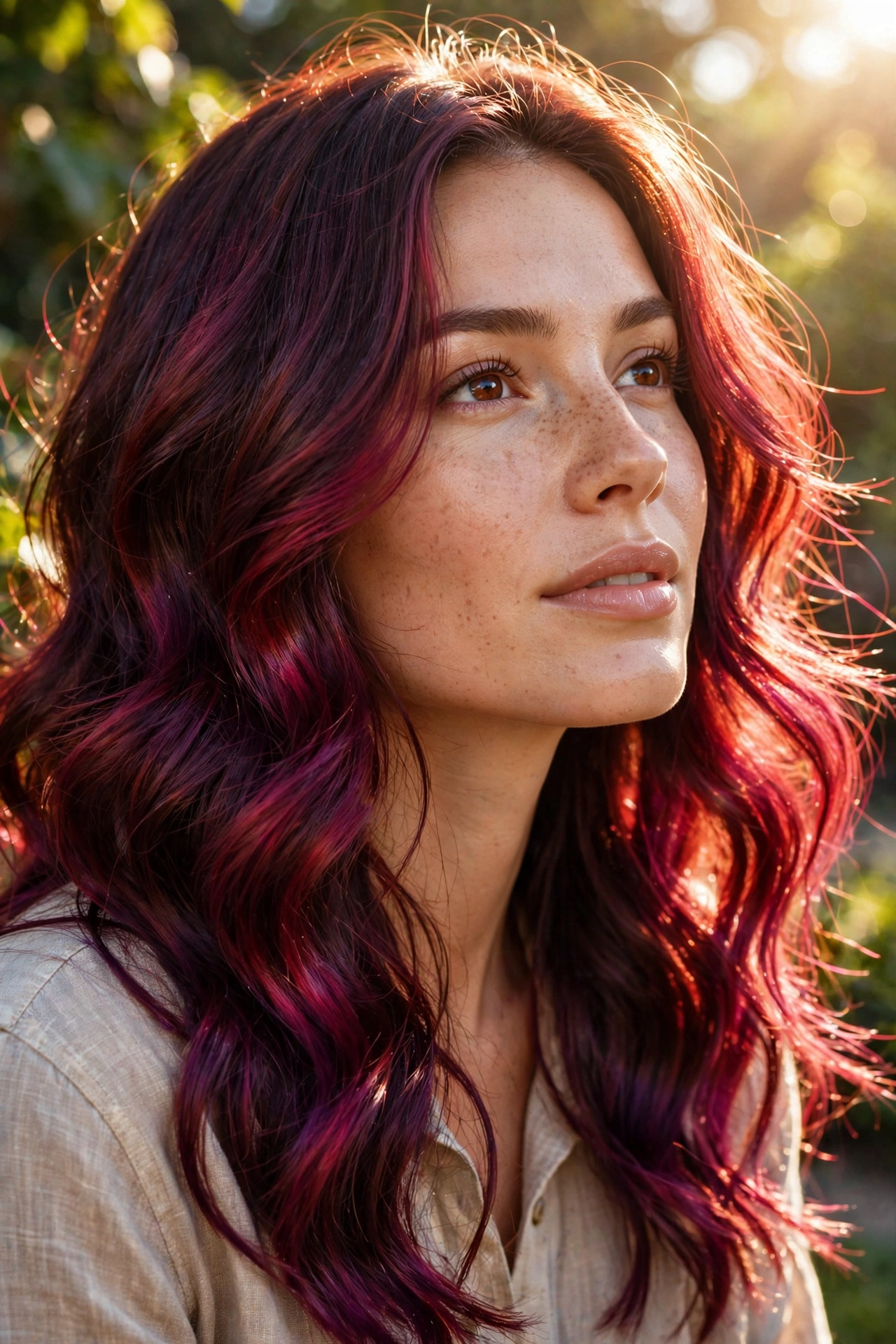
Color placement also affects styling payoff. If your cherry cola is all-over color, layers and face-framing pieces show the most dimension because shorter pieces catch more light. If you have cherry cola balayage or highlights over a darker base, wear hair down or half-up to display the contrast – tight updos hide the placement you paid for. A side part generally shows more dimension than a center part on this shade, because it creates overlapping layers of hair that catch light at different angles. And whatever the style, a weekly gloss or shine spray in the two weeks before an event gives you peak color for photos.
What to avoid: matte texturizing products and dry shampoos used heavily at the roots both mute the cherry reflect – use them sparingly and brush through thoroughly. Chlorine-green tint is the enemy of red-violet tones, so the swim precautions from the maintenance section matter doubly before beach vacations. And skip purple shampoo entirely – it is designed to neutralize warm tones in blonde hair and will actively dull your cherry cola.
What Should You Ask for at the Salon?
If you would rather have a professional establish your cherry cola, walk in with precise language and reference photos. Ask for “a level 4-5 brunette with red-violet reflects – cherry cola, not auburn, with visible violet depth.” The critical distinction to state out loud is violet: tell your colorist you want the shade to stay cool-toned and cola-like, not warm or brassy, because many stylists default to warmer reds unless directed otherwise. Bring 3-4 photos showing the color in both indoor and outdoor lighting, since cherry cola looks dramatically different between the two.
Ask about the formula approach: single-process permanent color for virgin or previously colored dark hair, or a demi-permanent gloss if you are testing the shade. If you have highlights or balayage you want to keep, ask for a “cherry cola gloss over existing dimension” rather than all-over color – the colorist can tone your lighter pieces cherry while deepening the base, preserving dimension. Ask how many levels of lift (if any) they plan and what developer volume they will use; for cherry cola on dark hair the answer should be 10 or 20 volume, and anything higher deserves a question about why.
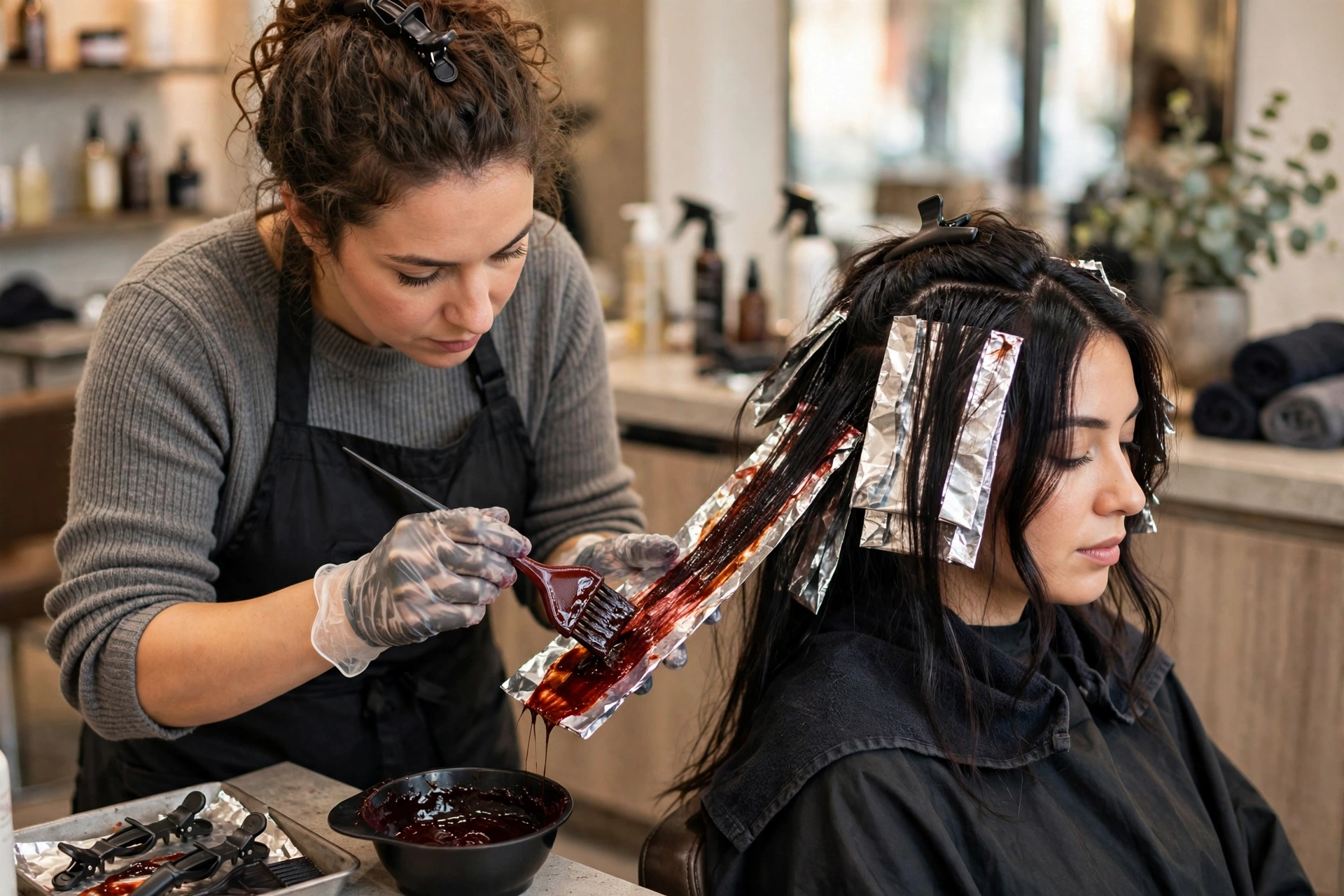
Discuss maintenance before you leave the chair: how often to return (expect 6-8 weeks), whether they recommend a take-home gloss or color-depositing conditioner, and what the refresh appointments cost versus full color. A good colorist will also warn you about the fade timeline honestly – if they promise the cherry will stay vivid for three months with no maintenance, find another colorist. Budget $120-200 for single-process cherry cola at a mid-range salon, more for corrective work or balayage placement. Many people do one salon session to establish perfect cherry cola, then maintain it at home with demi-permanent glosses – the best of both worlds for both quality and cost.
Frequently Asked Questions
1. What level is cherry cola hair color?
Cherry cola sits at level 4-5 (dark brown to medium-dark brown) with red-violet reflects. It is darker than auburn and redder than plain dark brown. The violet component is essential – without it, the shade pulls brassy instead of cola-like. When buying color, look for depth numbers 4 or 5 combined with red-violet reflects (often coded 5, 6, or 56 depending on the brand). If a shade is labeled only “dark red” or “burgundy” without a level number, check the box’s before-and-after chart to confirm it targets dark brown hair rather than blonde. Getting the depth right matters more than the exact reflect name – a level 4 red-violet will always look more like cherry cola than a level 6 cherry red.
2. Do I need to bleach my hair for cherry cola?
No, in most cases. Cherry cola is designed for dark hair – natural brunettes at level 3-5 achieve it with 10 or 20 volume developer and no bleach. Bleaching is only needed if your hair is black box-dyed (which blocks new color) or if you want a brighter, more vivid cherry than the deep cola version. This is one reason cherry cola is less damaging than copper or blonde transformations. If your hair is virgin dark brown, you are the ideal candidate – one process, minimal damage, maximum payoff.
3. How long does cherry cola hair color last?
The dark brown base lasts 6-8 weeks, but the cherry-violet tone visibly fades within 2-4 weeks without maintenance. With a red-depositing conditioner used weekly and a demi-permanent gloss refresh every 4-6 weeks, the cola glow lasts the full 6-8 weeks between permanent touch-ups. Without maintenance, expect it to soften to a plain dark brown within a month. The violet tones always fade first, so if your color starts looking more red-orange than cola-deep, that is your signal to gloss.
4. Will cherry cola hair suit warm skin tones?
Yes, beautifully – warm and neutral undertones are the best match for cherry cola, since the red-violet reflects harmonize with warmth in the skin. Cool undertones can wear it too by choosing a formula with stronger violet and less orange-red. Fair skin gets dramatic contrast, while medium and deep skin tones get gorgeous richness and warmth from the shade. If you are unsure about your undertone, the vein test takes thirty seconds: greenish veins mean warm, bluish-purple means cool, and a mix means neutral.
5. What is the difference between cherry cola and black cherry hair?
Cherry cola is a dark brown with visible red-violet glow in the light – the brown base is clearly brown. Black cherry is darker, closer to black, with the red only revealing itself in direct light. Cherry cola is more wearable daily and more obviously colored; black cherry is subtler and moodier. Both use red-violet reflects, just at different depths. If you work in a conservative office, black cherry is the safer pick; if you want the color to read clearly in photos and daylight, cherry cola delivers more impact.
6. Can I get cherry cola hair with box dye?
Yes – box dyes in “black cherry,” “burgundy,” or “dark red brown” shades produce a good cherry cola on natural dark hair. Choose a shade one level lighter than your target if your hair is porous or previously colored, since box dye processes darker than shown. For more control over the exact red-violet balance and gentler processing, professional tube color with 10 volume developer is the upgrade pick. Whichever you use, do the strand test first – box dye results vary more by starting color than any other dye type. Buy two boxes if your hair is past shoulder length or very thick; running out mid-application is the most common cause of patchy box-dye results.
7. Why does my cherry cola look orange instead of deep red?
Orange means the formula lacked enough violet, or the developer lifted too much natural warmth. Fix it by toning with a demi-permanent red-violet or burgundy shade for 15-20 minutes, which deposits the missing violet. Next time, choose a formula with violet reflects (coded 6 or 56) and drop to 10 volume developer if your hair is already at the right depth. Sun exposure can also push cherry cola toward orange over time as the violet fades first – a UV-protectant spray slows this, and a violet-toned gloss every month keeps the cola depth intact.
8. How often should I touch up cherry cola roots?
Every 4-6 weeks for the permanent color, applying to regrowth only and pulling through the lengths for the last 10 minutes to refresh without over-darkening. Between touch-ups, a demi-permanent cherry gloss every 4-6 weeks keeps the tone vivid. The dark base makes regrowth less obvious than with blonde or copper, so you have slightly more flexibility on timing – stretching to 7-8 weeks is fine if you keep up the glossing routine.
9. Does cherry cola hair damage your hair?
Less than most trend colors, because it typically uses 10-20 volume developer with no bleaching on already-dark hair. The main damage risks are overlapping permanent color onto previously colored lengths during touch-ups and over-processing past 45 minutes. Use demi-permanent formulas for refreshes, deep condition weekly, and the damage stays minimal – comparable to any routine dark brown coloring. If your hair is already compromised from bleaching, do a protein-moisture balancing treatment routine for two weeks before applying cherry cola, and consider a demi-permanent formula for the first application. When in doubt, the gentlest path is always the right one – you can deepen or intensify later, but you cannot undo damage quickly.
10. What makeup looks best with cherry cola hair?
Cherry cola pairs beautifully with warm neutrals: bronze eyeshadow, warm blush, and berry or brick-red lips echo the hair’s tones. For evening, a smoky eye with a nude lip lets the hair be the color story. Avoid cool-toned pinks right against the face, which can clash with the warmth – and matching your lipstick to the cherry tone (a deep berry) creates a polished, intentional look for events. Gold jewelry harmonizes better than silver with this shade, picking up the warm reflects in the hair.