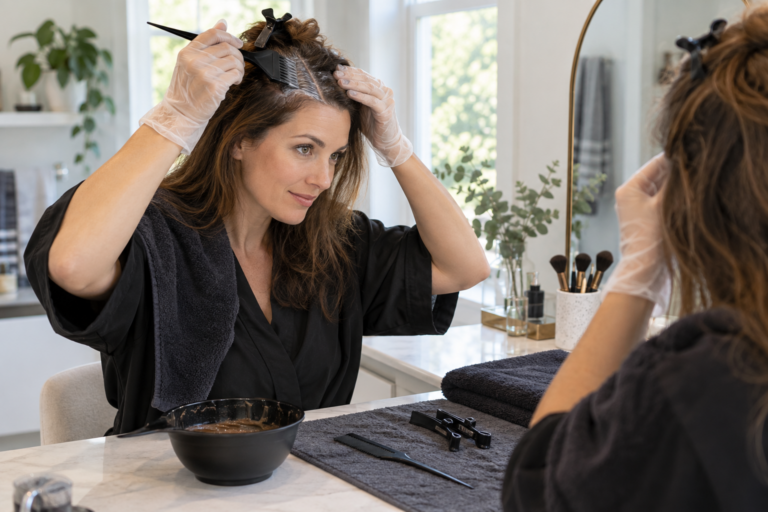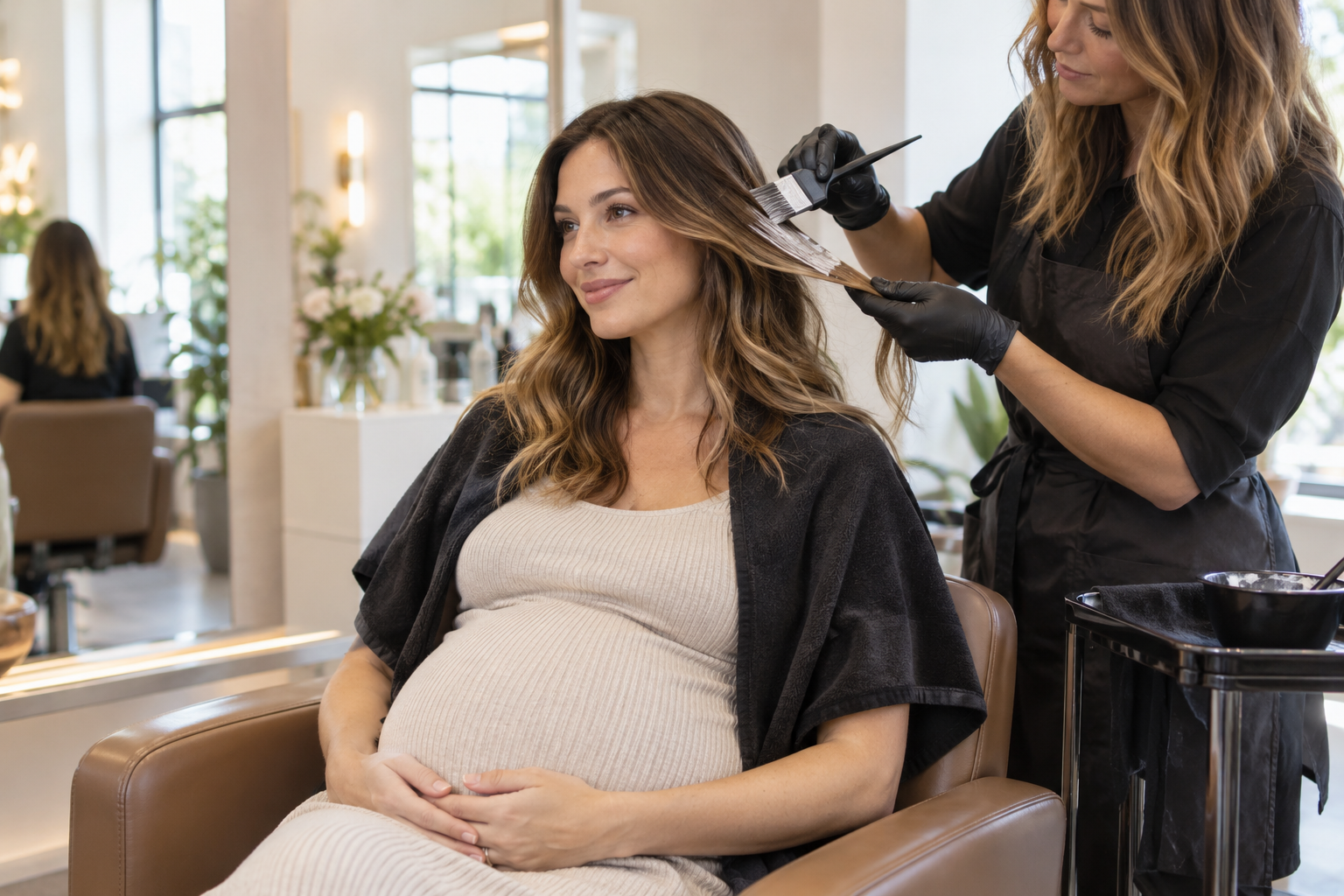
Can You Color Your Hair While Pregnant or Breastfeeding? Safety Guide
Pregnancy changes plenty of everyday routines, and hair color is one of those surprisingly complicated questions. A salon appointment that once required little thought can suddenly raise concerns about permanent dye, bleach, ammonia, scalp absorption, fumes, and whether waiting a few months would be wiser.
Breastfeeding brings a similar set of questions. If color chemicals touch the scalp, can they reach breast milk? Is balayage safer than a root touch-up? Should you switch to semi-permanent color or simply postpone everything until later?
For most people, occasional hair coloring during pregnancy or breastfeeding is generally considered low exposure when products are used correctly on healthy skin. Research specifically involving pregnant people is limited, so many expectant parents still prefer a cautious approach, especially during the earliest part of pregnancy.
The most useful way to think about hair color during this stage is not simply “safe” versus “unsafe.” The type of service, how much product touches the scalp, ventilation, scalp condition, application time, and how often you color your hair all affect the level of exposure.
Can You Color Your Hair While Pregnant?

For most pregnant people, occasional hair coloring is generally considered unlikely to create significant exposure because relatively little dye is absorbed through healthy, intact scalp skin. Some people still choose to delay coloring until after the first trimester as an extra precaution, particularly if they are uncomfortable with any avoidable chemical exposure early in pregnancy.
Permanent and semi-permanent hair dyes contain chemicals designed to penetrate or coat the hair shaft. Depending on the formula and service, these may include oxidative dyes, hydrogen peroxide, alkalizing ingredients such as ammonia or alternatives to ammonia, solvents, fragrances, and conditioning agents.
That ingredient list can sound alarming out of context. What matters is exposure.
A salon client having her roots colored every couple of months is not exposed in the same way as someone working with color, bleach, smoothing treatments, and other salon chemicals for many hours every week. During a standard color appointment, only a limited amount of product contacts the scalp, and the scalp absorbs relatively small amounts when its skin barrier is intact.
This is one reason highlights and balayage are often appealing during pregnancy. With these techniques, color or lightener can frequently be applied to the hair itself rather than directly across the scalp.
Pregnancy can also change how your hair behaves. Hair that previously lifted evenly may process differently. Some people notice increased dryness, oiliness, sensitivity, texture changes, or unpredictable color uptake.
A strand test is therefore useful even if you have used the same shade for years.
Is It Better to Wait Until After the First Trimester to Dye Your Hair?
Waiting until after the first trimester is a cautious option rather than a universal requirement. Available evidence has not established that correctly used hair dye causes pregnancy complications, but some people prefer to avoid unnecessary chemical exposure during the earliest stage of fetal development.
If maintaining your hair color is not urgent, postponing the appointment can provide peace of mind.
For someone who normally colors every four weeks, however, several months of regrowth may feel significant. In that situation, alternatives such as face-framing highlights, balayage, temporary root products, or a less scalp-intensive service can reduce direct contact while keeping the color looking intentional.
Your own medical history matters too. A person with a complicated pregnancy, severe asthma, significant chemical sensitivities, active dermatitis, or previous allergic reactions to hair dye should discuss elective chemical treatments with their healthcare professional.
Which Hair Coloring Methods Are Better Choices During Pregnancy?
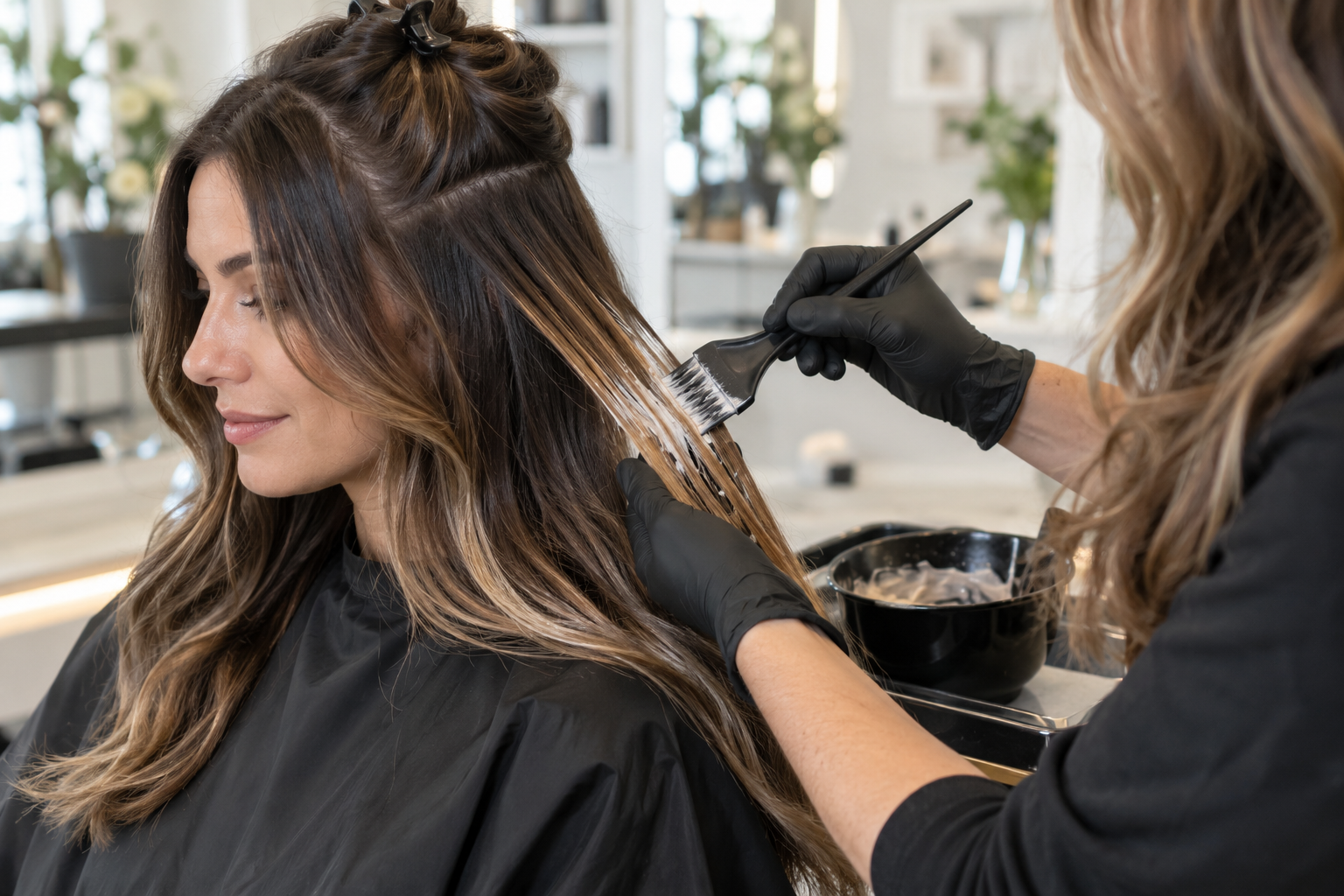
Hair coloring techniques that minimize scalp contact are generally the most conservative options during pregnancy. Highlights, balayage, foilyage, and certain lowlights can often place the color primarily on the hair shaft rather than directly against the skin, reducing the opportunity for ingredients to be absorbed through the scalp.
That does not automatically make every highlighting service gentle.
Lightening still involves oxidation, and bleach can be irritating. The advantage is primarily reduced scalp exposure when the application is performed off the scalp.
Balayage is particularly practical for someone who wants lower-maintenance color. Because the transition from natural hair to lighter sections is intentionally soft, regrowth is less obvious. You may be able to stretch appointments much longer than with an all-over blonde or permanent root color.
Highlights provide similar flexibility. A stylist can leave a small amount of natural hair near the scalp and brighten selected sections instead of saturating the entire root area.
Semi-permanent and demi-permanent colors are another option. They are often chosen for glossing, toning, refreshing faded color, adding depth, or temporarily darkening hair. Their formulas and chemistry vary, so “semi-permanent” should not automatically be interpreted as completely chemical-free.
Temporary color is the least committed approach. Color-depositing masks, sprays, powders, and similar products can disguise regrowth or refresh tone without a traditional permanent color process. Use them according to their directions and stop if they irritate your skin.
Is Ammonia-Free Hair Dye Safer During Pregnancy?
Ammonia-free hair dye may smell less harsh and can feel more comfortable for someone who is sensitive to salon fumes, but “ammonia-free” does not automatically mean pregnancy-safe or chemical-free. Permanent color still needs an alkalizing system to help the coloring process work, so alternative ingredients may be used instead.
The broader application routine matters more than focusing on a single ingredient.
A well-ventilated salon, healthy scalp, proper gloves, correct processing time, thorough rinsing, and limited unnecessary exposure are all practical considerations.
Pregnancy can also make strong smells difficult to tolerate. Someone dealing with nausea may find even familiar salon fragrances overwhelming. Booking near an open area, choosing a less busy appointment time, or asking the stylist about ventilation can make the experience much more comfortable.
How to Color Your Hair More Safely During Pregnancy
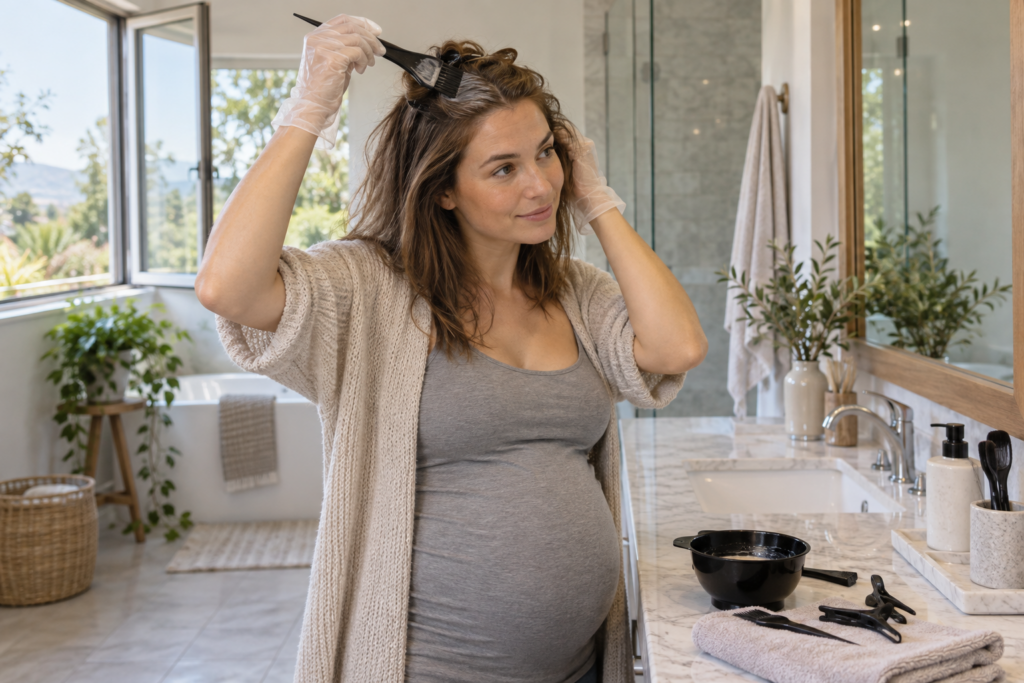
If you decide to color your hair while pregnant, a few practical precautions can reduce unnecessary exposure and make the appointment more comfortable.
Start with your scalp.
Do not apply dye over cuts, scratches, inflamed patches, severe dandruff irritation, sunburn, or active dermatitis. Damaged skin can allow greater absorption and is also more likely to sting or react.
If you are coloring at home, wear gloves throughout the application. Mix and use the product exactly as directed rather than improvising stronger mixtures or extending the processing time because you want a more dramatic result.
Use the shortest processing period appropriate for that particular formula and rinse thoroughly once processing is complete.
Ventilation deserves more attention during pregnancy. Open windows where practical, use an exhaust fan, or work in a spacious room rather than a small closed bathroom. At a salon, avoid sitting close to multiple chemical services if strong odors are making you feel sick.
A patch test is also sensible, following the product manufacturer’s instructions. Pregnancy does not necessarily cause hair-dye allergy, but skin sensitivity can change, and a product that was previously comfortable may not always feel the same.
A strand test answers a different question. It shows how your actual hair may react to the color. Pregnancy-related changes in texture, porosity, oil production, and previous color buildup can affect the final shade.
Do not mix different hair dye systems unless their instructions specifically allow it.
And do not assume that leaving permanent color on twice as long makes it work twice as well. It mainly increases unnecessary skin and chemical exposure while potentially damaging the hair.
Can You Bleach Your Hair While Pregnant?
Hair bleaching is generally approached similarly to other chemical coloring services: occasional use is thought to involve limited systemic exposure, particularly when the lightener does not touch the scalp. However, bleach is more irritating than many deposit-only color services and can significantly dry or weaken the hair.
Off-scalp techniques are therefore especially useful.
Balayage and foil highlights allow a stylist to lighten selected pieces without coating the entire scalp in lightener.
A full bleach-and-tone service is more demanding. It may involve direct scalp contact, repeated processing, stronger odor, greater hair damage, and longer time in the salon. Someone who wants to take a conservative approach during pregnancy may choose to postpone a major blonde transformation and maintain her current shade instead.
Hair condition should influence that decision too.
If pregnancy has left your hair unusually dry, fragile, or prone to breakage, aggressive lightening may create a disappointing result even if pregnancy exposure is not the main concern.
Can You Color Your Hair While Breastfeeding?

Hair coloring while breastfeeding is generally considered compatible with nursing because only small amounts of typical hair-color chemicals are expected to enter the bloodstream through healthy scalp skin. As a result, significant transfer into breast milk is considered unlikely when hair treatments are used normally.
You generally do not need to pump and discard breast milk simply because you have had your hair colored.
The bigger practical issues are skin exposure, fumes, allergic reactions, and safely managing the appointment while caring for a baby.
Rinse all color thoroughly from the scalp before prolonged close contact with your child, particularly if any residue remains around the hairline, neck, or ears.
Wash your hands after handling home color products.
Keep mixed dye, developer, lightener, bowls, brushes, gloves, and contaminated towels completely out of reach of children. This matters far more than many parents realize once babies begin grabbing nearby objects.
Ventilation is still worthwhile, especially if you are coloring at home with your baby elsewhere in the house. There is no benefit in exposing an infant to strong salon-type fumes while you are processing color.
A professional salon appointment can actually simplify this. The chemical handling happens away from the baby, the application is controlled, and the product is completely rinsed before you return home.
Can Hair Dye Chemicals Pass Into Breast Milk?
Only very small amounts of hair-color ingredients are expected to reach the bloodstream after normal application to healthy scalp skin, so substantial transfer into breast milk is considered unlikely. Evidence specifically studying hair dye during breastfeeding is limited, but current understanding does not suggest that routine hair coloring requires interruption of breastfeeding.
The distinction between occasional personal use and occupational exposure is important.
A breastfeeding parent who has her hair colored once every several weeks or months has a very different exposure pattern from a hairdresser handling chemical services throughout the workday.
For salon professionals, good ventilation, gloves, careful handling, covered containers where appropriate, and workplace safety procedures become especially important.
Hair Color Choices That Make Pregnancy and Postpartum Easier
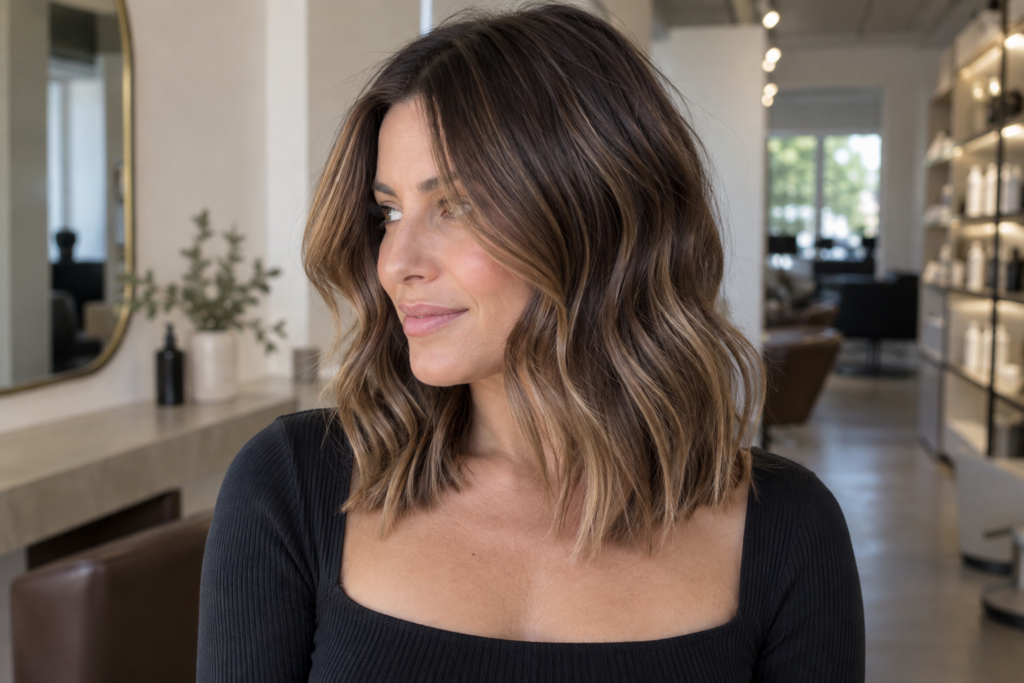
Pregnancy and the months after birth are often a good time to simplify a demanding color routine.
A high-maintenance shade can become frustrating quickly when appointments compete with prenatal visits, fatigue, newborn feeding schedules, and unpredictable sleep.
Root-heavy colors show regrowth fastest. Solid platinum blonde, very dark color over naturally light hair, or a permanent shade dramatically different from your natural level may require frequent upkeep.
Softer techniques are much easier to live with.
Balayage grows out gradually. Rooted blondes deliberately preserve depth near the scalp. Dimensional brunettes can combine natural roots with subtle ribbons of caramel, beige, chestnut, or mocha. Gloss treatments can refresh tone without completely recoloring every strand.
If you have gray hair, ask your stylist about blending rather than complete coverage. Fine highlights, lowlights, demi-permanent color, or strategically placed dimensional pieces can soften the contrast between gray and pigmented hair without creating such an obvious root line.
Postpartum hair changes are another reason to avoid making drastic decisions too quickly.
Many people notice significant shedding several months after giving birth. That shedding is related to the hair-growth cycle shifting after pregnancy rather than hair dye itself, but repeated bleaching, excessive heat styling, or aggressive chemical processing can make already-stressed lengths feel thinner or more fragile.
A trim, conditioning treatment, softer color placement, and lower-maintenance shade may be more useful at that stage than chasing a major transformation.
If you do want a dramatic new color after pregnancy, assess the condition of your hair first. Healthy hair will usually tolerate change better than strands already affected by dryness, breakage, or repeated lightening.
Frequently Asked Questions
Is Permanent Hair Dye Safe During Pregnancy?
Occasional use of permanent hair dye during pregnancy is generally considered low exposure when the product is used correctly on healthy scalp skin. Some pregnant people prefer to wait until after the first trimester or choose a technique with less scalp contact for additional caution.
Can I Dye My Hair at Home While Pregnant?
Yes, many people color their hair at home during pregnancy. Wear gloves, follow the instructions carefully, ventilate the room, avoid applying dye to irritated or broken skin, do not exceed the recommended processing time, and rinse the scalp thoroughly afterward.
Are Highlights Safer Than All-Over Hair Color During Pregnancy?
Highlights can reduce direct scalp exposure because the coloring or lightening product is usually applied to selected strands rather than rubbed across the entire scalp. Foil highlights and balayage are therefore popular options for people who want to take a more conservative approach.
Should I Tell My Hairdresser That I Am Pregnant?
Yes. Telling your stylist allows them to adjust the service if needed, improve ventilation, recommend lower-maintenance or off-scalp techniques, and perform appropriate patch or strand testing. It also helps them understand if nausea, sensitivity, or discomfort affects the appointment.
Can Pregnancy Change the Way Hair Dye Turns Out?
Yes. Hormonal and physical changes during pregnancy can affect hair texture, oiliness, dryness, porosity, and how evenly color processes. A familiar shade may behave differently, which is why a strand test can be worthwhile before committing to a full application.
Can I Use Henna While Pregnant or Breastfeeding?
Pure henna is often used as a plant-based coloring alternative, but not every product labeled henna contains only henna. Some mixtures contain additional dyes or additives. Read the ingredient list carefully and avoid unfamiliar products, especially so-called black henna formulations that may contain highly sensitizing ingredients.
Do I Need to Pump and Dump After Coloring My Hair?
Routine hair coloring does not generally require pumping and discarding breast milk. Normal scalp exposure is expected to result in only minimal absorption into the bloodstream, making meaningful transfer into breast milk unlikely.
Is It Safe to Work as a Hairdresser While Pregnant?
Many hairdressers continue working throughout pregnancy, but occupational exposure is different from having your own hair colored occasionally. Good ventilation, gloves, safe chemical handling, proper storage, workplace safety procedures, and reducing unnecessary skin contact are particularly important for professionals who work with hair chemicals repeatedly.