How to Style a Warrior Cut with Thick Hair
The warrior cut has become one of the more recognizable men’s hairstyles in recent years, and if you’ve got thick hair, you’re honestly working with one of the best possible starting points for it. This cut lives and dies on volume and texture, and thick hair naturally supplies both without much effort. The trick isn’t fighting your hair’s density. It’s cutting and styling around it correctly so all that natural body works in your favor instead of turning into an unmanageable, heavy mess on top.
This guide walks through what actually makes a warrior cut work on thick hair specifically, how to talk to your barber about texturizing and fade choice, the styling routine that keeps it looking intentional day to day, and a few variations that particularly suit thicker, denser hair types.
What Is a Warrior Cut, and Why Does Thick Hair Suit It So Well?
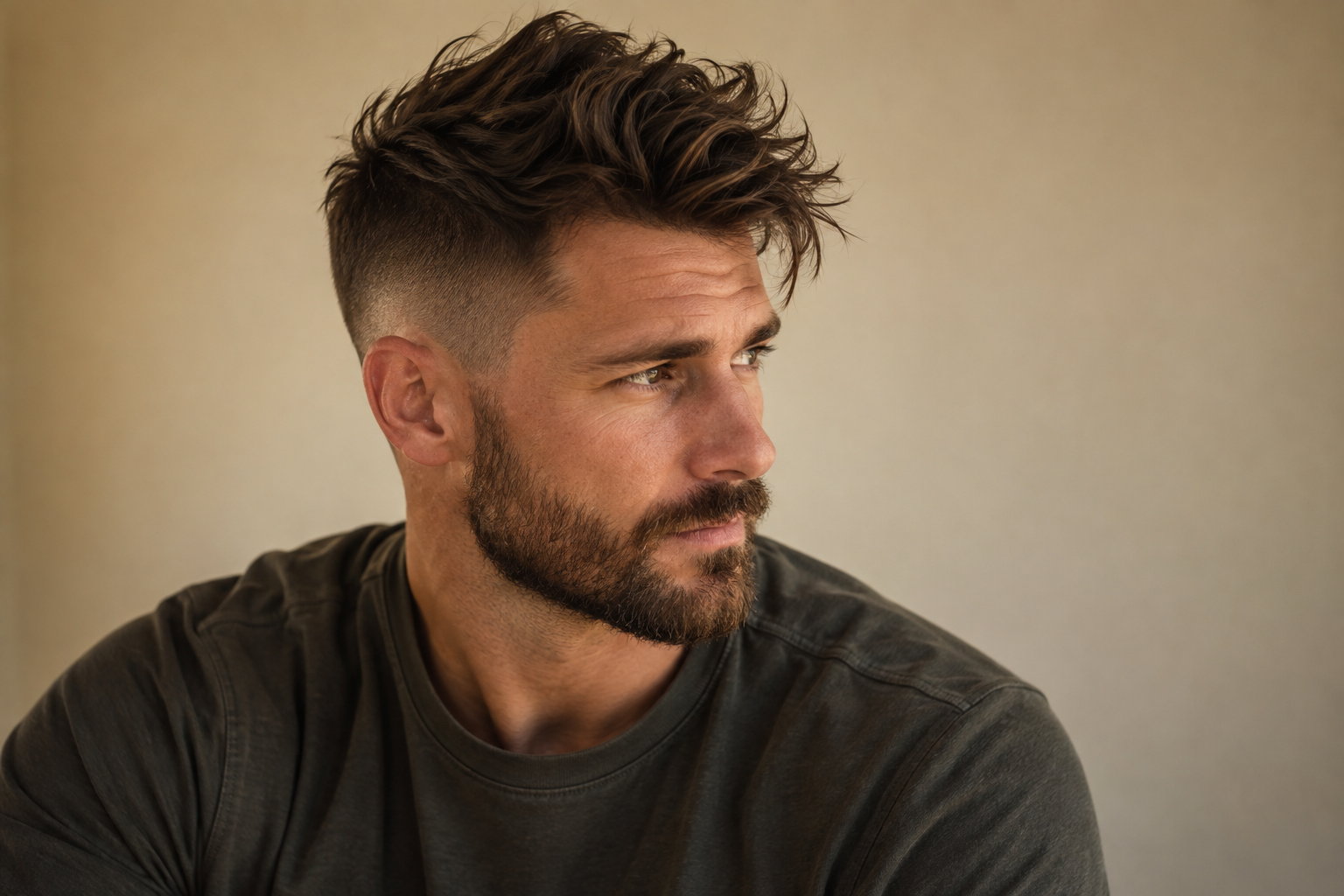
A warrior cut pairs shorter, tapered or faded sides with a noticeably longer, textured top, often left choppy and a little undone, drawing inspiration from historical warrior aesthetics and rugged nineties references. The overall effect reads as rugged but intentional, somewhere between effortless and clearly styled.
Thick hair suits this cut particularly well because the style depends on visible volume and movement on top, exactly what thick hair provides on its own without heavy product or elaborate technique. Where finer hair types often need extra product or styling tricks just to create the illusion of body, thick hair usually just needs the right cut to let its natural density do the work.
Getting the Cut Right for Thick Hair
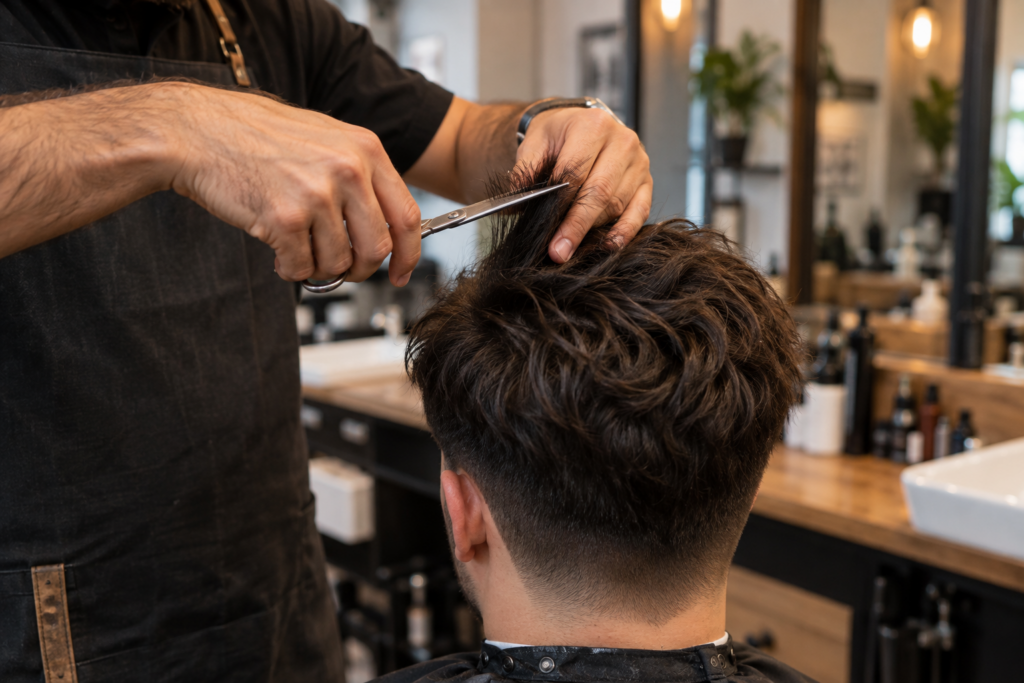
Thick hair genuinely changes what a barber needs to do differently compared to fine or medium hair when cutting a warrior style. Left completely unthinned, very dense hair can end up looking heavy and blocky on top rather than textured and piecey, which somewhat defeats the whole point of the cut.
Point cutting and selective texturizing help remove bulk from the top section while preserving overall length and the choppy, separated look the style depends on. This isn’t about thinning hair down dramatically. It’s about removing just enough density so individual pieces can move and separate rather than sitting as one solid, heavy mass.
Does Thick Hair Need Thinning Before Getting a Warrior Cut?
Thick hair often benefits from some light texturizing or point cutting when getting a warrior cut, mainly to prevent the top from looking overly heavy or blocky rather than textured and piecey. This doesn’t mean aggressively thinning hair down, since removing too much can actually work against the cut’s signature volume, so most barbers approach it as selective bulk removal rather than a full thinning treatment.
What Fade Works Best With a Warrior Cut on Thick Hair?
Low or mid tapers and fades generally pair well with a warrior cut on thick hair, creating clean contrast against the fuller top without making the overall silhouette feel too severe or disconnected. A skin fade can also work well, particularly for men who want stronger visual contrast between the sides and the voluminous top, though a slightly softer taper often suits thick hair’s natural volume more proportionally than an extremely tight, high fade.
Styling a Warrior Cut Day to Day With Thick Hair
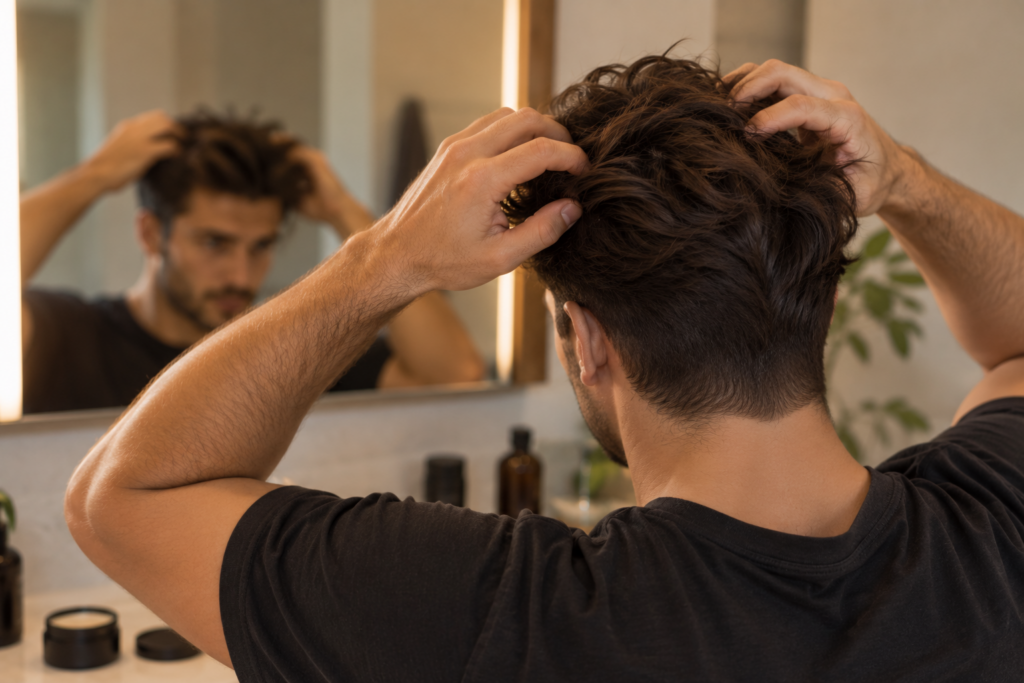
Blow-drying with your fingers, lifting sections at the roots while directing warm air upward and outward, helps build additional height and separation on top, working with thick hair’s natural volume rather than flattening it down with a brush the way you might with finer hair.
Matte clay or paste, rather than heavier, glossier pomades, tends to work best for this cut on thick hair, since it adds texture and light hold without weighing down hair that already has plenty of natural body. Scrunching or twisting small sections of product-coated hair between your fingers helps create the separated, piecey look that defines a well-styled warrior cut, rather than smoothing everything into one uniform mass.
How Much Product Does Thick Hair Need for a Warrior Cut?
Thick hair generally needs a moderate amount of product, more than fine hair would require for the same style, but applied with restraint to avoid weighing down natural volume. Starting with a small amount, working it through with fingers, and adding slightly more only if needed for hold or definition tends to work better than applying a large amount all at once, since excess product on already-dense hair can quickly start looking greasy or overly controlled rather than naturally textured.
Warrior Cut Variations That Work Especially Well on Thick Hair
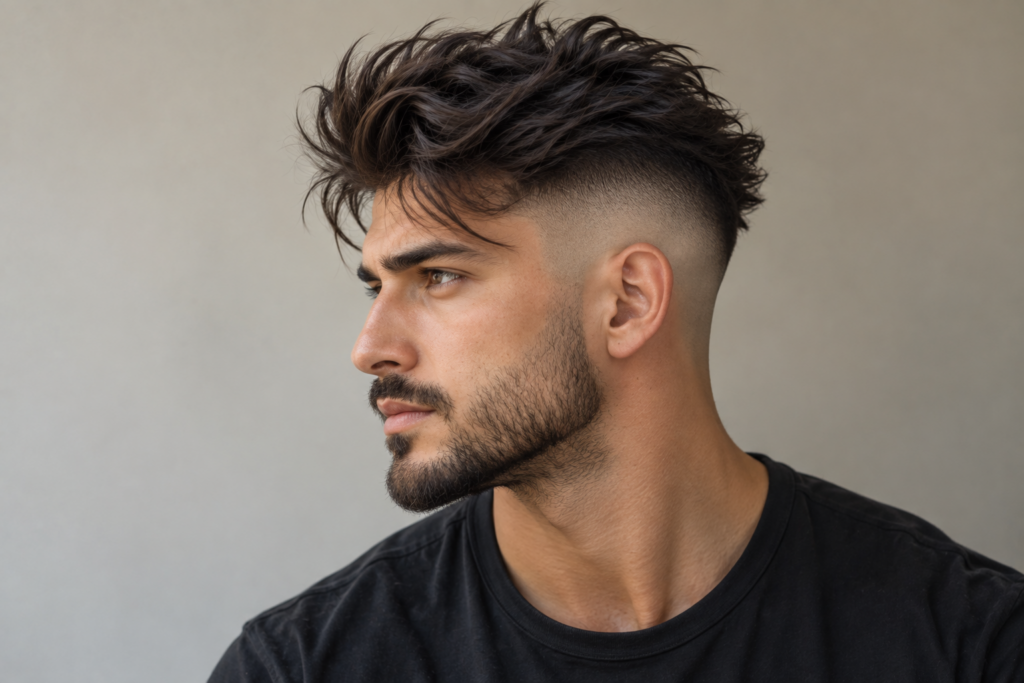
A handful of warrior cut variations lean into thick hair’s natural strengths particularly well.
The skin fade warrior cut creates maximum contrast between closely shaved sides and a fuller, voluminous top, a combination that reads especially sharp on thick hair since the density up top really stands out against the cleanly shaved sides.
The warrior cut with a hard part adds a clean, defined line through the hair, giving thick hair’s natural volume a more structured, intentional edge rather than letting it read as purely loose and undone.
The longer warrior cut, sometimes described as a warrior mullet variation, extends length further at the back while maintaining the shorter, faded sides, taking full advantage of thick hair’s ability to hold shape and movement even at greater lengths.
Can Wavy or Curly Thick Hair Work With a Warrior Cut?
Yes, wavy and curly thick hair often works exceptionally well with a warrior cut, since natural wave or curl pattern adds movement and texture to the top section with minimal styling effort required. Curlier textures may need a barber experienced with curl-specific cutting techniques to account for shrinkage and ensure the top length and side taper balance out correctly once hair is fully dry.
Keeping the Cut Looking Sharp Between Trims
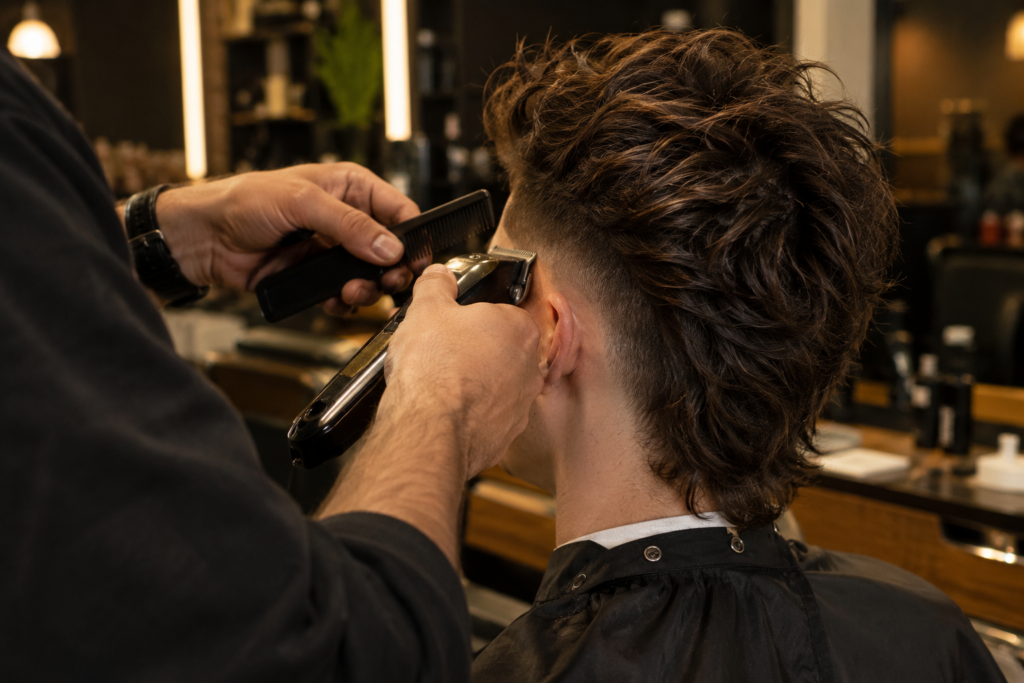
Thick hair tends to show growth on the sides more visibly than finer hair, since increased density makes even a small amount of regrowth look noticeably bulkier. Regular trims, generally every three to five weeks depending on how quickly your hair grows and how sharp you want the fade to stay, help keep the contrast between the sides and top looking clean and intentional.
A quick daily refresh, often just a small amount of texture spray or dry shampoo worked through the roots, can revive volume and separation on days when hair has fallen a bit flatter than usual without requiring a full restyle from scratch.
Frequently Asked Questions
1. Is a warrior cut a good option for straight thick hair, or does it work better with texture?
A warrior cut works well on straight thick hair, though naturally wavy or curly texture does some of the styling work on its own, so straight thick hair may benefit from a bit more product and finger-styling technique to create the same level of separation and movement.
2. How long does hair need to be on top before getting a warrior cut?
Most warrior cuts work best with roughly three to five inches of length on top, giving a barber enough hair to create the choppy, textured layers the style depends on, though the exact length can vary based on your specific hair type and how much volume it naturally holds.
3. Does a warrior cut require daily styling, or can it be worn more naturally?
A warrior cut can genuinely be worn with minimal daily styling, especially with wavy or textured hair, though most people still use a small amount of product to enhance definition and control frizz, even on lower-maintenance days when they’re not doing a full styling routine.
4. Can a warrior cut be adjusted for a more formal, professional look?
Yes, a warrior cut can be styled more polished and professional using a hard part, slightly more controlled product application, and a cleaner, tighter fade on the sides, giving it a more refined edge while still keeping the cut’s signature volume and texture on top.
5. Does thick hair need a different shampoo routine to support a warrior cut?
Thick hair generally benefits from a moisturizing shampoo and conditioner routine to keep it manageable, particularly since a warrior cut relies on healthy, well-hydrated hair to move and separate properly rather than looking dry or coarse when styled.
6. Is a warrior cut suitable for receding hairlines?
A warrior cut can work with a receding hairline, particularly variations with a hard part or slightly shorter top length, since these can help balance the hairline visually, though working directly with a barber experienced in cutting around hairline changes typically gives the best, most flattering result.
7. Can a warrior cut be grown out easily into a different style later?
Yes, a warrior cut generally grows out fairly gracefully compared to more precisely disconnected styles, since the layered, textured top blends reasonably well as length increases, making it easier to transition into a longer style without needing to start over completely.
8. Does humidity affect how a warrior cut looks on thick hair?
Yes, humidity can add extra volume and sometimes frizz to thick hair styled in a warrior cut, which some men find actually enhances the rugged, textured look the style is going for, though a light anti-frizz product can help control it if the added volume becomes harder to manage.
9. Is scissor work or clipper work generally used for the top of a warrior cut?
Scissor work, often combined with point cutting and selective texturizing, is typically used on top to create the choppy, layered texture that defines a warrior cut, while clippers are more commonly reserved for the shorter, faded sides to achieve clean, precise contrast.
10. Can a warrior cut work for older men with thinning hair on the crown?
A warrior cut generally works best with reasonably full hair, since the style relies on visible volume, so men with significant thinning on the crown specifically might consider discussing adjustments with a barber, such as slightly shorter overall length, to help the cut read well despite reduced density in that area.