Fall Outfits 2026: Layering Formulas That Always Work
You stand in front of your closet every October morning with the same problem: it is 55 degrees at 8 a.m. and 72 by lunch, and nothing you own seems to handle both. Fall dressing is not about owning more clothes — it is about knowing a handful of layering formulas you can repeat with whatever you already have.
This guide gives you 20 complete fall outfits built on 5 repeatable layering formulas. Each formula explains the principle once, then shows you 3 to 5 outfits that use it, with the exact pieces, the shoes, and the one detail that makes it work. Learn the formulas and you will never stare at your closet blankly in October again.
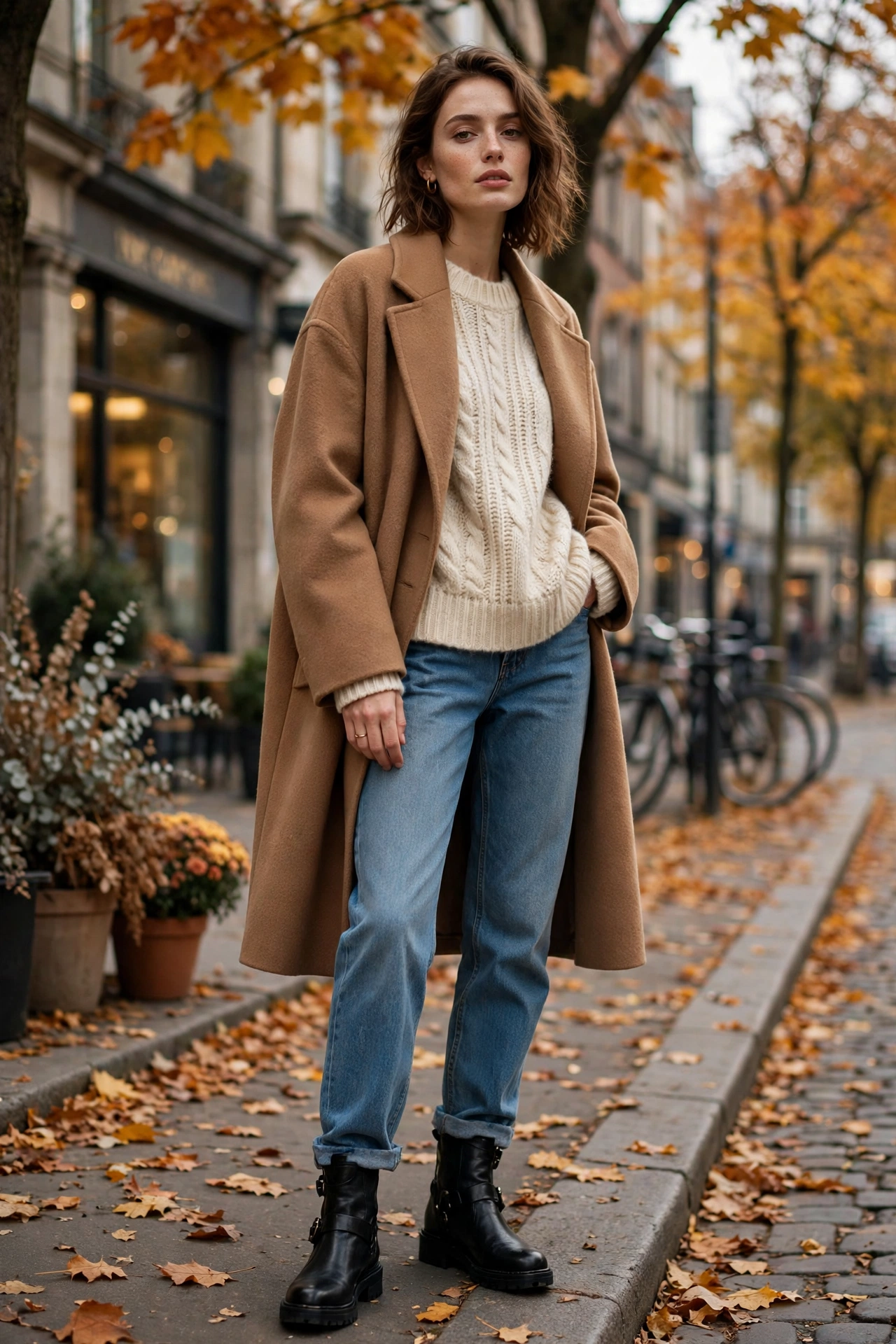
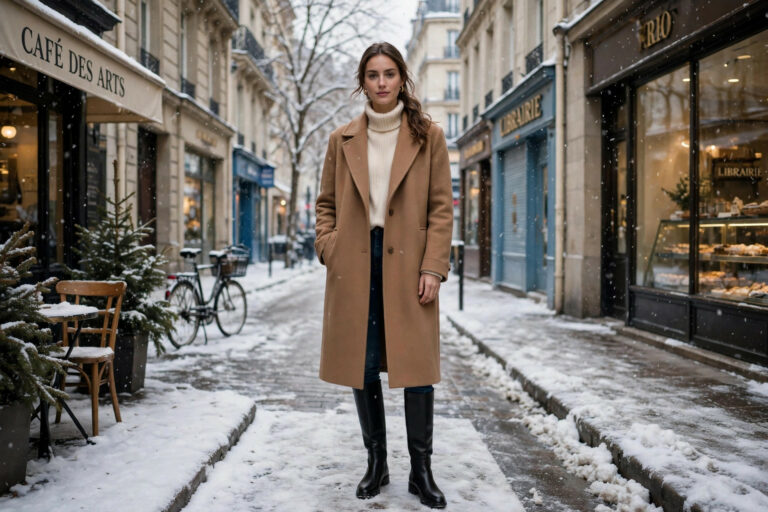
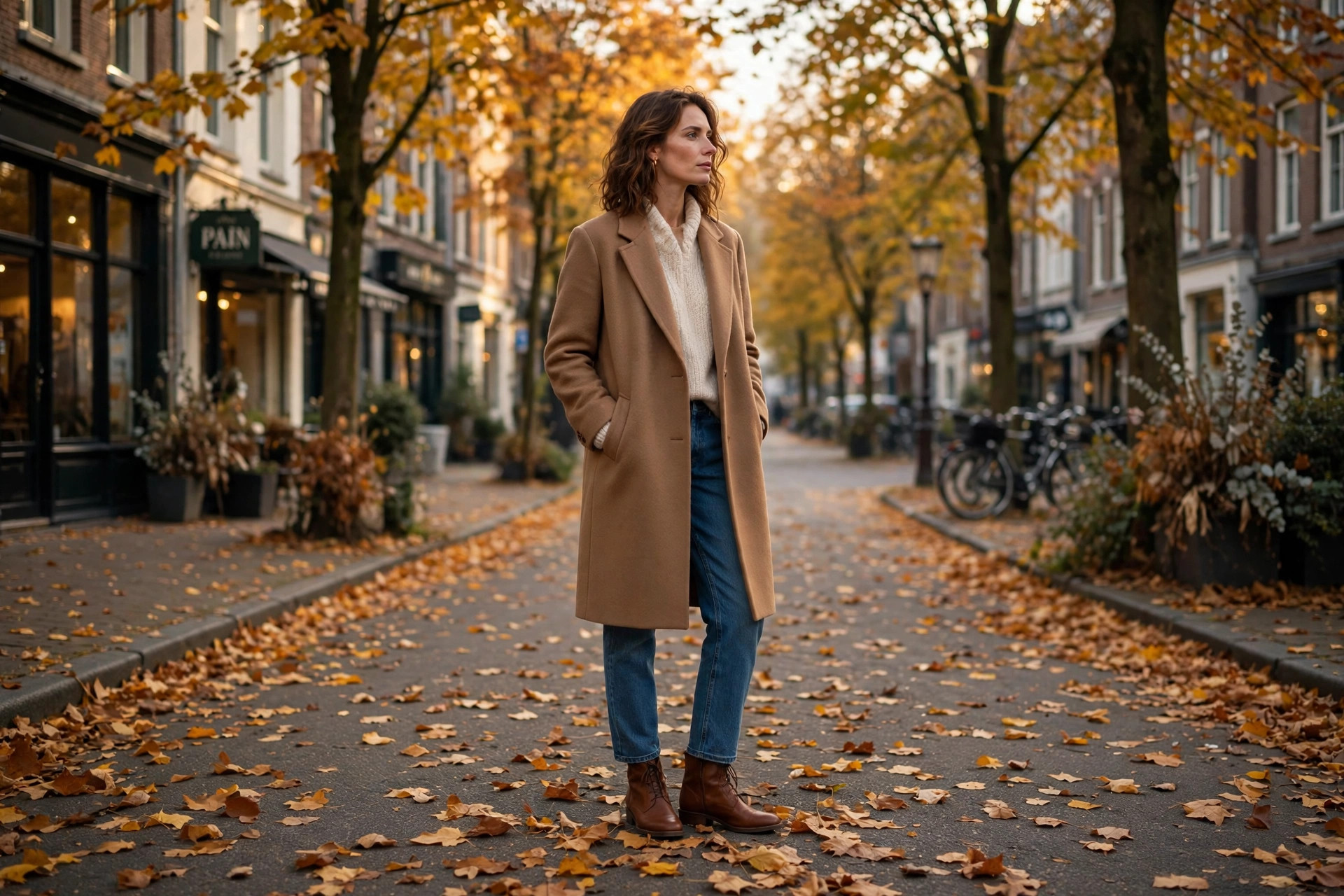
The fastest answer: the most reliable fall layering formula is base layer + mid layer + third piece + one texture contrast. A fitted base (tee, turtleneck, or camisole), a mid layer for warmth (sweater, cardigan, or vest), and a structured third piece (blazer, coat, or jacket) handle any temperature swing — shed layers as the day warms up. Add one texture contrast, like leather against knit or silk against wool, and the outfit looks intentional instead of thrown together. Every outfit below follows a version of this formula.
What Is the Third-Piece Rule?
The third-piece rule is the simplest styling principle in fashion: an outfit with two pieces looks unfinished, and adding a third piece — a jacket, blazer, cardigan, vest, or even a scarf worn as a layer — makes it look complete. Jeans and a sweater are fine. Jeans, a sweater, and a blazer are an outfit.
The third piece does three jobs at once: it adds visual structure (especially important with soft knits), it gives you a temperature-control layer you can remove, and it introduces either contrast or cohesion. A camel blazer over an all-black base adds polish. A leather jacket over a floral dress adds edge. The rule works because our eyes read three intentional layers as “styled” and two as “dressed.”
How to pick your third piece
- For polish: a blazer, a wool coat, or a trench. Structured shoulders instantly elevate soft layers.
- For edge: a leather or faux-leather jacket, a denim jacket, or an oversized utility jacket.
- For coziness: a long cardigan, a shacket, or a quilted vest. These add warmth without formality.
- The 2026 angle: Pinterest’s trend forecasters predict brooches returning as statement accessories in 2026, with searches up significantly — pinning a vintage brooch to your third piece is the easiest way to make a familiar formula feel current (TheIndustry.fashion, on Pinterest Predicts 2026).
How Do You Layer Without Looking Bulky?
Bulky layering happens when every layer is the same weight and volume. The fix is varying thickness and keeping one layer fitted. These four principles prevent the marshmallow effect:
- Thin to thick, inside to out: the layer closest to your body should be the thinnest — a camisole, tee, or fitted turtleneck. Each layer outward can be progressively heavier. A chunky knit directly over a thick thermal is bulk; the same knit over a thin long-sleeve tee is silhouette.
- One oversized piece per outfit: an oversized sweater works with slim jeans or a fitted skirt. An oversized sweater with wide-leg trousers and an oversized coat does not. Pick one volume piece and keep everything else closer to the body.
- Show some shape: a belt over a cardigan, a half-tucked sweater, pushed-up sleeves, or an open front layer all reveal the body underneath the layers. These small moves signal intention.
- Mix textures, not just colors: knit + leather, wool + silk, denim + suede. Texture contrast creates visual interest without adding physical bulk, which is why a leather jacket over a sweater looks slimmer than a second sweater would.
Formula 1: The Third Piece — 5 Outfits
The most versatile formula: a simple base, plus one structured third piece that does all the styling work. These five outfits cover work, weekends, and evenings.
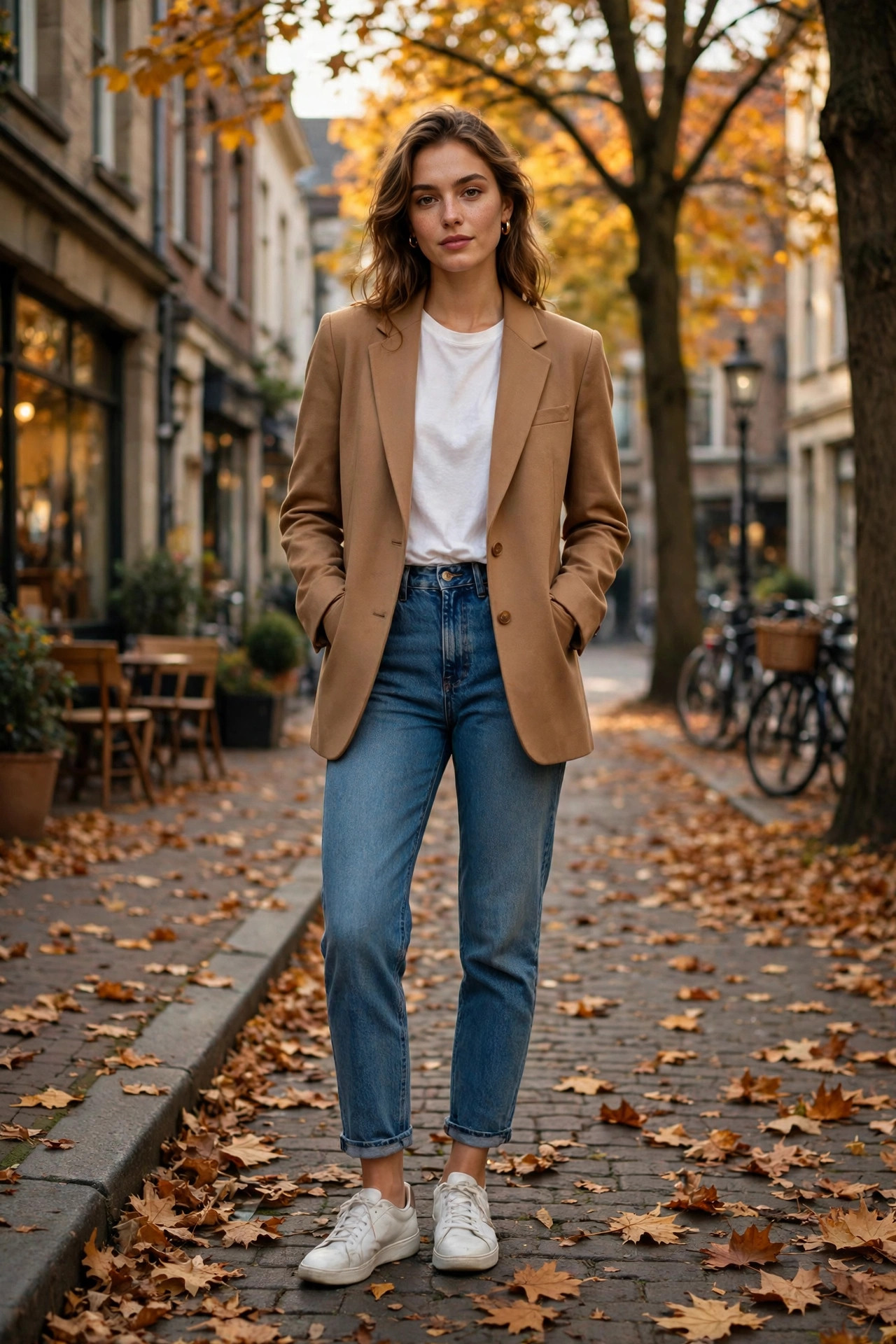
Outfit 1: Camel Blazer Over White Tee and Jeans
The formula: fitted base + classic denim + structured third piece. Pieces: white crew-neck tee, medium-wash straight-leg jeans, camel wool-blend blazer, white leather sneakers or loafers. Why it works: the blazer adds instant structure to the most casual base imaginable. The detail: push the blazer sleeves to the forearm and add a gold necklace — the exposed wrist and jewelry keep it from reading corporate. This is the outfit to wear when you have no idea what the day holds.
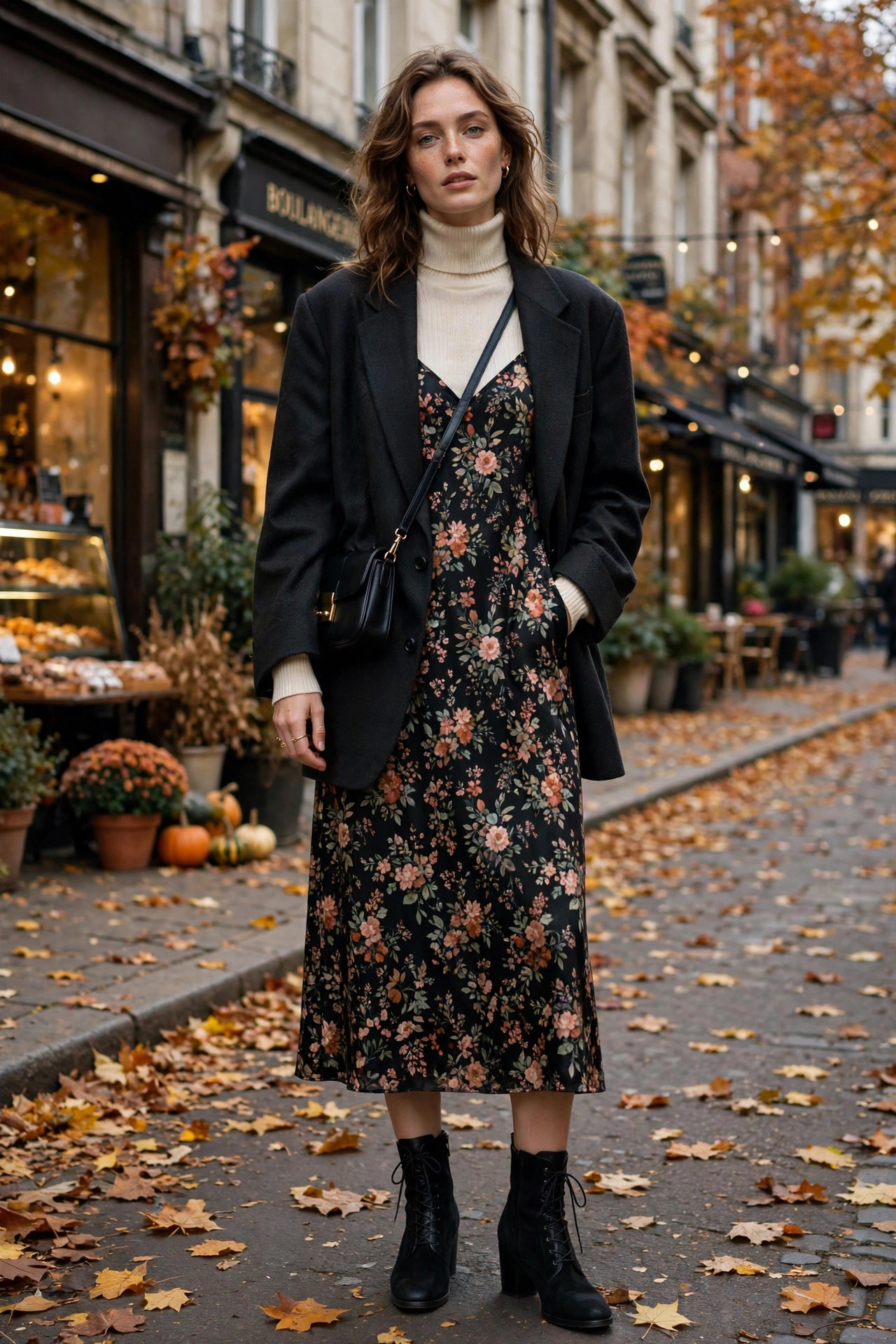
Outfit 2: Turtleneck Under Slip Dress With Oversized Blazer
The formula: summer dress extended into fall with two added layers. Pieces: black fitted turtleneck, satin slip dress (midi length), oversized black or charcoal blazer, knee-high boots. Why it works: the turtleneck underneath transforms a summer dress into a fall piece, and the blazer adds the third-piece structure. The detail: let the slip dress hem show 3 to 4 inches below the blazer — the visible layered hems are the whole point. Tights optional depending on temperature.
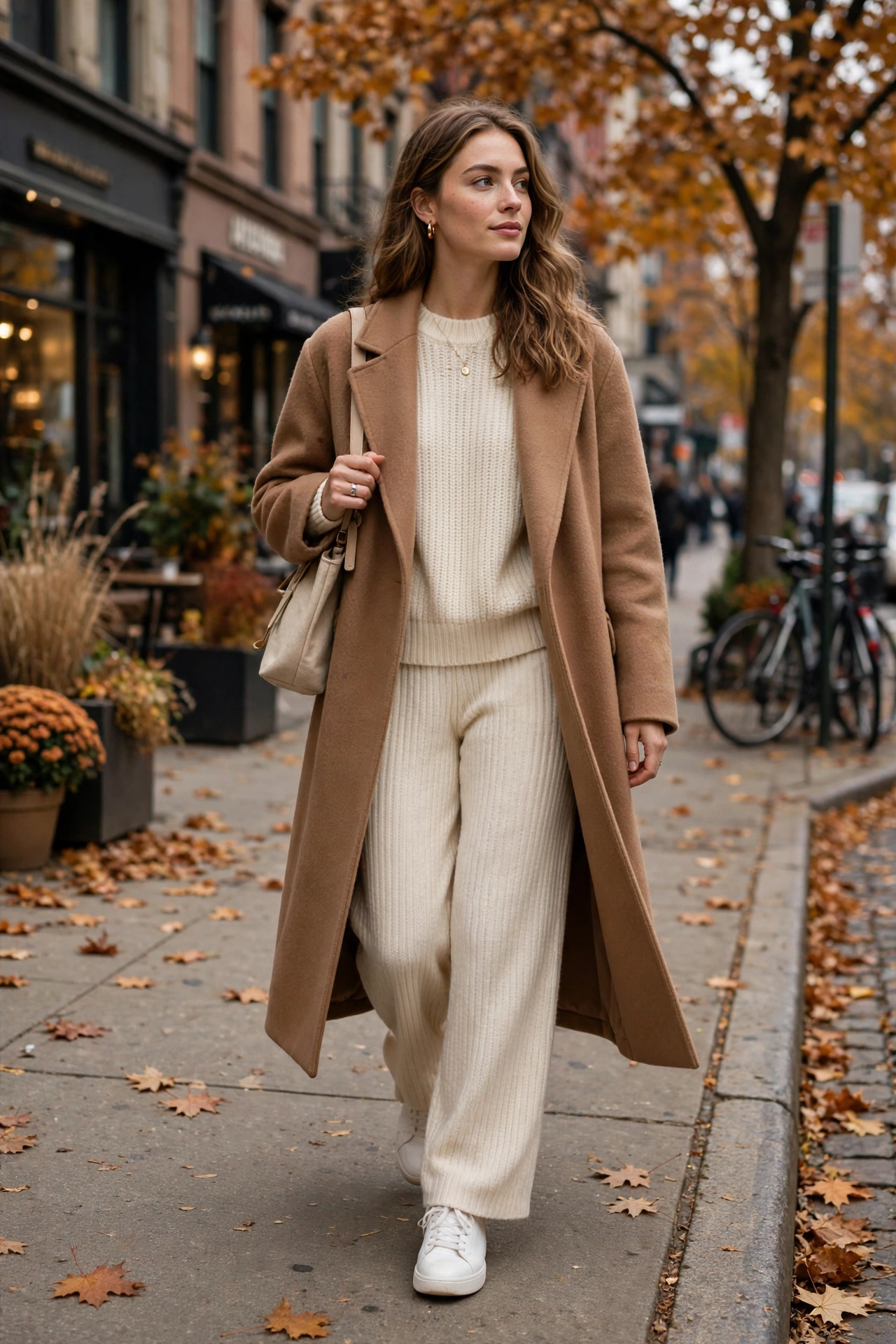
Outfit 3: Knit Set With Long Wool Coat
The formula: monochrome knit base + dramatic outer layer. Pieces: matching knit top and wide-leg knit pants (cream, gray, or camel), long wool coat in a complementary neutral, minimal sneakers or ankle boots. Why it works: a matching set reads as one intentional piece, and the long coat adds the polish that makes loungewear street-ready. The detail: the coat should hit mid-calf or lower — the long line over the knit column is what elevates it. Add a structured bag to sharpen the softness.
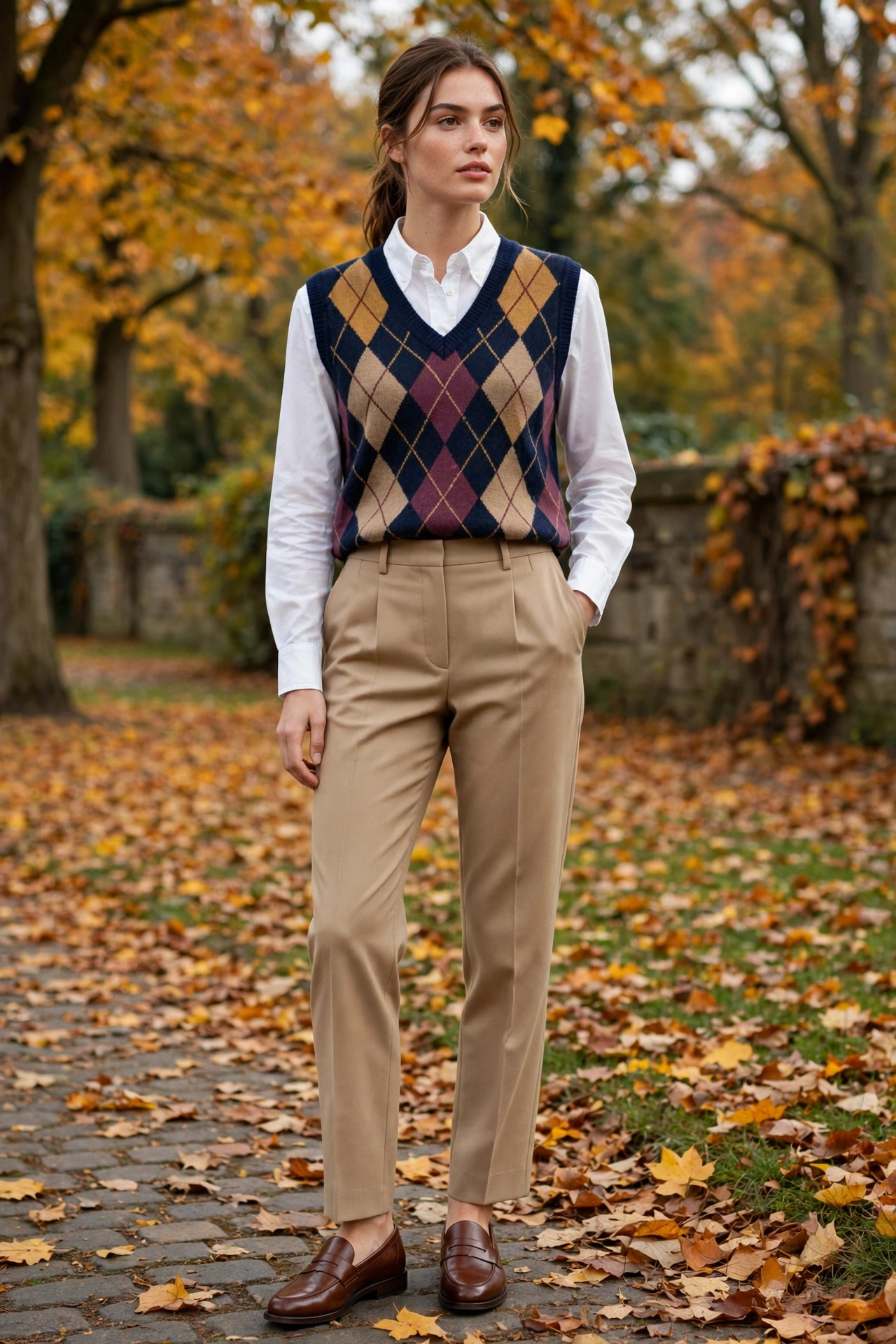
Outfit 4: Sweater Vest Over Button-Down With Trousers
The formula: preppy layering with the vest as the third piece. Pieces: white or striped button-down shirt, V-neck sweater vest (argyle, cable-knit, or solid), high-waist tailored trousers, loafers. Why it works: the button-down collar and cuffs peeking out from the vest create built-in layering detail with zero effort. The detail: let the shirt collar sit over the vest neckline and roll the cuffs once past the vest sleeves — these two visible shirt edges are what make the formula work. A 2026-leaning move: add a vintage brooch to the vest.
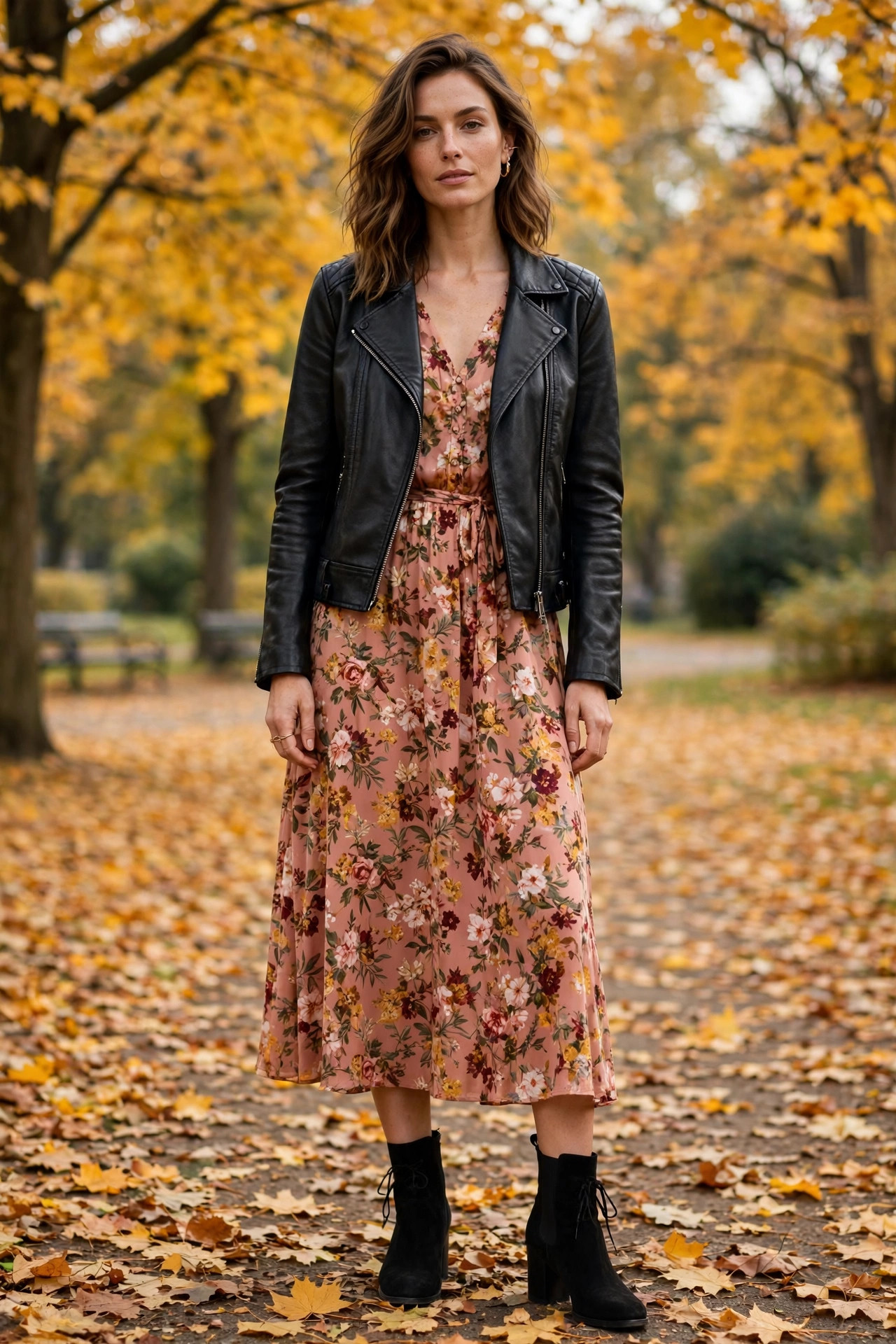
Outfit 5: Leather Jacket Over Floral Midi Dress
The formula: feminine base + tough third piece for contrast. Pieces: floral midi dress (dark background prints work best for fall), black leather or faux-leather moto jacket, ankle boots. Why it works: the leather jacket cuts the sweetness of the floral dress and adds fall-appropriate weight. The detail: a dark floral — burgundy, navy, or black background — reads autumnal; a light pastel floral fights the season no matter what you layer over it. Add opaque tights when temperatures drop below 60.
Formula 2: Texture Mixing — 5 Outfits
When every layer is the same fabric, outfits look flat. Mixing textures — smooth against rough, soft against structured — creates depth without adding pieces. These five outfits each hinge on one texture contrast.
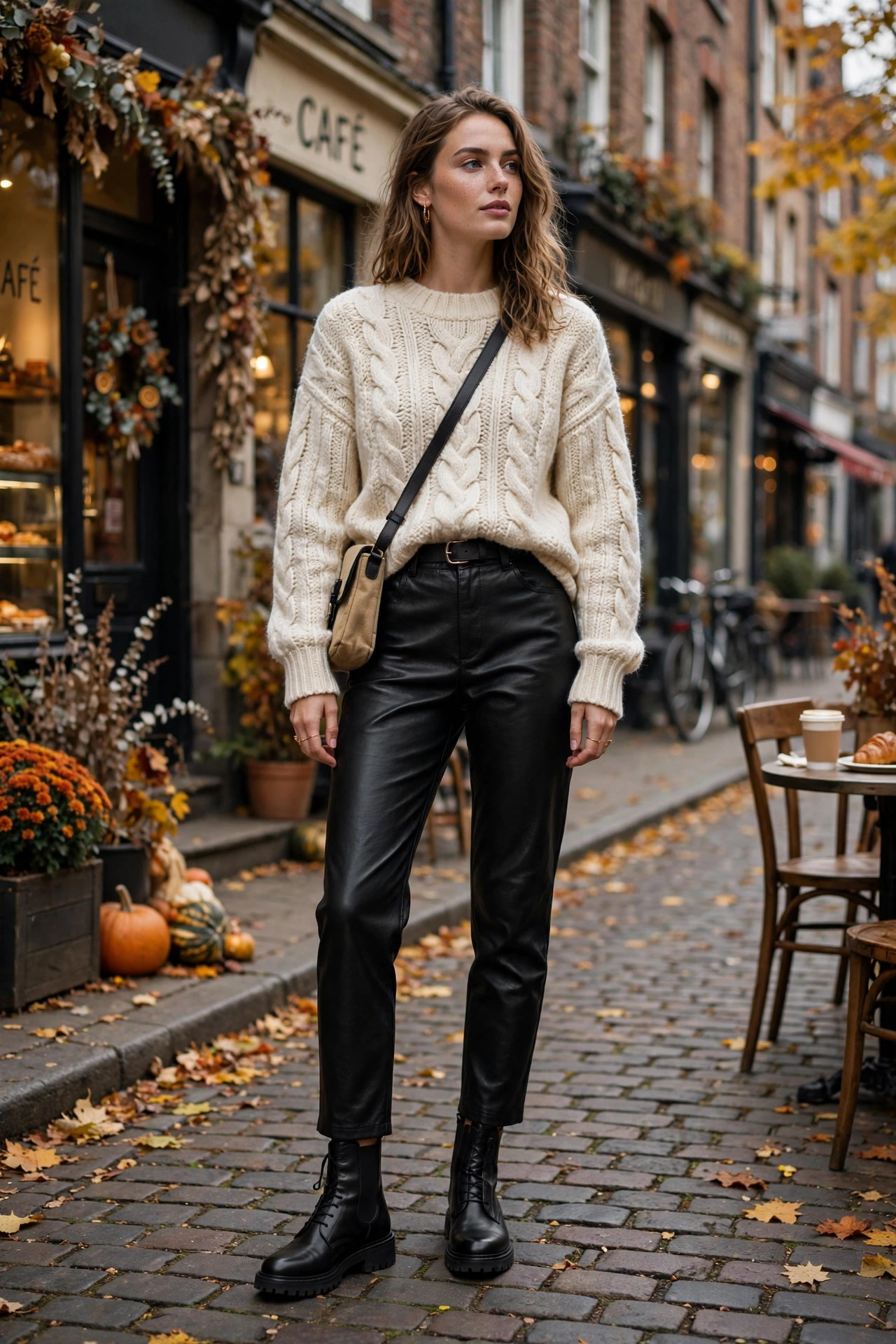
Outfit 6: Chunky Knit With Leather Pants
The formula: soft volume + sleek structure. Pieces: oversized chunky-knit sweater (cream or oatmeal), black faux-leather leggings or trousers, Chelsea boots. Why it works: the matte, nubby knit against the smooth leather sheen is the entire outfit — the contrast does the styling. The detail: half-tuck the sweater at the front to show where the leather begins. Without the tuck, the sweater swallows the pants and you lose the contrast that makes this work.
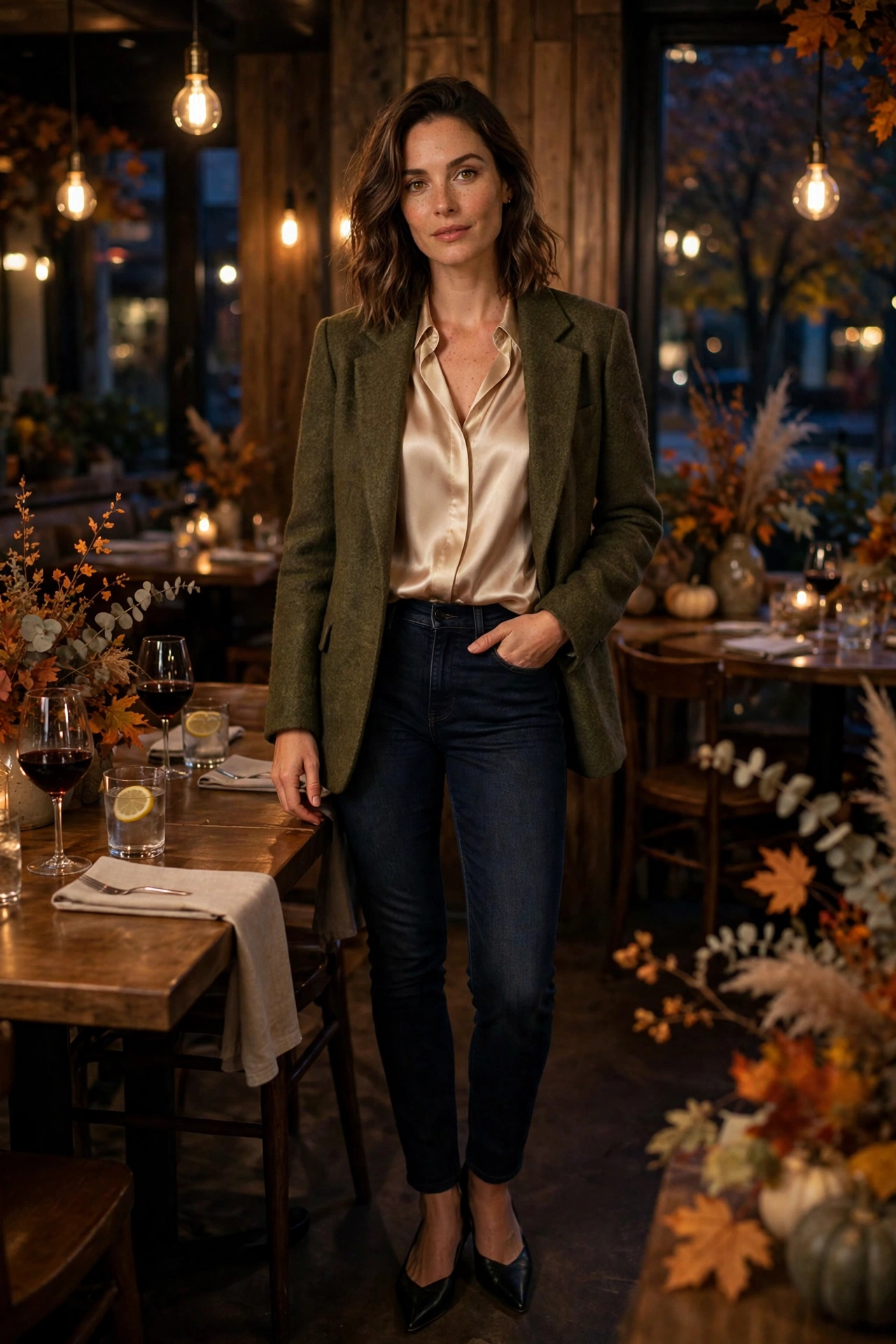
Outfit 7: Silk Blouse With Wool Blazer and Jeans
The formula: luxe fabric + workhorse denim, bridged by tailoring. Pieces: silk or satin blouse (champagne, rust, or olive), wool blazer, dark straight-leg jeans, pointed flats or low heels. Why it works: the silk blouse elevates jeans to dinner level, and the wool blazer keeps the silk from feeling overdressed. The detail: French-tuck the blouse — the small draped fold at the waistband shows off the silk’s fluidity against the denim’s rigidity. This is the formula for “nice dinner but not trying too hard.”
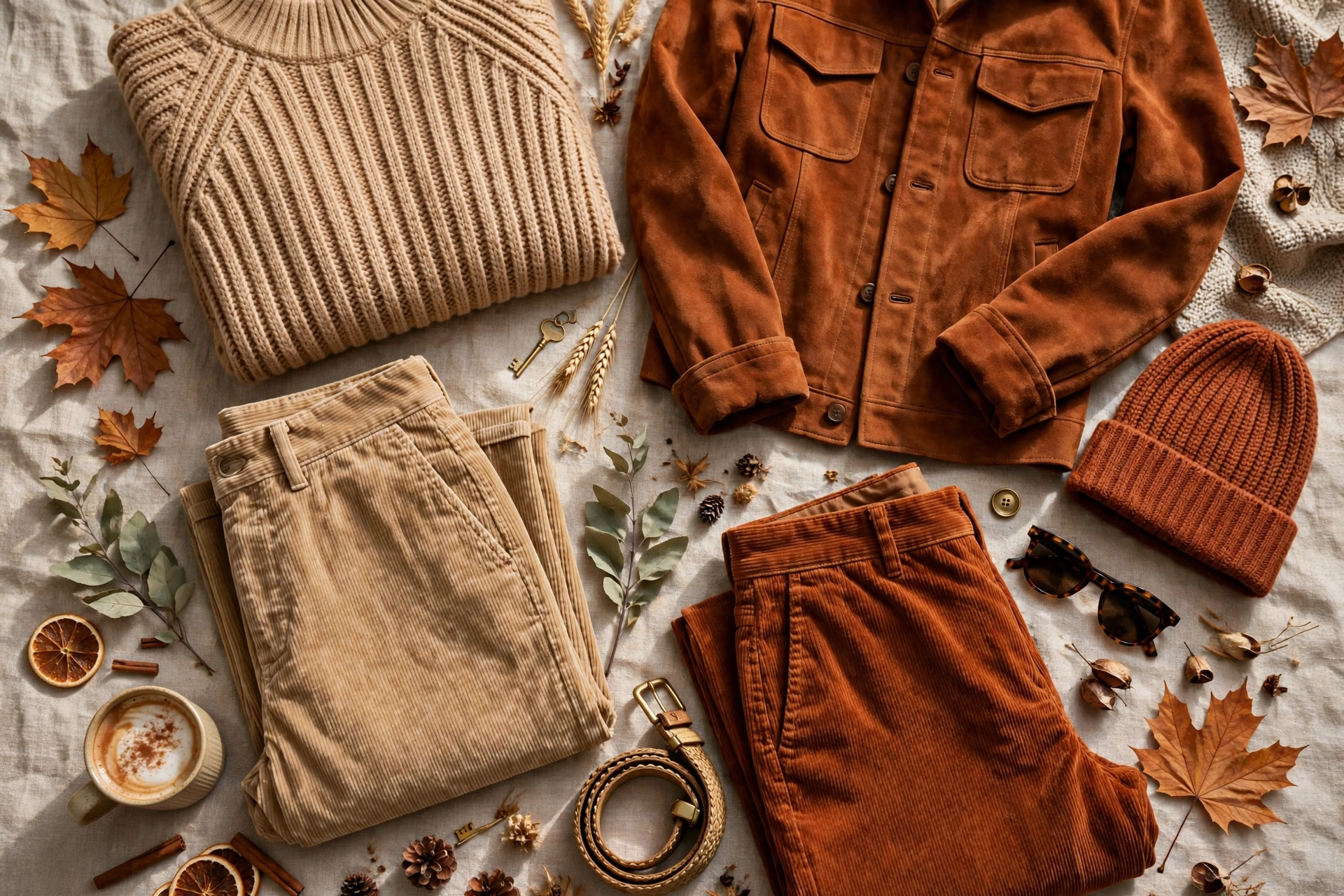
Outfit 8: Suede Jacket With Ribbed Knit and Corduroy
The formula: three fall textures in one outfit. Pieces: ribbed knit turtleneck, suede trucker or moto jacket, corduroy trousers or skirt, suede ankle boots. Why it works: ribbed knit, napped suede, and ridged corduroy are all distinctly fall textures that harmonize because they share a matte, touchable quality. The detail: keep the palette tonal — camel, rust, and chocolate together — so the textures, not the colors, are the star. Three textures is the maximum; a fourth starts to look busy.
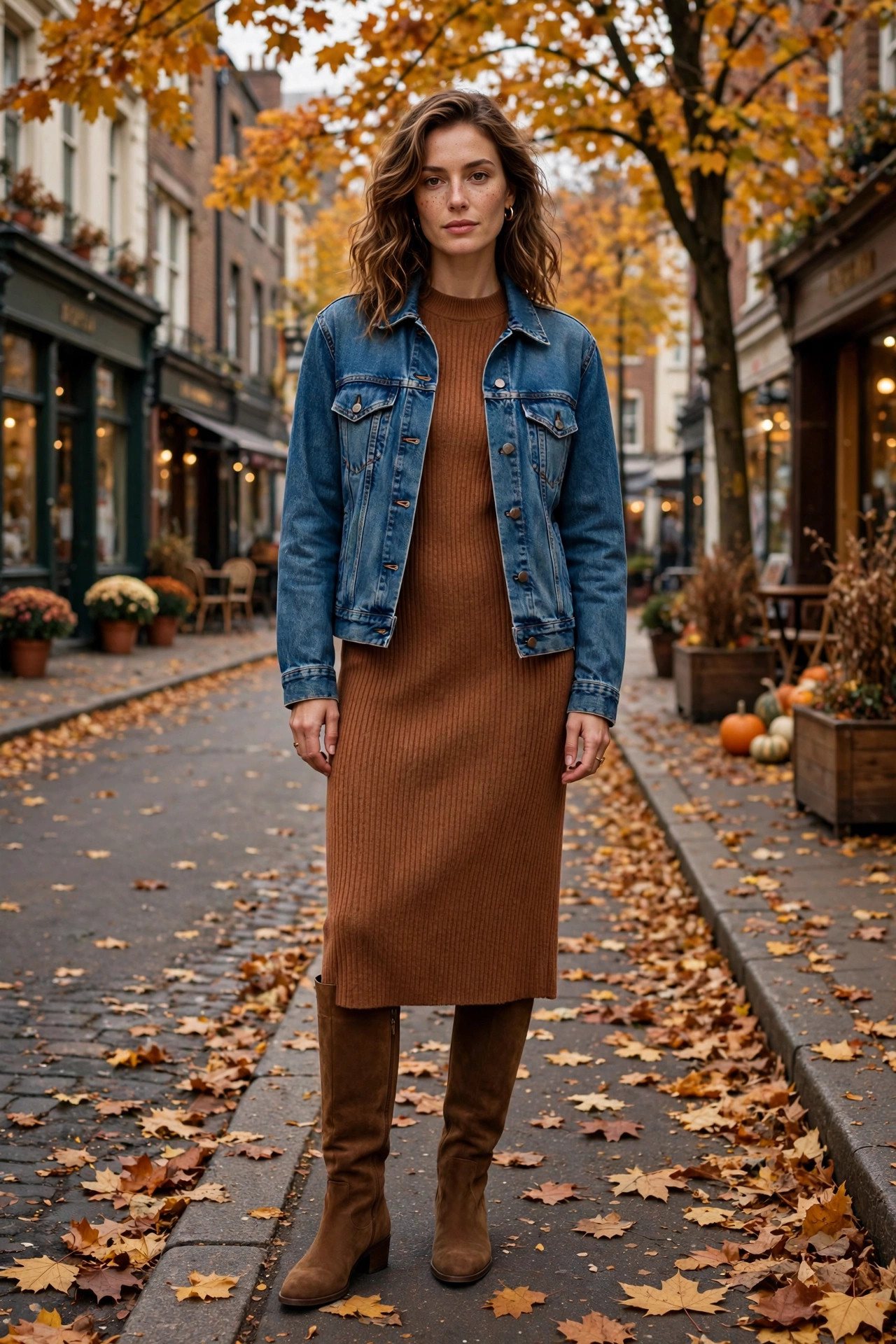
Outfit 9: Denim Jacket With Knit Dress and Knee Boots
The formula: rugged layer softening a feminine base. Pieces: fitted ribbed-knit midi dress, oversized denim jacket, knee-high or over-the-knee boots. Why it works: the structured denim jacket breaks up the body-conscious knit dress and adds casual daytime energy. The detail: an oversized, slightly worn denim jacket works better here than a fitted one — the volume contrast against the fitted dress creates the silhouette. Roll the jacket sleeves twice to show the knit cuffs.
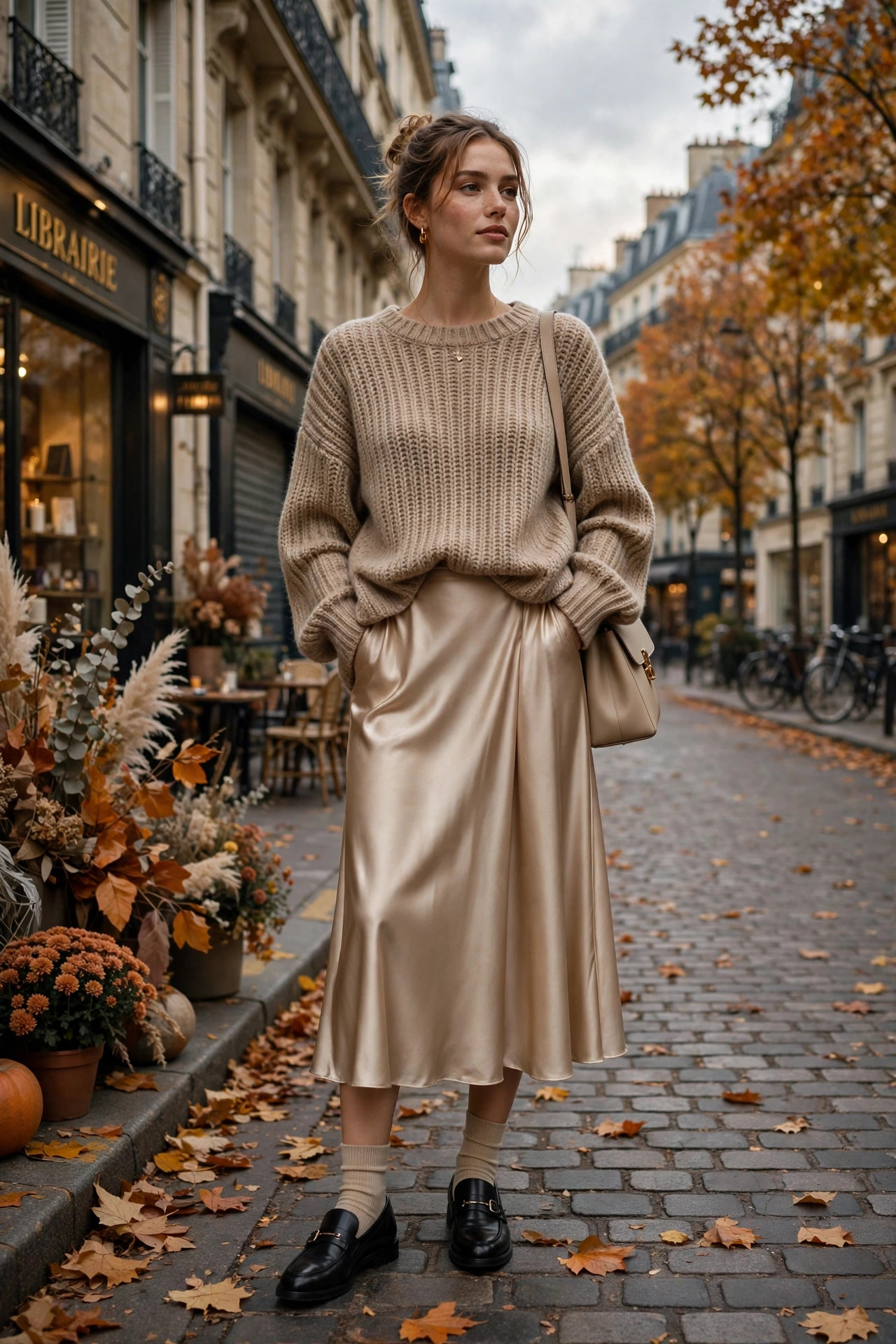
Outfit 10: Oversized Sweater With Satin Skirt
The formula: cozy volume + fluid shine. Pieces: oversized crew-neck sweater, satin midi skirt, ankle boots or mules. Why it works: the heavy knit against the liquid satin is one of the most reliable texture contrasts in fall dressing. The detail: the sweater should hit at the hip — long enough to look slouchy, short enough to show the skirt’s movement. A sweater that covers the whole skirt defeats the purpose. Tuck just the front corner for a deliberate look.
Formula 3: Proportion Play — 4 Outfits
Proportion is about balancing volume: something oversized on top pairs with something fitted below, and vice versa. Get the balance right and layers look sculptural instead of shapeless.
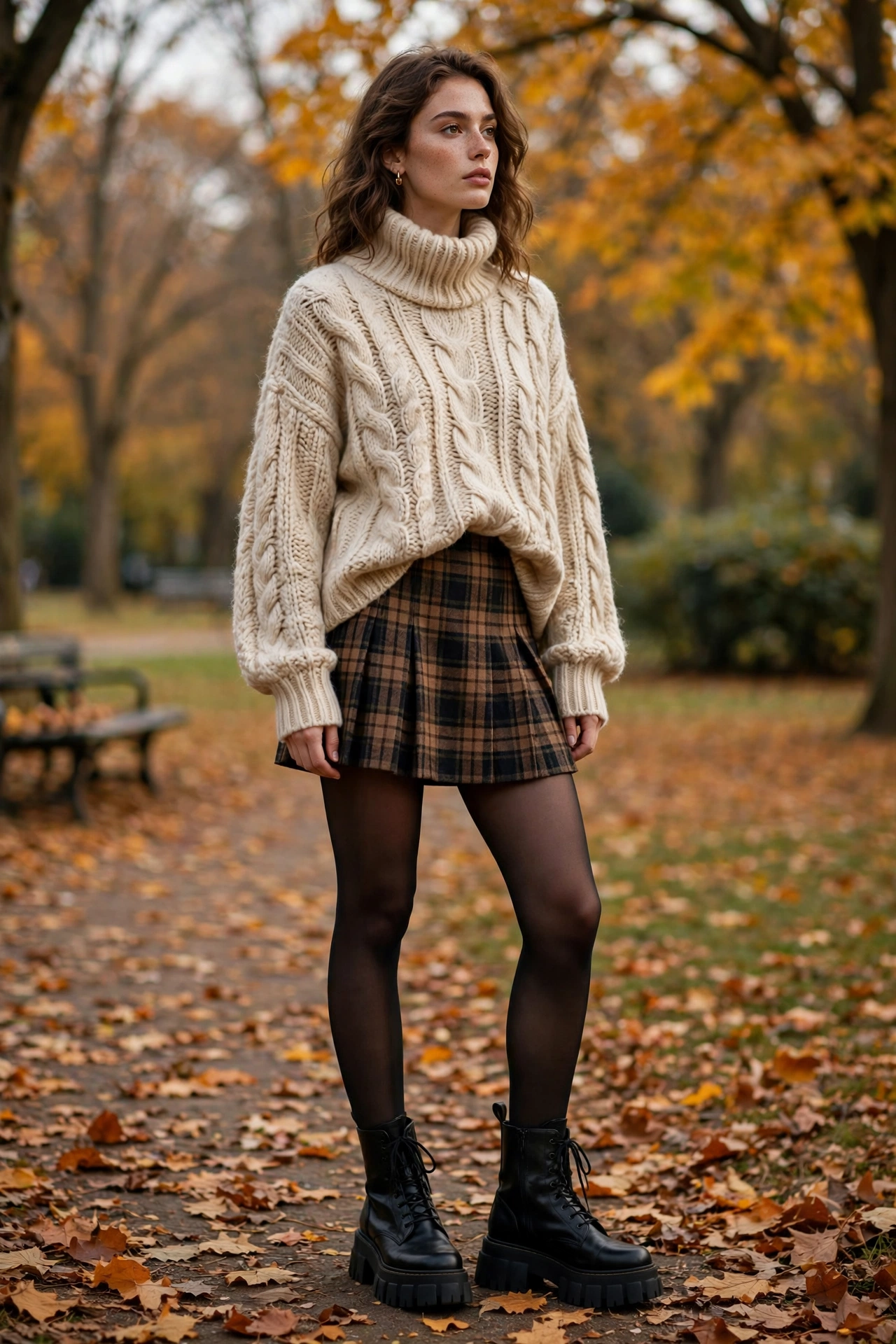
Outfit 11: Oversized Sweater With Mini Skirt, Tights, and Boots
The formula: maximum volume on top, bare-minimum on the bottom. Pieces: oversized turtleneck sweater, plaid or solid mini skirt, opaque black tights, chunky ankle or knee boots. Why it works: the long sweater over the short skirt creates the leg-lengthening illusion — all leg, all sweater. The detail: the sweater hem should overlap the skirt waistband slightly so no skin shows at the waist. Opaque tights (80 denier or higher) are non-negotiable below 55 degrees; sheer tights break the cozy proportion.
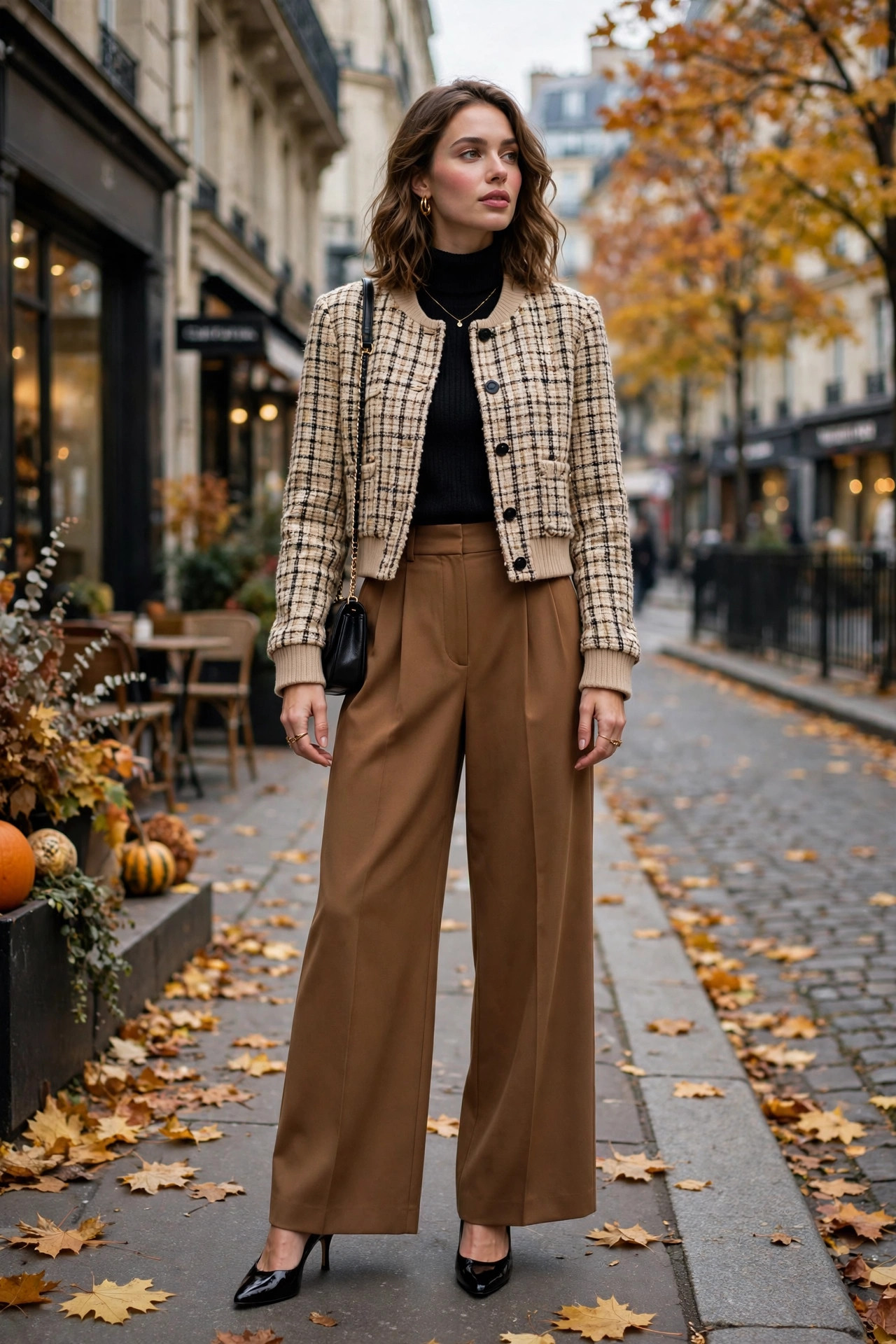
Outfit 12: Cropped Jacket With High-Waist Wide-Leg Trousers
The formula: short on top, long on the bottom. Pieces: cropped denim or leather jacket, fitted top, high-waist wide-leg trousers, heeled boots. Why it works: the cropped jacket ends exactly where the high waist begins, creating an unbroken long leg line. The detail: the top underneath must be tucked in — any untucked fabric between the cropped jacket and the waistband chops the silhouette in half. This formula adds 3 visual inches to anyone under 5’6″.
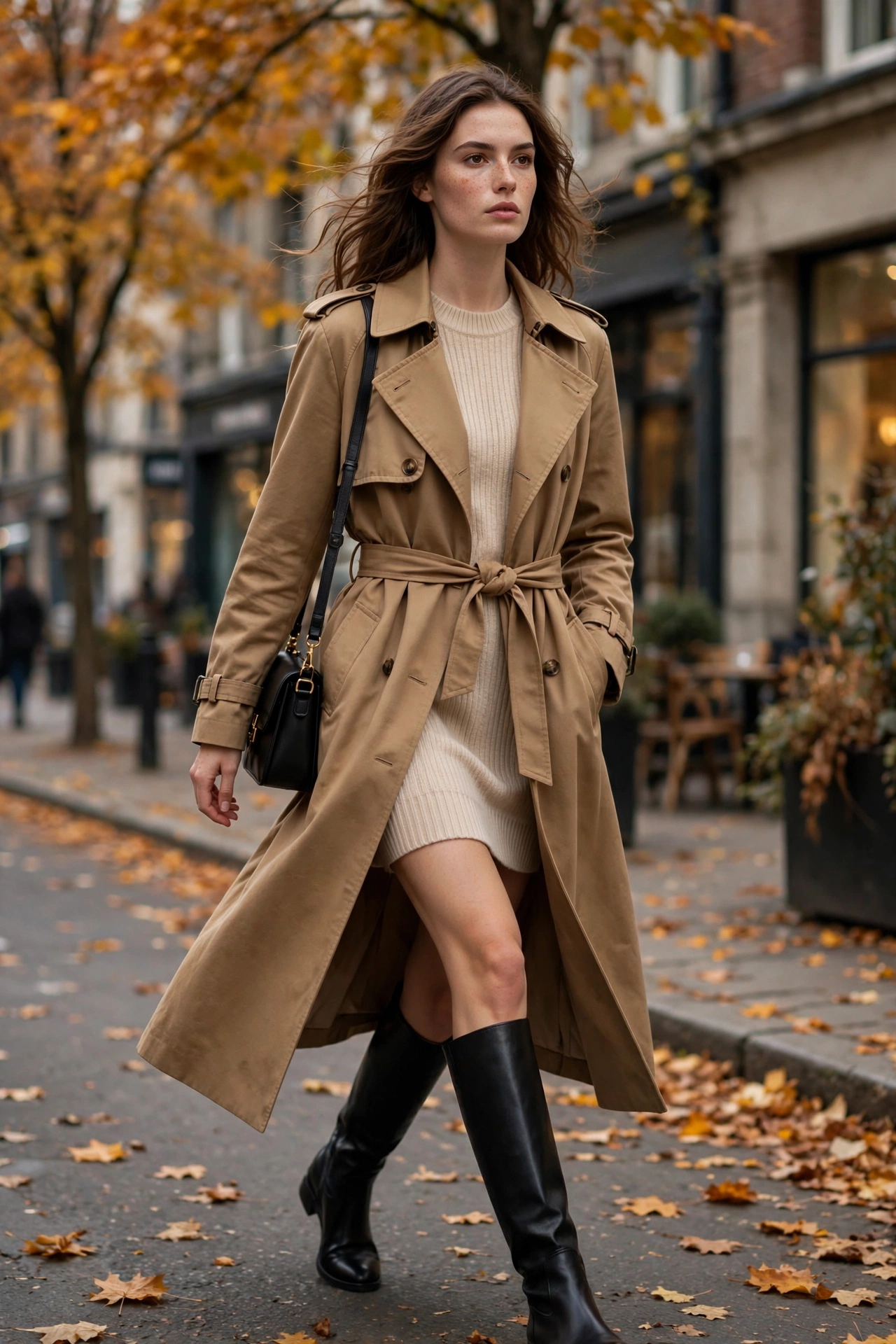
Outfit 13: Long Coat Over Short Dress
The formula: drama in the outer layer, simplicity underneath. Pieces: simple short dress (sweater dress or shirt dress), long belted trench or wool coat, knee-high boots. Why it works: the long coat creates a dramatic column, and the short dress underneath keeps it from overwhelming a smaller frame. The detail: belt the coat at the natural waist — an unbelted long coat over a short dress can look like you forgot the bottom half. The belted waist is what makes the proportion intentional.
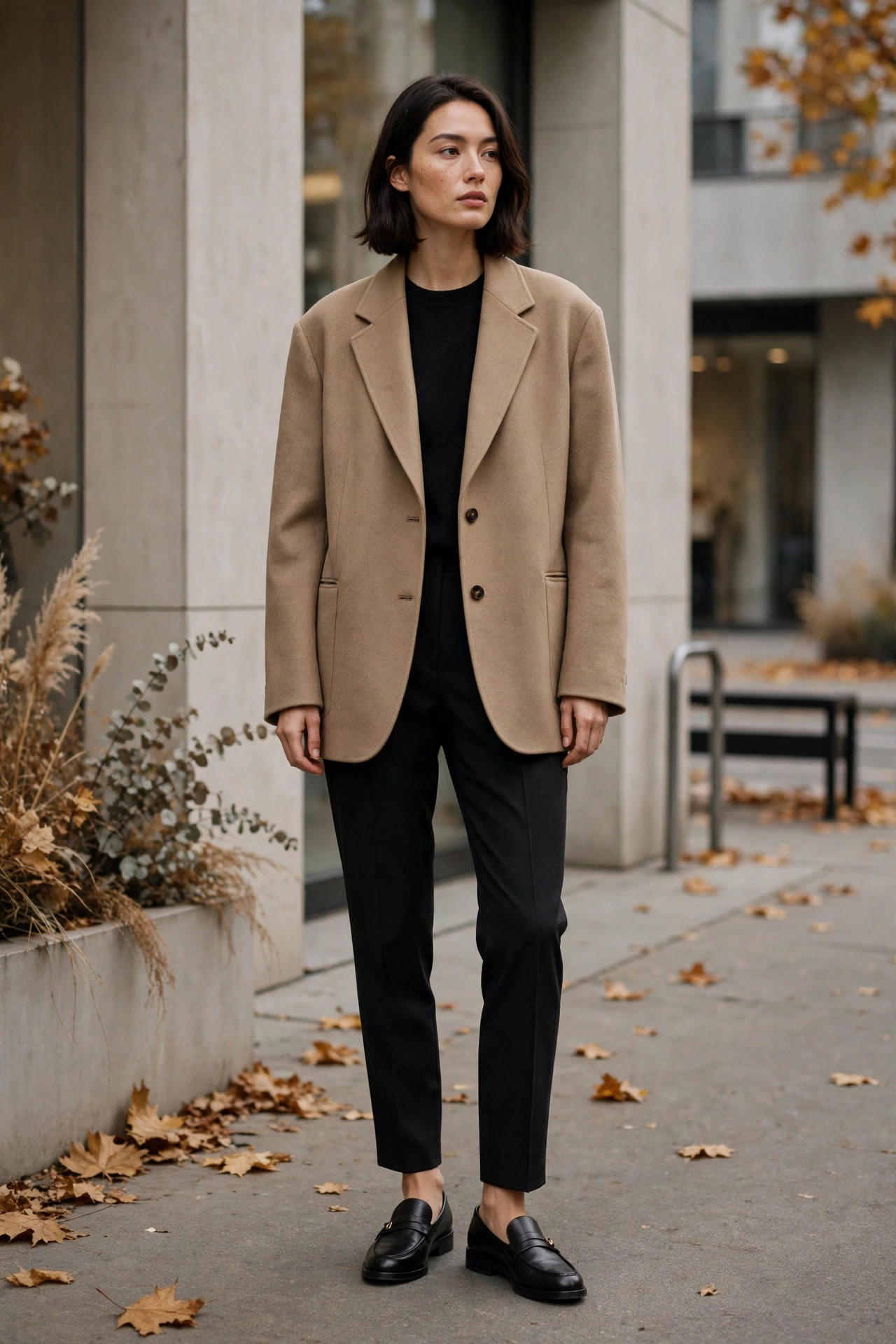
Outfit 14: Boxy Blazer With Slim Trousers
The formula: borrowed-from-him volume on top, streamlined below. Pieces: oversized boxy blazer, slim or straight tailored trousers, fitted top, loafers or heels. Why it works: the ’80s-inspired oversized blazer — very 2026, with sculpted shoulders trending in the current forecasts — needs slim trousers to avoid drowning the frame. The detail: push the blazer sleeves up to show some wrist and add one bold accessory (a chunky cuff or statement earring) — the oversized blazer is already a statement, so everything else stays quiet.
Formula 4: Monochrome and Tonal Layering — 3 Outfits
Wearing one color head to toe is the easiest way to look expensive, and fall’s palette — cream, camel, chocolate, black — is made for it. The rule within the rule: vary the shades slightly and mix at least two textures so the monochrome has depth.
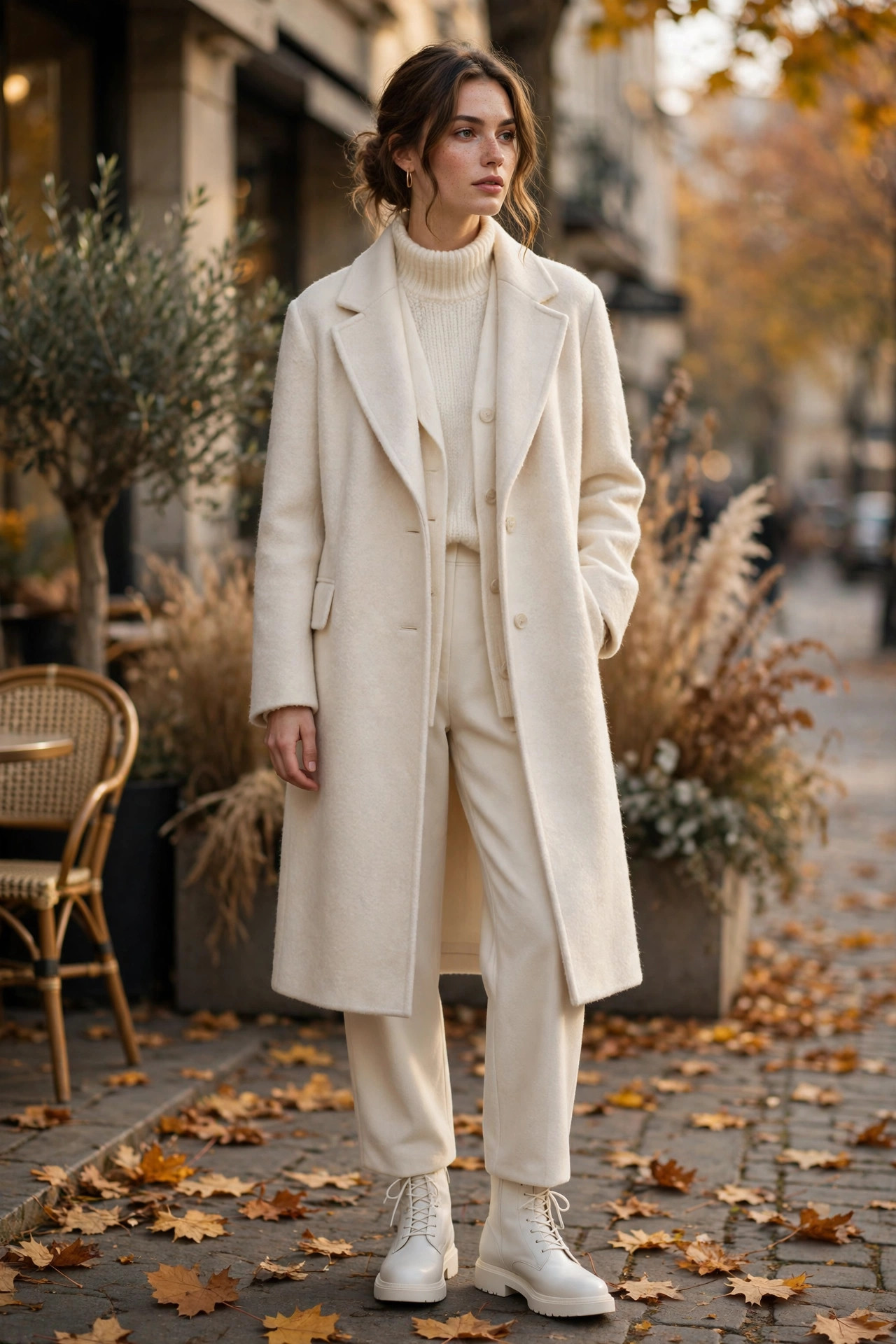
Outfit 15: All-Cream Layers
The formula: tonal whites and creams with mixed textures. Pieces: cream silk camisole, oatmeal cardigan or knit, ivory wool coat, cream jeans or trousers, nude boots. Why it works: head-to-toe cream elongates the body and looks luxurious at any price point. The detail: the shades must be close but not identical — exact-match cream looks like a uniform, while ivory, oatmeal, and ecru together look curated. Keep makeup warm-toned to harmonize; cool makeup against cream can look washed out.
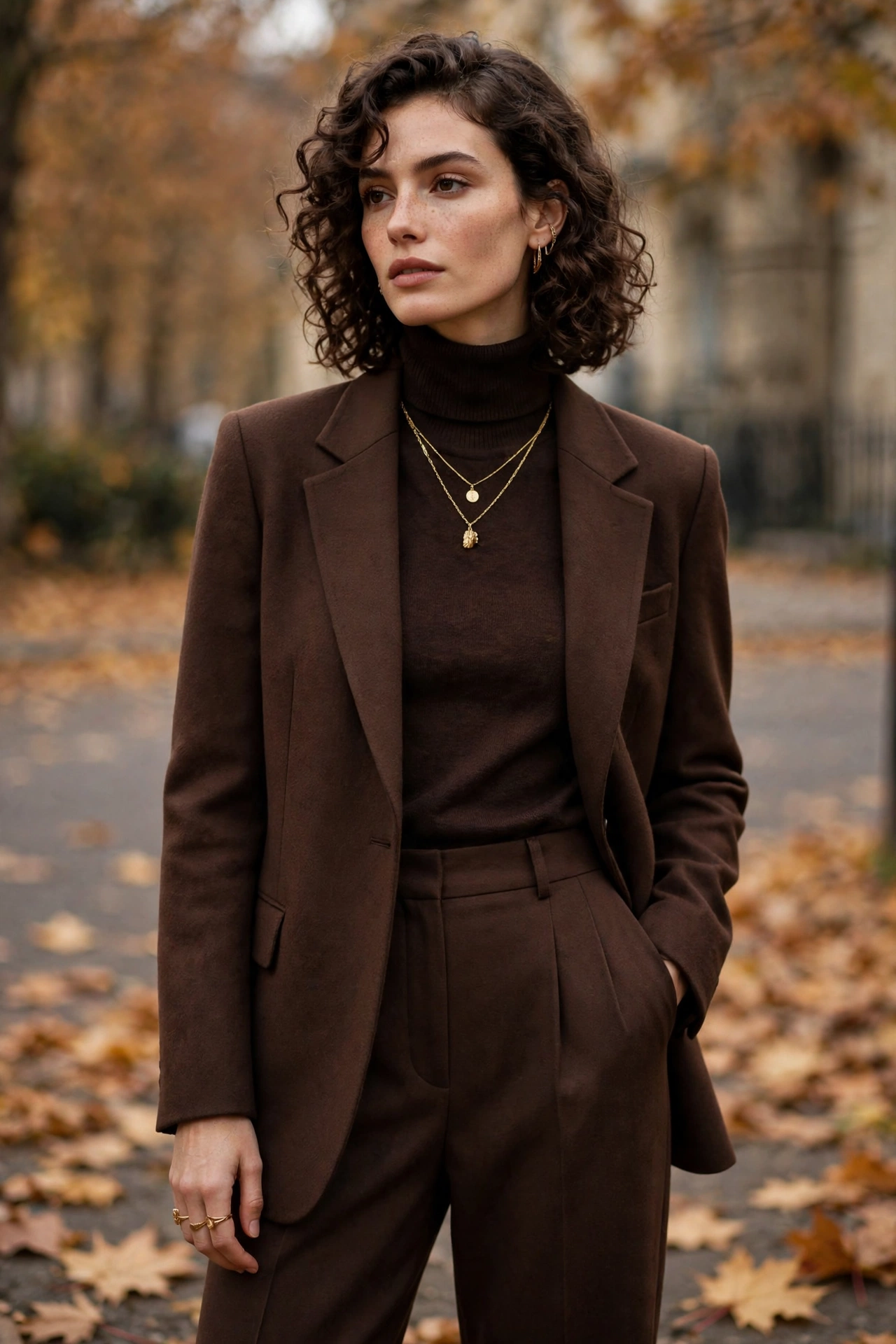
Outfit 16: Chocolate Brown Tonal
The formula: deep browns layered dark to light. Pieces: espresso turtleneck, milk-chocolate cardigan or blazer, dark brown trousers or jeans, brown leather boots. Why it works: brown is fall’s most underrated neutral — richer than black, softer than gray, and it makes every skin tone glow. The detail: add one gold accessory (hoops, a watch, a bag clasp) — gold against chocolate brown is the combination that makes this outfit feel expensive. Brown-on-brown with silver reads flat; gold is the move.
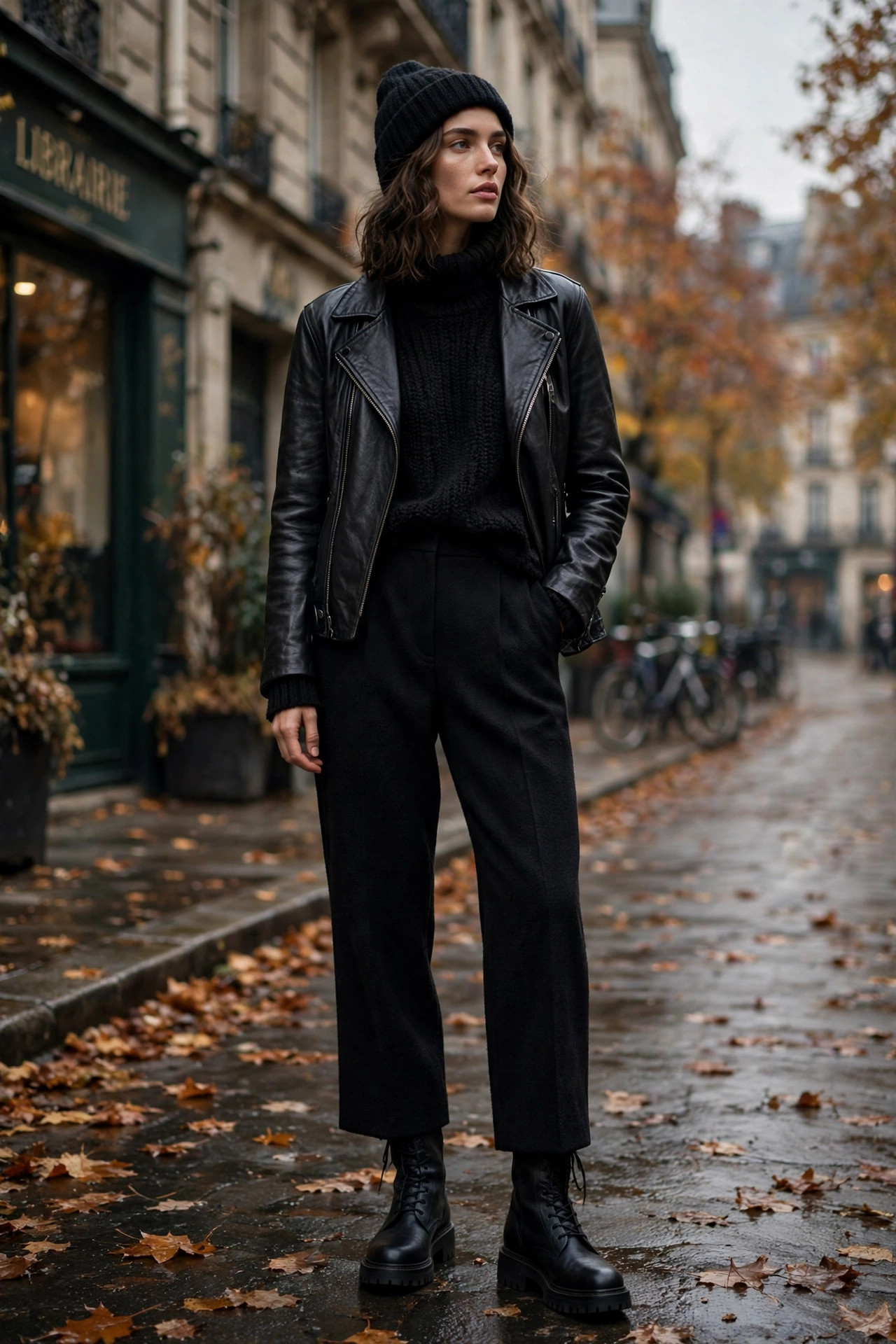
Outfit 17: All-Black With Texture Variation
The formula: one color, four textures. Pieces: black turtleneck, black leather pants or coated jeans, black wool coat, black ankle boots. Why it works: all-black fails when everything is the same matte jersey — it succeeds when knit, leather, wool, and suede each catch light differently. The detail: this is the outfit where texture mixing matters most. Check yourself in natural light: if any two pieces blend into one indistinguishable black mass, swap one for a different texture. A red lip or gold jewelry is the classic finishing contrast.
Formula 5: The Statement Layer — 3 Outfits
Sometimes one hero piece does all the work and everything else stays quiet. The formula: one bold layer (pattern, dramatic silhouette, or trending piece) over a simple neutral base. These three outfits prove you only need one interesting thing.
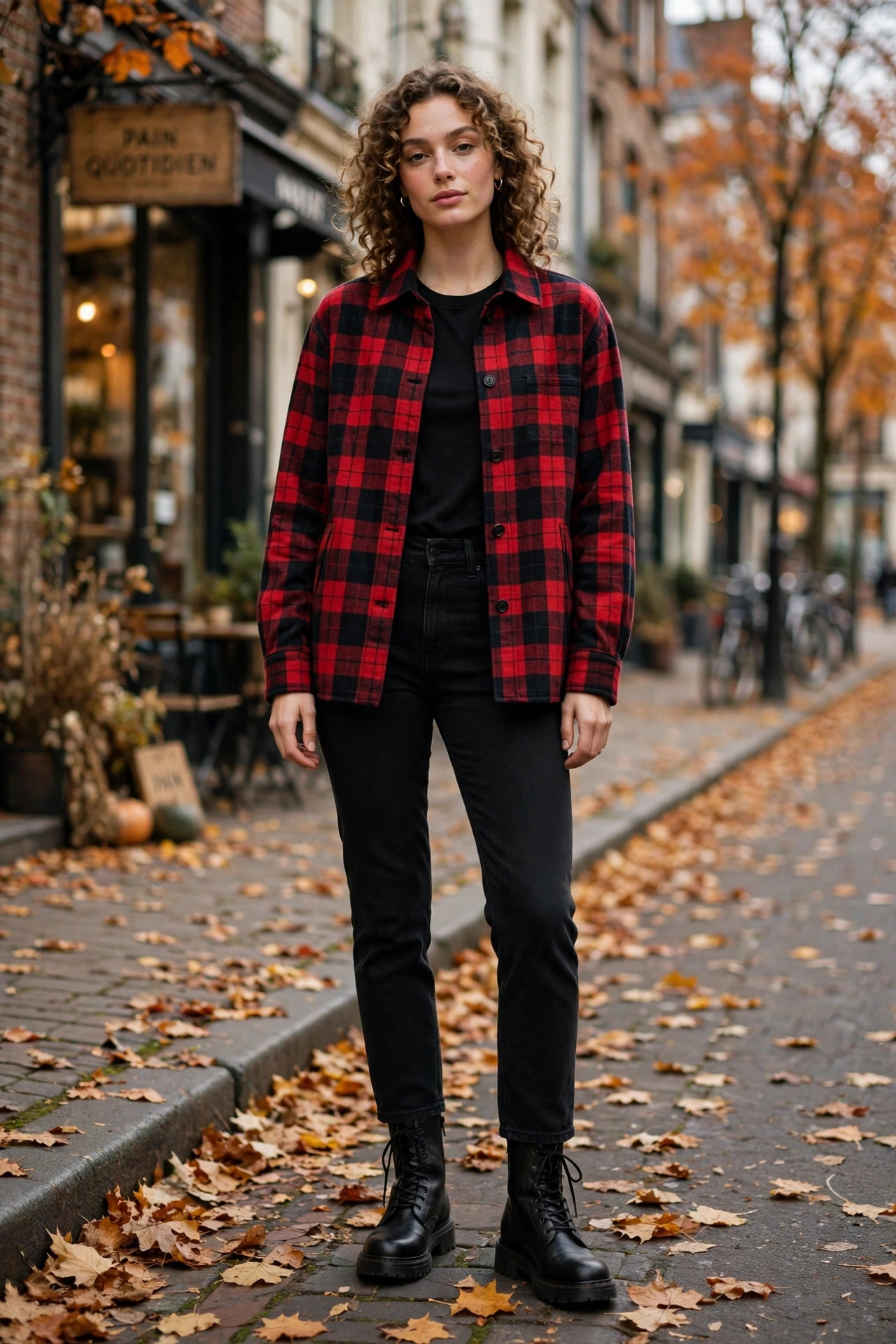
Outfit 18: Plaid Shacket Over All-Black Base
The formula: bold pattern on top, invisible base underneath. Pieces: black turtleneck, black skinny or straight jeans, oversized plaid shacket (red-black buffalo check or camel tartan), black Chelsea boots. Why it works: the shacket — shirt-jacket hybrid — is the definitive fall statement layer, and wearing it open over black lets the pattern carry the outfit. The detail: the shacket should be oversized enough to wear open without pulling. Size up if you are between sizes; a shacket that will not close looks wrong, but one worn deliberately open looks perfect.
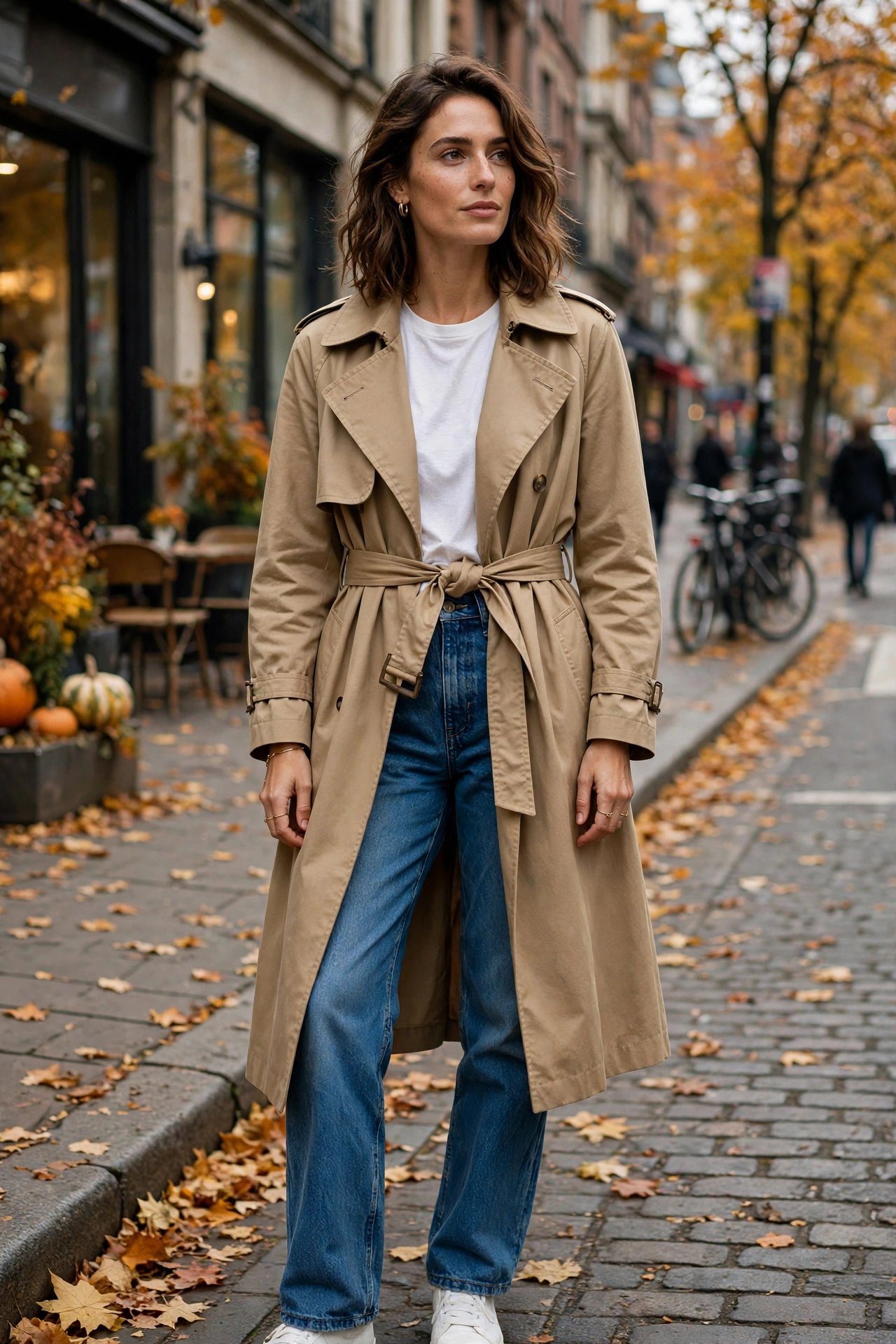
Outfit 19: Trench Coat Over Everything
The formula: the trench as the outfit. Pieces: literally any base — jeans and a tee, a dress, workout leggings and a hoodie — plus a classic belted trench in camel, stone, or black, and loafers or sneakers. Why it works: a good trench elevates whatever is underneath it, which is why it is the highest-ROI layer in fall dressing. The detail: wear it open with the belt tied loosely at the back for daytime, belted at the waist for evening. One trench, two completely different outfits. Look for water-resistant cotton gabardine if you want it to actually handle fall rain.
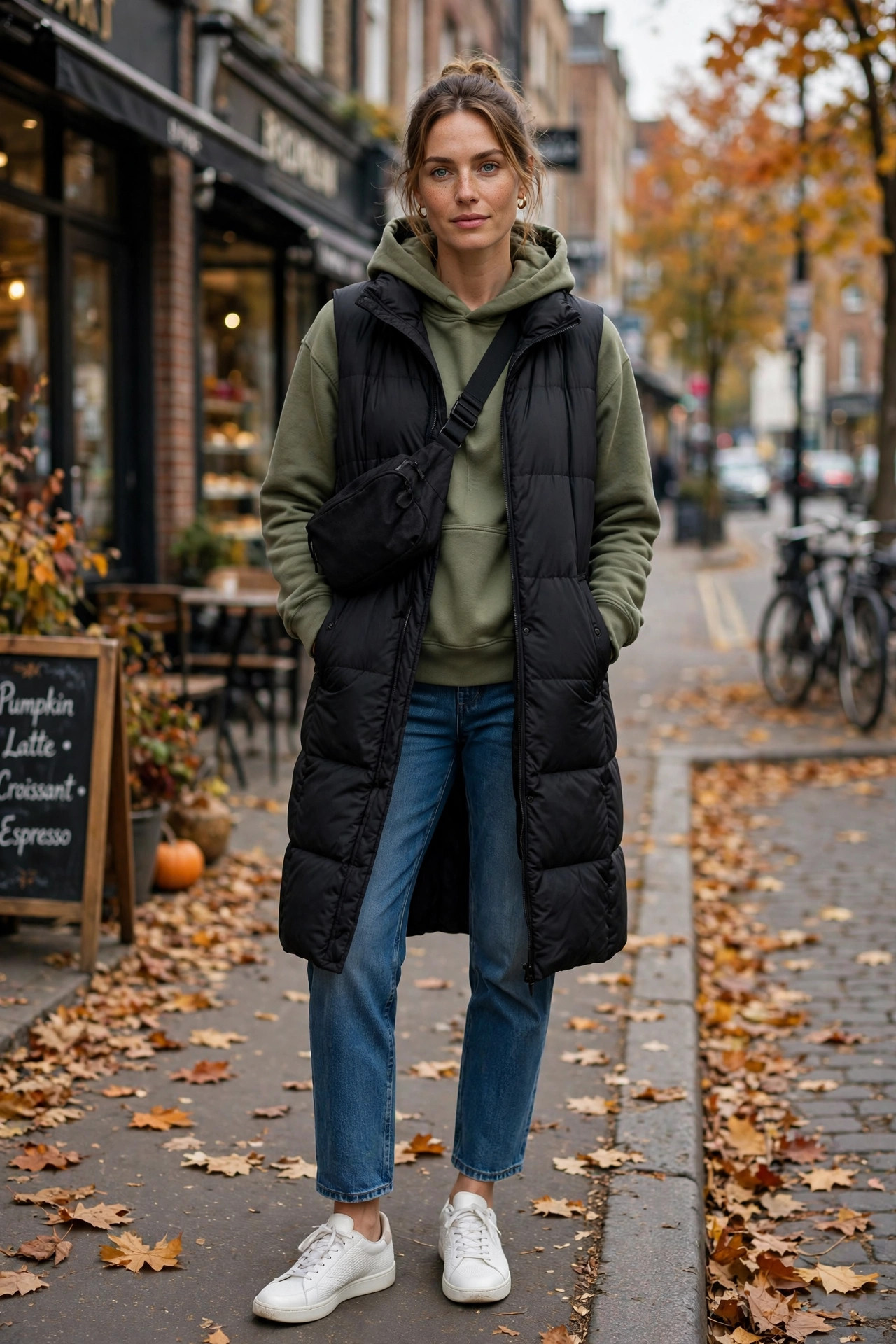
Outfit 20: Puffer Vest Over Hoodie and Jeans
The formula: sporty insulation as the style piece. Pieces: hoodie (gray, cream, or black), quilted puffer vest, straight-leg jeans, sneakers or hiking-style boots. Why it works: the puffer vest adds core warmth without the arm bulk of a full puffer, and the hoodie underneath keeps it casual. The detail: let the hoodie hood sit outside the vest collar at the back — the visible hood is what makes this look styled rather than purely practical. This is the weekend-errands formula that still looks put together.
How Do 2026 Fall Trends Fit Into These Formulas?
The formulas above are timeless, but 2026 has its own flavor. Here is how to nod to the current trends without rebuilding your wardrobe:
- Khaki-coded utility: Pinterest’s 2026 forecast highlights utility dressing — field jackets, cargo pockets, desert neutrals — as a defining trend. Swap your third piece for a utility or field jacket in Outfits 1 or 18 and you are instantly current.
- ’80s glamour touches: sculpted shoulders and bolder accessories are trending. An oversized blazer with real shoulder structure (Outfit 14) or a pair of gold cuffs with Outfit 17 nods to the Glamoratti trend without a full wardrobe overhaul (TheIndustry.fashion, on Pinterest Predicts 2026).
- Thrifted and secondhand: the Pinterest fall trend report shows thrifting surging, with searches for vintage fall pieces up dramatically as shoppers hunt one-of-a-kind layers (Pinterest Newsroom, 2025 Fall Trend Report). Blazers, wool coats, and leather jackets are the three best things to thrift — they are expensive new, plentiful secondhand, and better made in vintage versions.
- Brooches: pin a vintage brooch to a blazer lapel, a coat collar, or a sweater. It is the smallest possible trend commitment with the biggest visual payoff.
What Are the Most Common Fall Layering Mistakes?
Wearing all your layers closed and buttoned
An open layer reveals the layers beneath it, which is the entire visual point of layering. Wear coats and jackets open when indoors or when the temperature allows, let cardigans hang open over a tucked top, and leave blazer buttons undone. A fully buttoned-up stack of layers reads as one bulky mass; the same layers worn open read as an outfit with depth.
Ignoring the bottom half
People plan their tops carefully and then default to the same jeans with every layered look. The bottom half carries equal weight: a satin skirt under an oversized sweater, wide-leg trousers under a cropped jacket, or knee boots under a midi dress change the outfit completely. When an outfit feels boring, change the bottom before you add another top layer.
Matching everything too perfectly
Head-to-toe exact-match sets in identical fabric can look like pajamas, not polish. The fix is breaking the match slightly: a cream sweater with ivory (not identical cream) trousers, or a matching knit set with a contrasting coat. Near-matches look curated; exact matches look accidental.
Forgetting temperature reality
Fall mornings lie. Check the afternoon high before you commit to four layers, and build outfits you can subtract from — the third piece should always be removable without ruining the outfit underneath. If the outfit only works with the coat on, it is not a layering outfit; it is a coat outfit.
How Do You Build a Fall Wardrobe That Supports All 20 Outfits?
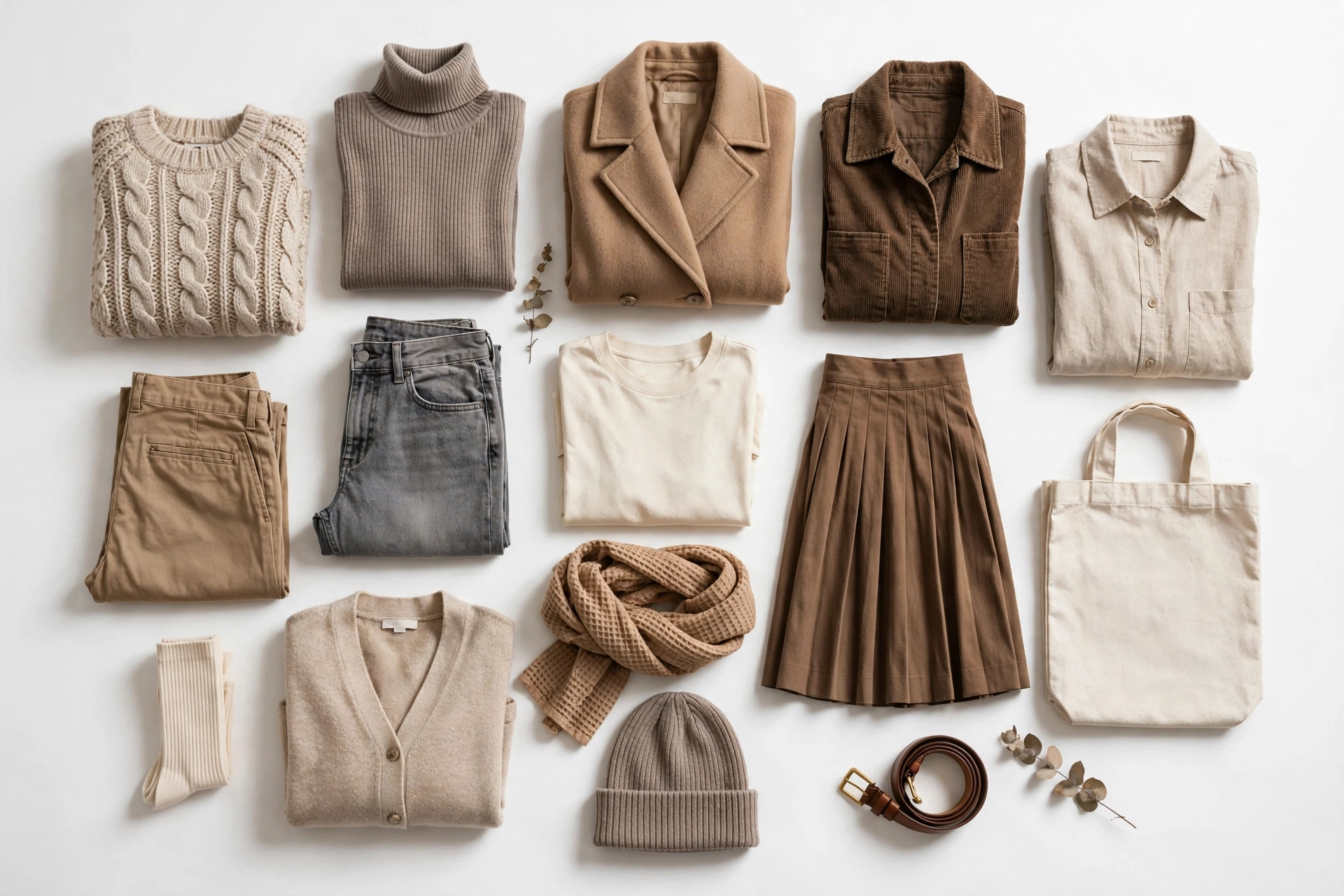
You do not need 20 outfits’ worth of clothes. These 15 pieces combine into all 20 looks above:
- Tops: white tee, black turtleneck, silk blouse, striped button-down, cream crew-neck sweater, chunky knit sweater, hoodie
- Bottoms: medium-wash straight jeans, dark jeans, black trousers, satin midi skirt
- Third pieces: camel blazer, wool coat, leather jacket, trench coat
That is 15 pieces for 20 outfits — the math works because the formulas recombine the same items. If you want to go deeper into minimalist seasonal dressing, our companion guide to the winter capsule wardrobe builds 15 cozy, polished looks from an even smaller set of pieces. To complete these fall looks, add a slicked-back bun or polished updo and, for evening, a vamp romantic makeup look.
How Do You Layer for Fall Rain?
Rain changes the layering math: suede, silk, and unlined wool suffer in wet weather, so swap them out on rainy days. A water-resistant trench or waxed utility jacket replaces the wool coat as your third piece. Trade suede boots for leather Chelsea boots (leather handles rain; suede spots permanently) and skip the silk blouse for a cotton or merino base. The formulas do not change — only the fabrics do. Keep a compact umbrella in your bag from October through November and you will never have to think about it twice.
Frequently Asked Questions
1. What is the best layering formula for fall 2026?
The most reliable formula is fitted base + mid layer + structured third piece + one texture contrast. It handles 50-to-70-degree temperature swings, works for casual and polished settings, and adapts to every 2026 trend by swapping the third piece. Master this one formula and the other four in this guide become variations.
2. How many layers should I wear in fall?
Three layers is the sweet spot for most fall days: a base, a mid layer, and an outer layer. Two layers work above 65 degrees; four layers are for days below 50. More than four visible layers almost always looks bulky unless each layer is very thin, like a camisole under a shirt under a cardigan under a lightweight coat.
3. How do I layer clothes without looking bulky?
Keep the innermost layer thin and fitted, limit yourself to one oversized piece per outfit, and mix textures instead of stacking the same fabric. Open front layers, half-tucks, and pushed sleeves all reveal shape beneath the layers. The thin-to-thick, inside-to-out principle prevents the marshmallow effect.
4. What is the third-piece rule in fashion?
The third-piece rule says an outfit needs three visible pieces to look complete — for example, jeans and a sweater (two pieces) become an outfit when you add a blazer, jacket, or long cardigan (the third piece). The third piece adds structure, gives you a removable temperature layer, and is what makes an outfit look styled rather than simply dressed.
5. Can I wear summer dresses in the fall?
Yes — layer a fitted turtleneck underneath and add tights, boots, and a structured third piece like a blazer or leather jacket on top. Slip dresses, shirt dresses, and knit dresses all transition well. The pieces that do not transition are ultra-light fabrics like linen and eyelet, which read as summer no matter what you layer over them. When in doubt, hold the dress up against a wool coat — if the fabrics look like they belong to different seasons, they do.
6. What shoes work best with layered fall outfits?
Ankle boots are the most versatile — they work with jeans, skirts, and dresses. Chelsea boots skew casual-cool, heeled ankle boots dress things up, and knee-high boots anchor midi lengths. Loafers suit preppy and polished formulas, white sneakers keep everything casual, and pointed flats bridge work and weekend.
7. How do I layer for a fall wedding or dressy event?
Start with a midi or maxi dress in a fall fabric (satin, velvet, or heavy crepe), add a structured third piece like a tailored blazer or wool coat, and finish with heeled boots or pumps. Monochrome or tonal layering (Outfits 15-17) reads dressiest. Avoid puffer vests, denim jackets, and sneakers for dressy events — the third piece sets the formality level.
8. What colors are trending for fall 2026?
Chocolate brown, camel, and khaki utility neutrals lead, alongside ’80s-inspired rich tones and classic black. Pinterest’s 2026 forecast highlights khaki-coded utility dressing and glamorous ’80s influences. For a safe palette that stays current, build around camel, chocolate, cream, and black with one accent like burgundy or olive.
9. Is it worth thrifting fall layers?
Yes — blazers, wool coats, and leather jackets are among the best things to buy secondhand. They are expensive new, abundant in thrift stores, and often better constructed in vintage versions. Pinterest’s trend data shows thrifting surging for fall fashion. Check shoulder fit and lining condition; those are the expensive things to alter or repair.
10. How do I transition these outfits from day to evening?
Change the shoes and add one polished element: swap sneakers for heeled boots, add a red lip or statement earring, or trade the casual third piece for a blazer or leather jacket. The base layers stay the same — evening polish comes from structure and accessories, not a whole new outfit. Keep a pair of heeled ankle boots and a bold lipstick in your bag and you can make the switch anywhere in five minutes.