 Global Fashion Trends
Brown vs. Brunette Hair: What’s the Real Difference?
Ask five different people to define “brunette” and you’ll probably get five slightly different answers. Some will tell you it just means brown hair, plain and simple. Others will insist it only counts if the hair is dark, verging on black. A few might even bring skin tone into the conversation, which sounds strange until you dig into where the word actually came from. The truth is that brown and brunette aren’t quite interchangeable, even though people use them that way constantly.
Understanding the real distinction matters more than it might seem, especially if you’re trying to describe a color to a stylist, search for the right shade online, or just settle an argument with a friend. Here’s what actually separates the two terms, and where they overlap.
Brown vs. Brunette Hair: What’s the Real Difference?
Brown hair refers specifically to the pigment and shade of the hair itself, ranging from light caramel tones to deep chocolate. Brunette is a broader, more cultural term, borrowed from French, that’s traditionally used to describe someone with brown to nearly black hair as a general category or “look,” rather than pinpointing an exact shade the way a specific color name does.
In practice, most brown-haired people get called brunettes without anyone thinking twice about it. The distinction shows up more in precision. If you’re at a salon discussing a specific formula and level, your colorist is talking about brown hair in technical terms. If you’re describing someone’s general coloring in casual conversation, “brunette” is doing that broader, looser work instead.
For help deciding, see how to choose the best hair color for your skin tone.
Ready to try it? Learn how to color your hair at home step by step.
What “Brunette” Actually Means
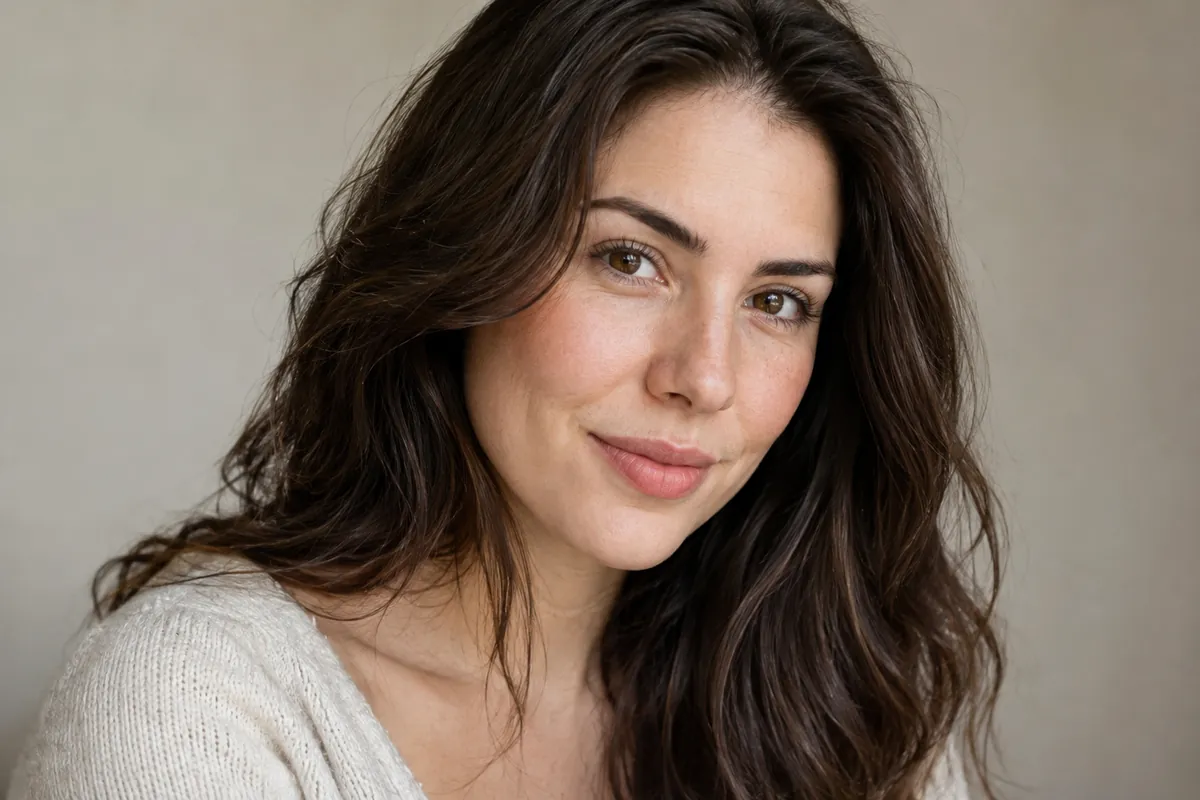
The word brunette comes from the French “brun,” meaning brown, with a diminutive suffix attached. It entered English usage as a way to describe women with brown or dark hair, and historically it carried a slightly broader connotation, sometimes loosely tied to an overall coloring, meaning hair and sometimes complexion together, rather than strictly isolating hair shade the way modern usage tends to.
Grammatically, brunette is technically the feminine form in French, with “brunet” as the masculine counterpart, though English speakers largely dropped that distinction and use “brunette” broadly across genders today. You’ll rarely see “brunet” used in casual English conversation anymore, even though it’s technically the correct masculine form.
What makes brunette functionally different from a color name like “brown” is that it behaves more like a category label than a precise shade descriptor. People use it the way they use “blonde” or “redhead,” as a broad grouping that covers a wide spectrum of actual color variation underneath one convenient word.
Is Brunette a Hair Color or a Hair Type?
Brunette functions more like a broad descriptive category than a single, specific hair color. It groups together a wide range of actual brown and near-black shades under one convenient term, similar to how “blonde” covers everything from pale platinum to golden honey tones without specifying an exact shade.
What “Brown Hair” Actually Means
Brown hair, by contrast, is a genuine color descriptor rooted in actual pigment. Hair color professionals typically work with a numbered level system, running from the darkest shades at one end to the lightest at the other, and brown tones occupy a specific middle range on that scale. Within that range, you’ll find meaningful variation, light brown sitting close to dark blonde territory, medium brown as the classic middle ground, and dark brown edging close to black.
This technical framing is why a colorist can look at a swatch and say precisely what level and tone they’re working with, while “brunette” wouldn’t give them nearly enough specific information to mix a formula. Brown hair, in this sense, is about the actual pigment present in the strand, determined by the type and concentration of melanin, specifically eumelanin, which is responsible for brown and black tones in hair.
Is Black Hair Considered Brunette?
Very dark brown hair is often casually grouped under “brunette” even when it looks nearly black, since the term traditionally spans from mid-brown all the way to the darkest natural shades. True black hair, with essentially no visible brown undertone even in bright light, sits at the far end of that spectrum and is sometimes described separately as simply “black” rather than brunette, though usage varies quite a bit depending on who you ask.
The Many Shades That Fall Under “Brunette”
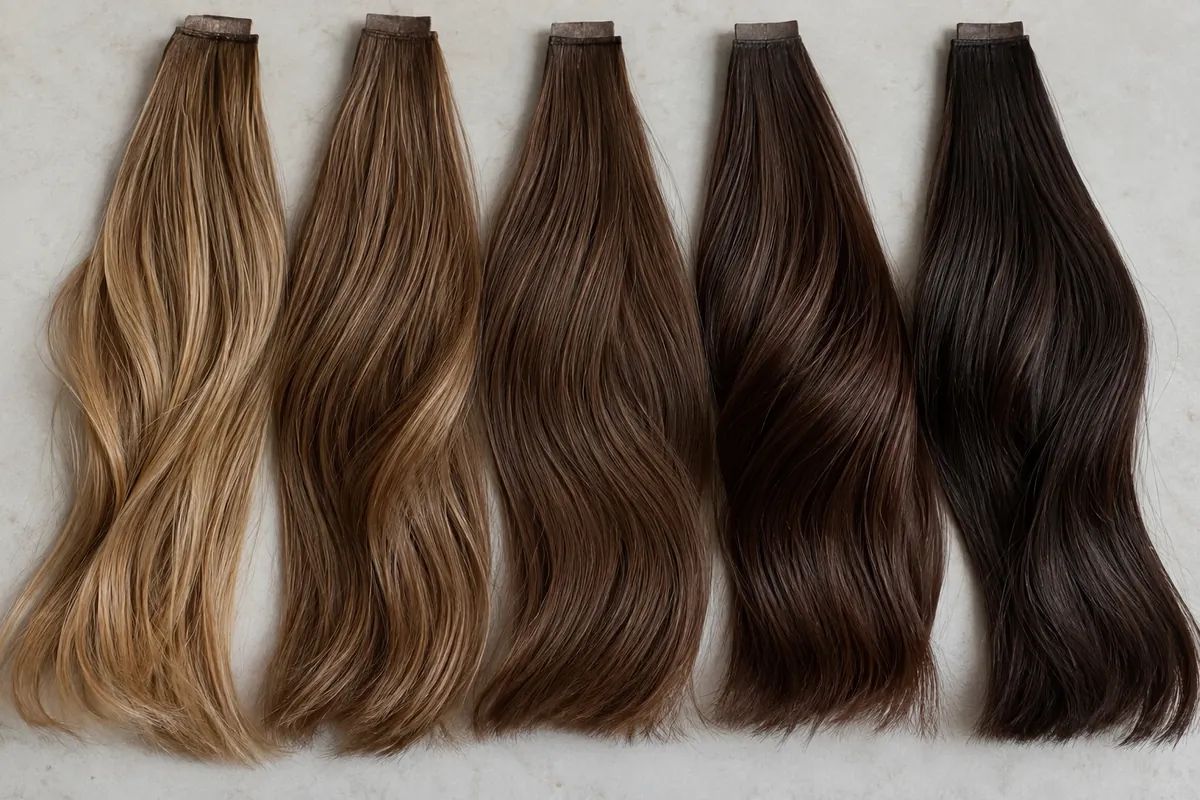
Part of what makes brunette such a useful umbrella term is just how much variation it covers. A handful of common brown shade names give a better sense of that range.
- Chestnut brown carries warm, reddish undertones and tends to look rich and glossy, especially in natural light.
- Chocolate brown sits in a similar warm family but leans slightly darker and more uniform, without the reddish cast chestnut has.
- Espresso is about as dark as brown gets before it crosses into black territory, deep and almost devoid of visible warmth.
- Mahogany brings a more pronounced red-violet undertone into the mix, giving it a bit more drama than a straightforward brown.
- Caramel and light brown shades sit at the lighter end, often blending into what some people would call dark blonde depending on lighting and personal perception.
- Ash brown mutes out warm undertones entirely, leaning cool and sometimes slightly gray-toned by comparison.
- Golden brown does the opposite, leaning warm and sunlit, often with visible yellow or amber undertones running through it.
All of these fall comfortably under the brunette umbrella, even though they’d require entirely different formulas, undertones, and sometimes different levels to achieve at a color appointment.
Is Dark Blonde the Same as Light Brunette?
Dark blonde and light brunette sit right next to each other on the color spectrum, and the line between them is blurry, shifting based on lighting, individual hair texture, and personal perception. Some colorists treat the two as essentially overlapping categories, while others draw a firmer line at a specific level on the professional color scale, which is part of why two different stylists might describe the exact same head of hair differently.
How Colorists and the Beauty Industry Use These Terms Differently
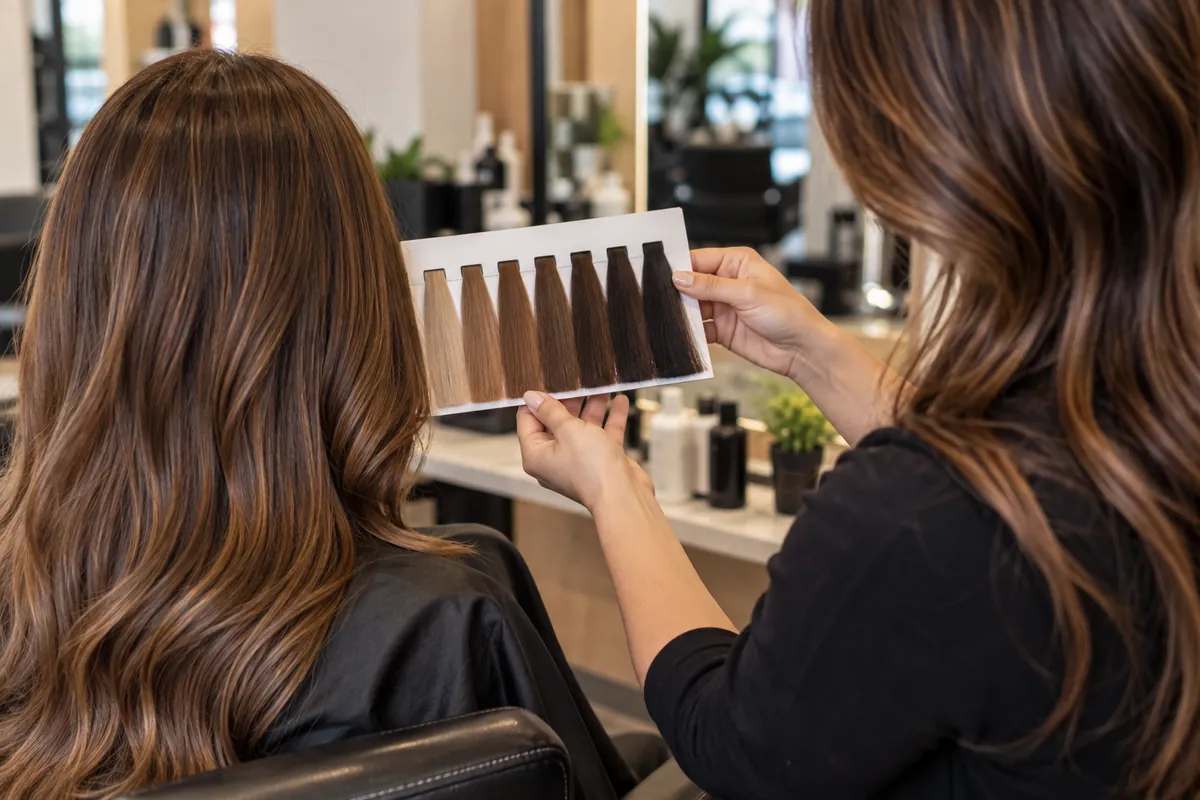
Inside a salon, colorists lean heavily on the technical level and tone system because it removes ambiguity. Saying “level six, warm” tells a professional exactly what to mix, in a way that “brunette” simply can’t. This precision matters enormously when trying to replicate a color, correct an uneven result, or communicate a formula between different stylists.
Outside the salon, in marketing and everyday conversation, “brunette” does a lot of heavy lifting as a broad, approachable category. Hair dye packaging and color charts often use it as an umbrella label grouping several specific brown shades together, while the individual shade names underneath, like “medium brown” or “dark chocolate brown,” do the more precise work of telling you which actual product to grab. This is why searching for “brunette hair dye” tends to surface a whole range of brown options rather than pointing you toward one exact shade.
Can Hair Naturally Shift Between Blonde and Brunette Over Time?
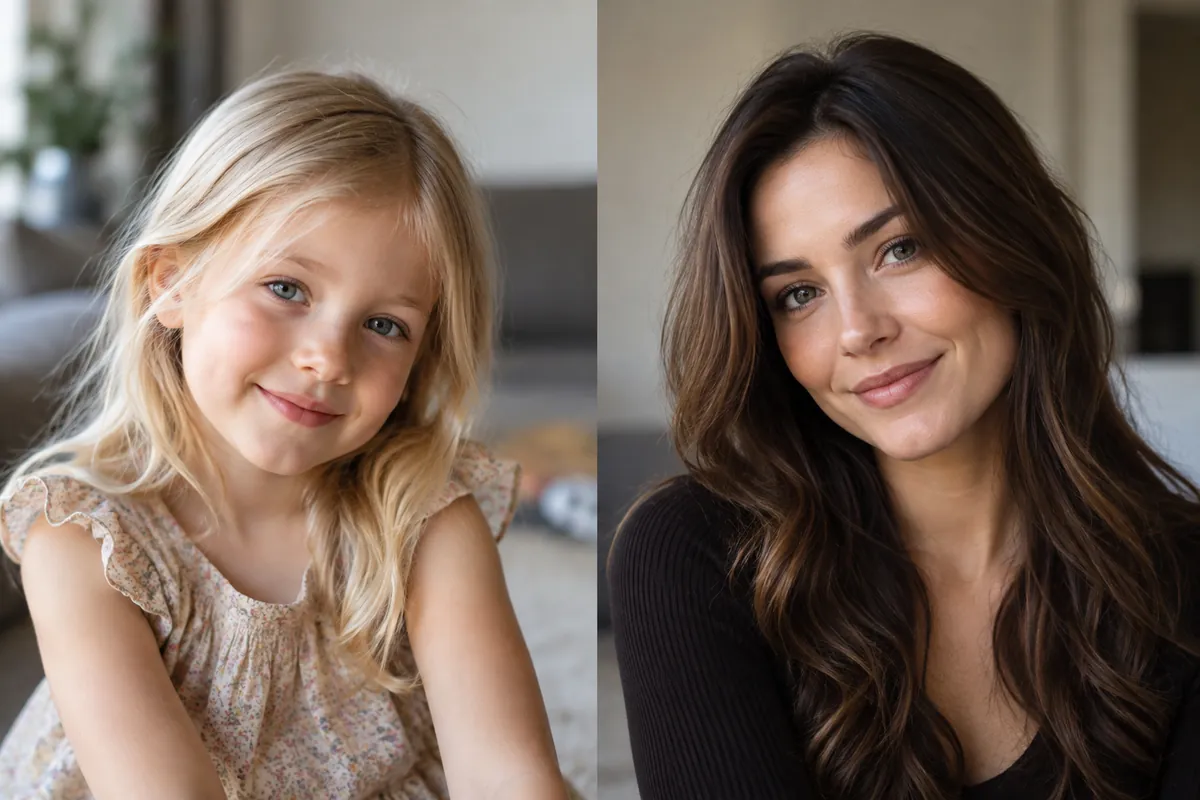
Yes, hair color can shift gradually over a person’s lifetime due to changes in melanin production, which is why many children born blonde naturally darken into brunette shades by adolescence or adulthood. This happens because eumelanin production often increases with age in some people, deepening the hair’s natural color well before any artificial coloring ever comes into play.
Frequently Asked Questions
1. Is brunette always a natural hair color, or can it be dyed?
Brunette isn’t limited to natural hair at all, since the term simply describes the resulting shade, whether that color comes from natural pigment or from an applied hair dye that lands somewhere in the brown to near-black range.
2. Why do some people get called brunette even with reddish-brown hair?
Reddish-brown shades like chestnut and auburn often still get grouped under brunette in casual conversation, since the term generally covers the broader brown family even when a noticeable red or copper undertone is present.
3. Is there a difference between “brunette” and “brown-haired” in everyday usage?
In casual conversation, most people use these interchangeably, though brunette carries a slightly more stylized, broader connotation as a descriptive category, while “brown-haired” reads as a more literal, straightforward description of the actual color.
4. Does undertone matter when choosing a brunette hair dye shade?
Yes, undertone plays a major role in how a brunette shade looks once applied, since warm, cool, and neutral brown formulas can produce noticeably different results even at the same overall depth or level, so matching undertone to your skin tone and desired look matters as much as picking the right darkness.
5. Can brunette hair have highlights and still be called brunette?
Yes, brunette hair with highlights is still generally referred to as brunette overall, since the base color remains in the brown family even with lighter dimensional pieces woven through, though the specific look might get a more descriptive name like “sunkissed brunette” or “balayage brunette.”
6. Why do hair color charts group so many different browns under one “brunette” category?
Marketing and retail color charts often use brunette as a broad, recognizable umbrella term to help shoppers quickly find the general family of shades they want, then rely on more specific shade names underneath that category to guide the final, precise choice.
7. Is “brunet” ever used instead of “brunette” in modern English?
Rarely, since English speakers have largely dropped the French masculine and feminine distinction and use “brunette” broadly regardless of gender, even though “brunet” remains technically correct as the masculine form in its original French grammar.
8. Does hair texture affect how a brunette shade appears?
Yes, hair texture and thickness can affect how light reflects off colored hair, which means the same brunette formula can look slightly different on straight, wavy, or curly hair, or on fine versus coarse strands, even though the underlying pigment is identical.
9. Is auburn considered a type of brunette or a separate category?
Auburn sits in a gray area, since it’s a reddish-brown shade that some people group under brunette and others treat as its own distinct category closer to red hair, largely because auburn’s strong red undertone makes it visually stand apart from more classic brown tones.
10. Why does the same brown hair color look different in different lighting?
Lighting changes how pigment reflects and how undertones show up, so a brunette shade that looks rich and warm in natural daylight can appear noticeably cooler, darker, or flatter under indoor or fluorescent lighting, even though the actual hair color hasn’t changed at all.