How to Style Hair: A Beginner’s Guide to Getting Started
Standing in front of the mirror with a blow dryer in one hand and no real plan is a pretty universal experience. Styling hair looks effortless when someone else does it, and it feels anything but effortless the first dozen times you try it yourself. Most of the frustration, though, comes from missing a handful of fundamentals that nobody ever explicitly teaches, not from any lack of natural talent.
This guide walks through everything a true beginner actually needs: understanding your hair type, the tools worth owning, the order products actually go on, and the core techniques that everything else eventually builds from. Once these basics click, styling stops feeling like guesswork and starts feeling like a routine you actually understand.
How to Style Hair: The Basics Every Beginner Should Know
Good hair styling starts with knowing your natural texture and working with it rather than against it, using the right products in the correct order, and applying heat tools correctly with proper protection. From there, a small set of core techniques, like blow-drying with tension, basic curling or waving, and simple braiding or updo skills, covers the vast majority of everyday styling needs.
The biggest shift for most beginners isn’t learning a fancy technique. It’s understanding that styling success depends heavily on what happens before any tool touches your hair, meaning how your hair was washed, what products went on while it was still damp, and how much moisture it started with.
Understand Your Hair Type and Texture First

Every styling decision downstream depends on this step, which is why it belongs first rather than being an afterthought. Hair generally falls somewhere on a spectrum from straight to wavy to curly to coily, and within each category, thickness and density vary quite a bit from person to person.
Straight hair tends to hold less texture naturally and often needs more deliberate effort to create movement or volume, since it doesn’t have a natural bend working in its favor. Wavy hair sits in between, often benefiting from styling techniques that enhance its existing wave pattern rather than fighting it into something completely different. Curly and coily hair have their own distinct needs entirely, typically requiring more moisture, gentler handling, and techniques built specifically around working with curl clumps and pattern rather than brushing curls out, which usually creates frizz instead of definition.
Porosity matters here too, referring to how easily your hair absorbs and releases moisture. Low porosity hair tends to resist product absorption and often needs lighter formulas applied to damp rather than fully wet hair. High porosity hair absorbs product quickly but can lose moisture just as fast, often benefiting from heavier, more emollient products and techniques that help seal the cuticle after styling.
How Do You Know Your Hair Type Before Choosing a Styling Method?
The simplest way to identify your hair type is to look at freshly washed, air-dried hair with no product in it and observe its natural pattern, ranging from straight with no bend, to loose waves, to defined curls, to tight coils. Paying attention to how your hair behaves without any styling intervention gives you the clearest picture of what techniques and products will actually work with your natural texture rather than against it.
The Tools Worth Owning as a Beginner
You don’t need a drawer full of specialty equipment to get started, but a handful of tools make a genuine difference in results.
A quality blow dryer with adjustable heat and speed settings is worth prioritizing over almost anything else, since it’s the foundation for a huge range of everyday styles. A diffuser attachment is particularly valuable for wavy, curly, and coily hair types, helping dry hair while preserving natural texture rather than blowing it straight and frizzy.
A round brush is essential for anyone working toward a smooth blowout or added volume at the roots, with brush barrel size affecting how much curl or bend gets created during drying. A wide-tooth comb handles detangling on wet hair far more gently than a standard brush, reducing breakage during the most vulnerable part of the styling process.
A flat iron and a curling iron or wand cover most heat-styling needs beyond blow-drying, letting you smooth texture or add curl and wave as needed. Clips for sectioning hair make almost every technique easier to execute evenly, since working in smaller, manageable sections consistently produces better results than trying to style your entire head at once.
Products and the Order to Apply Them
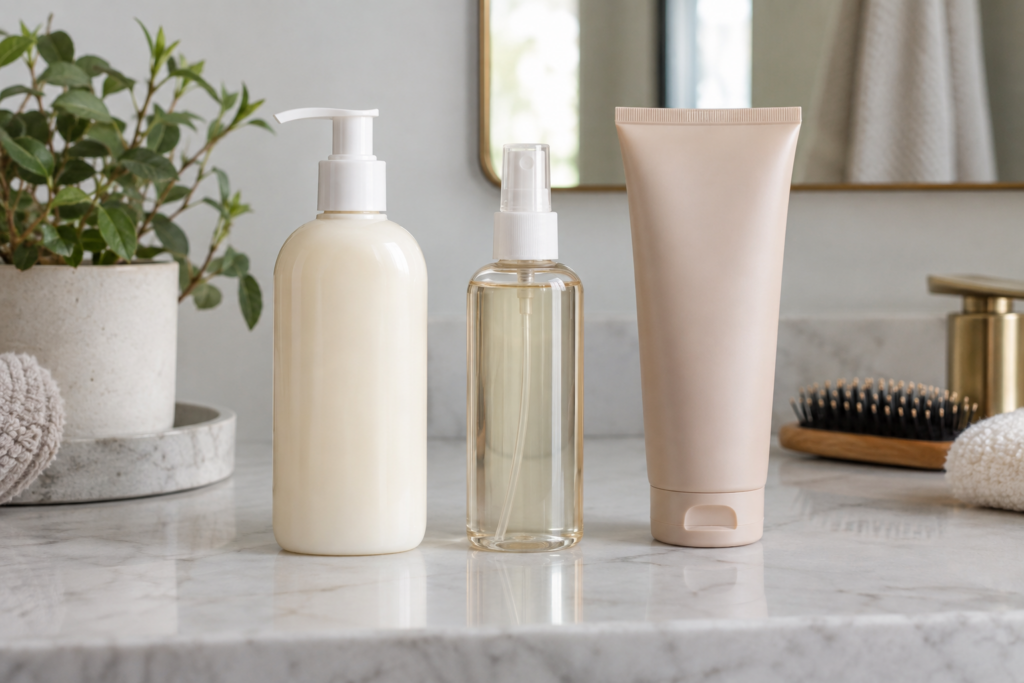
Product order genuinely matters, and getting it backward is one of the most common beginner mistakes. A general, reliable order looks like this: start with a leave-in conditioner or detangler on damp hair, follow with a heat protectant if you’re using any hot tools, then add styling products like mousse, curl cream, or a lightweight gel depending on your hair type and desired result, and finish with any hold or shine product only after your style is fully set.
Heat protectant deserves special mention here, since it needs to go on before any hot tool touches your hair, not after. Skipping this step, even occasionally, adds up to real cumulative damage over time, especially with regular use of flat irons or curling tools.
Lighter products generally work better for fine or low-density hair, since heavier formulas can weigh strands down and leave hair looking flat or greasy. Thicker, more emollient products tend to work better for coarse, curly, or high-density hair, which often needs more moisture and hold to manage frizz and maintain definition throughout the day.
What Hair Styling Products Does a Beginner Actually Need?
A genuine beginner really only needs a heat protectant, a leave-in conditioner or detangler, and one styling product suited to their hair type, whether that’s mousse for volume, a curl cream for texture, or a smoothing serum for sleek styles. Building out a more specialized routine can come later, once you understand how your specific hair responds to these core essentials.
Foundational Styling Techniques to Learn First
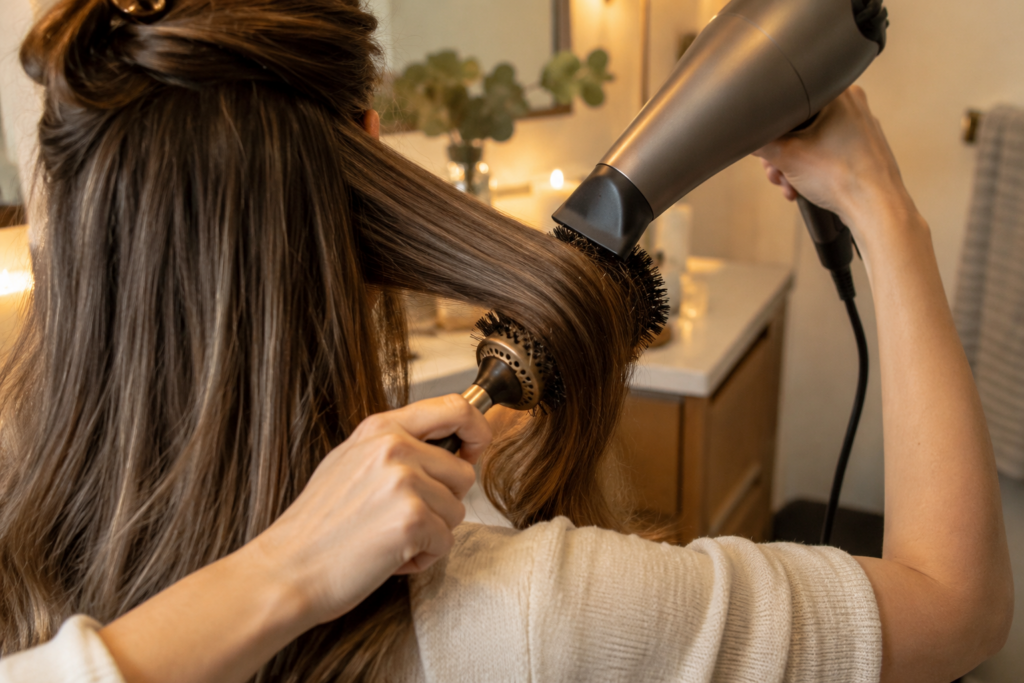
A handful of core techniques cover most everyday styling needs, and mastering these first makes everything more advanced far easier to pick up later.
Sectioning is genuinely foundational. Dividing hair into smaller, manageable pieces before blow-drying or heat styling produces far more even, controlled results than trying to work through your entire head in one pass, and it’s a habit worth building early rather than skipping to save time.
Blow-drying with tension creates smoothness and shape by pulling hair taut with a brush while directing airflow down the hair shaft, which also helps smooth the cuticle for extra shine. Practicing this on small sections first builds the coordination needed before attempting it on a full head of hair.
Basic curling or waving with a curling iron or wand comes down to consistent section size, wrap direction, and hold time, and beginners generally get more even results working with smaller sections rather than trying to curl large chunks of hair at once.
A simple braid, whether a basic three-strand braid or a slightly more advanced version, is one of the most versatile skills to learn early, useful for everyday styling, protecting hair overnight, or creating texture once it’s taken down.
A clean low bun or ponytail rounds out the essential list, since it’s a reliable, polished option that works on most hair types and lengths, and it’s forgiving enough for days when more elaborate styling isn’t realistic.
How Long Should Freshly Washed Hair Dry Before Styling?
Hair generally styles best when it’s damp rather than dripping wet, since fully saturated hair takes longer to style and is more prone to stretching and breakage during the process. Letting hair air-dry partially, or blotting it with a towel until it’s just damp, before applying products and starting your styling routine typically produces better, more controlled results than working with soaking wet hair.
Avoid These Common Beginner Mistakes
A few recurring mistakes trip up almost everyone starting out, and knowing about them ahead of time helps you sidestep the learning curve a little faster.
Using too much heat, too often, without protection is probably the single most damaging habit beginners fall into, often without realizing the cumulative effect until months later when hair starts feeling noticeably drier or more prone to breakage. Working in sections that are too large is another common issue, since it makes it much harder to get even heat distribution or a consistent curl and wave pattern across the whole head.
Skipping heat protectant to save time, even occasionally, adds up faster than people expect. Applying too much product, particularly heavier styling creams or oils, is another frequent misstep, since it’s much easier to add more product than to remove excess once it’s already been applied throughout the hair.
Brushing curly or wavy hair when it’s dry is a mistake that specifically affects textured hair types, since it typically breaks up natural curl pattern and creates frizz rather than smooth definition. Detangling and styling curly hair while it’s wet or damp, using fingers or a wide-tooth comb, generally preserves texture far better.
How Do You Style Hair Without Heat Damage?
Minimizing heat damage comes down to always using a heat protectant, keeping tool temperatures at the lowest setting that still achieves your desired result, and giving hair regular breaks from heat styling altogether when possible. Air-drying techniques, protective overnight styles, and heat-free curling methods like braiding or twisting damp hair are all effective ways to achieve styled looks without relying on hot tools every single day.
Frequently Asked Questions
1. How long does it typically take to get good at styling your own hair?
Most people notice real improvement within a few weeks of regular practice, since styling relies heavily on muscle memory and understanding how your specific hair responds, both of which develop naturally with repetition rather than through any single breakthrough moment.
2. Is it better to learn styling on wet, damp, or dry hair first?
Damp hair is generally the easiest starting point for most techniques, since it’s more manageable than fully wet hair and still pliable enough to shape effectively, unlike dry hair which tends to resist significant styling changes without added moisture or heat.
3. Do beginners need a diffuser attachment even if they don’t have curly hair?
A diffuser is most beneficial for wavy, curly, and coily hair types specifically, since it helps preserve natural texture during drying, so beginners with straight hair generally don’t need one and can prioritize a standard round brush and nozzle attachment instead.
4. How often should you wash hair if you’re trying to build a consistent styling routine?
Washing frequency depends heavily on scalp oil production and hair type, but many people find washing every two to three days strikes a good balance between manageable styling and not over-washing, with dry shampoo helping extend the time between washes when needed.
5. Can you style hair well without ever using heat tools?
Yes, heat-free styling methods like braiding or twisting damp hair, using foam or fabric rollers, and finger-styling curly or wavy hair to enhance natural texture can all produce polished, well-defined results without any heat tool involved at all.
6. Why does the same styling technique look different on different people?
Hair texture, density, porosity, and natural growth pattern all affect how any given technique translates onto an individual head of hair, which is why two people following identical steps can end up with noticeably different results even using the same tools and products.
7. Is it necessary to use a heat protectant even at lower heat settings?
Yes, heat protectant is still worth using even at lower temperatures, since any direct heat exposure carries some risk of moisture loss and cuticle damage over time, and consistent protection habits matter more for long-term hair health than any single low-heat session.
8. What’s the difference between styling for volume versus styling for smoothness?
Styling for volume typically involves techniques like root lifting, blow-drying hair upside down, or using larger-barrel curling tools to create lift and movement, while styling for smoothness focuses on tension-based blow-drying and flat-iron techniques that flatten the cuticle and minimize frizz.
9. Can you style hair the same day you wash it, or does it need to settle first?
Freshly washed hair can absolutely be styled the same day, and in many cases it holds a style better right after washing than hair with a day or two of natural oil buildup, though some people prefer slightly “second-day” hair for certain updo styles since it offers more grip.
10. Is it worth learning to style hair without watching video tutorials?
Video tutorials can genuinely speed up learning specific techniques, but understanding the underlying fundamentals covered here, like hair type, product order, and sectioning, makes any tutorial far easier to follow and adapt successfully to your own hair rather than just copying steps that may not translate directly.