 Global Fashion Trends
How to Style Medium & Shoulder-Length Hair: Complete Guide
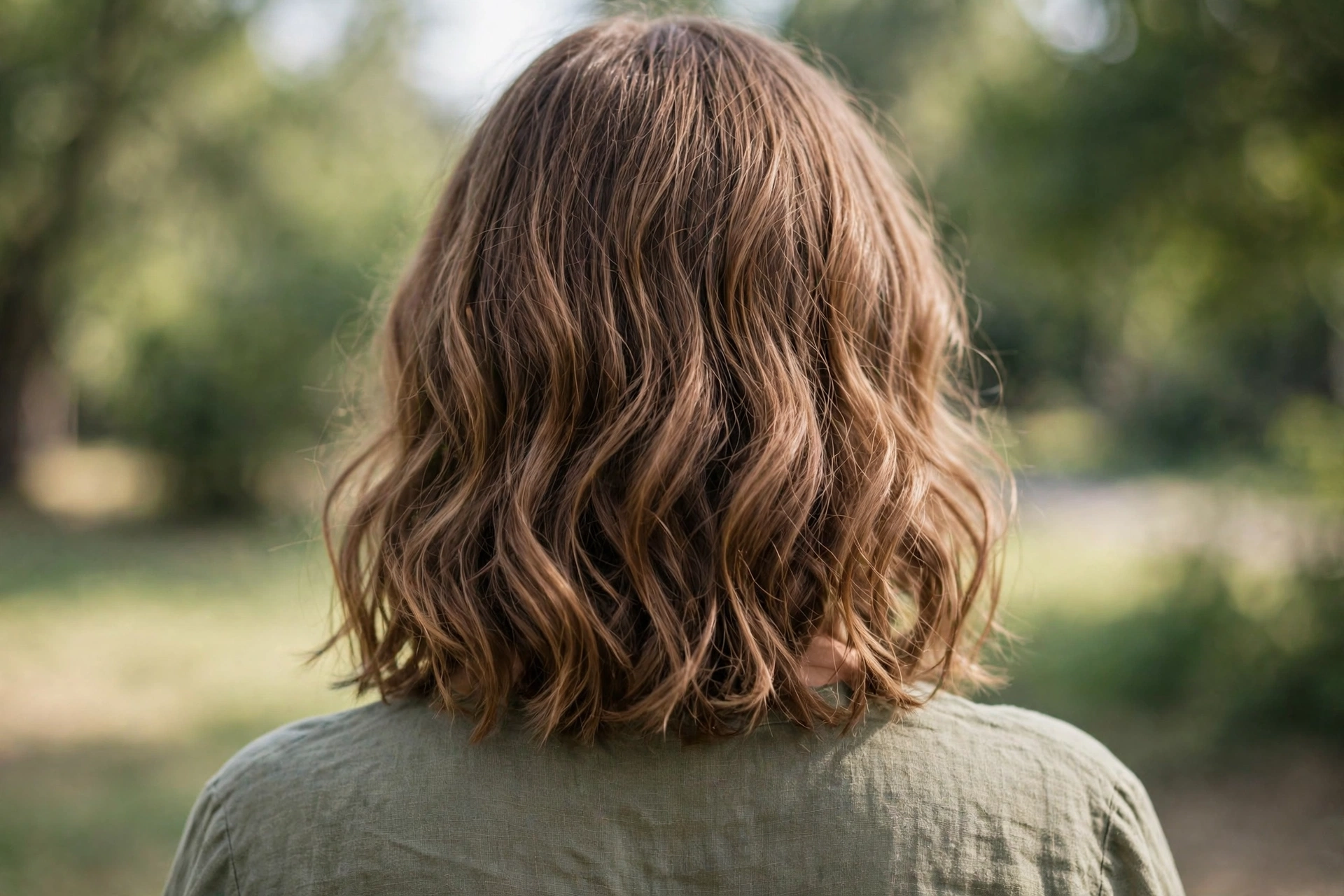
Styling medium and shoulder-length hair well comes down to building root volume first and choosing techniques made for this length, rather than borrowing tricks meant for much longer hair. Shoulder-length hair sits in a strange spot. It’s long enough for a decent number of style options, but it’s also short enough that half of those options don’t quite work the way they would on longer hair. A ponytail can end up looking stubby. An updo can feel sparse. A blowout that should look full and bouncy sometimes just falls flat by midday. None of this means medium-length hair is harder to love, but it does mean it benefits from a slightly different playbook than either short or long hair.
This guide covers what actually makes this length tricky, how to build real volume that lasts, how to approach curls and sleek styling at this specific length, and how to make half-up styles, ponytails, and braids look intentional rather than thin or awkward.
How to Style Medium and Shoulder-Length Hair: The Basics
Styling medium-length hair successfully comes down to building volume at the roots before it has a chance to fall flat, choosing techniques that work with this length’s specific weight and movement rather than borrowing tricks meant for longer hair, and using smaller, more deliberate sectioning for anything involving an updo or ponytail, since there’s simply less length and bulk to work with than longer hair provides.
The core challenge at this length is that shoulder-length hair often has just enough weight to pull volume down, but not quite enough length or bulk to create the fuller, more forgiving movement longer hair naturally has. Recognizing that tension is the first step toward styling around it rather than fighting it.
Why This Length Has Its Own Specific Styling Challenges
For shorter cuts, see how to style short hair.
New to styling? Start with our beginner’s guide to styling hair.
This length is tricky because it is heavy enough to fall flat but too short to move the way longer hair does naturally. Shoulder-length hair frequently gets called the “in-between” length for good reason. It’s long enough to feel weighty at the ends, which can pull hair flat and stringy-looking without any volume-building technique involved, but it’s not long enough to have the kind of natural bend and movement that longer hair develops simply from its own length and weight working together.
This length also transitions awkwardly during growth phases. Hair growing out from a shorter cut toward medium length, or medium length growing toward long, often goes through a stretch where it’s neither short enough to style with short-hair techniques nor long enough for typical long-hair styling to work smoothly, which is part of why this length sometimes gets a reputation for being difficult.
Why Does Shoulder-Length Hair Look Stringy Without Styling Help?
Shoulder-length hair looks stringy primarily because it has enough weight at the ends to pull hair down flat, but not quite enough length or natural body to create movement and separation on its own the way longer hair often does. Without added volume at the roots or some kind of texture through the mid-lengths and ends, gravity simply pulls this length straight down into a flatter, thinner-looking shape than the same hair might show at a shorter or longer length.
Is Medium-Length Hair Harder to Style Than Long Hair?
Medium-length hair isn’t inherently harder to style, but it does require more deliberate volume-building and sectioning technique than long hair, which often has enough natural weight and length to hold styles with less active effort. Long hair tends to be more forgiving for updos and ponytails specifically, since there’s more length and bulk available to work with, while shoulder-length hair benefits from techniques designed to maximize what’s available at a shorter length.
Blow-Drying and Adding Volume at Shoulder Length
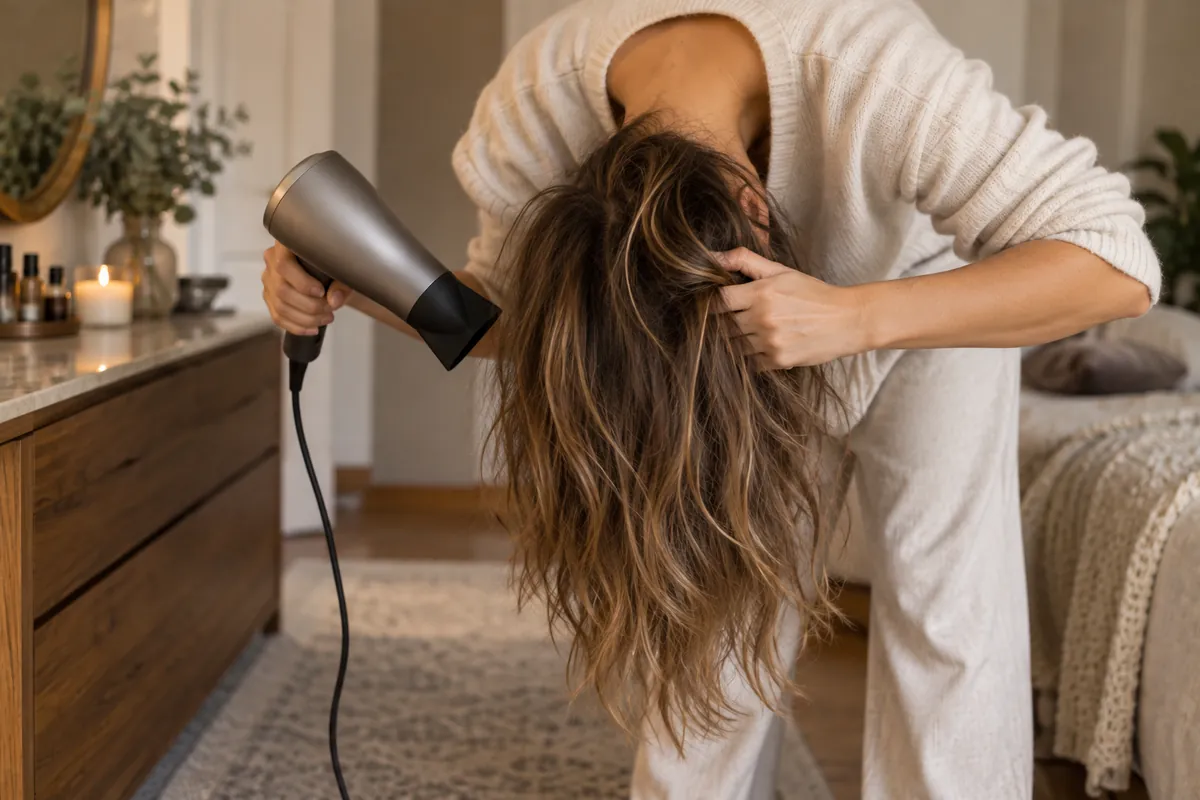
Root-focused blow-drying is one of the most effective habits for this length specifically. Bending forward and drying hair upside down for the first portion of the blow-dry, then flipping back over to finish and shape the ends, helps build lift at the roots that shoulder-length hair otherwise loses fairly easily under its own weight.
A medium to large round brush works well for creating smooth movement and shape through the mid-lengths and ends without overwhelming this length the way an oversized brush made for much longer hair might. Applying a lightweight volumizing mousse or root-lift spray specifically at the roots, rather than throughout the entire length, helps target lift exactly where shoulder-length hair tends to need it most.
Velcro rollers, placed at the crown and roots while hair finishes drying or cools down after blow-drying, can add extra lasting volume for anyone who wants more lift than blow-drying technique alone typically provides at this length.
- Bend forward and direct airflow at the roots until they lift, then flip back to finish and shape the ends.
- Smooth and shape through the mid-lengths and ends with a medium to large round brush.
- Place velcro rollers at the crown and roots while hair cools to set the extra volume.
Curls, Waves, and Sleek Styling for Medium Hair
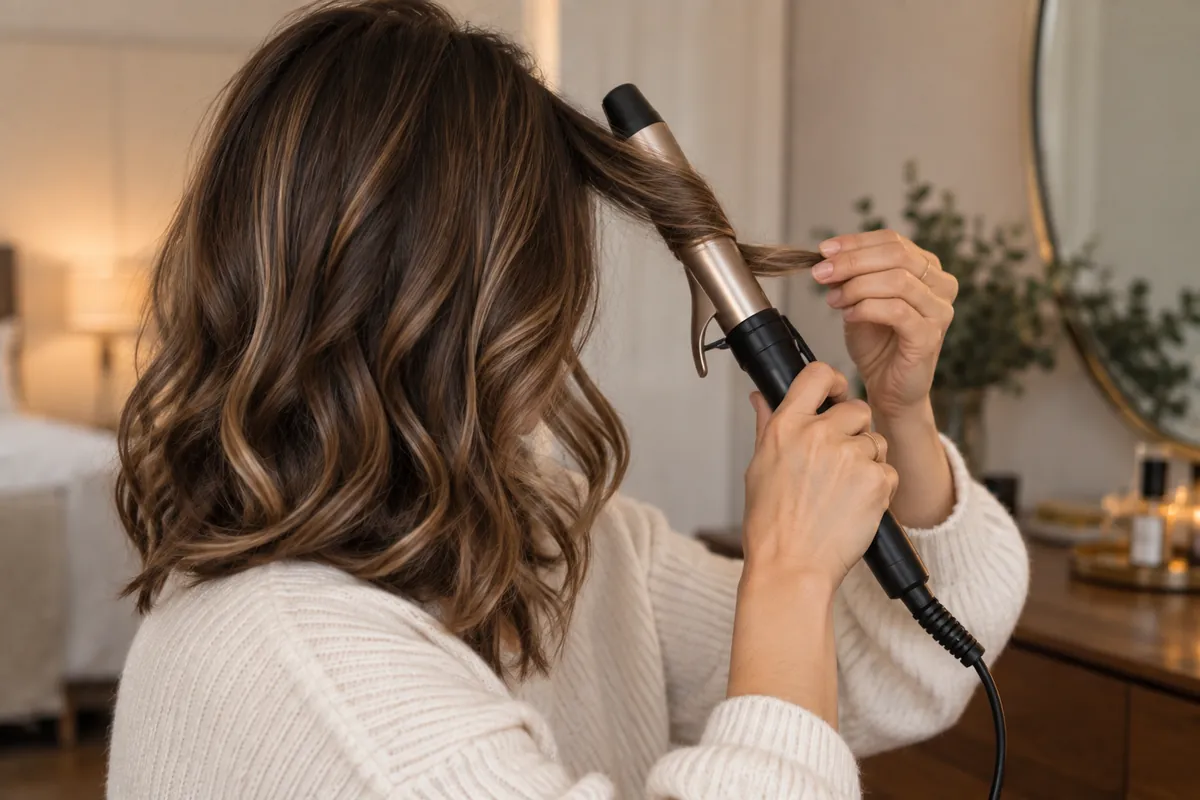
Shoulder-length hair holds curls and waves particularly well, arguably better than very long hair in some cases, since there’s enough length for curls to have real body and bounce, but not so much length that curls drop out quickly under excess weight the way they sometimes do on much longer hair.
A medium-barrel curling iron or wand generally works best at this length, creating waves or curls with enough definition to show clearly without looking overly tight or small for the amount of hair being curled. Alternating curl direction between sections, and running fingers through curls once they’re fully cooled, helps create a softer, more natural wave pattern rather than a uniform, overly polished curl.
For sleek styling, a flat iron used with smooth, even sections, combined with a lightweight smoothing serum, gives shoulder-length hair a polished look without the heaviness that a richer, more emollient product might create at this particular length.
Updos, Half-Up Styles, and Braids at This Length
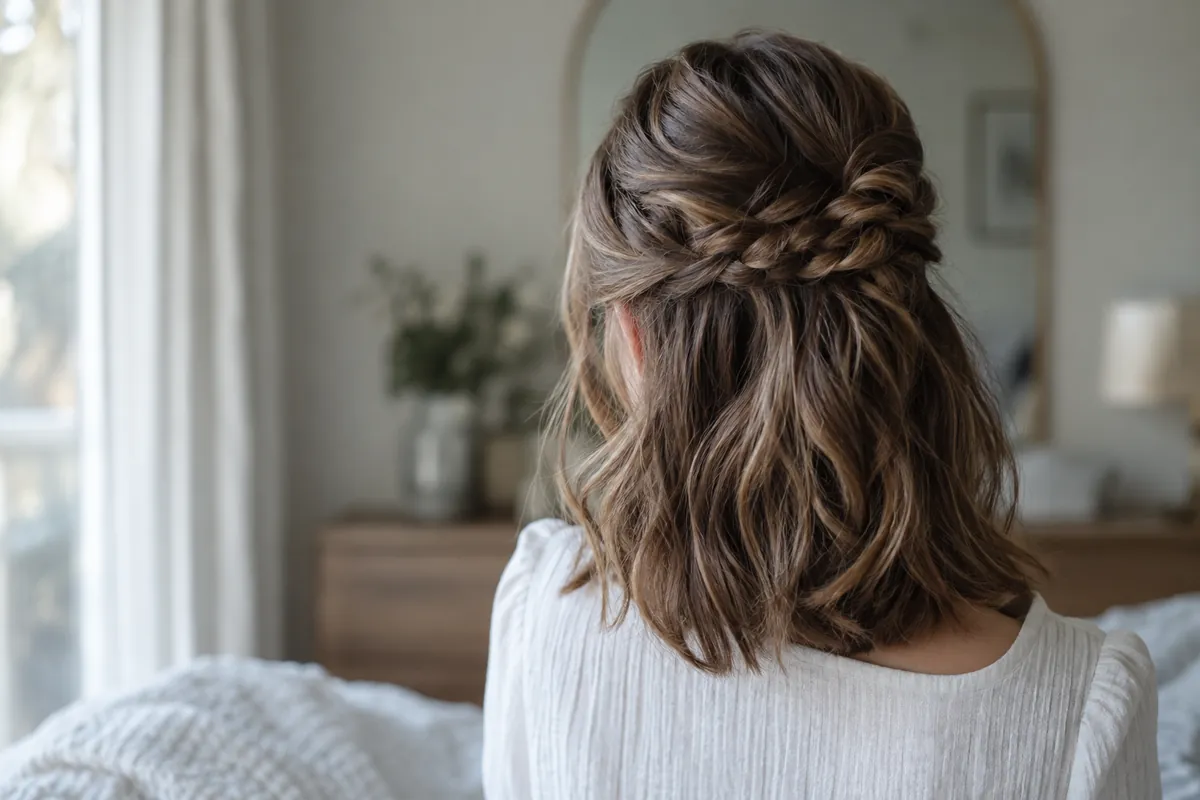
Shoulder-length hair works for a wide range of updo and half-up options, though the technique often needs slight adjustment compared to what would work on longer hair.
Braids, whether a simple three-strand braid, a fishtail, or a smaller Dutch or French braid incorporated into a half-up style, work well at this length and can help disguise some of the thinner, stringier look this length sometimes has when worn completely down and unstyled.
Can You Do a Half-Up Style With Shoulder-Length Hair?
Yes, half-up styles work well with shoulder-length hair, and this length actually offers enough hair to create a secure, visible half-up section without looking sparse, provided the sectioned portion is gathered thoughtfully rather than taking too small an amount from the crown. Adding a small braid or twist to the half-up section, or slightly teasing the crown before securing it, can add extra volume and polish to the finished look.
How Do You Make a Ponytail Look Fuller at Medium Length?
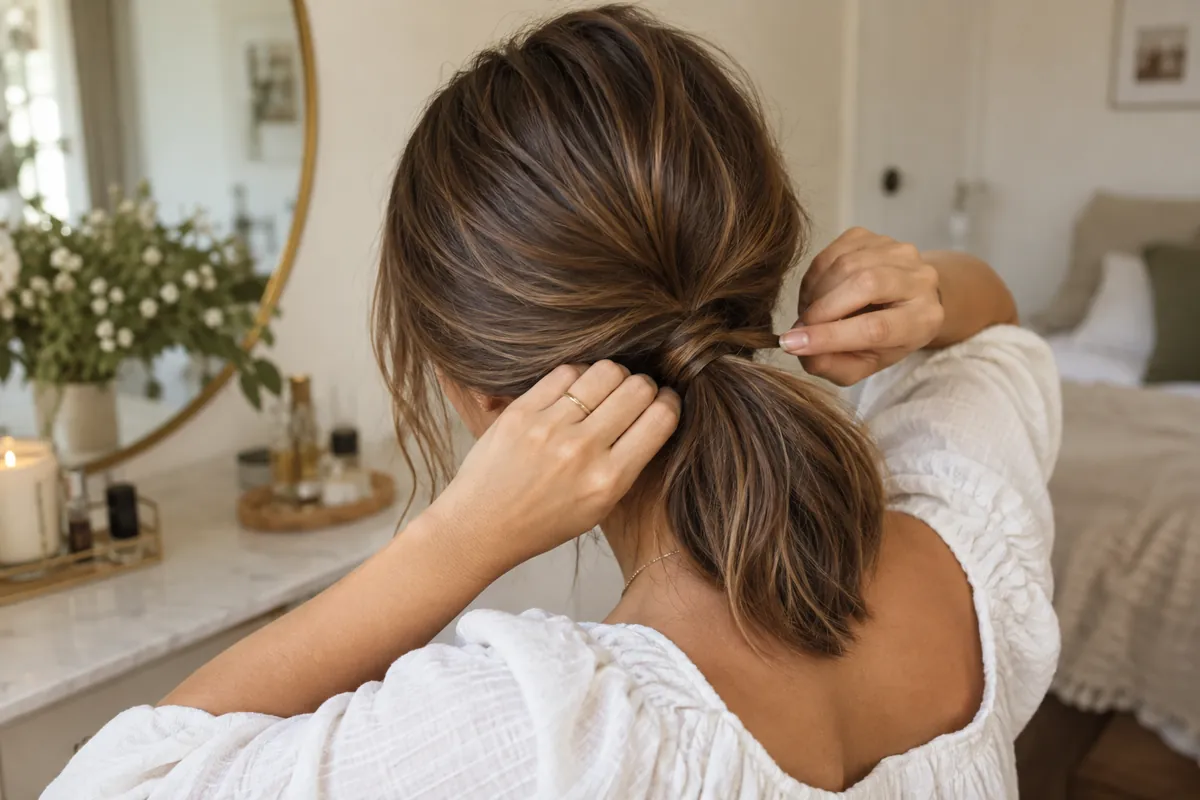
Creating a fuller ponytail at shoulder length generally involves teasing the hair slightly at the crown before pulling it back, using a technique sometimes called a “double ponytail” or “topsy tail” where hair is secured in two smaller sections stacked on top of each other, or simply choosing a slightly lower, looser ponytail position that has more length to work with rather than a very high, tight one that emphasizes how short the length actually is. Wrapping a small section of hair around the elastic to disguise it also adds a more polished, intentional look to a shoulder-length ponytail.
Frequently Asked Questions
1. Does shoulder-length hair need different products than longer hair?
Shoulder-length hair generally benefits from lighter products than longer hair might use, since there’s less overall weight and length to counteract product buildup, and heavier formulas can flatten this length’s volume more noticeably than they would on hair with more natural weight and movement.
2. Can you get soft, beachy waves at shoulder length without heat?
Yes, braiding damp shoulder-length hair overnight or twisting sections and securing them until dry can create soft, natural-looking waves without any heat tool, though the resulting wave pattern is often slightly looser at this length compared to how the same technique might look on longer hair.
3. Why does shoulder-length hair sometimes flip out at the ends unexpectedly?
Hair ends naturally curve based on how they were last cut, dried, or slept on, and shoulder length is particularly prone to visible flipping since there’s often just enough length for the ends to have movement but not enough weight to consistently pull them into one uniform direction without deliberate styling.
4. Is shoulder-length hair a good choice for people who want low-maintenance styling?
Shoulder-length hair can be relatively low-maintenance, especially with a wash-and-go texture or natural wave, though achieving a consistently polished look at this length often requires slightly more intentional root volume and technique than either a very short or very long style might need.
5. Does shoulder-length hair need trims more often than longer hair?
Trim frequency depends more on the specific cut and how quickly ends show damage than on length category alone, though many people with shoulder-length hair find trims every eight to twelve weeks help maintain shape, since this length can look uneven or grown-out fairly visibly compared to longer styles with more forgiving length to spare.
6. Can you achieve a sleek, straight look at shoulder length without it looking flat?
Yes, sleek styling at shoulder length works well with a bit of root lift added before flat-ironing, along with a lightweight shine serum applied only to the mid-lengths and ends rather than the roots, which helps maintain polish and smoothness without sacrificing the volume this length needs to avoid looking flat.
7. Is it easier to transition from short hair to shoulder length or from long hair down to shoulder length?
Both transitions involve some adjustment, though growing from short to medium often requires more patience with awkward in-between stages, while cutting from long to shoulder length is typically a more immediate change that some people find easier to style right away since it happens all at once rather than gradually.
8. Does shoulder-length hair work well with bangs?
Yes, bangs pair well with shoulder-length hair and can add balance and dimension to this length, whether through full bangs, side-swept bangs, or curtain bangs, though the specific style often depends on face shape and how much additional daily styling the person wants to take on.
9. Can shoulder-length hair be styled for both casual and formal occasions equally well?
Yes, this length is versatile for both casual, everyday looks like loose waves or a simple ponytail and more formal styling like a polished half-up style or a smooth blowout, making it one of the more adaptable lengths for switching between different occasions without needing a haircut change.
10. Why does shoulder-length hair sometimes look different depending on how it was cut, even at the same length?
The specific cut, whether blunt, layered, or angled, significantly affects how shoulder-length hair falls and moves, since a blunt one-length cut behaves quite differently from a layered version even when both technically measure the same overall length, which is why two people with “the same length” hair can style very differently.