How to Do Chrome Nails: A Complete Step-by-Step Guide
Chrome nails have that unmistakable quality of looking almost too perfect to be real, a mirror-smooth, metallic finish that catches light like polished steel. For years this look felt like something only a salon could pull off, but with the right technique and a bit of patience, it’s genuinely achievable at home. The whole thing comes down to a specific pigment and application method rather than any complicated freehand skill.
This guide covers exactly what chrome nails are made of, the two main ways to achieve the effect, a full step-by-step walkthrough, and the specific mistakes that most often turn a chrome manicure dull and streaky instead of glossy and mirror-like.
How to Do Chrome Nails: The Basic Method

Chrome nails are typically created by applying a fine metallic pigment powder over a cured, slightly tacky gel top coat, then buffing it in with a sponge or applicator until it develops a reflective, mirror-like shine. A dark base color, usually black, tends to produce the most dramatic full mirror effect, though the technique also works over lighter colors for a softer, more subtle metallic sheen.
An alternative, increasingly popular method uses a pre-mixed chrome or mirror gel polish that creates a similar metallic effect directly when applied and cured, without needing a separate powder step at all. Both approaches land on the same visual result, though the process and level of control differ somewhat between them.
What You’ll Need Before You Start

A handful of specific supplies make this technique possible, most of which you’ll reuse across many future manicures once you own them.
Chrome pigment powder, sold specifically for this technique, along with a soft sponge-tipped applicator or silicone tool for buffing it into the nail, are the core essentials for the powder method. You’ll also need a gel base coat, a gel color polish in whatever shade you’re using underneath, a specific tacky or no-wipe top coat designed to hold onto pigment powder, and a UV or LED lamp for curing each layer.
If you’re going the chrome gel polish route instead, the supply list shortens considerably, generally just requiring the pre-mixed chrome gel itself, along with your standard base coat, lamp, and a compatible top coat.
Chrome Powder vs. Chrome Gel Polish: Two Ways to Get the Look
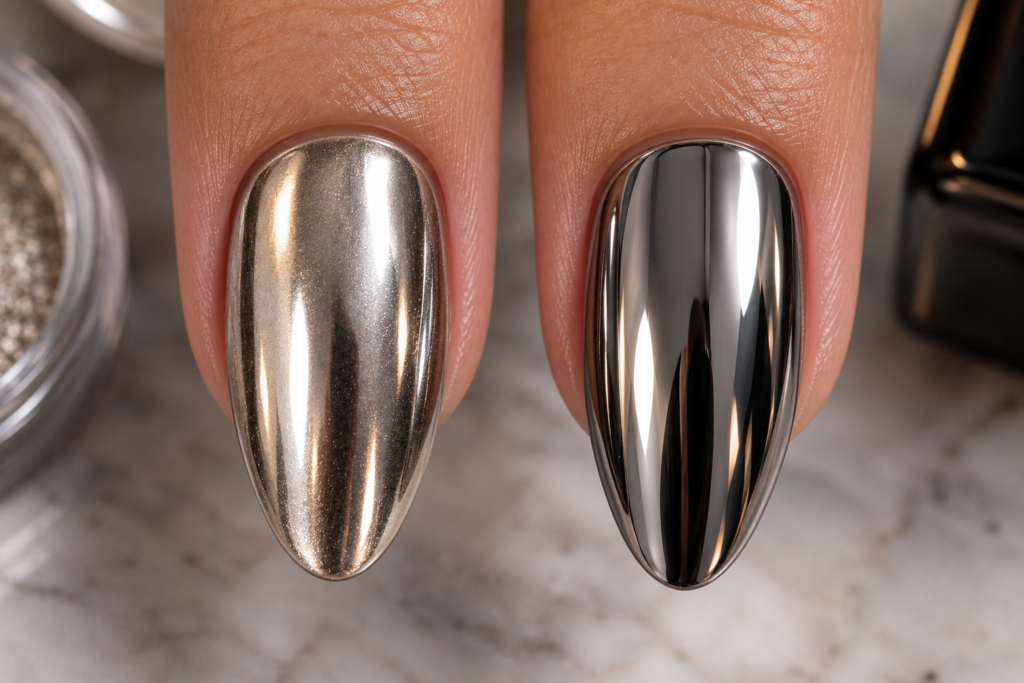
Both methods produce a genuinely metallic, reflective finish, but they work quite differently and each comes with its own trade-offs worth understanding before you pick one.
What’s the Difference Between Chrome Powder and Chrome Gel Polish?
Chrome powder is a separate pigment applied and buffed onto a cured, tacky top coat layer, giving you more control over intensity and placement but requiring an extra application step and a bit more technique. Chrome gel polish, by contrast, is a pre-mixed formula that creates a similar metallic effect when applied like a regular color and cured, offering a simpler, more beginner-friendly process, though the mirror intensity can sometimes be slightly less dramatic than a well-applied powder finish.
Can You Do Chrome Nails With Regular Nail Polish Instead of Gel?
Chrome effects are significantly harder to achieve well with regular air-dry polish, since the technique generally relies on a tacky, semi-cured gel surface for the pigment to properly adhere to, something standard polish doesn’t reliably provide. While some chrome powders are marketed as compatible with regular polish over a very specific tacky top coat, results tend to be less consistent and less durable than the gel-based method, which is why gel remains the standard approach for achieving a genuine mirror finish.
Step-by-Step: How to Apply Chrome Powder Over Gel Polish
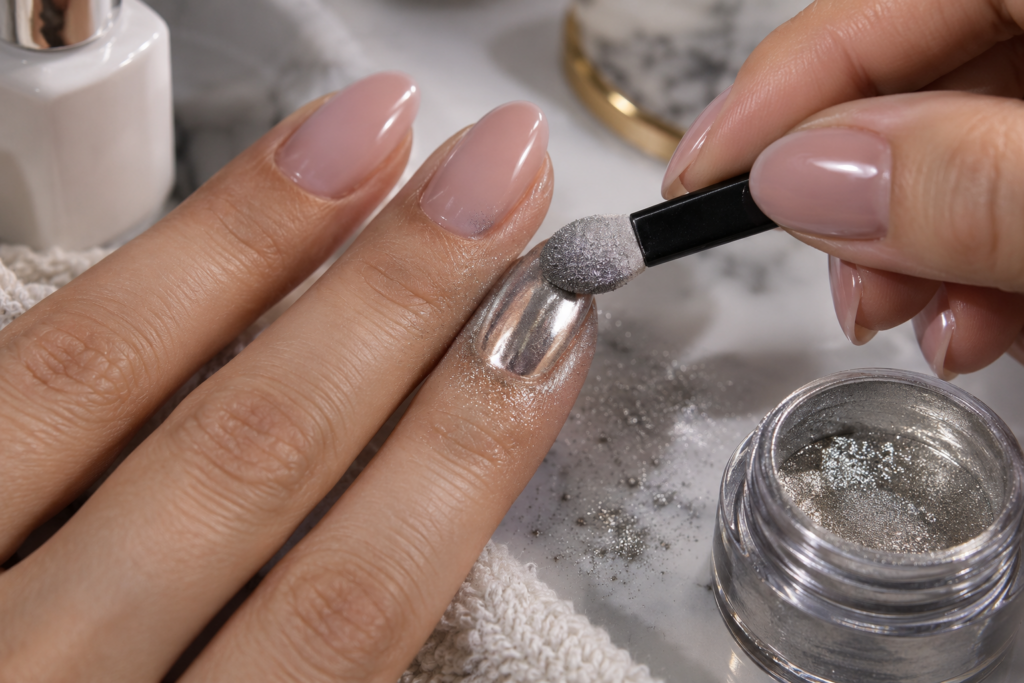
Start with clean, properly prepped nails, cuticles pushed back and the nail surface lightly buffed. Apply a thin base coat and cure it under your lamp according to the product’s instructions.
Apply your chosen gel color, generally in one to two thin, even coats, curing fully between coats. A solid, opaque black base tends to produce the strongest, most dramatic mirror effect, though any solid color works for a softer metallic tint.
Apply a thin layer of your no-wipe or tacky top coat and cure it fully under the lamp. This layer needs to stay slightly tacky on the surface once cured, which is exactly what gives the chrome pigment something to grip onto.
Using your sponge applicator or silicone tool, pick up a small amount of chrome powder and gently rub it onto the nail in circular motions, applying light, even pressure until the surface develops that signature reflective shine. Work across the entire nail surface, checking for any missed or uneven patches as you go.
Once the mirror effect looks even and complete, use a soft, dry brush to sweep away any loose excess powder from the nail and surrounding skin. Finish with a compatible top coat, applied carefully and cured under the lamp, to seal and protect the chrome finish.
Does Chrome Powder Work Over Any Base Color?
Yes, chrome powder can technically be applied over any solid, opaque gel base color, though the specific base shade significantly changes the final look. A black base creates the most intense, true mirror effect, while lighter colors produce a softer, more tinted metallic sheen rather than a full reflective shine, so the choice really depends on how dramatic or subtle you want the finished result to be.
Common Mistakes That Ruin the Chrome Effect
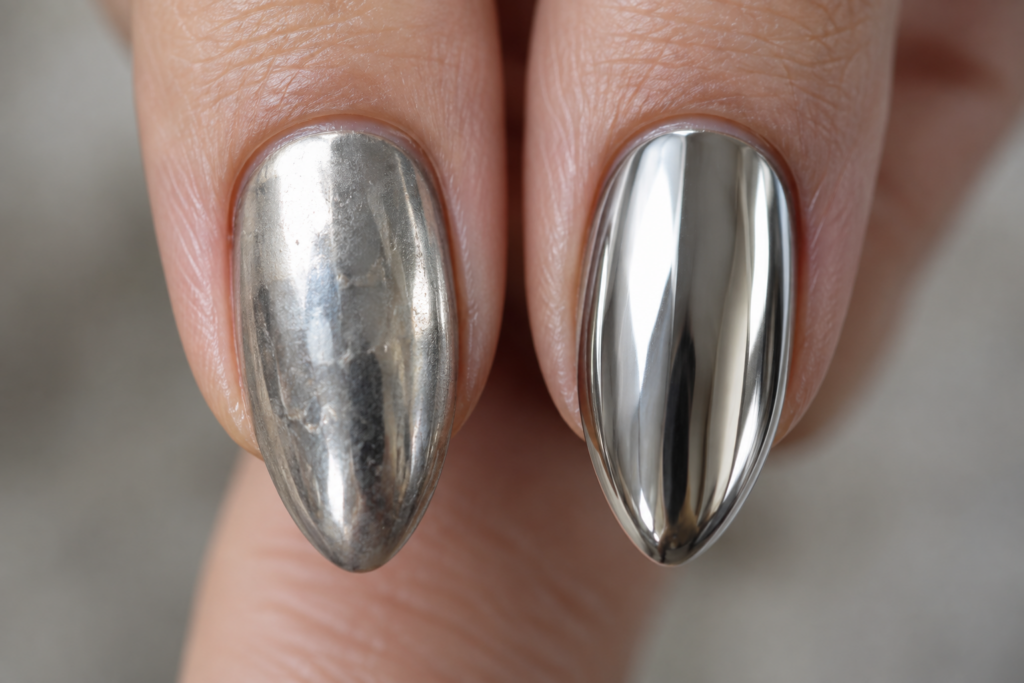
A handful of recurring issues explain most disappointing chrome manicure results, and nearly all of them come down to timing and technique rather than the products themselves.
Applying the chrome powder over a top coat that isn’t tacky enough, either because it was over-cured or because the wrong type of top coat was used entirely, prevents the pigment from adhering properly, leaving a dull, patchy finish rather than a smooth mirror shine. On the flip side, a top coat that’s still too wet or under-cured can cause the powder to clump or smear rather than buff in evenly.
Pressing too hard while buffing the powder in is another common issue, since excess pressure and friction can actually rub some of the pigment back off the nail rather than helping it adhere. A light, even touch, working in gentle circular motions, produces far better, more consistent results than heavy scrubbing.
Sealing with the wrong final top coat can also dull an otherwise perfect chrome finish. Some top coats interact poorly with the pigment layer, muting the shine or creating a slightly hazy look, which is why using a top coat specifically compatible with chrome or mirror finishes matters more here than with a standard color manicure.
Why Did My Chrome Nails Turn Out Dull Instead of Shiny?
A dull chrome finish almost always comes down to the tackiness of the top coat layer being wrong, either too fully cured to grip the pigment or not cured enough to hold it properly, along with buffing technique that’s too rough or uneven. Double-checking your top coat’s cure time, using a lighter touch while applying the powder, and making sure you’re using a top coat genuinely compatible with chrome finishes are the most effective fixes for a dull result.
Frequently Asked Questions
1. How long do chrome nails typically last before the shine fades?
A well-applied chrome manicure generally lasts as long as a standard gel manicure, often two to three weeks, though the mirror shine specifically can sometimes dull slightly faster than the base color underneath, particularly with frequent hand-washing or exposure to harsh chemicals.
2. Can you do chrome nails at home without a UV or LED lamp?
Chrome nails genuinely require a gel-based process, which means a UV or LED lamp is necessary for curing each layer properly, since the technique depends on a cured, tacky gel surface that regular air-dry polish simply can’t replicate reliably.
3. Does chrome powder work on natural nails, or do you need acrylics or extensions?
Chrome powder works just as well on natural nails as it does on acrylic or gel extensions, since the technique relies entirely on the gel base and top coat layers rather than the underlying nail structure, making it fully achievable on a natural manicure.
4. Can you remove chrome nail powder if you’re not happy with how it turned out?
Yes, if the powder layer hasn’t been sealed with a top coat yet, gently buffing it off and reapplying is straightforward, though once sealed and fully cured, you’ll typically need to soak off or buff away the entire gel layer to start over.
5. Is chrome nail powder safe to use at home without professional training?
Yes, chrome nail powder is safe for home use, though it’s worth using it in a well-ventilated space and avoiding inhaling loose powder particles during application, similar to general precautions taken with any fine cosmetic powder product.
6. Can you combine chrome nails with other nail art, like ombre or accent nails?
Yes, chrome finishes pair well with other techniques, whether applied to just one or two accent nails within an otherwise solid-color set, blended into an ombre gradient, or layered partially over specific design elements for a mixed-finish look.
7. Why does my chrome finish look streaky instead of smooth and even?
Streaking usually results from uneven pressure while buffing the powder in, missed sections during application, or an inconsistent tacky layer on the top coat, and working in small, even circular motions across the entire nail surface generally resolves this.
8. Does the color of chrome powder affect how reflective the finish looks?
Yes, silver and white-based chrome powders tend to produce the most reflective, true mirror effect, while colored chrome powders, like rose gold, blue, or green, still shine but generally show a bit more tint and slightly less pure reflectivity than a classic silver finish.
9. Can you use chrome powder over gel polish that’s already been worn for a few days?
It’s generally better to apply chrome powder as part of a fresh manicure rather than over polish that’s already been worn, since you need a properly cured, tacky top coat layer specifically prepared for the powder, which isn’t something you can add onto an existing, fully sealed manicure.
10. Is chrome gel polish easier for beginners than the powder method?
Yes, chrome gel polish is generally considered more beginner-friendly, since it applies and cures like a standard gel color without the extra step of buffing in a separate pigment, making it a good starting point before attempting the more technique-dependent powder method.