 Global Fashion Trends
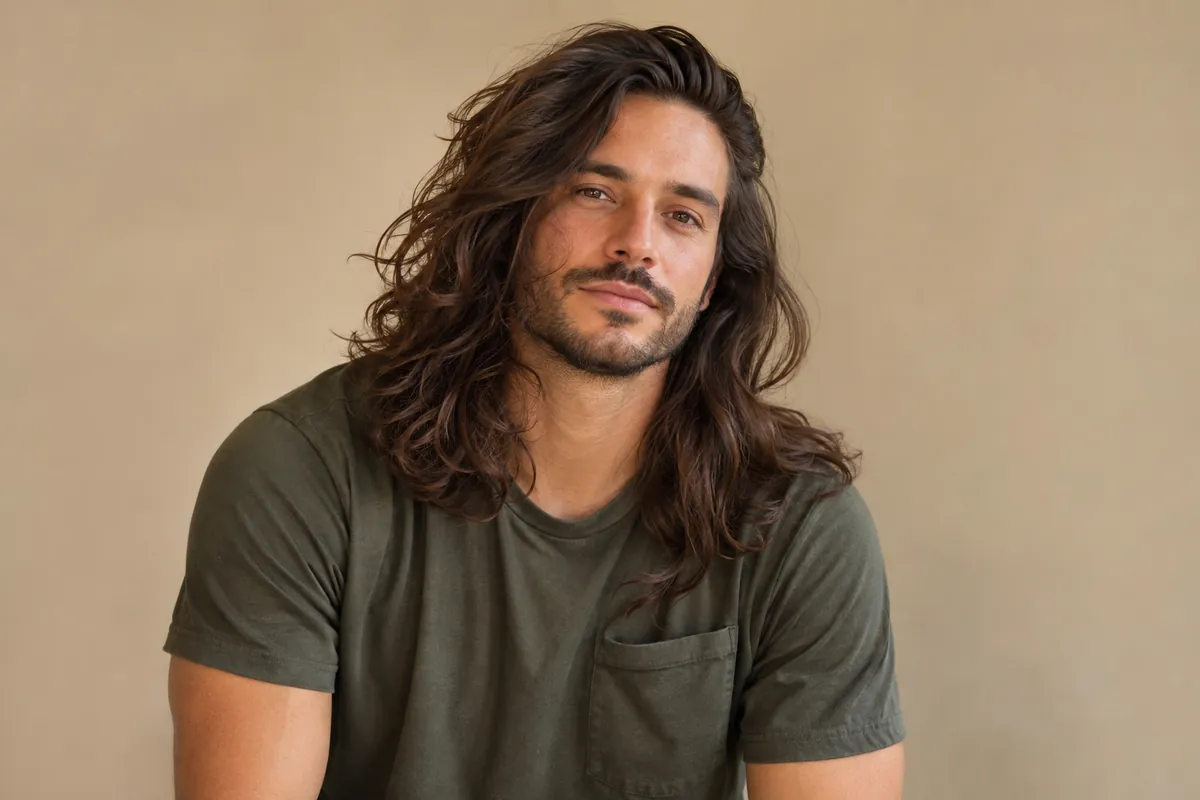
How to Style Long Hair for Men: A Complete Guide
Styling long hair for men takes a different approach than styling shorter hair. Long hair needs regular care, a different way of thinking about washing and styling, and patience during the awkward stage when it is too short to tie back but too long to look like a finished style.
This guide covers the whole process: surviving the awkward growth phase, washing and caring for long hair day to day, tying it back without causing damage, and styling it in ways that look intentional rather than accidental.
How to Style Long Hair for Men: The Basics
Styling long hair for men comes down to a few basics: keep it healthy, keep it clean without washing it too often, and choose styles that suit your hair type and face shape.
The biggest adjustment for most men growing their hair out is learning that long hair needs different care than short hair. It takes longer to wash and dry, it tangles more easily, and it shows damage more clearly, so the routine has to change as the length grows.
Choosing a Long Hairstyle for Your Hair Type and Face Shape
The best long hairstyle for a man is the one that suits his own hair texture and face shape, not the style in a photo of someone with completely different hair. Straight hair usually looks best worn loose or in a low ponytail, because it shows length and shine with very little effort. Wavy hair suits loose styles, half-up styles and low buns, since the natural wave adds shape without much styling.
Curly and coily hair needs more moisture and gentler handling than straight hair, and it often looks shorter than it really is because the curls spring up as they dry. If your hair is curly, our guide to styling curly hair for men covers the routine in detail, and the same principles apply at longer lengths: detangle gently, keep curls moisturised, and let the texture do most of the work. Men starting from a short cut will find the same advice useful in our guide to styling short curly hair, which covers the early stages before length builds up.
Face shape matters less than most men expect, but a simple rule helps: if your face is long, keep some width at the sides and avoid pulling everything straight back and flat; if your face is round, a little height on top or hair worn loose at the sides balances it out. When in doubt, ask your barber to shape the ends so the cut follows your face, rather than copying a style that was cut for someone else.
Getting Through the Awkward Growth Phase
The stretch between short hair and long hair is widely considered the hardest part of growing men’s hair out, mostly because hair sits at lengths too short to tie back effectively but too long to style the way a shorter cut would.
Regular trims, even while actively growing hair out, help enormously during this phase. Removing split ends and slightly shaping the growth prevents hair from looking shapeless or scraggly, without meaningfully slowing down the overall length you’re trying to gain. Many barbers can trim just enough to maintain shape while leaving the bulk of the length intact.
Accessories and simple styles carry a lot of weight during this stage. Headbands, small clips, or even just tucking shorter pieces behind the ears can manage awkward lengths around the face while the rest of the hair catches up.
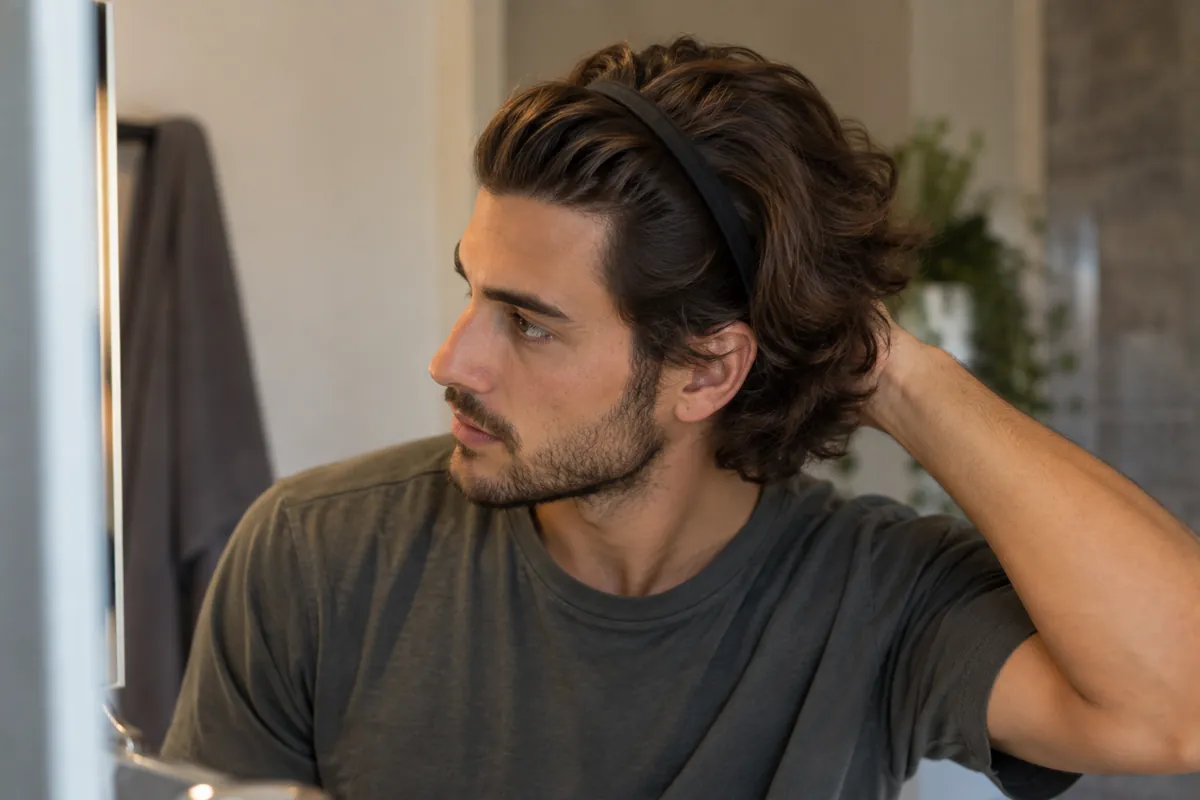
What’s the Best Way to Grow Out Hair From Short to Long as a Man?
The most effective approach to growing hair out involves regular trims to maintain shape and remove split ends, patience through the awkward mid-length stage using accessories or simple pulled-back styles to manage shorter pieces, and consistent scalp and hair care to support healthy growth throughout. Avoiding the temptation to cut hair short again out of frustration during the awkward phase is often the biggest challenge, since many men give up right before reaching a length that becomes easier to style.
Washing, Products, and Daily Care for Long Hair
Long hair generally does best with less frequent washing than shorter hair, since natural oils have further to travel and take longer to make hair look visibly greasy. Many men with long hair find washing every two to three days keeps hair looking clean without stripping natural moisture the way daily washing tends to, and the American Academy of Dermatology advises washing as often as your scalp and hair type need, rather than on a fixed schedule.
A lightweight leave-in conditioner or detangling spray, applied to damp hair before combing, makes a noticeable difference in how manageable long hair feels day to day, reducing breakage during detangling and making hair generally easier to work with. For styling, most men prefer lightweight, matte-finish products, a light pomade or texturizing cream, over heavier, glossier options, since these tend to look more natural on longer hair without an obvious ‘styled’ appearance. If your hair is colored, the routine changes a little: our guide to taking care of colored hair explains how to keep color from fading while you grow the length out.
Detangling should always happen with a wide-tooth comb, working from the ends upward toward the roots in small sections, rather than trying to comb straight through from root to tip, which tends to cause more breakage and discomfort on longer, more tangle-prone hair.
Apply conditioner mainly to the lengths and ends, where hair is oldest and driest, rather than to the scalp, where it can weigh hair down and make it look greasy sooner. Letting hair air dry when you can, and protecting it from heat when you cannot, matters more the longer it gets, because the ends have been through more washes, more brushing and more weather than the roots. Wet hair is more fragile than dry hair, so avoid tying it up tightly while it is still wet and avoid brushing it hard until it is mostly dry.
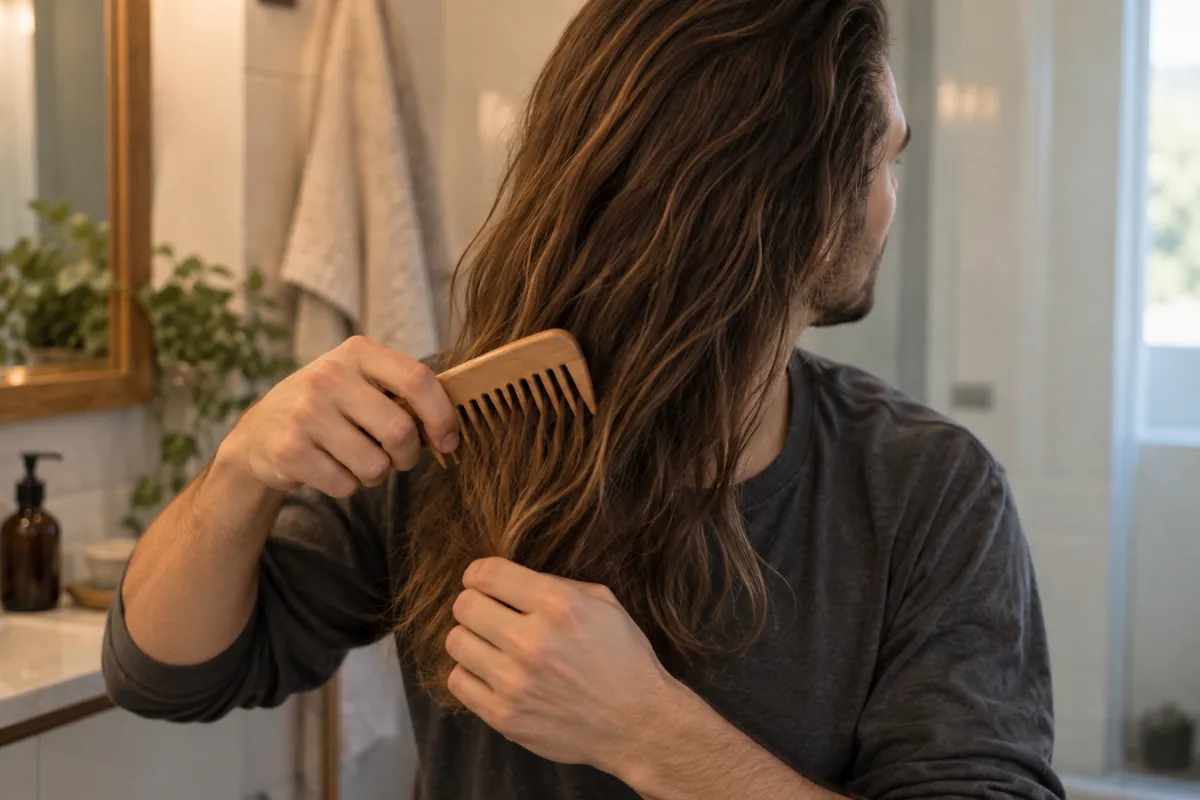
Do Men Need Different Hair Products for Long Hair Than Short Hair?
Yes, long hair generally benefits from different products than short hair, particularly a leave-in conditioner or detangling spray that short hair rarely needs, along with lighter styling products overall, since heavier formulas that work fine on short hair can look greasy or overly weighed down once there’s significantly more length and surface area involved.
Tying It Back Without Damaging Your Hair or Hairline
Tying hair back is one of the most common ways men manage long hair day to day, but doing it the same way repeatedly, especially with tight elastics pulled close to the hairline, can cause hair thinning and breakage along the hairline over time due to repeated tension. The American Academy of Dermatology explains that hairstyles that pull can lead to hair loss, and that loosening the style and varying its position helps prevent it.
Using soft, fabric-covered hair ties rather than thin elastic bands with metal parts reduces breakage significantly, since metal and tightly wound rubber bands tend to snag and pull at hair strands. Varying where you position a ponytail or bun, and how tightly you pull it, also helps distribute tension differently rather than repeatedly stressing the exact same section of hair and scalp.
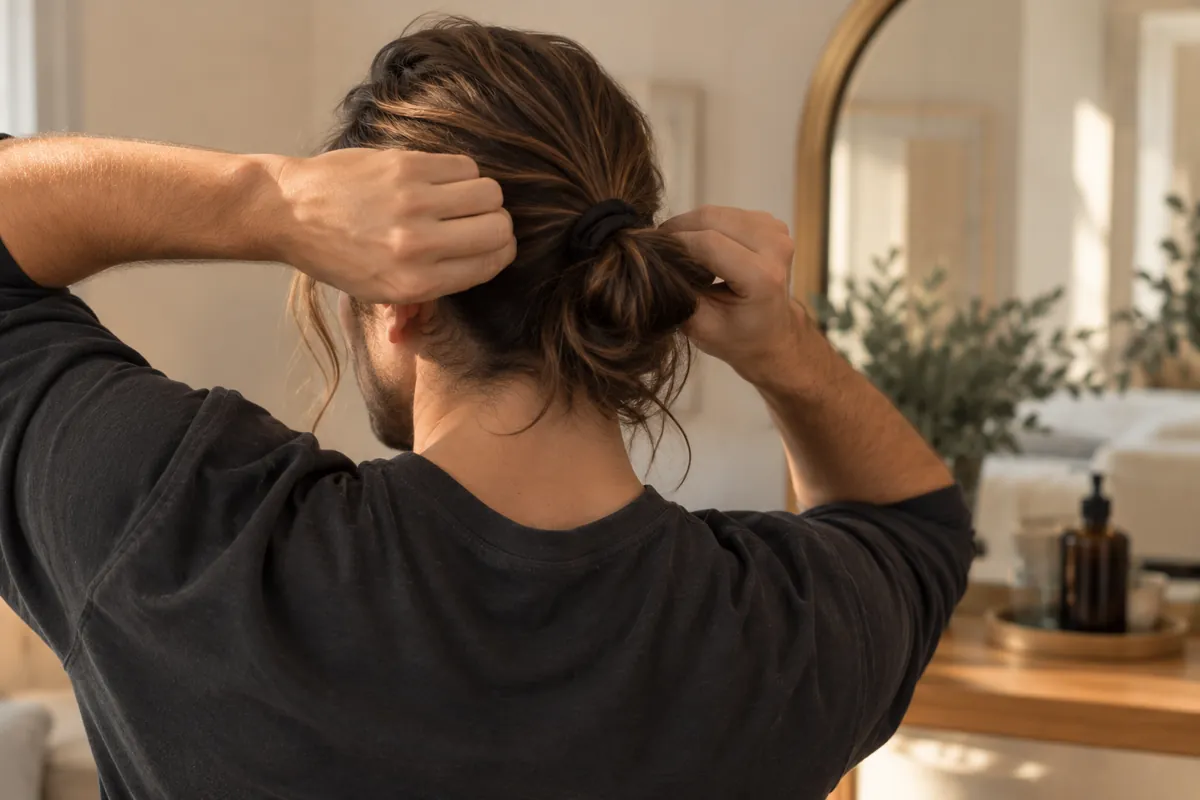
How Do You Tie Back Long Hair Without Making a Receding Hairline Worse?
Reducing hairline stress when tying hair back starts with keeping the style loose, varying its position regularly, and avoiding styles that pull hair tightly away from the forehead, since repeated tension in the same place is what causes most of the damage. If the hairline is already thinning, wearing hair loose more often, or in a low, loose style, puts far less strain on it than a tight, high ponytail or bun.
How to Style Long Hair for Men: Styles That Work for Every Day
Several long hairstyles for men consistently look good, and most of them are variations on a few basic ideas: hair worn loose, hair tied back, or hair partly tied up.
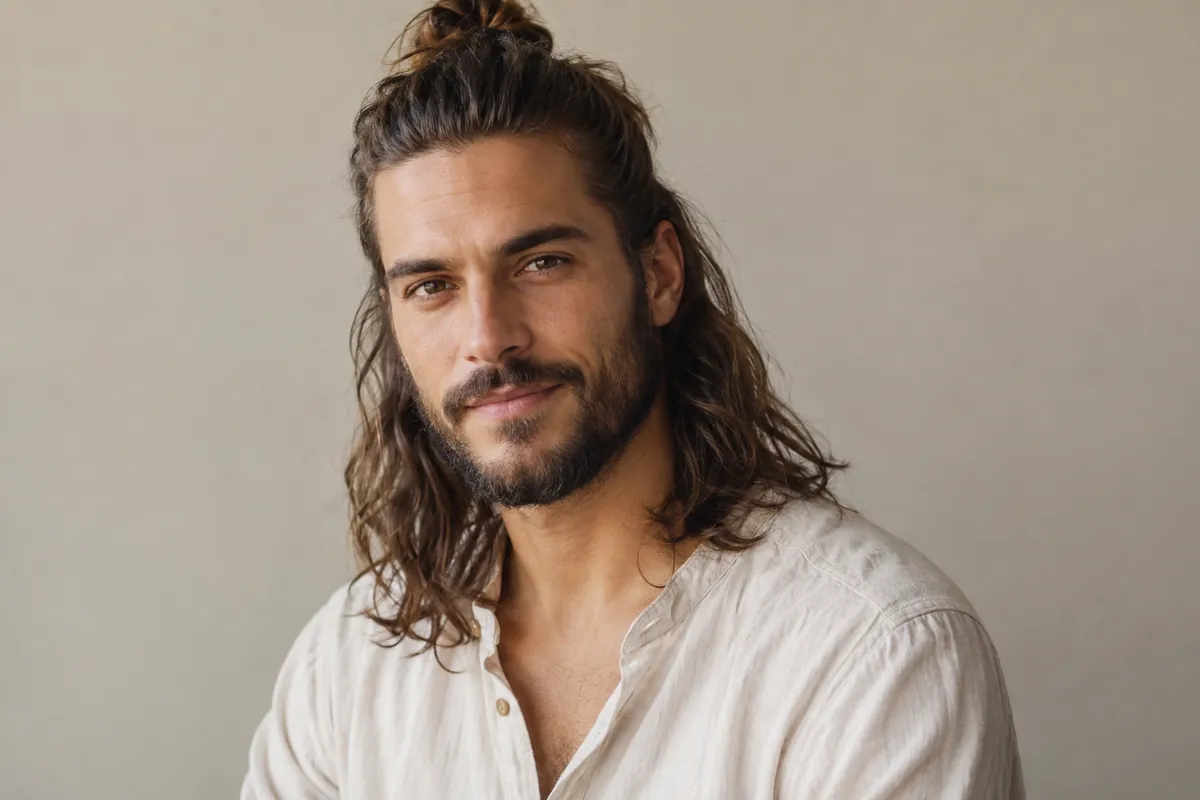
The man bun remains a popular choice because it keeps hair completely out of the way while still looking deliberate, especially when it sits at the crown or back of the head rather than pulled too tight.
A low ponytail offers a cleaner, more understated option that works well for work or formal settings, sitting at the nape of the neck rather than high on the head.
A half-up topknot combines the best of both worlds, keeping the front sections out of the face while leaving the rest of the hair loose and natural.
Braids, whether a single braid down the back or a few smaller braids, add texture and keep hair controlled, and they work particularly well for men with thicker or wavier hair.
Natural texture worn loose is the simplest option of all, and it works best when hair is healthy and well-maintained, with a little product to control frizz or flyaways without making hair look stiff.
Whichever style you choose, the finish matters more than the style itself: clean ends, a little product worked through damp hair, and no flyaways sticking out are what make long hair look deliberate rather than neglected. If you are still growing it out, a longer bob is a useful in-between stage, and our guide to styling bob hair shows how that length is worn.
Long Hair at Work and at the Gym
At work, the safest long hairstyles are the tidy ones: a low ponytail, a low bun, or hair worn loose but neatly brushed back. The style itself matters less than the condition of the hair, so clean ends and hair that is not falling into your face will read as professional in most workplaces.
At the gym, practicality comes first: tie hair up in a low bun or a braid so it stays off your neck and out of the way, and rinse it after sweating so sweat does not dry into the lengths. A soft fabric tie is the better choice here too, since a tight elastic worn every workout puts the same strain on the same spot day after day.
How to Keep Long Hair Looking Good Overnight
Long hair left completely loose overnight tends to tangle, especially for men who move around a lot in their sleep, since the friction between hair and pillowcase creates knots that are painful to brush out in the morning.
A loose braid or a low, gentle ponytail before bed keeps hair contained without pulling at the roots, and a silk pillowcase creates less friction than cotton, reducing tangles and breakage overnight.
How Do You Keep Long Hair From Tangling Overnight?
Preventing overnight tangles generally works best with a combination of a loose braid or low ponytail, a silk or satin covering at night, and detangling hair gently before bed, rather than relying on any single trick alone.
Common Mistakes That Make Long Hair Look Unkempt
The most common mistake with long hair is leaving it completely alone: no trims, no detangling and no product. Hair that is never shaped looks shapeless, and split ends make the bottom few inches look thin and frayed even when the rest of the hair is healthy.
The second mistake is the opposite: over-styling with heavy products, the same tight tie every day, and high heat with no protection. Light products, a loose tie and the lowest heat setting that gets the job done keep long hair looking natural instead of stiff, pulled or dried out.
Long Hair and Thinning: What to Watch For
Long hair does not cause hair loss, but it can make thinning more noticeable, especially at the crown or hairline, where the weight of the hair pulls it flat and shows more scalp. If you notice a widening part, more scalp showing through, or shedding that increases suddenly, pay attention rather than covering it up with a tighter style.
The NHS notes that losing 50 to 100 hairs a day is normal, and that you should see a GP if you are worried about hair loss. MedlinePlus also advises contacting a health professional if hair loss is sudden or patchy, or if it comes with scalp irritation. A dermatologist can tell the difference between styling-related breakage and pattern hair loss, and the earlier you ask, the more options you have.
Frequently Asked Questions
How long does it take to grow long hair as a man?
There is no fixed timetable, because growth speed varies from person to person, but expect the journey from a short cut to shoulder length to take many months rather than weeks. The awkward stage in between is normal, and regular trims and simple tied-back styles make it easier to get through.
Do men need a different shampoo for long hair?
Long hair doesn’t strictly require a different shampoo, but many men find a gentler, moisturizing shampoo works better than a harsh clarifying one, especially if hair is dry or damaged. The American Academy of Dermatology advises choosing products for your scalp and hair type, so a dry scalp and an oily scalp do not need the same routine.
Is a diffuser good for long hair?
Yes, a diffuser attachment works well for wavy or curly long hair, since it spreads airflow more evenly and dries hair with less frizz than a regular nozzle, especially on low heat. Keep the dryer on the lowest heat setting that dries your hair and keep the diffuser moving so no one section takes too much heat.
Should men trim long hair regularly?
Yes, occasional trims remain important even for long hair, since they remove split ends before they travel further up the hair shaft, keeping hair looking healthier and preventing the ends from looking thin or ragged.
Does long hair make a receding hairline look worse?
Long hair can sometimes draw more attention to a receding hairline, particularly if hair is pulled back tightly, but it doesn’t cause the recession itself, which is usually related to hormones and family history. Wearing it loose, or in a low, loose style, draws less attention to the hairline than a tight pull-back.
Can curly and coily hair be worn long?
Yes, curly and coily hair can absolutely be worn long, though it needs more moisture and gentler handling than straight hair, and the length often looks shorter than it actually is because of shrinkage. Our guide to styling curly hair covers the detangling and drying routine that works best at longer lengths.
Does humidity affect long hair?
Yes, humidity affects long hair regardless of hair type, though wavy and curly hair tends to react most visibly, becoming frizzier or losing definition as it absorbs moisture from the air. A little leave-in conditioner and a tied-back style on the most humid days are usually enough to keep it under control.
Can long hair look professional in formal settings?
Yes, long hair can absolutely read as polished and professional in formal settings, particularly when it is clean, neatly tied back in a low ponytail or bun, or worn loose with a smooth, controlled finish.
Is it normal to shed hair every day with long hair?
Some natural daily shedding is completely normal, since hair naturally cycles through growth and shedding phases. The NHS notes that losing 50 to 100 hairs a day is normal, and long hair simply makes the shed hairs easier to notice. Shedding becomes unusual when the amount increases suddenly or when scalp coverage visibly changes, in which case a dermatologist is worth seeing.