
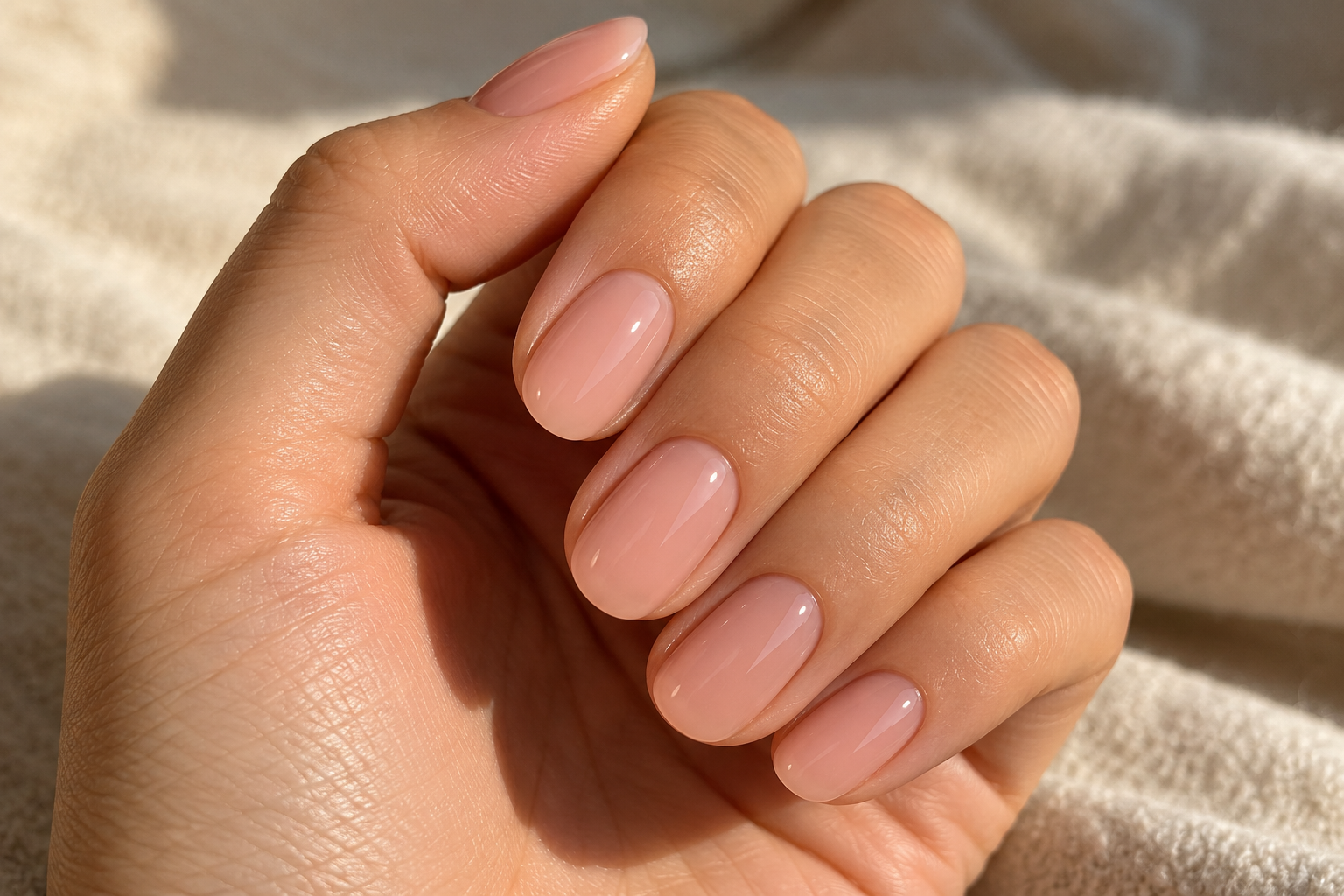
What Are Gel Nails? Cost, Longevity, and Safety Explained
Gel nails have quietly become the default choice for a lot of people who want a manicure that actually survives more than a couple of days, and it’s easy to see why once you understand what’s actually happening chemically. But between the real cost, how long a set genuinely holds up, and the honest question of whether sitting under a curing lamp repeatedly is doing anything harmful, there’s more worth knowing than a quick glance at salon photos ever reveals.
This article walks through exactly what gel nails are, what they typically cost, how long they realistically last before needing attention, and the genuine safety considerations, including the UV lamp question people ask about most, worth understanding before your next appointment.
What Are Gel Nails?
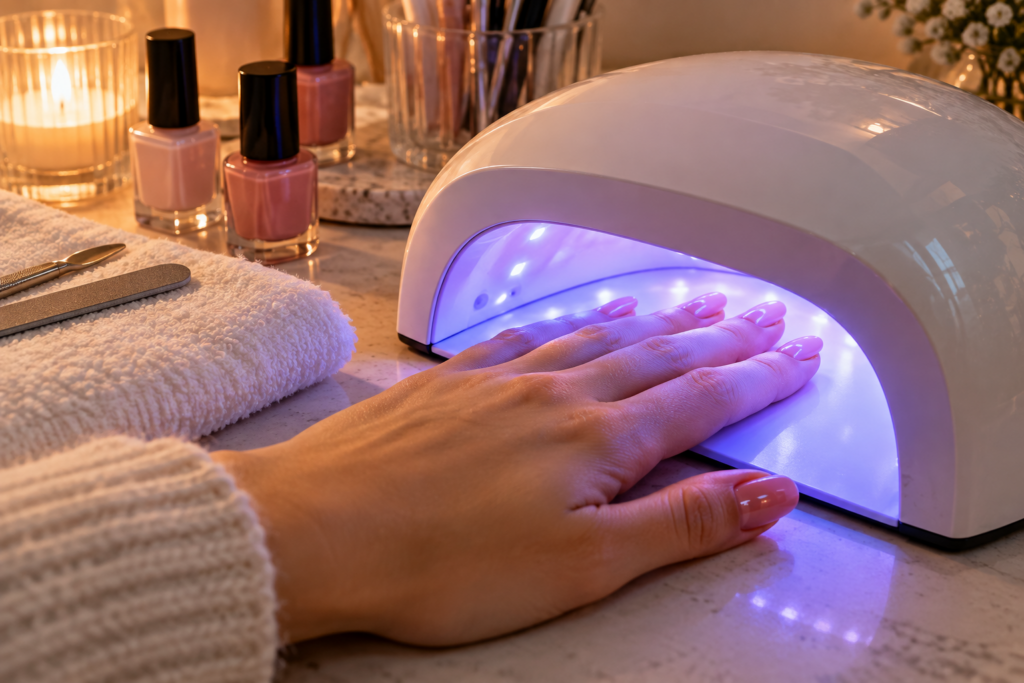
Gel nails are created using a pigmented gel polish that hardens through a light-activated curing process under a UV or LED lamp, rather than air-drying the way regular polish does. This curing process is what gives gel its signature glossy, chip-resistant finish and considerably longer wear time compared to standard nail polish.
There are actually two distinct categories worth knowing. Soft gel, sometimes called soak-off gel, is the standard choice for gel polish manicures and is designed to be removed with acetone. Hard gel, often used to build structural extensions similar to acrylic, is more durable and typically must be filed off rather than soaked, since it doesn’t fully dissolve in acetone the way soft gel does.
What’s the Difference Between Soft Gel and Hard Gel Nails?
Soft gel is formulated specifically for soak-off removal and is the standard choice for gel polish manicures and lighter overlays, while hard gel is a more durable, structural product used primarily for building extensions and added length, typically requiring filing rather than an acetone soak for removal. Choosing the wrong removal method for either type, particularly trying to soak off hard gel, generally doesn’t work well and can waste significant time without actually removing the product.
How Much Do Gel Nails Cost

A standard gel manicure typically costs somewhere between thirty-five and sixty dollars, with pricing shifting meaningfully based on location and salon tier. Major metro areas and higher-end salons often price above this general range, while smaller towns and more budget-focused salons tend to come in below it.
A gel pedicure generally runs a bit higher, often landing somewhere between sixty and ninety dollars, given the additional time and steps typically involved compared to a hand manicure. Removal, when done as a standalone service rather than bundled into a new manicure appointment, usually adds another five to twenty dollars depending on the salon and how labor-intensive the specific removal process is.
How Long Do Gel Nails Last
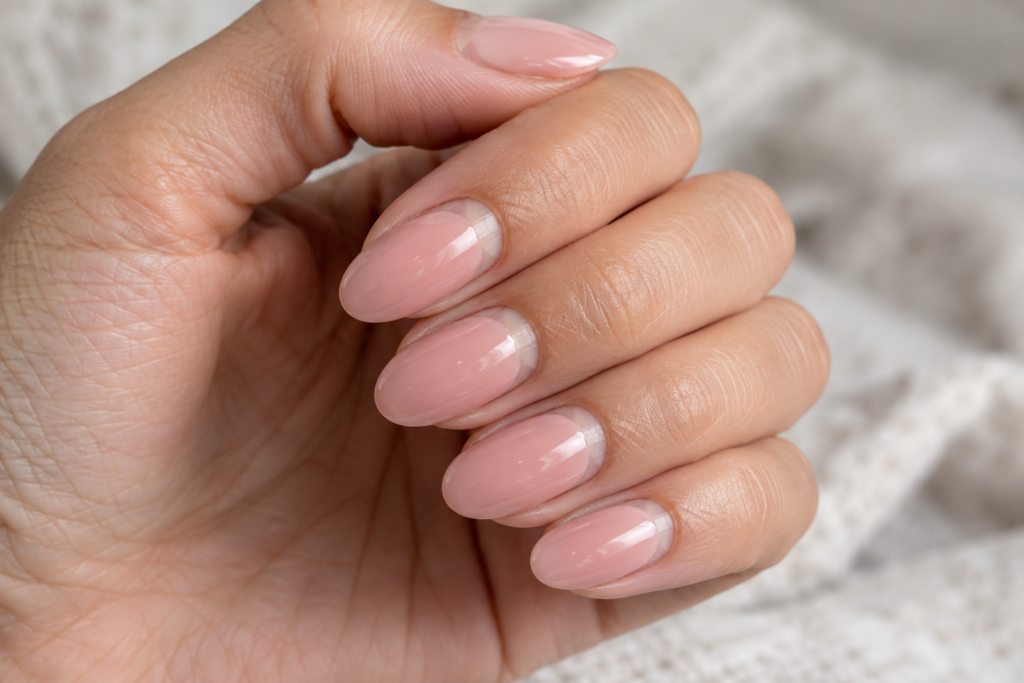
A gel manicure typically lasts about two to three weeks before noticeable regrowth or wear makes a fresh application worthwhile. This holds true for standard gel polish manicures on natural nails, where the entire application is usually removed and redone from scratch at each appointment rather than filled the way acrylic extensions are.
Hard gel extensions, by contrast, can be maintained through regular fills similar to acrylic, since they’re a structural product rather than just a polish-like color layer, and a well-maintained hard gel set can last for months through consistent fill appointments.
Do Gel Nails Need to Be Filled Like Acrylics, or Fully Redone Each Time?
Standard gel polish manicures are typically removed completely and reapplied fresh at each appointment, rather than filled the way acrylic or hard gel extensions are, since gel polish is more comparable to a durable color layer than a structural building material. Hard gel extensions, however, do follow a fill schedule similar to acrylic, since they add actual length and structure that needs ongoing maintenance as the natural nail grows.
Are Gel Nails Bad for You?
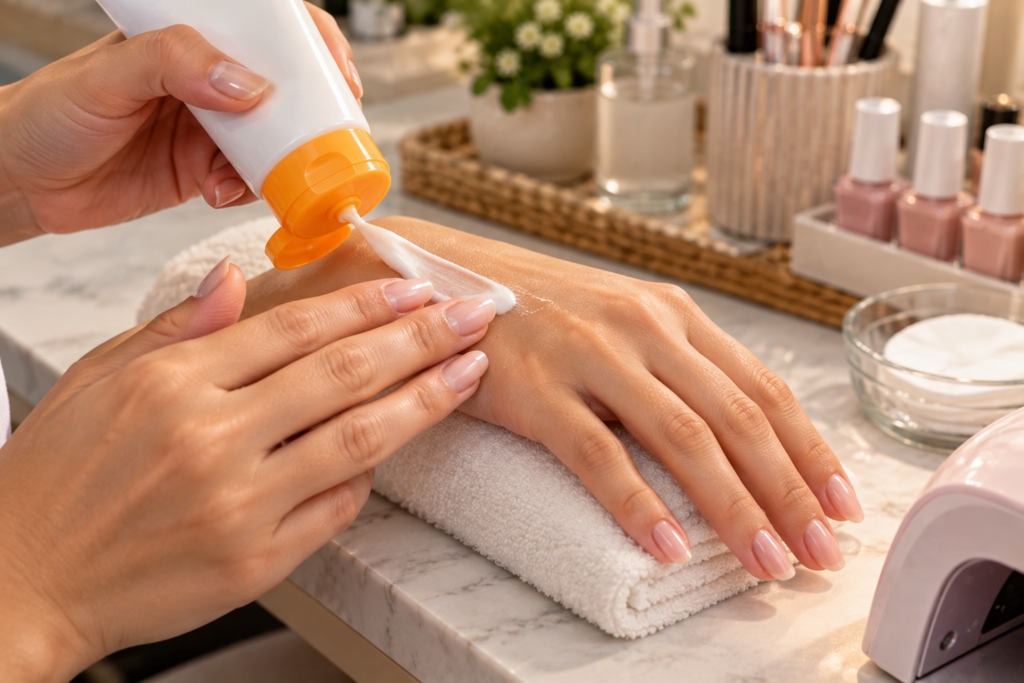
Gel nails aren’t inherently bad for you, and for most people, a properly applied and maintained gel manicure carries minimal risk. That said, there are a few legitimate safety considerations worth understanding, particularly around UV lamp exposure, potential allergic reactions, and the same trapped-moisture infection risk that applies to most nail enhancements when improperly sealed or removed.
The UV lamp question comes up constantly, and it deserves an honest answer rather than dismissal in either direction.
Do UV Nail Lamps Increase Skin Cancer Risk?
UV nail lamps do emit UVA radiation, and dermatology research has raised some genuine, though generally considered minor, concern about cumulative UV exposure to the hands from frequent, repeated gel manicure appointments over many years. LED lamps, which cure gel faster and therefore involve shorter individual exposure times, are generally considered a somewhat lower-exposure option compared to older-style UV lamps, and applying broad-spectrum sunscreen to hands before a gel manicure, or wearing UV-protective fingerless gloves during the curing process, are reasonable, commonly recommended precautions for anyone getting gel manicures regularly.
Can You Be Allergic to Gel Nail Polish?
Yes, allergic reactions to gel nail products can occur, typically involving the acrylate and methacrylate compounds present in most gel formulas, and reactions can range from mild redness and itching around the nail to more noticeable contact dermatitis. Sensitization can develop even in people who’ve worn gel polish without issue for years, and anyone noticing new irritation after a gel manicure should mention it to their nail technician and consider discussing it with a dermatologist if symptoms persist or worsen.
How to Get Gel Nails More Safely
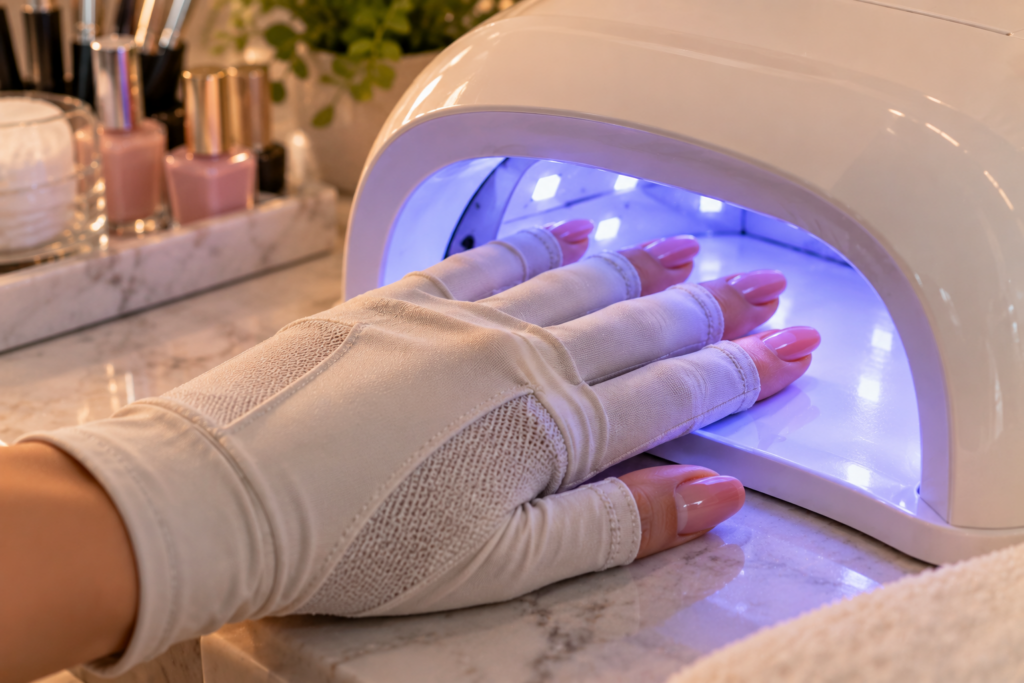
A few practical habits meaningfully reduce whatever real risk gel manicures carry, without requiring you to give up the service entirely.
Applying sunscreen to your hands before a gel appointment, or asking about UV-protective glove options, addresses the lamp exposure question directly. Choosing a salon that uses well-maintained, properly functioning LED lamps, rather than older or inconsistently calibrated UV equipment, can also help minimize unnecessary exposure time.
Giving nails occasional breaks between gel manicures, rather than maintaining continuous back-to-back applications indefinitely, supports overall nail health and gives you a chance to notice any early signs of irritation, thinning, or infection before they become more significant. Insisting on a proper acetone soak-off for removal, rather than allowing a technician to file gel off aggressively, also protects the natural nail plate from unnecessary thinning over repeated appointments.
Frequently Asked Questions
1. Can you do gel nails without a UV or LED lamp?
No, gel polish specifically requires light-activated curing to harden, so a UV or LED lamp is a genuine necessity for the process, unlike regular polish, which air-dries without any special equipment involved.
2. Are LED lamps safer than UV lamps for gel manicures?
LED lamps are generally considered a somewhat lower-exposure option since they cure gel faster, meaning less total time under the light per session, though both lamp types emit UVA radiation to some degree, which is why precautions like sunscreen remain reasonable regardless of lamp type.
3. Does gel polish damage nails more than regular polish?
Gel polish itself isn’t inherently more damaging than regular polish, but improper removal, especially filing or peeling rather than a proper acetone soak, is the primary way gel manicures can lead to nail thinning or damage over time.
4. Can children safely get gel manicures?
There’s no strict age restriction on gel manicures, though considerations like UV lamp exposure and potential allergic sensitization are worth thinking through for children specifically, and many parents choose to wait until children are a bit older before starting regular gel appointments.
5. Do gel nails smell as strong as acrylic during application?
No, gel polish generally has a much milder odor than acrylic, since it doesn’t involve the liquid monomer used in acrylic systems, making it a more comfortable option for people sensitive to strong chemical smells.
6. Can you get gel nails if you’re pregnant?
Gel manicures are generally considered safe during pregnancy for most people, with reasonable precautions like working in a well-ventilated salon space, and anyone with specific health concerns should discuss it with their doctor beforehand.
7. Why does gel polish sometimes peel at the tips before the rest of the nail?
Tip peeling often happens when the free edge wasn’t properly sealed with the top coat during application, since the exposed tip experiences the most daily friction and water exposure of any part of the nail.
8. Is it necessary to buff nails before applying gel polish?
Yes, lightly buffing the natural nail to remove shine before applying base coat genuinely improves gel adhesion, giving the gel a slightly textured surface to bond to rather than a smooth, naturally glossy one.
9. Can you get gel nails on toenails, and does the process differ from fingernails?
Yes, gel polish works the same way on toenails as it does on fingernails, using the same base coat, color, and top coat process cured under a lamp, and many people find gel particularly appealing for pedicures given how well it resists chipping compared to regular polish.
10. Does gel polish work well over nails that are already somewhat damaged or thin?
Gel can still be applied over nails with mild existing damage, though giving already weakened or thin nails some recovery time and extra moisturizing care before a new gel application is generally a good idea to avoid adding further stress to compromised nails.
Ready to try them? See how to do and remove gel nails at home, or compare with dip nails.