What Are Solar Nails? Pink-and-White Acrylics Explained
If you’ve ever admired a French manicure that somehow never seemed to chip, fade, or need constant touch-ups, there’s a decent chance you were looking at solar nails rather than a painted French tip. It’s an older term in the nail world, one that’s stuck around for decades, and it refers to something genuinely different from simply painting white polish over a natural or pink-toned nail.
This article breaks down exactly what solar nails are, where the name actually comes from, how they differ from a standard painted French manicure, and what the application and maintenance process actually involves.
What Are Solar Nails?
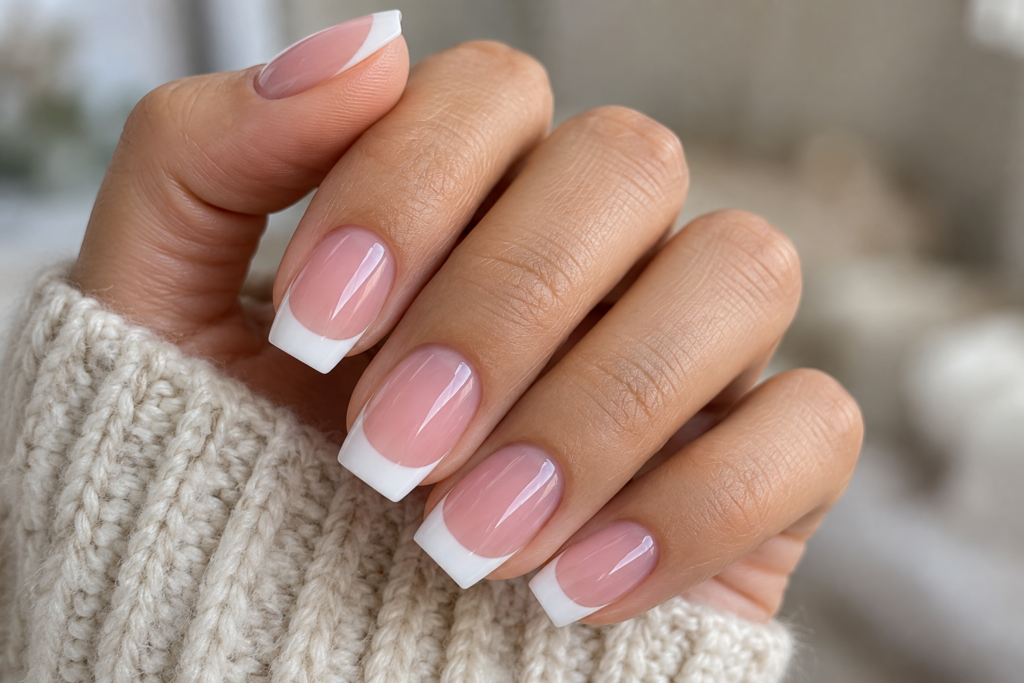
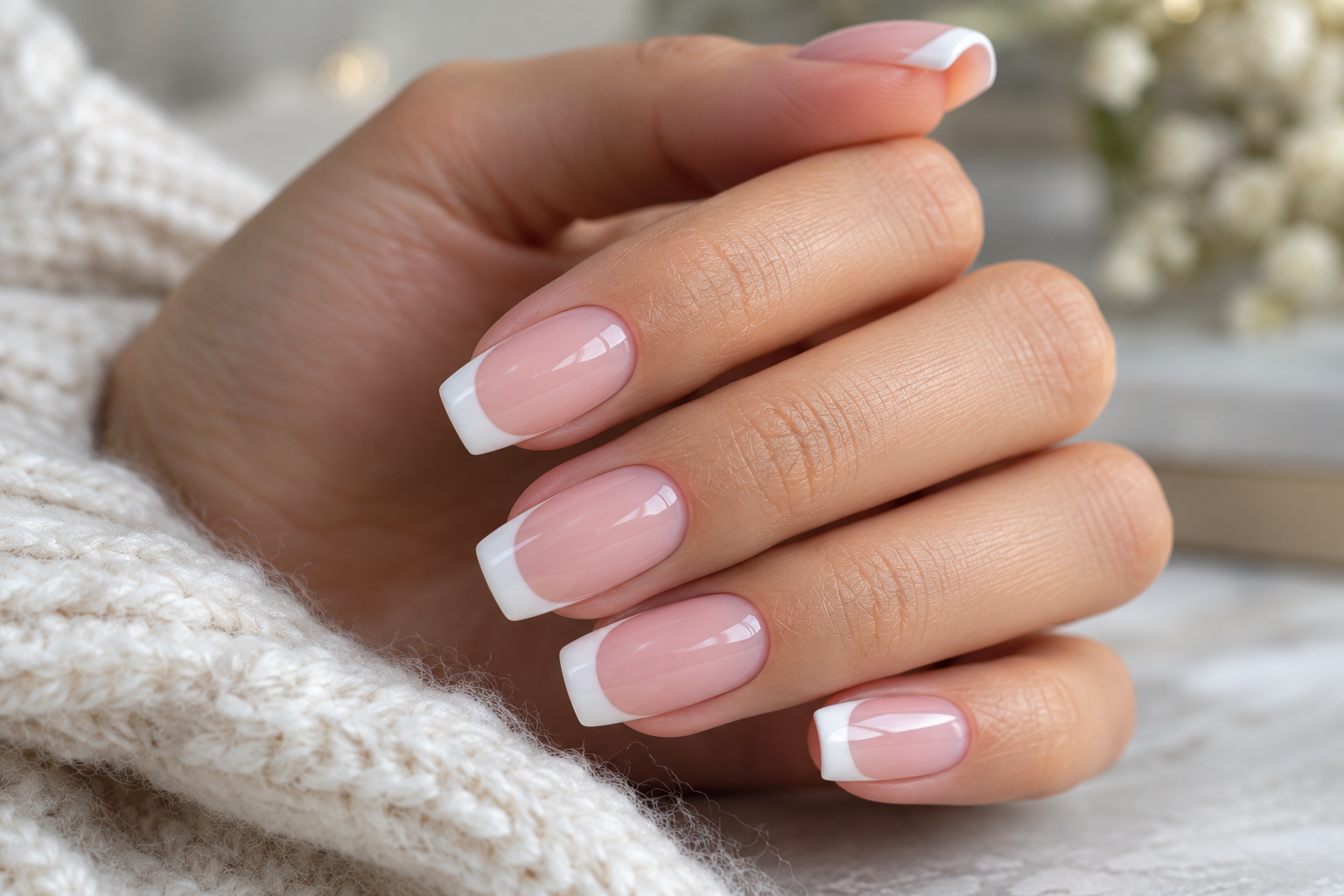
Solar nails are a specific type of acrylic nail enhancement originally developed by Creative Nail Design, commonly known as CND, that creates a French manicure look using pigmented pink and white acrylic powders rather than painted color applied on top of the nail. The pink and white color is built directly into the acrylic material itself during application, which is why this style is also frequently called “pink and white” nails.
Because the color comes from the acrylic powder rather than a topcoat of polish, solar nails tend to hold their crisp, clean French appearance considerably longer than a painted version, without the visible wear or chipping that polish-based French manicures are prone to over time.
Are Solar Nails the Same as Pink and White Nails?
Yes, “solar nails” and “pink and white nails” generally refer to the same style, an acrylic enhancement using separately pigmented pink and white powders to create a permanent French manicure look. “Solar nails” technically refers to the specific branded formula originally developed by CND, while “pink and white” has become the more generic, descriptive term used across the industry regardless of which specific brand’s acrylic powder was actually used.
Why Are They Called “Solar” Nails Specifically?
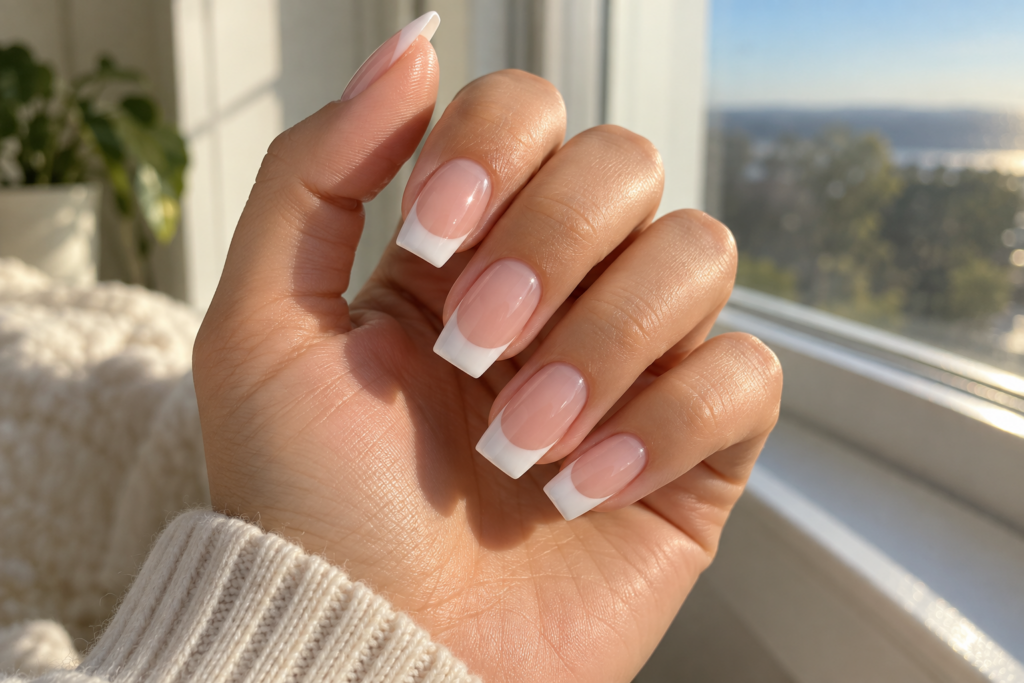
The “solar” name refers to the formula’s resistance to yellowing and discoloration from UV light exposure, a genuine issue that affected many standard acrylic formulas, which could gradually turn yellow with regular exposure to sunlight over time. CND’s original solar formula was specifically engineered to resist this kind of sun-related discoloration considerably better than typical acrylic powders available at the time.
This UV-resistant quality became a significant selling point, since it meant a crisp white tip could stay looking genuinely white for much longer, rather than gradually yellowing into a duller, less polished appearance the way some standard acrylics were prone to doing.
How Solar Nails Differ From a Painted French Manicure
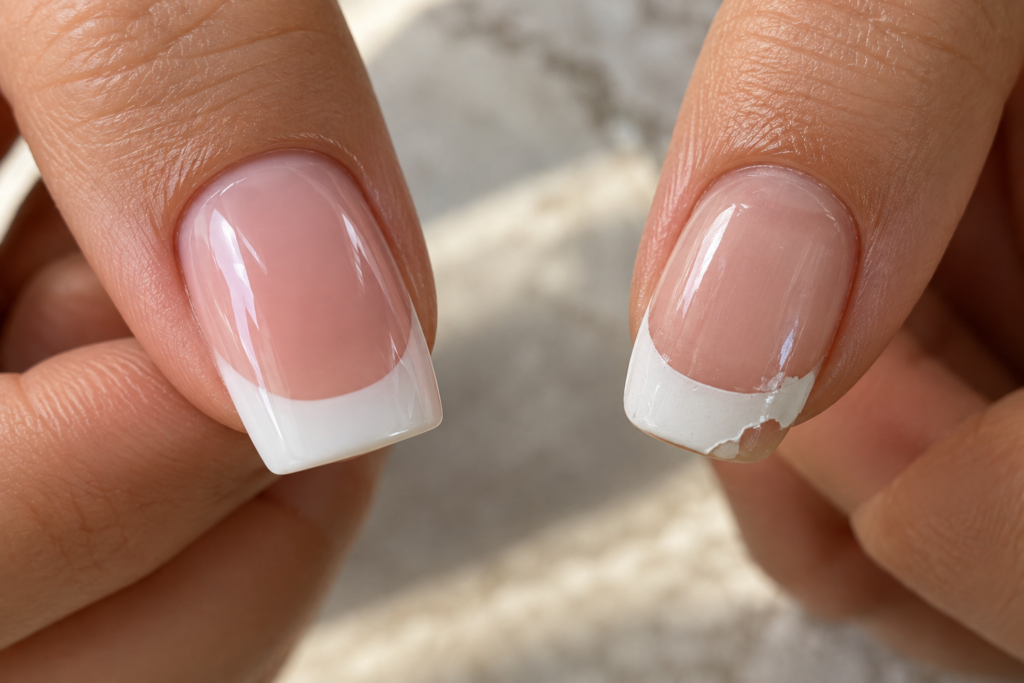
The core difference comes down to where the color actually lives. A traditional painted French manicure applies a base color, often a sheer pink or nude, and then hand-paints or stencils a white tip on top using polish, meaning the color sits as a surface layer that can chip, wear, or peel away with normal daily use.
Solar nails build the pink and white color directly into the acrylic structure itself during application, so the color is part of the nail’s actual material rather than a coating sitting on top of it. This structural difference is exactly why solar nails hold their French look so much longer, since there’s no separate polish layer to wear away or chip in the way a painted version inevitably will.
What’s the Difference Between Solar Nails and a Regular Painted French Manicure?
Solar nails build pink and white color directly into the acrylic material during application, while a painted French manicure applies white polish over a base color as a separate top layer that can chip or wear away over time. This structural difference means solar nails generally hold their crisp French appearance for weeks without visible wear, while a painted version typically starts showing chips or fading within days.
How Solar Nails Are Applied
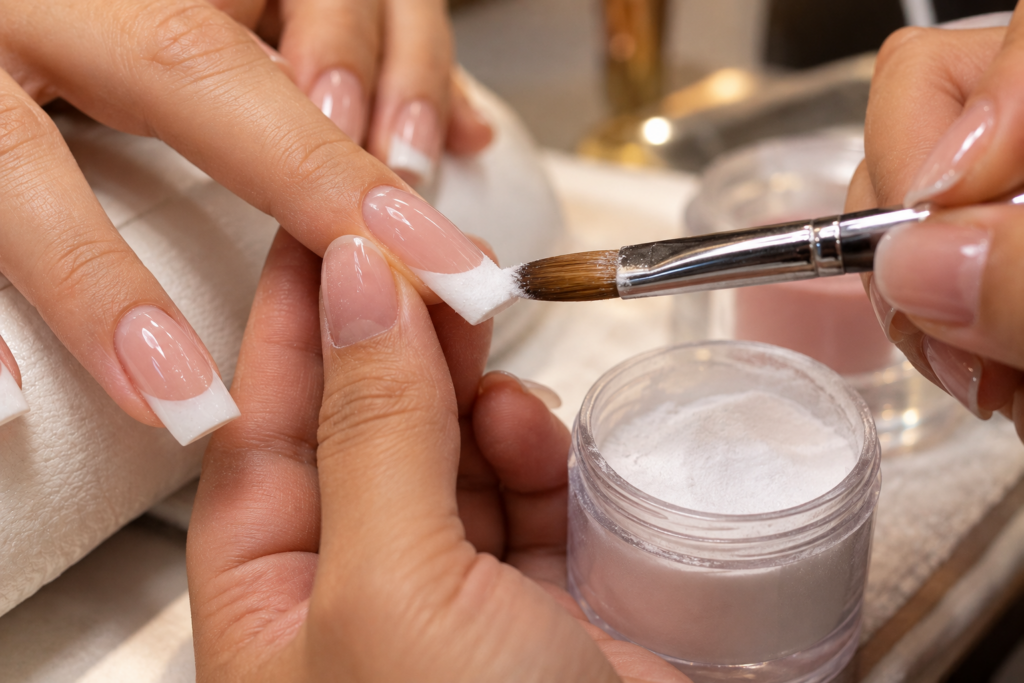
Application follows the same general acrylic process as any other enhancement, starting with nail prep, shaping, and either a tip or nail form to establish length and structure. Rather than using a single-color acrylic powder, a technician applies white acrylic powder specifically to the tip or free edge area first, creating the crisp white portion of the French look.
Pink acrylic powder is then applied over the remaining nail bed area, blending carefully where the two colors meet to create a smooth, seamless transition rather than a harsh, visible line. Once both sections are applied and hardened through the acrylic’s normal chemical curing process, the nail is filed, shaped, and buffed to a glossy finish.
Do Solar Nails Require a UV Lamp to Cure?
No, solar nails cure through the same chemical hardening process as standard acrylic, combining a liquid monomer with powder, rather than requiring any UV or LED lamp. This is one of the practical differences between solar nails and gel-based enhancement options, which specifically need light-based curing to harden properly.
Caring for and Removing Solar Nails
Solar nails generally hold up well over several weeks, with regular fill appointments maintaining the look as natural nail growth creates a gap near the cuticle. Because the pink and white color is built into the acrylic rather than painted on top, fills tend to blend more seamlessly than they would with a painted French design, since a technician simply extends the same pigmented acrylic material to cover new growth.
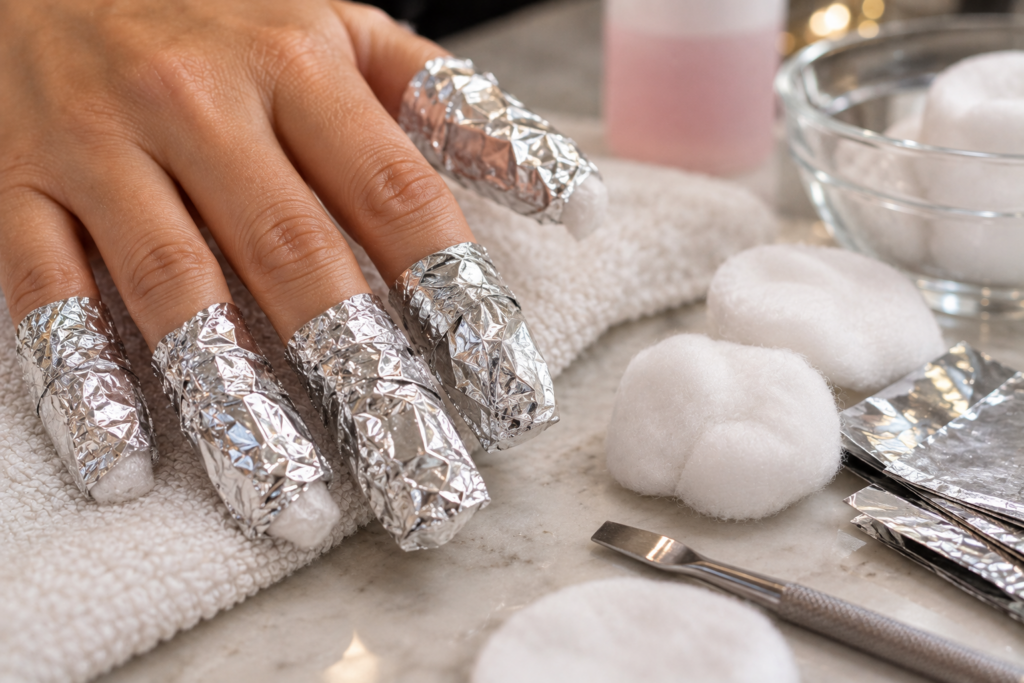
Removal follows the same acetone soak-off process used for standard acrylic nails, requiring patience and an adequate soak time before gently removing the softened material, rather than filing or forcing the set off, which risks damaging the natural nail underneath.
Frequently Asked Questions
1. Are solar nails more expensive than standard acrylic nails?
Solar nails sometimes cost somewhat more than a basic single-color acrylic set, reflecting the additional technique and product involved in applying two separate pigmented powders, though actual pricing varies significantly by salon, location, and the specific brand of product used.
2. Can solar nails be done in colors other than pink and white?
Yes, while pink and white is the classic and most associated look, solar-style acrylic techniques can technically be done using other color combinations, since the underlying method of using pigmented powders rather than painted polish applies regardless of the specific colors chosen.
3. How long do solar nails typically last before needing a fill?
Solar nails generally last around two to three weeks before natural growth creates a visible gap near the cuticle, similar to the typical timeline for standard acrylic nails.
4. Do solar nails smell as strong as regular acrylic during application?
Yes, since solar nails use the same liquid monomer and acrylic powder system as standard acrylics, they carry the same characteristic chemical odor during application that many people associate with traditional acrylic services.
5. Can solar nails be applied without extensions, directly on natural nail length?
Yes, solar-style pink and white acrylic can be applied as an overlay on natural nails without added length, though it’s more commonly associated with some degree of extension given its strong ties to the classic, elongated French manicure look.
6. Is it possible to add nail art on top of solar nails?
Yes, nail art can absolutely be added over a finished solar nail set, though many people choose to keep the classic pink and white look clean and simple specifically because that crisp French appearance is the main draw of this style.
7. Do solar nails yellow at all over extended wear, despite the UV-resistant formula?
Solar nails resist yellowing considerably better than standard acrylic, though no acrylic formula is completely immune to gradual discoloration with extended wear and repeated exposure to sunlight, cleaning products, or other environmental factors over a long enough period.
8. Can solar nails be removed and reapplied at home?
Removal can be done at home using the standard acetone soak-off method, though reapplication of a full solar nail set generally requires more specialized skill and product than many at-home nail enthusiasts have readily available, making a salon visit the more common choice for reapplication specifically.
9. Are solar nails still a popular choice today, or have they fallen out of fashion?
Solar and pink-and-white nails remain a classic, consistently requested style at many salons, and while nail trends shift constantly, this particular clean, timeless French look has maintained steady popularity rather than disappearing the way some more fleeting trends have.
10. Is there a difference between solar nails and “permanent French” nails?
“Permanent French” is often used as another general term for the same pink-and-white acrylic technique, since both describe a French manicure look built into the nail material itself rather than achieved through polish, making the two terms largely interchangeable in most salon contexts.
For more on related nail systems, see our guides to acrylic nails and dip nails.