How to Stop Biting Nails, and Why You Bite Them at All
Nail biting is one of those habits that sneaks up on you. You’re reading, watching something, sitting through a stressful meeting, and suddenly your fingers are at your mouth without any real conscious decision behind it. It’s an incredibly common habit, one that starts for a lot of people in childhood and just never fully goes away, and it genuinely deserves an honest look rather than either dismissal or unnecessary alarm.
This article covers why nail biting happens in the first place, what it actually does to your nails, teeth, and general health, and practical, realistic strategies for cutting back or stopping altogether, including what to do when it feels like more than just a casual habit.
Why Do People Bite Their Nails?
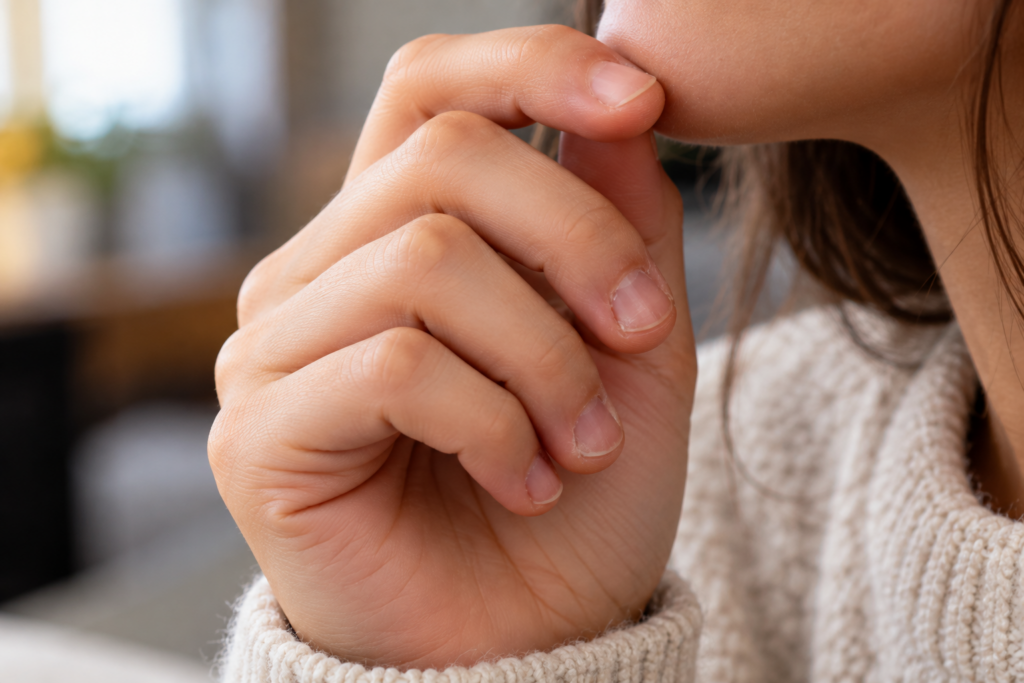
Nail biting typically develops as a response to stress, anxiety, boredom, or simply as a learned habit picked up in childhood that carries into adulthood without much conscious thought involved. For some people, it functions almost like a grooming behavior, an attempt to smooth out a rough edge or hangnail that then becomes a repeated pattern triggered by similar situations.
It’s worth understanding that nail biting sits on a spectrum. For a lot of people, it’s a fairly mild, occasional habit that shows up mainly during specific triggers like concentration or stress. For others, it becomes more frequent, automatic, and harder to consciously control, sometimes falling into a broader category clinicians refer to as body-focused repetitive behaviors, which also includes things like hair pulling or skin picking.
Is Nail Biting a Sign of Anxiety or a Mental Health Condition?
Nail biting is commonly associated with anxiety and stress, but it’s also an extremely common habit on its own, not automatically indicating an underlying mental health condition for most people who do it. Many people bite their nails simply out of habit, boredom, or concentration, without any connection to significant anxiety, while for others it may genuinely correlate with higher stress levels, making it worth paying attention to as one piece of a broader picture rather than a definitive standalone signal.
What’s the Difference Between Casual Nail Biting and a Compulsive Habit?
Casual nail biting tends to happen occasionally, often triggered by specific situations like stress or boredom, and generally doesn’t feel distressing or difficult to stop once someone decides to work on it. A more compulsive pattern typically involves biting that feels automatic and hard to control even when someone wants to stop, happens frequently throughout the day regardless of specific triggers, and sometimes continues to a degree that causes noticeable physical damage or genuine distress about the behavior itself.
Is Nail Biting Actually Bad for You?
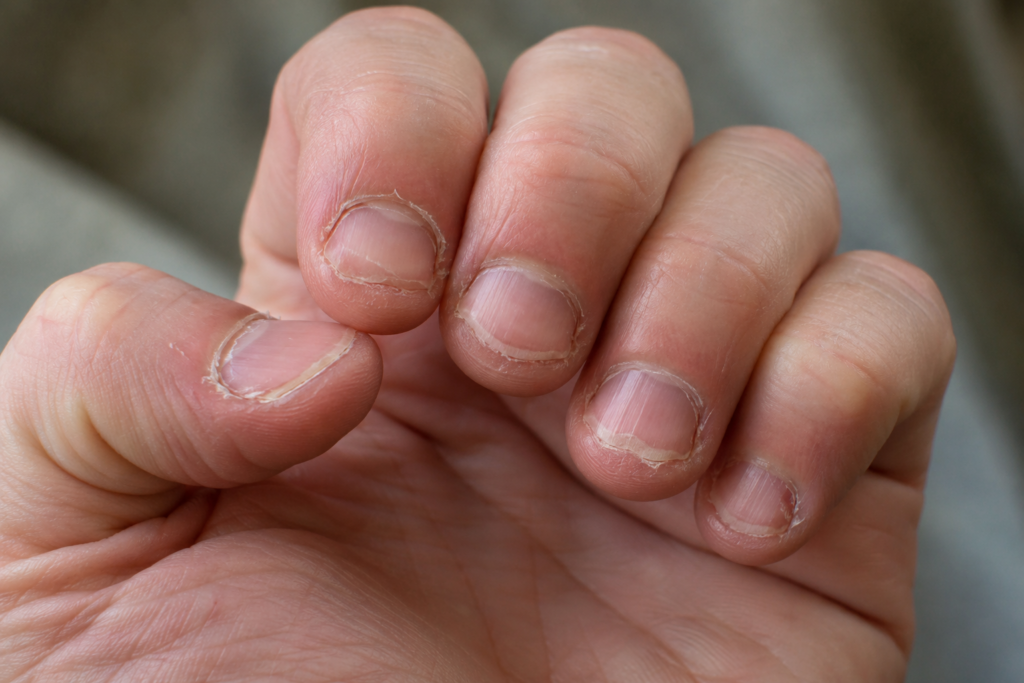
Yes, nail biting can cause genuine physical problems beyond just the cosmetic issue of short, uneven nails. Repeated biting can damage the nail matrix over time, potentially affecting how nails grow back and sometimes leading to permanently altered nail shape or texture. It also increases the risk of minor infections around the nail bed, since biting frequently breaks the skin and creates an entry point for bacteria already present in the mouth.
Can Nail Biting Damage Your Teeth?
Yes, chronic nail biting can contribute to dental issues over time, including uneven wear on tooth edges, increased risk of chips or cracks, and in some cases, contributing to jaw alignment problems from the repetitive biting motion and pressure involved. Dentists sometimes notice signs of habitual nail biting during routine checkups based on these characteristic wear patterns.
Does Nail Biting Increase Your Risk of Getting Sick More Often?
Yes, nail biting can increase exposure to germs, since fingers and the area under nails frequently carry bacteria and viruses picked up throughout the day, and biting brings that directly into contact with the mouth. This creates a more direct pathway for germs to enter the body compared to normal hand-to-face contact, which is part of why breaking the habit can genuinely support better overall hygiene.
Practical Ways to Stop Biting Your Nails
A combination of approaches tends to work better than relying on willpower alone, since nail biting is often at least partly automatic rather than a fully conscious choice.
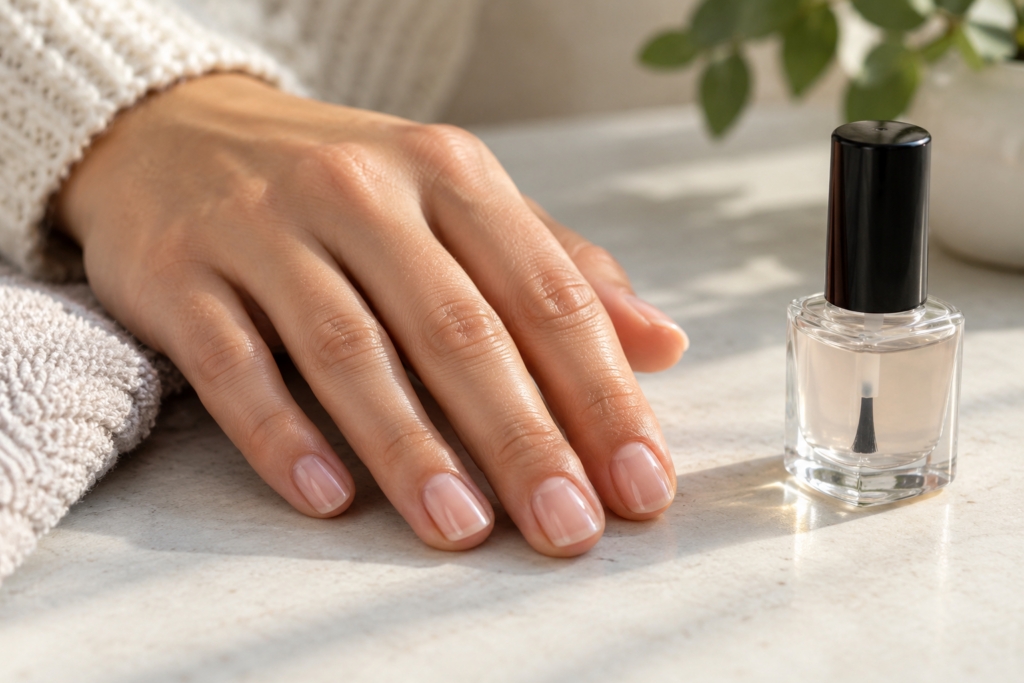
Bitter-tasting nail polish, specifically formulated to discourage biting, creates an immediate unpleasant taste that interrupts the habit in the moment, making it one of the most commonly recommended starting points. Keeping nails trimmed short and neat reduces the temptation altogether, since there’s simply less rough edge or loose nail to pick at or bite in the first place.
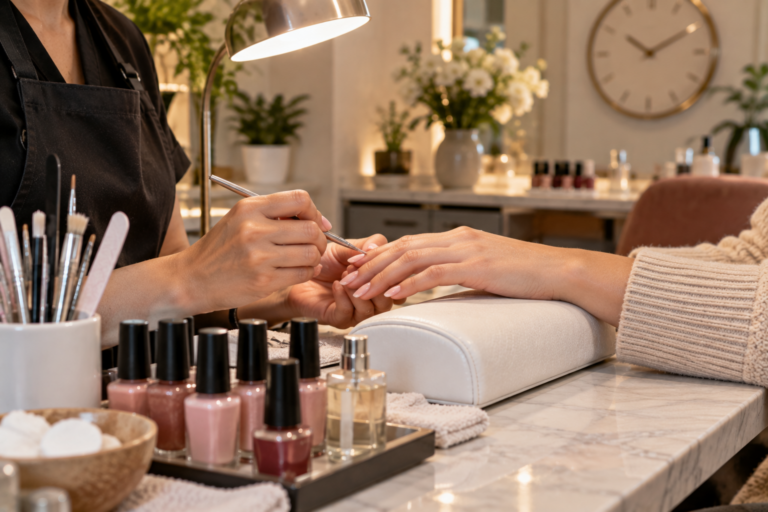
Getting regular manicures, even simple ones, can also help, both because well-groomed nails feel less appealing to damage and because the financial and time investment can create a bit of extra motivation to protect the result. Wearing gloves or adhesive bandages on frequently bitten fingers works as a more direct physical barrier for people who need something more immediate than taste-based deterrents.
Dealing With Triggers Instead of Just the Habit Itself
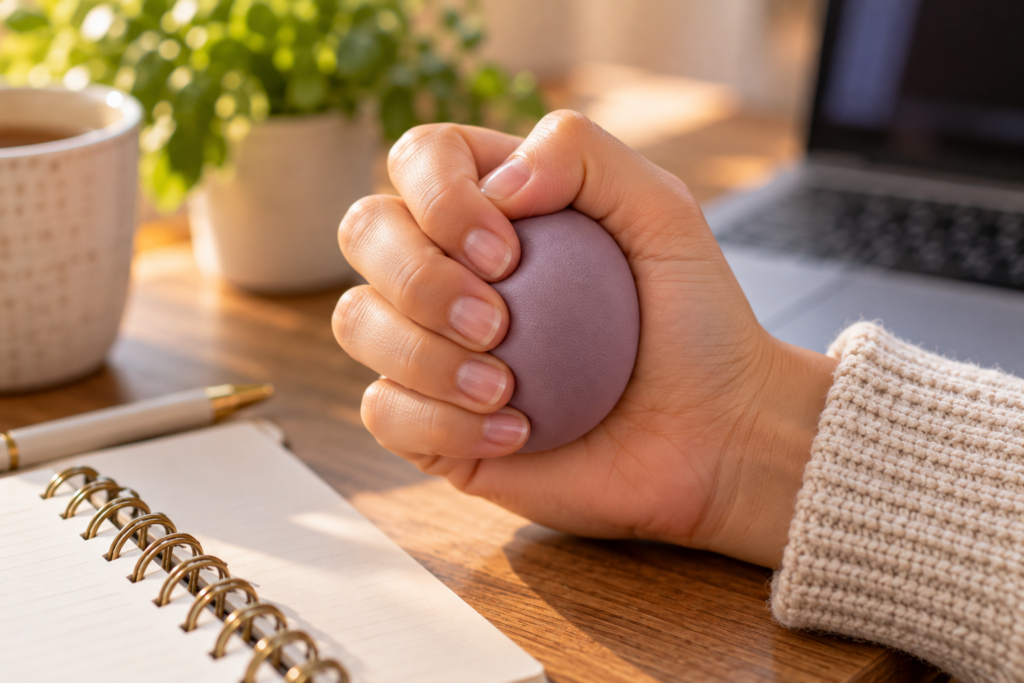
Since nail biting is often triggered by specific situations, stress, boredom, concentration, or anxiety, addressing those underlying triggers tends to be more effective long-term than just focusing on stopping the physical behavior alone.
Keeping hands occupied with something else during known trigger moments, like a fidget tool, stress ball, or even just doodling, gives the urge somewhere else to go rather than leaving hands with nothing to do but reach for the mouth. Noticing patterns around when biting happens most, whether that’s during specific tasks, times of day, or emotional states, helps identify which triggers matter most for your specific habit, since the right strategy often depends on understanding what’s actually driving the behavior in the first place.
When to Consider Getting Extra Support
For most people, nail biting is a manageable habit that responds well to the practical strategies covered here, given some consistency and patience. That said, if biting feels genuinely difficult to control despite real effort, causes significant physical damage, or feels connected to broader anxiety or stress that’s affecting daily life, talking to a doctor or therapist is a reasonable next step.
Professionals experienced with body-focused repetitive behaviors can offer structured approaches, like habit reversal training, that go beyond general tips and address the specific patterns driving a more persistent or distressing habit.
Frequently Asked Questions
1. Does nail biting run in families, or is it purely a learned behavior?
Nail biting does show some tendency to run in families, though it’s generally considered a combination of learned behavior, often picked up by observing a parent or sibling, and individual factors like temperament or stress response, rather than being purely genetic.
2. Can nail biting cause permanent damage to the nail shape?
Yes, chronic, long-term nail biting can sometimes lead to permanently altered nail growth or shape if the nail matrix has been repeatedly damaged, though many people see significant improvement in nail appearance once they stop biting and give nails time to grow out normally.
3. Is it common for children to bite their nails, and does it usually stop on its own?
Yes, nail biting is extremely common in childhood, and many children naturally outgrow the habit on their own by adolescence or early adulthood, though for some people it continues well into adulthood without ever fully resolving without some intentional effort.
4. Does stress management help reduce nail biting even without directly targeting the habit?
Yes, since nail biting is frequently triggered by stress or anxiety, general stress management techniques, like regular exercise, adequate sleep, or relaxation practices, can indirectly reduce how often the urge to bite shows up in the first place.
5. Can wearing fake nails or extensions help someone stop biting?
Yes, artificial nails like gel or acrylic can act as a physical barrier that makes biting more difficult or less satisfying, and many people find this an effective temporary strategy while working on breaking the underlying habit.
6. Does nail biting affect how nail polish or enhancements apply afterward?
Yes, severely bitten nails often have an uneven or damaged surface that can make polish or gel application trickier initially, though as nails grow out healthier following the habit stopping, application typically becomes noticeably easier and more consistent.
7. Is it possible to stop nail biting cold turkey, or does it usually take a gradual approach?
Both approaches can work depending on the individual, though many people find a gradual approach, focusing on one hand or a few fingers at a time, combined with specific deterrent strategies, more sustainable than attempting to stop the entire habit abruptly all at once.
8. Can nail biting be linked to obsessive-compulsive tendencies?
In some cases, particularly when biting feels highly repetitive, difficult to control, and causes significant distress, it can be related to obsessive-compulsive spectrum patterns, though for the majority of people who bite their nails, it’s simply a common habit unrelated to any clinical condition.
9. Does chewing gum or other oral habits help reduce nail biting?
Yes, some people find that substituting another mouth-focused habit, like chewing gum, can help redirect the specific oral fixation aspect of nail biting, though this works better for some people than others depending on what’s actually driving their particular habit.
10. Can adults successfully break a nail biting habit they’ve had since childhood?
Yes, adults can absolutely break long-standing nail biting habits, even ones that started in childhood, though it often takes more deliberate strategy and patience than habits picked up more recently, given how deeply automatic the behavior can become after years of repetition.