How to Shape Nails: A Complete Step-by-Step Guide
Shaping nails looks simple enough until you actually sit down with a file and realize your nails aren’t quite matching on both hands, or the edges feel rough no matter how much you file. Most of that frustration comes down to a few technical habits that nobody really explains clearly, like filing direction, angle, and the difference between shapes that look similar but aren’t filed the same way at all.
This guide breaks down the actual mechanics of proper nail shaping: the tools worth having, the correct filing technique, how each popular shape is achieved, and how to pick a shape that actually suits your nail beds and daily life rather than just copying whatever looks good in a photo.
How to Shape Nails: The Basic Technique
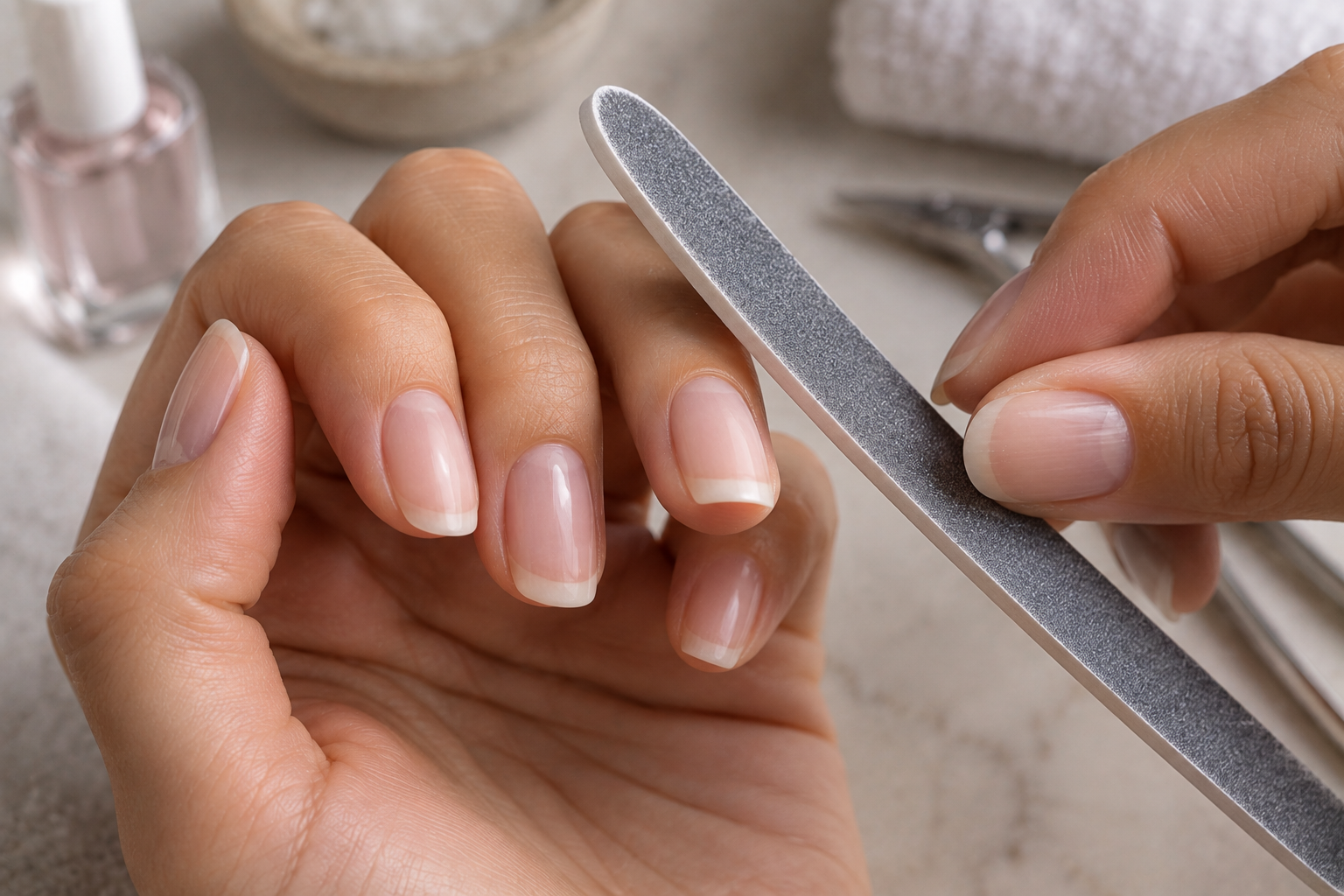
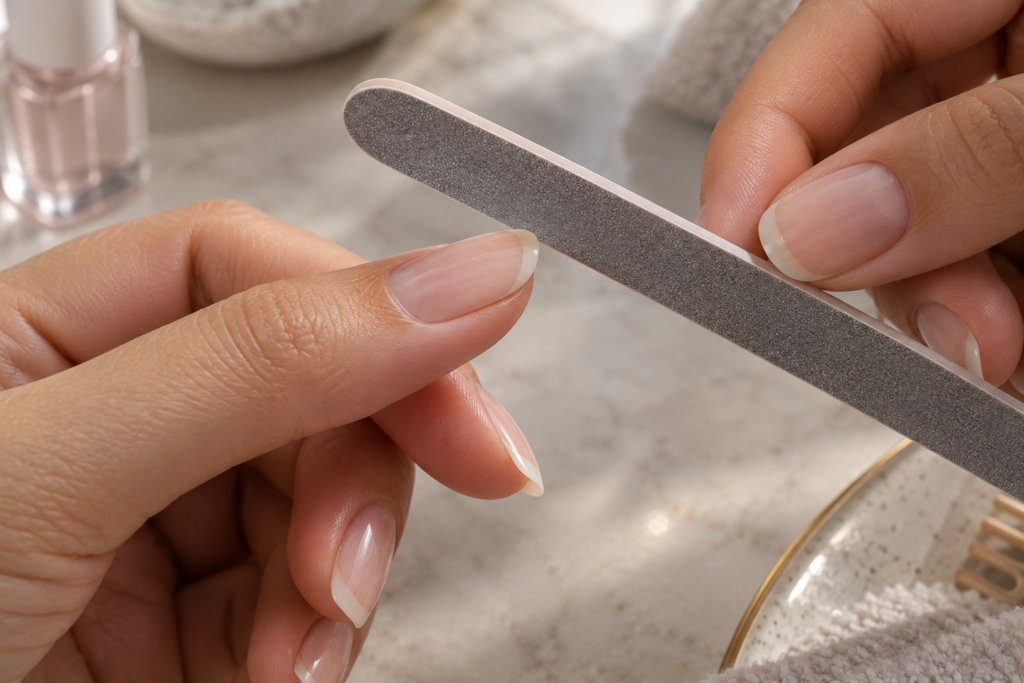
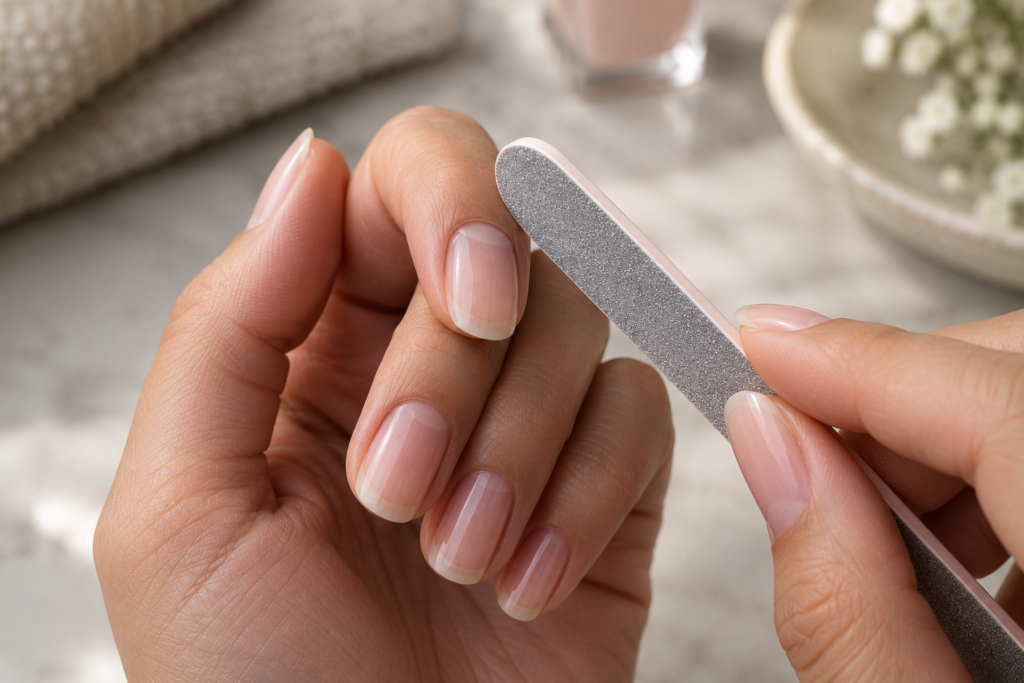
Proper nail shaping starts with filing in one consistent direction rather than sawing back and forth, using light, even pressure, and working from the outer edge of the nail toward the center on each side. This single-direction technique prevents the kind of splitting and peeling that a rough, back-and-forth sawing motion tends to cause over time.
Beyond direction, angle matters just as much. Holding the file at a slight angle, generally around 45 degrees, along the free edge helps create a smoother, more finished edge than filing completely flat across the top of the nail tip. Working slowly and checking your progress frequently, rather than filing aggressively in long, heavy strokes, gives you far more control over the final shape.
Tools You Need for Proper Nail Shaping
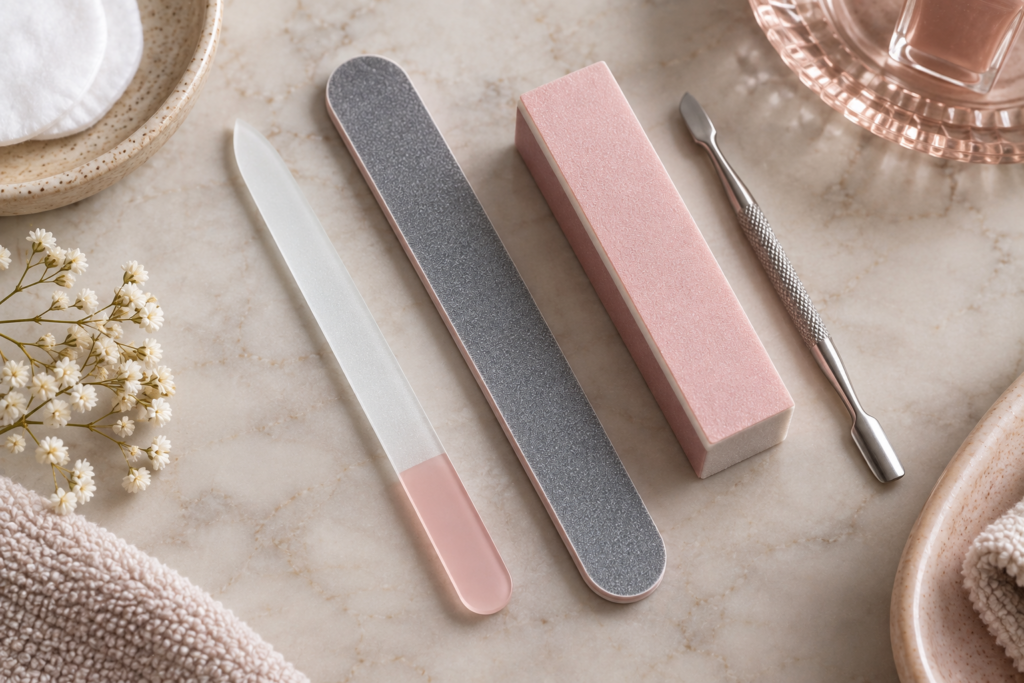
A glass or crystal file is worth the investment over a standard emery board, since the smoother, more consistent grit tends to create a cleaner edge with less microscopic damage to the nail plate. That said, a quality emery board still works perfectly well for most people, especially when paired with correct technique.
A buffer block helps smooth out any remaining ridges or rough spots along the edge after the main shaping is done, giving the final result a more polished, finished feel. Cuticle tools, like a pusher and small nippers, aren’t strictly necessary for shaping the nail itself, but they support the overall look, since neat cuticles make any nail shape read as more put-together and intentional.
Wet Filing vs. Dry Filing
This is one of the more commonly debated points in nail care, and the general consensus among most nail professionals favors one approach pretty clearly.
Should You File Your Nails Wet or Dry?
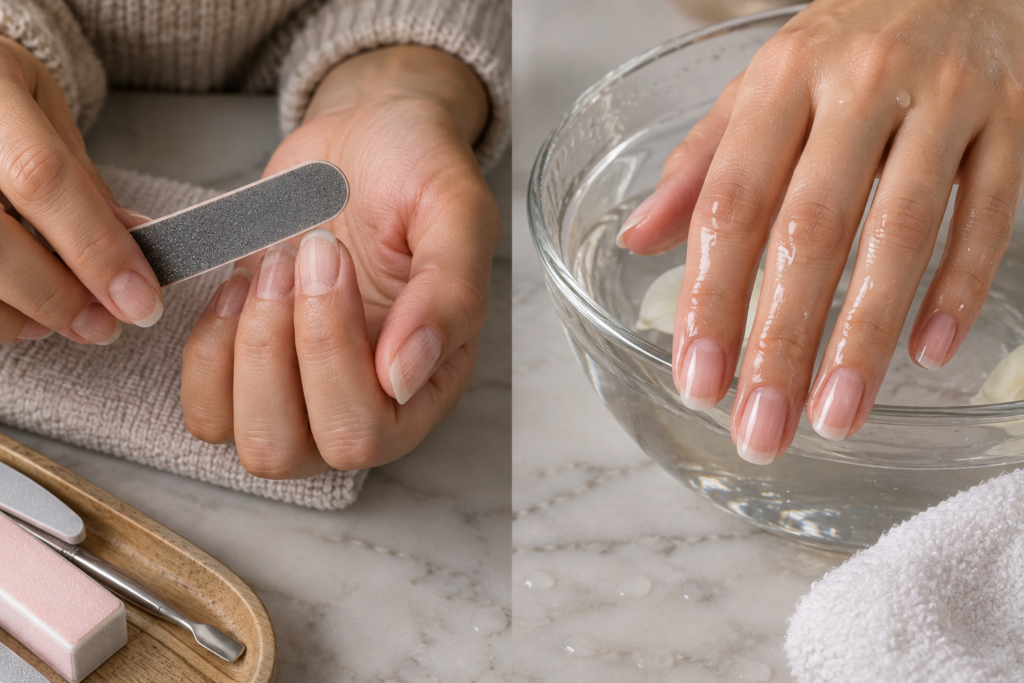
Nails should generally be filed dry rather than wet, since wet nails temporarily swell and soften, which makes them more prone to splitting, tearing, or an uneven edge once they dry back out and shrink slightly. Filing dry nails gives you a more accurate, stable shape that’s less likely to change once the nail returns to its normal hydration level after a shower or hand wash.
How to File Each Popular Nail Shape
Different shapes call for genuinely different filing approaches, and understanding what makes each one distinct helps you achieve a cleaner, more intentional result rather than an approximation.
Square nails are filed with a flat, straight edge across the top and sharp, defined corners on both sides, creating a bold, geometric look that reads as clean and structured. This shape generally works best on longer nail beds, since very short nails can make sharp square corners look disproportionate.
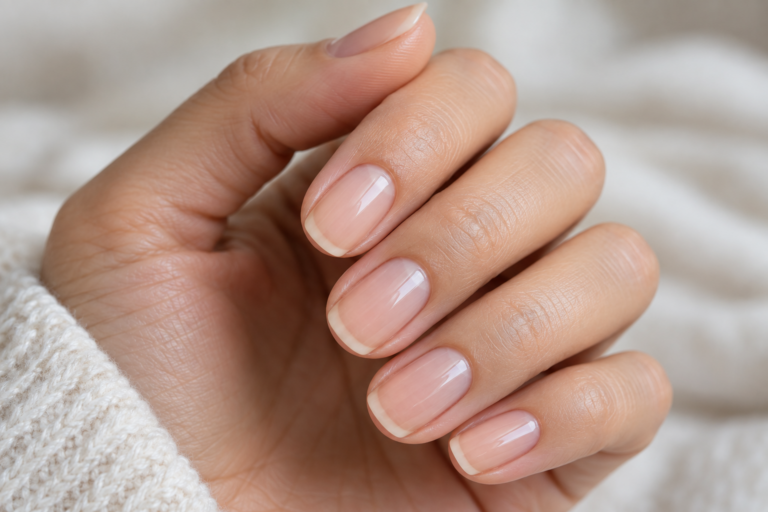
Round nails follow the natural curve of the fingertip, filed to eliminate corners entirely in favor of a soft, continuous curve from one side to the other. This shape tends to be the most forgiving and low-maintenance, since there are no sharp corners to catch or chip.
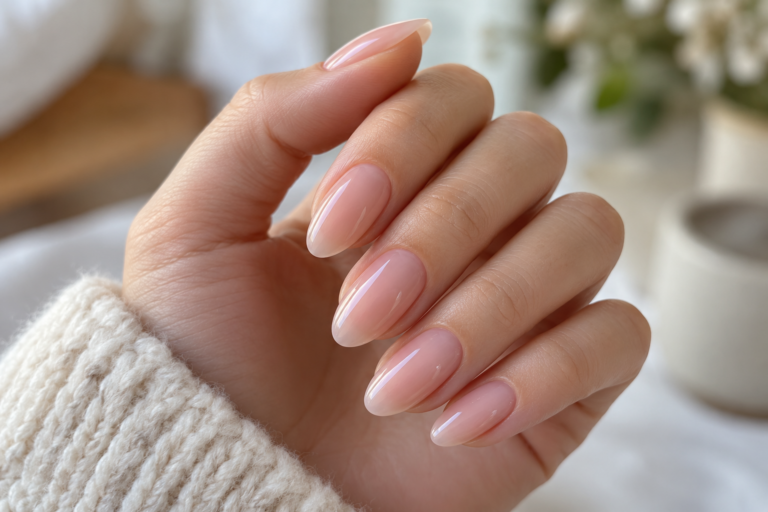
Oval nails extend the round shape slightly further, tapering gently at the sides toward a rounded, elongated tip, without ever forming a distinct point. The overall silhouette is softer and narrower than a full round shape.
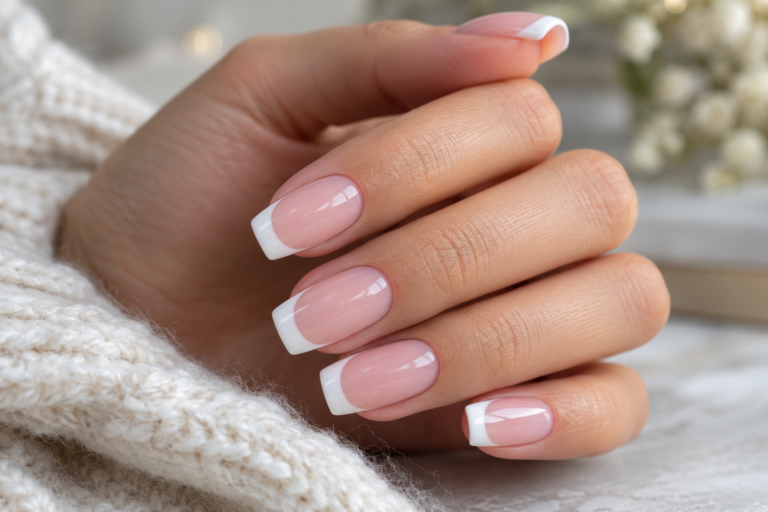
Squoval, a blend of square and oval, keeps the flat top edge of a square shape but softens the corners into a gentle curve rather than a sharp point, offering a middle-ground look that many people find both practical and polished.
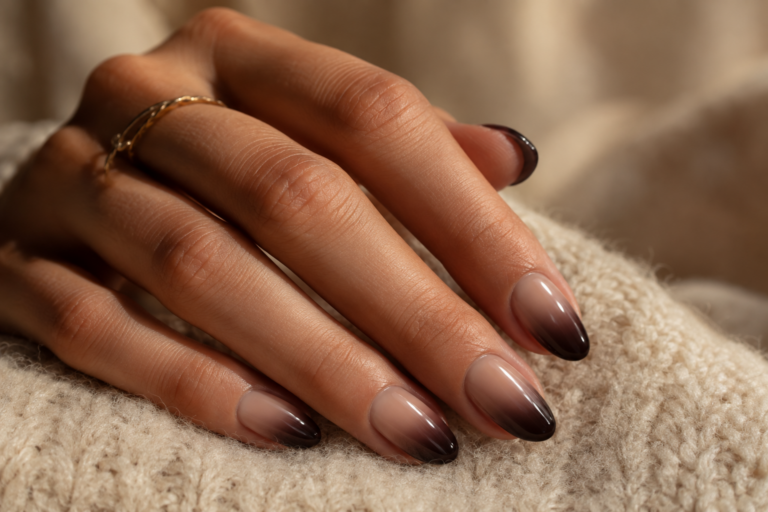
Almond nails taper more dramatically than oval, narrowing toward a rounded point at the tip that echoes the shape of an actual almond. This shape requires a bit more length to execute well, since very short nails don’t have enough room to taper convincingly.
Coffin, sometimes called ballerina, nails taper inward along the sides before ending in a flat, squared-off tip, creating a long, tapered silhouette with a distinct flat edge rather than a point. This shape needs considerable length to achieve properly and is generally done with extensions rather than on very short natural nails.
Stiletto nails taper to a sharp, pointed tip, the most dramatic and elongated of the common shapes, requiring both length and careful, symmetrical filing on both sides to avoid an uneven or crooked point.
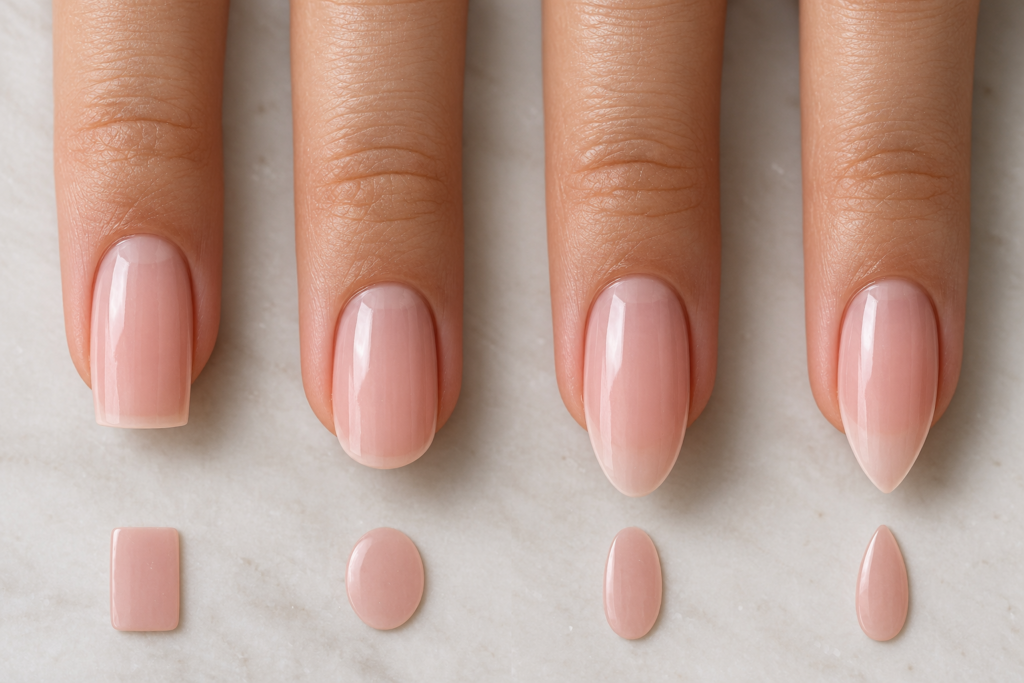
What’s the Difference Between Oval and Almond Nail Shapes?
Oval nails taper gently and stay rounded at the tip without narrowing to a point, while almond nails taper more sharply and end in a defined, rounded point that echoes an actual almond’s shape. The practical difference comes down to how much the sides narrow, oval remains wider and softer throughout, while almond creates a more elongated, pointed silhouette that generally requires slightly more nail length to shape well.
Choosing the Right Shape for Your Nails and Lifestyle
Nail shape isn’t purely aesthetic. It genuinely affects durability, how the shape complements your natural nail bed, and how much daily upkeep you’re signing up for.
Shorter, rounder shapes like round and squoval tend to be the most durable and forgiving for anyone with an active lifestyle or hands-on daily routine, since there are fewer sharp corners or delicate points to catch or chip. Longer, more tapered shapes like almond, coffin, and especially stiletto look striking but require more careful handling and more frequent maintenance to keep the tips from breaking or the shape from growing out unevenly.
Your natural nail bed shape also plays a role. Wider nail beds often suit square or squoval shapes well, since these shapes work with that natural width rather than fighting it, while narrower nail beds can sometimes look more balanced with oval or almond shapes that echo their existing taper.
Which Nail Shape Is the Most Durable and Least Likely to Break?
Round and squoval shapes are generally considered the most durable, since they eliminate the sharp corners and narrow points that are most prone to catching, chipping, or breaking during everyday activities. Square nails, while still relatively sturdy, carry slightly more risk at the corners compared to a fully rounded shape, and more dramatically tapered shapes like almond, coffin, and stiletto require the most careful handling due to their narrower, more delicate tips.
Keeping Your Shape Looking Fresh Between Manicures
Nail growth naturally shifts a shape’s proportions over time, since new growth doesn’t follow the exact taper or angle you originally filed. Regular light maintenance filing, even just a quick touch-up between full manicures, helps keep the intended shape looking crisp rather than letting it drift into something less defined as the nail grows out.
How Often Should You Reshape Your Nails?
Most people benefit from a light reshaping touch-up roughly every one to two weeks, with a more thorough reshaping alongside a full manicure every few weeks depending on individual growth rate. Nails that grow faster, or shapes with more dramatic tapering like almond or stiletto, generally need more frequent attention to keep the silhouette looking clean and intentional as new growth comes in.
Frequently Asked Questions
1. Can you change your nail shape without cutting your nails significantly shorter first?
Yes, in many cases you can gradually reshape nails through filing alone without a dramatic length reduction, though moving to a more tapered shape like almond or stiletto from something like square may require removing a bit more length at the corners to achieve the new silhouette properly.
2. Does nail shape affect how polish or nail art looks on the nail?
Yes, nail shape genuinely affects how certain designs and even solid color read visually, since a longer, more tapered shape like almond or coffin gives more visual canvas for gradients or intricate art, while shorter, rounder shapes tend to showcase simpler, more compact designs more cleanly.
3. Is it bad to use a metal nail file?
Metal files are generally considered harsher on the natural nail plate compared to glass or fine-grit emery options, since they tend to be more abrasive, which is why many nail professionals recommend glass or crystal files for gentler, more controlled shaping, especially on natural, unenhanced nails.
4. Can you shape acrylic or gel nails the same way as natural nails?
Yes, the same basic filing direction and angle principles apply to acrylic and gel extensions, though these enhanced nails can typically tolerate a bit more filing pressure than natural nails, since they’re generally more durable and less prone to the splitting that dry, unenhanced natural nails can experience.
5. Why do my nails feel rough even after filing?
Roughness after filing is often caused by filing in a back-and-forth sawing motion rather than one consistent direction, or by using too coarse a grit file for the final shaping pass, and switching to a finer grit or a buffer for the last step usually smooths out any remaining texture.
6. Does finger length affect which nail shape looks best?
Finger length can influence which shapes appear most proportionate, with longer, more tapered shapes like almond or oval sometimes elongating the appearance of shorter fingers, while shorter, rounder shapes can help balance out already elongated fingers, though personal preference ultimately matters more than any strict rule.
7. Can you shape nails without any tools at all, just by biting or picking at them?
Biting or picking at nails instead of filing them tends to create jagged, uneven edges and can cause real damage to the nail plate and surrounding skin, so using a proper file remains the only reliable way to achieve a clean, intentional shape.
8. Is it necessary to soak nails before filing them?
No, soaking nails before filing is generally not recommended, since it softens and temporarily swells the nail, which can lead to a less accurate shape and increased risk of splitting once the nail dries and returns to its normal state.
9. Do nail shapes go in and out of fashion trends?
Yes, certain shapes tend to trend more heavily during different periods, with almond and coffin shapes seeing significant popularity in recent years, though classic shapes like round, oval, and square have remained consistently popular choices regardless of shifting trends.
10. Can uneven nail beds still achieve a symmetrical shape?
Yes, slightly uneven natural nail beds can still be filed into a visually symmetrical shape with careful, deliberate filing that compensates for the natural variation, though achieving perfect symmetry may take a bit more time and attention on the side that needs more adjustment.