How to Care for Baby’s Nails: A Complete Safety Guide
There’s a particular kind of nervousness that comes with holding tiny nail clippers near a newborn’s even tinier fingers for the first time. It’s a completely normal reaction, and honestly, most parents feel it. Baby nails are soft, thin, and attached to fingers that tend to move without warning, which makes the whole process feel a lot riskier than it actually needs to be once you understand the right tools and technique.
This guide walks through everything from choosing baby-safe tools, to the safest timing and trimming method, to handling a squirmy baby who won’t sit still, and what to actually do if you nick their skin, because that happens to nearly every parent at some point and it’s rarely as serious as it feels in the moment.
How to Care for Baby’s Nails: The Basics
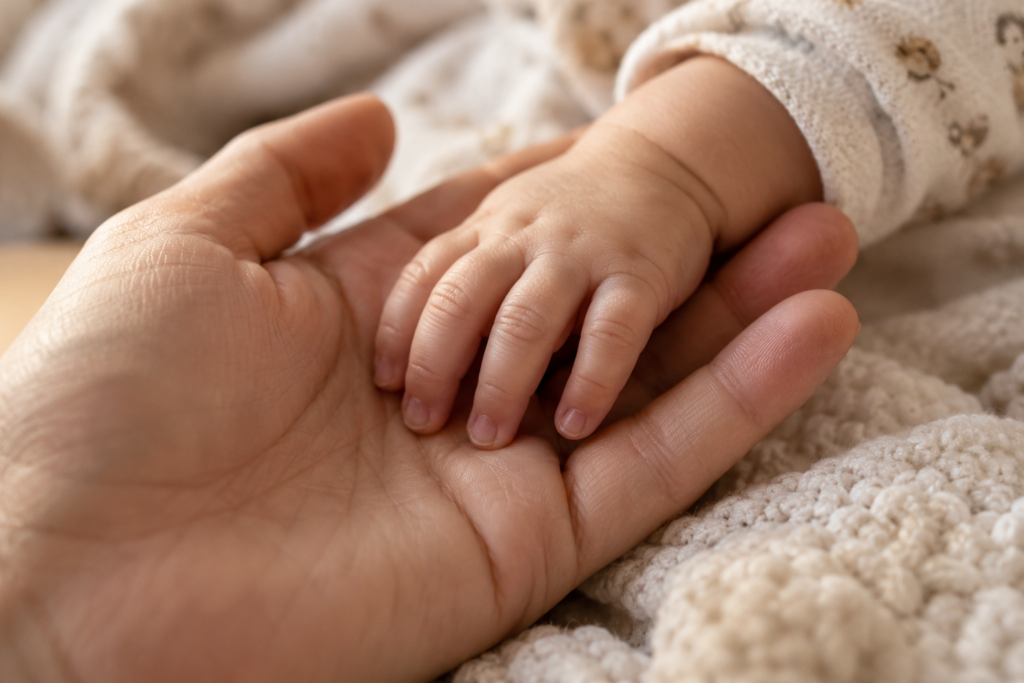
Baby nail care mainly comes down to using the right tools, choosing a calm moment to trim, and cutting straight across rather than rounding the corners, which helps prevent ingrown nails later on. Fingernails typically need trimming more often than toenails, since they grow faster and are more likely to scratch a baby’s face during normal movement.
Newborn nails grow surprisingly fast in the first few weeks, often needing attention once or twice a week, while toenails grow more slowly and usually only need trimming every few weeks. Staying on top of fingernails specifically matters most in the early months, since uncontrolled scratching can leave real marks on a baby’s sensitive face.
Choosing the Right Tools for Baby Nail Care
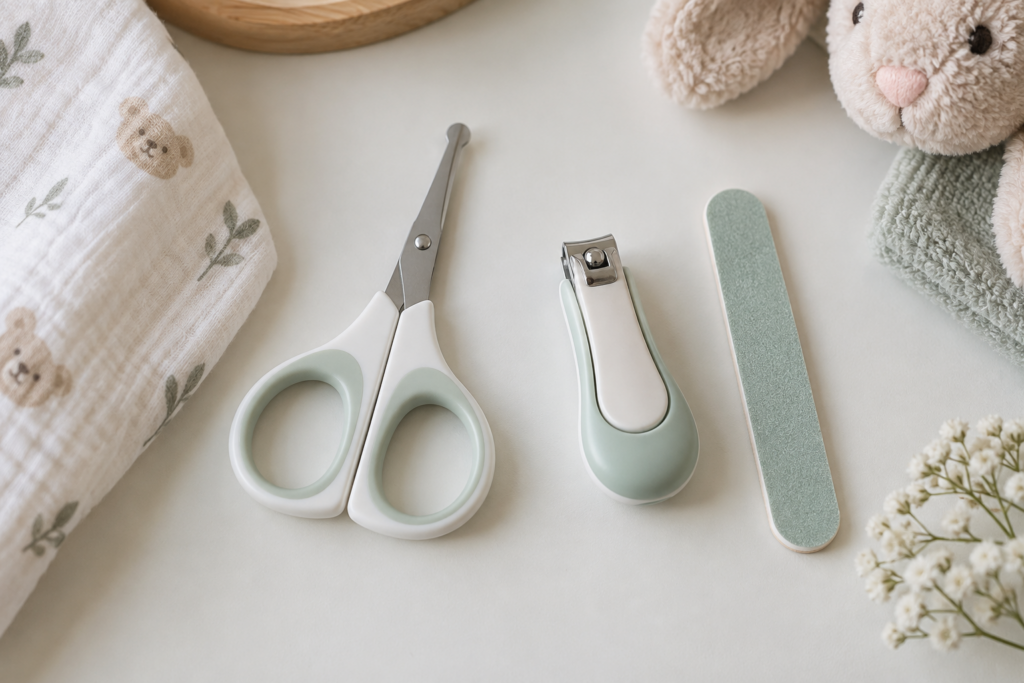
Baby-specific nail clippers or scissors, designed with a rounded, blunt tip and a smaller blade size proportioned for tiny fingers, are genuinely worth using instead of adult clippers, which are far too large and imprecise for a newborn’s nails. Many of these baby-specific tools also include a small magnifying element built into the design, making it easier to see exactly where you’re cutting.
An emery board or soft nail file offers a gentler alternative, particularly useful in the very first weeks when a newborn’s nails are still soft, thin, and growing quickly. Filing removes the sharp edge without requiring the same precision as clipping, which can feel less intimidating for a lot of first-time parents.
Should You File or Cut a Newborn’s Nails?
Filing is often recommended for the first few weeks of a newborn’s life, since their nails tend to be soft, thin, and prone to tearing rather than clean cutting, making a gentle file a lower-risk option during this early period. Once nails firm up slightly, usually within the first month or so, baby-safe clippers or scissors with a rounded tip generally become easier and faster to use than filing alone.
The Safest Time and Technique for Trimming
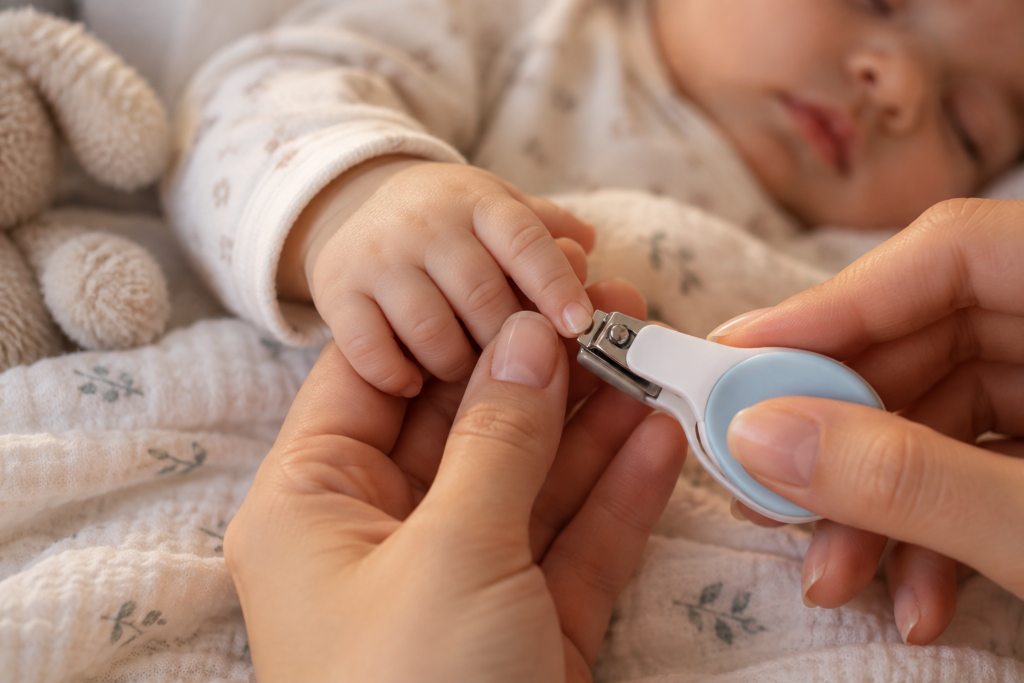
Timing genuinely affects how smoothly nail trimming goes. Most parents find the process significantly easier while a baby is deeply asleep, since sleep naturally reduces the sudden, unpredictable movement that makes trimming feel risky. Right after a feeding, when many babies are drowsy and relaxed, can also work well if sleep timing doesn’t line up conveniently.
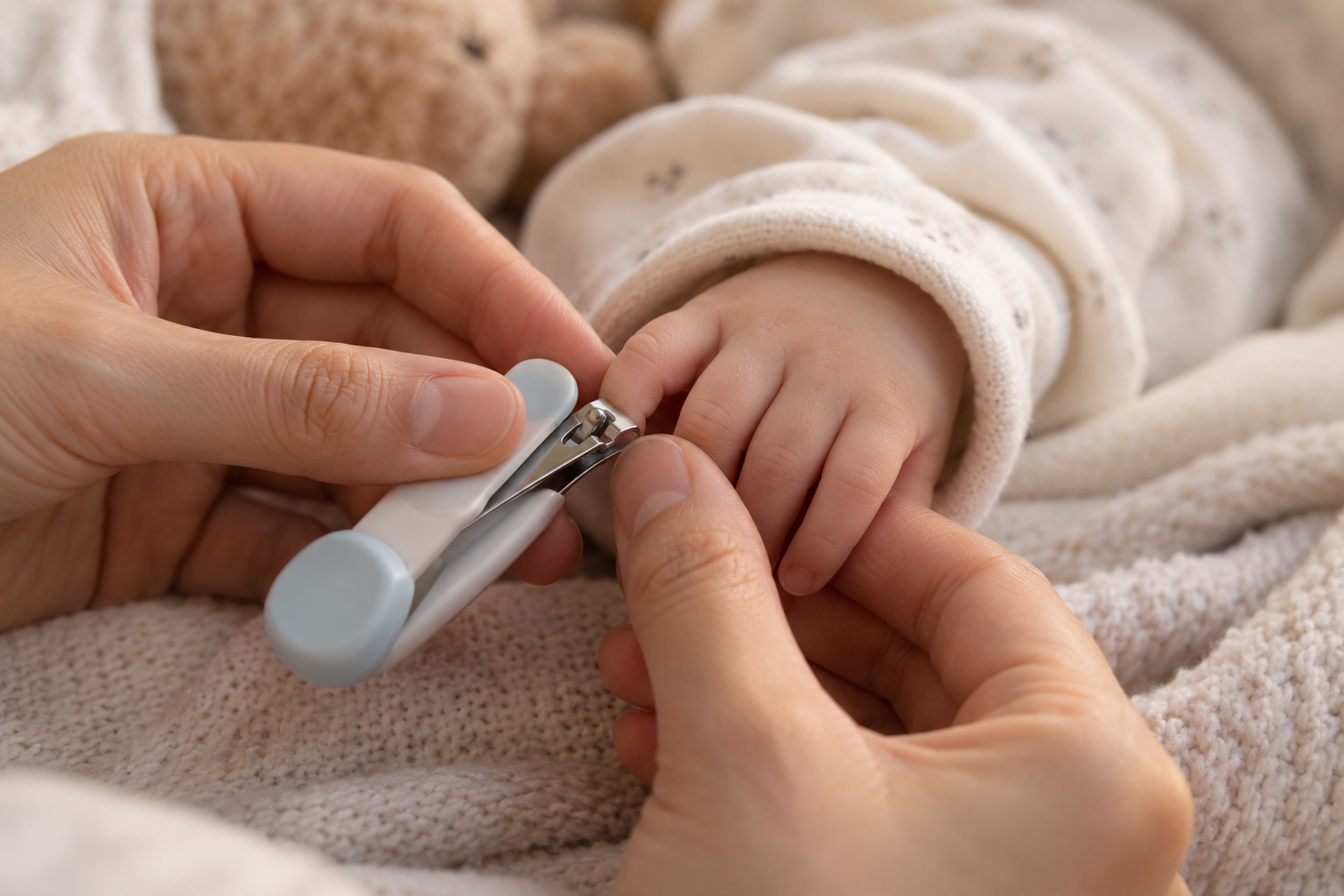
Hold the baby’s hand firmly but gently, using your thumb to press the fingertip pad slightly away from the nail before cutting. This creates a small gap between the nail and the skin underneath, reducing the chance of accidentally catching skin during the trim. Cutting straight across, rather than rounding the corners as you might with your own nails, helps prevent the nail from growing into the surrounding skin as it develops.
How Often Should You Trim a Newborn’s Nails?
Newborn fingernails often need trimming once or twice a week during the first few months, since they grow quickly and can be sharp enough to scratch a baby’s face during normal, unintentional movement. Toenails generally grow more slowly and typically only need attention every few weeks, making them a less frequent part of the overall routine compared to fingernails.
Handling a Wiggly or Fussy Baby During Nail Care
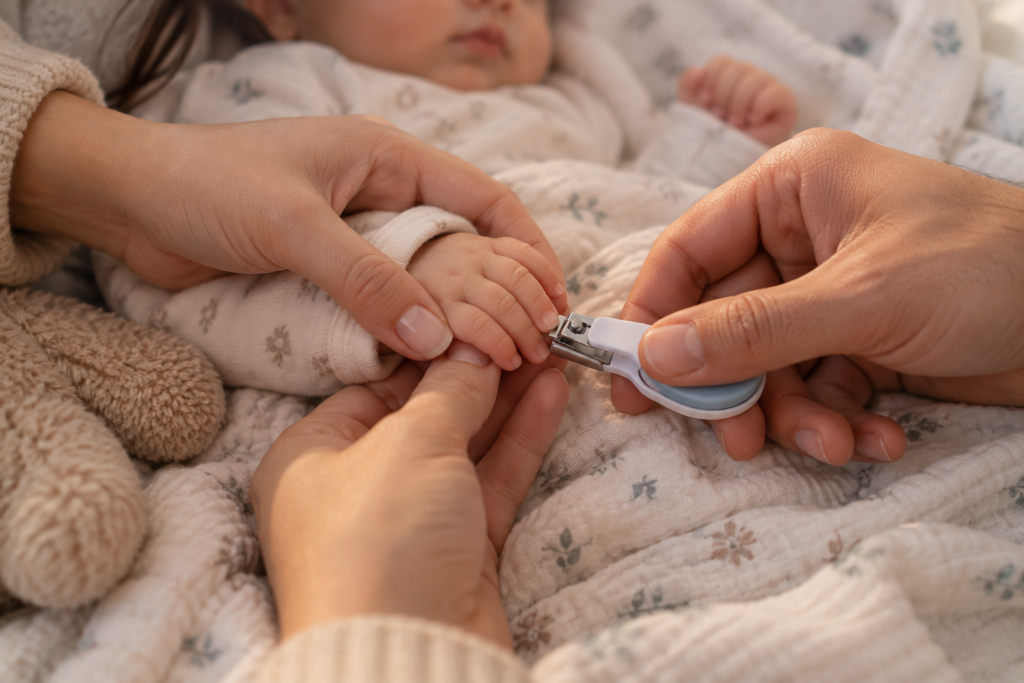
Not every baby cooperates for nail trimming, and having a few strategies ready makes a real difference on the harder days.
Trimming one or two nails at a time, rather than attempting all ten fingers in one sitting, reduces how long you need a baby to stay relatively still and gives both of you a break if frustration starts building. Enlisting a second person to gently hold and distract the baby, whether with a toy, a song, or simple conversation, can free you up to focus entirely on the trimming itself rather than managing both tasks at once.
Trimming during a feeding session works well for many families, since a nursing or bottle-feeding baby is often calm and naturally occupied, making their hands more accessible and still. If a baby is particularly resistant no matter the timing, breaking the task into very short sessions across the day, rather than forcing through one long, stressful attempt, tends to work better for everyone involved.
What to Do If Things Go Wrong
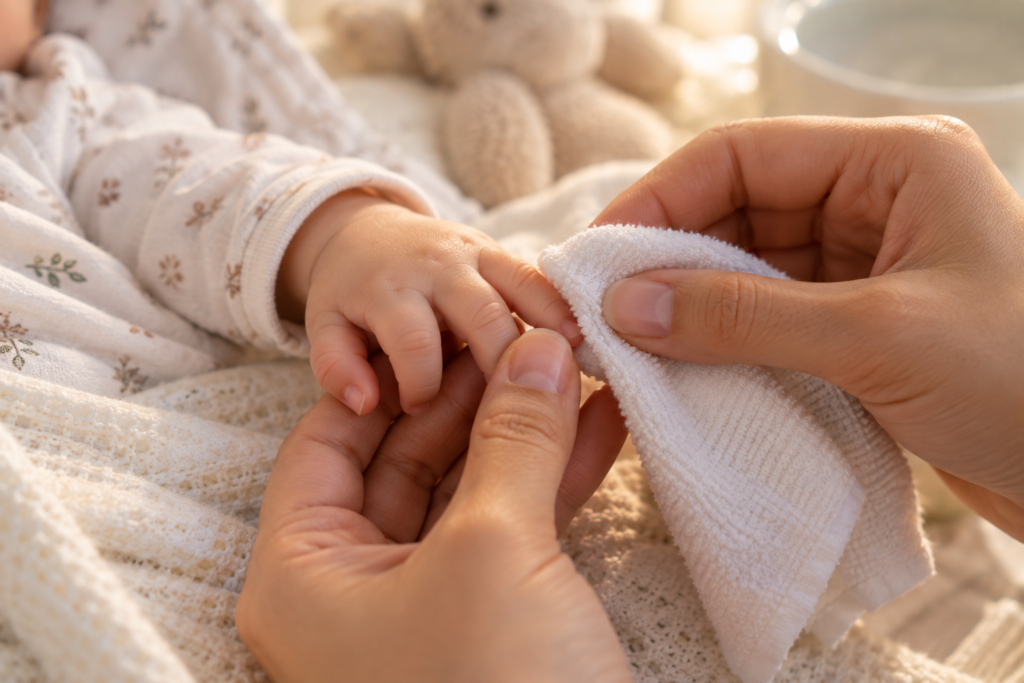
Even careful, experienced parents nick their baby’s skin occasionally, and knowing how to handle it calmly makes the moment far less stressful than it might otherwise feel.
What Should You Do If You Accidentally Cut Your Baby’s Skin While Trimming Nails?
Apply gentle, steady pressure to the area with a clean cloth or gauze until any bleeding stops, which usually happens quickly given how small these nicks typically are. Keep the area clean afterward, and watch for any signs of redness, swelling, or discharge over the following day or two, contacting a pediatrician if anything looks concerning rather than healing normally.
Is It Safe to Bite a Baby’s Nails Instead of Cutting Them?
Biting a baby’s nails isn’t generally recommended, since it introduces bacteria from your mouth directly to their skin and offers far less precision and control than a proper baby nail clipper or file. Sticking with baby-specific tools designed for this purpose gives you much more control over exactly where and how much nail is being trimmed, reducing the risk of accidental nicks compared to biting.
Frequently Asked Questions
1. Is it normal for newborns to be born with long nails?
Yes, it’s fairly common for newborns, especially those born a bit past their due date, to arrive with noticeably long nails that may need trimming or filing within the first few days to prevent accidental face scratches.
2. Can you use regular adult nail clippers on a baby if baby-specific ones aren’t available?
It’s best to avoid adult clippers when possible, since they’re sized and shaped for much larger nails, making precise, controlled cuts on tiny baby fingers considerably harder and increasing the risk of accidentally catching skin.
3. Why does my baby keep pulling their hand away during nail trimming?
Babies often pull away simply due to the unfamiliar sensation and general startle reflex common in infants, rather than any actual pain, and this tends to improve as both you and your baby get more used to the process over time.
4. Should baby toenails be cut the same way as fingernails?
Toenails can generally be trimmed with the same straight-across technique as fingernails, though since they grow more slowly and are less prone to scratching, many parents find toenail trims can be spaced out considerably compared to the more frequent fingernail routine.
5. Are scratch mittens a good substitute for regular nail trimming?
Scratch mittens can offer temporary protection against accidental face scratches, particularly useful for very young newborns or during a stretch when trimming feels especially difficult, but they aren’t a long-term substitute for actual nail care, since nails still need regular trimming underneath.
6. When should a parent be concerned about a baby’s nail health beyond normal trimming?
Signs like persistent redness, swelling, warmth, or any discharge around the nail bed are worth mentioning to a pediatrician, since these can sometimes indicate a minor infection that benefits from professional evaluation rather than home treatment alone.
7. Does nail trimming get easier as babies get older?
Yes, most parents find nail trimming becomes noticeably easier as babies grow, both because nails become slightly firmer and more predictable to cut and because babies themselves often become more used to and tolerant of the sensation over time.
8. Can you trim a baby’s nails while they’re awake and calm, or does it have to be during sleep?
Trimming while awake and calm is entirely possible, particularly with an older baby who’s used to the process, though many parents still prefer sleep or drowsy post-feeding moments specifically because they minimize sudden, unpredictable movement.
9. Is it safe to file a baby’s nails every day instead of cutting them less frequently?
Yes, daily gentle filing is generally considered safe and can actually be a good approach for parents who feel more comfortable with frequent, small maintenance rather than less frequent, more involved clipping sessions.
10. Do baby nails need any special care beyond trimming, like moisturizing?
Baby nails generally don’t require special moisturizing or additional products beyond regular trimming and basic hygiene, since healthy infant skin and nails typically don’t need the kind of intervention adult nails sometimes do.