What Are Dip Nails? Cost, Longevity, and Safety Explained
Dip powder occupies a genuinely interesting spot among nail enhancement options, more durable than regular polish, no lamp required the way gel needs, and often praised for feeling lighter than a full acrylic set. It’s also the enhancement type most associated with one specific hygiene question that comes up constantly: the shared powder pot most salons traditionally use. Between that concern, the real cost, and how long a set actually holds up, there’s a lot worth understanding before your next appointment.
This article covers exactly what dip nails are, what they typically cost, how long they genuinely last, and an honest look at the safety questions people ask most, including whether that shared powder situation is something to actually worry about.
What Are Dip Nails?
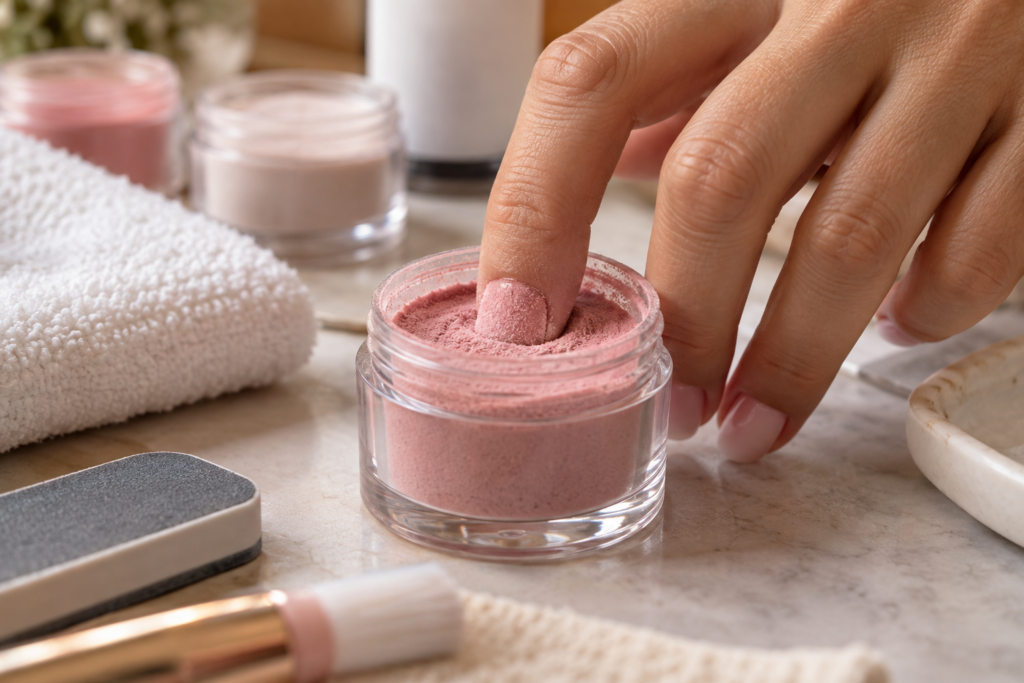
Dip nails are created by applying a bonding base coat, then building color and structure through multiple thin layers of colored powder, either dipped directly into a container or brushed on, before sealing everything with an activator that chemically hardens the layers. Unlike gel, dip powder doesn’t require any UV or LED lamp, since it cures through a chemical reaction rather than light activation.
The finished result tends to be somewhat thicker and more durable than a standard gel manicure, closer in overall sturdiness to acrylic, while avoiding the strong chemical odor associated with traditional acrylic’s liquid monomer.
How Is Dip Powder Different From Acrylic Nails?
Dip powder and acrylic both build structure through layered powder application, but acrylic uses a liquid monomer mixed directly with powder to form a sculptable bead, while dip powder uses a separate bonding base coat and activator system rather than mixing the powder with liquid beforehand. Dip powder generally has a milder odor during application and is often described as feeling somewhat lighter than a full acrylic set, though acrylic still tends to offer more flexibility for dramatic sculpted length and shape.
Do Dip Powder Nails Require a UV Lamp Like Gel?
No, dip powder nails cure through a chemical reaction triggered by the activator or sealer product, not through light-based curing, which means no UV or LED lamp is needed at any point in the process. This is one of the clearer practical differences between dip powder and gel, and it’s a meaningful consideration for anyone specifically trying to avoid UV lamp exposure.
How Much Do Dip Nails Cost

A dip powder manicure typically costs somewhere between forty-five and seventy dollars, landing in a similar general range to a full acrylic set, though actual pricing shifts based on location and salon tier just like every other nail service. Major metro areas and higher-end salons tend to price above this range, while smaller towns and budget-focused salons often come in below it.
Removal, when done as its own separate service rather than bundled into a new application, generally adds an additional charge, often somewhere in the range of most other soak-off removal services.
How Long Do Dip Nails Last
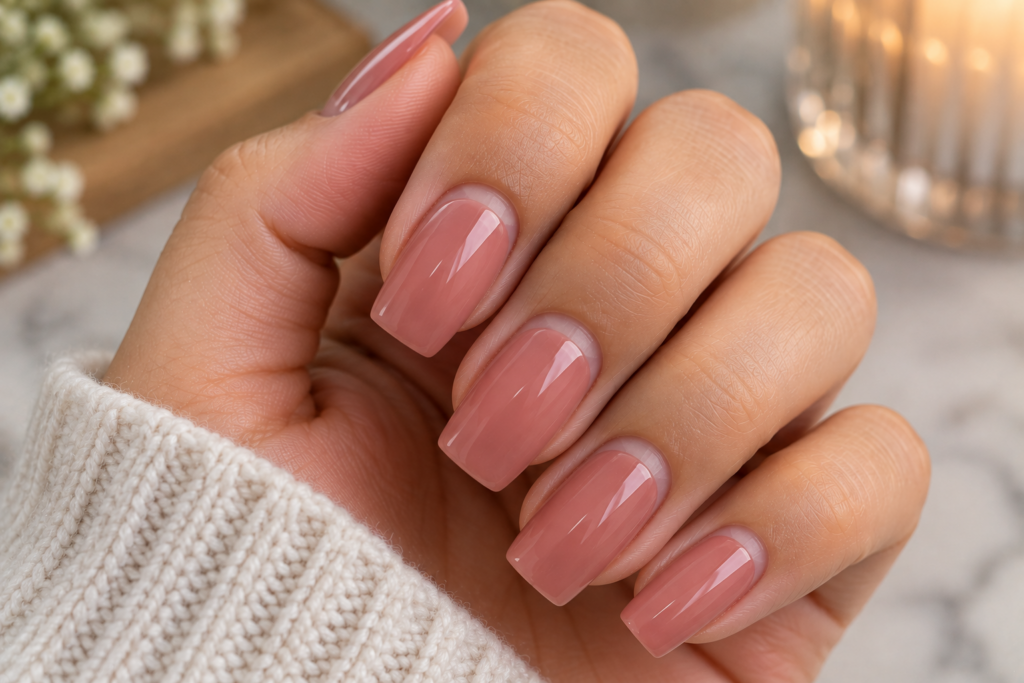
A dip powder manicure typically lasts about three to four weeks before noticeable regrowth or wear makes a fresh application worthwhile, often slightly longer than a standard gel manicure given dip’s thicker, more built-up structure. This durability is one of dip powder’s most commonly cited advantages, particularly for people whose daily activities put a fair amount of wear on their hands.
Are Dip Nails Bad for You?
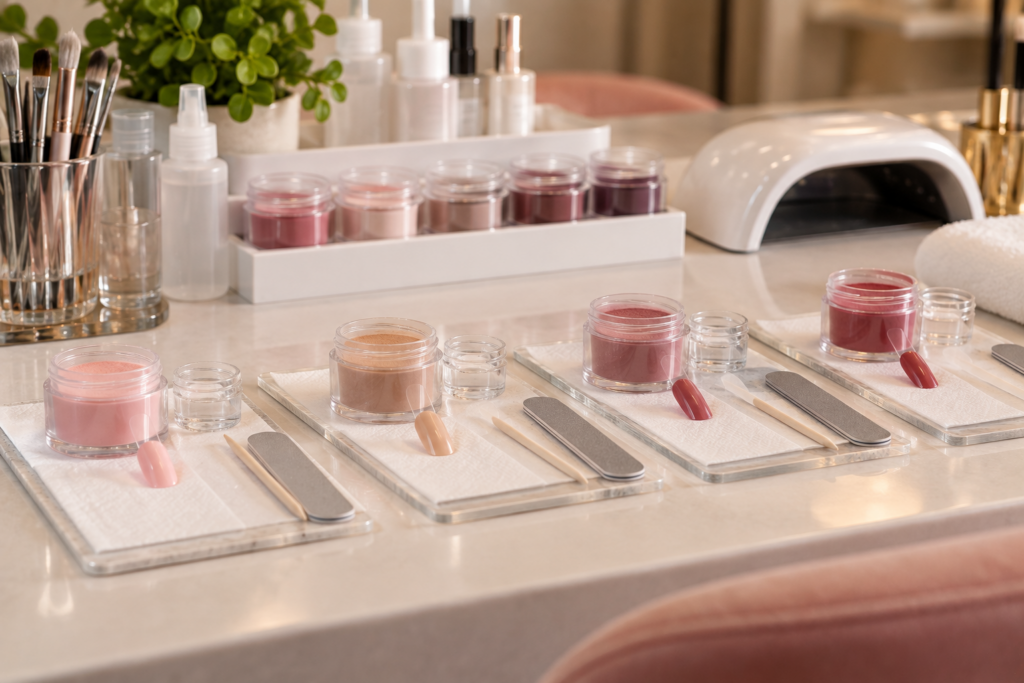
Dip nails aren’t inherently bad for you, and for most people, a properly applied set carries manageable, well-understood risks similar to other nail enhancements. The specific concern most associated with dip powder, more than any other enhancement type, involves salon hygiene practices around shared powder containers.
Is Double-Dipping Into Shared Powder Actually Unsanitary?
Yes, repeatedly dipping a brush used on one client’s nails back into a shared powder container that other clients also use raises a genuine cross-contamination concern, since bacteria or fungal spores from one person’s nails can potentially transfer into the shared powder and reach the next client. Many salons and at-home kits now address this by using individual powder containers per client or brushing powder onto the nail rather than dipping directly into a shared pot, both of which meaningfully reduce this specific risk.
Can Dip Powder Nails Cause an Allergic Reaction?
Yes, allergic reactions to dip powder systems can occur, typically related to the bonding agents used in the base coat and activator, which often share chemical similarities with strong adhesives. Reactions can range from mild irritation around the nail to more noticeable redness or itching, and sensitization can develop over time even in people who’ve worn dip powder without issue previously.
How to Get Dip Nails More Safely
A few practical habits meaningfully reduce whatever risk dip powder carries, without requiring you to avoid the service altogether.
Asking your salon directly about their powder hygiene practices, specifically whether they use individual containers per client or a brush-on application method rather than shared dipping, is a reasonable and increasingly common question to ask. Doing dip powder at home with your own personal powder container sidesteps this concern entirely, since you’re never sharing product with anyone else.
Giving nails occasional breaks between dip applications, rather than maintaining continuous back-to-back sets indefinitely, supports overall nail health. Insisting on a proper acetone soak-off for removal, rather than aggressive filing, also protects the natural nail plate from unnecessary thinning over repeated appointments.
Frequently Asked Questions
1. Can you do dip powder nails at home without a salon-style shared powder system?
Yes, at-home dip powder kits typically come with an individual powder container meant for personal use, which entirely avoids the shared-pot hygiene concern associated with some salon setups.
2. Does dip powder damage nails more than gel or acrylic?
Dip powder isn’t inherently more damaging than gel or acrylic, but like both of those systems, improper removal through filing or peeling rather than a proper acetone soak is the primary way any of these enhancements can lead to nail thinning over time.
3. Is dip powder a good option for people who dislike the smell of acrylic?
Yes, dip powder generally has a much milder odor than traditional acrylic during application, since it doesn’t use the same liquid monomer system, making it a more comfortable option for anyone sensitive to strong chemical smells.
4. Can you get dip powder nails while pregnant?
Dip powder is generally considered a reasonable option during pregnancy for most people, particularly since it avoids UV lamp exposure entirely, though anyone with specific health concerns should discuss it with their doctor beforehand.
5. Does dip powder require any special aftercare compared to gel or acrylic?
Dip powder generally follows similar aftercare principles to other enhancements, including regular moisturizing and avoiding using nails as tools, without requiring any meaningfully different routine specific to the dip system itself.
6. Can nail art be added to a dip powder manicure?
Yes, nail art can absolutely be added on top of a finished dip powder set, typically applied with regular or gel polish and hand-painted or embellished designs once the base layers are fully shaped and sealed.
7. Why does dip powder sometimes feel bulkier than gel polish?
Dip powder is built up through multiple layers of powder rather than thin coats of liquid polish, which naturally creates a slightly thicker, more structured finish compared to the thinner application typical of standard gel polish.
8. Is it necessary to buff nails before applying dip powder?
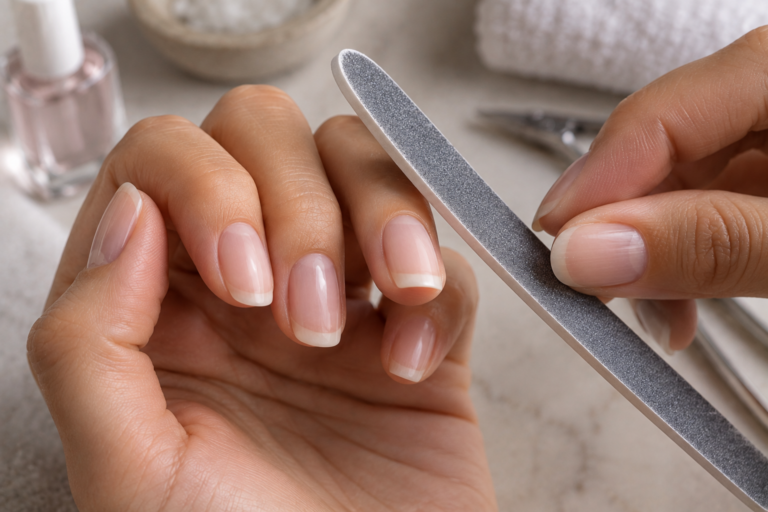
Yes, lightly buffing the natural nail surface to remove shine before applying the base coat genuinely improves adhesion, giving the bonding agent a slightly textured surface to grip onto rather than a smooth, naturally glossy nail.
9. Can dip powder be used on toenails as well as fingernails?
Yes, dip powder works the same way on toenails as it does on fingernails, and many people find its added durability particularly appealing for feet, given how much daily friction and moisture exposure toenails typically experience.
10. How can you tell if a salon uses proper hygiene practices for dip powder application?
Signs of good hygiene practice include visibly individual powder containers per client, sanitized tools between appointments, and a technician willing to openly discuss their sanitation procedures when asked, all of which are reasonable things to look for or ask about before booking.
If you’d like to try the system yourself, this guide to doing and removing dip powder nails at home walks through the whole process, and you can see how dip nails stack up against gel nails before choosing a system.