How to File Nails the Right Way: A Complete Guide
Most people learn to file their nails by trial and error, sawing back and forth with whatever file happened to be in the bathroom drawer. It works, sort of, but it’s also one of the most common reasons nails end up peeling, splitting, or looking rough no matter how often you touch them up. Filing technique matters just as much as the shape you’re going for, and getting it right is honestly one of the simplest upgrades you can make to your at-home nail care routine.
This guide covers the actual mechanics of proper filing: the right motion and angle, how grit affects the results, the mistakes that quietly damage nails over time, and how filing fits into a broader routine that keeps nails genuinely healthy rather than just looking okay for a few days after a manicure.
How to File Nails: The Basic Technique
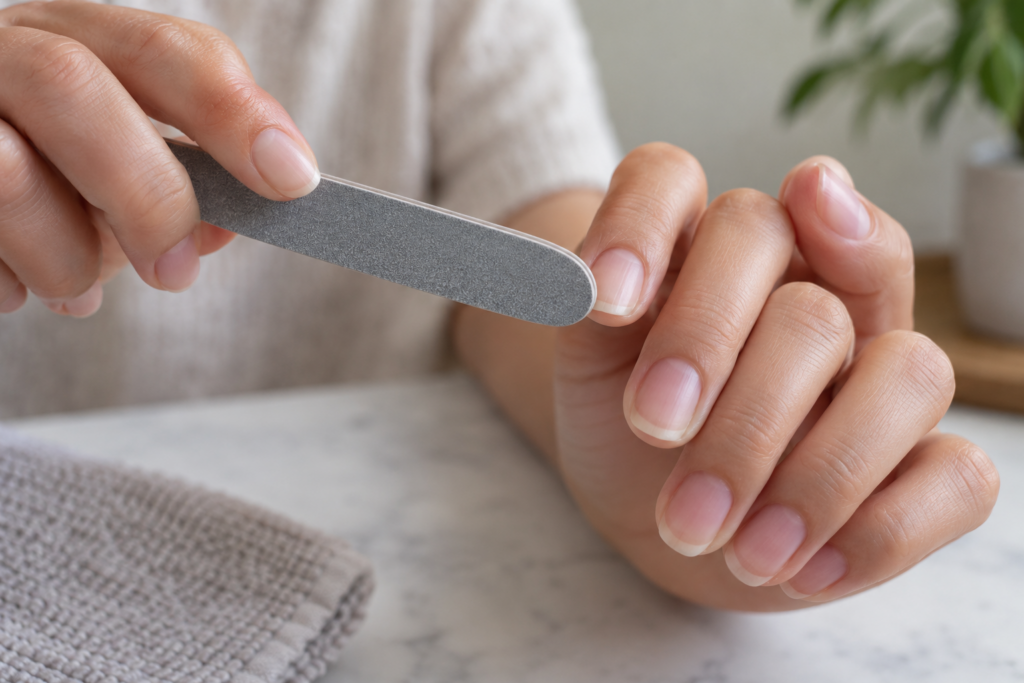
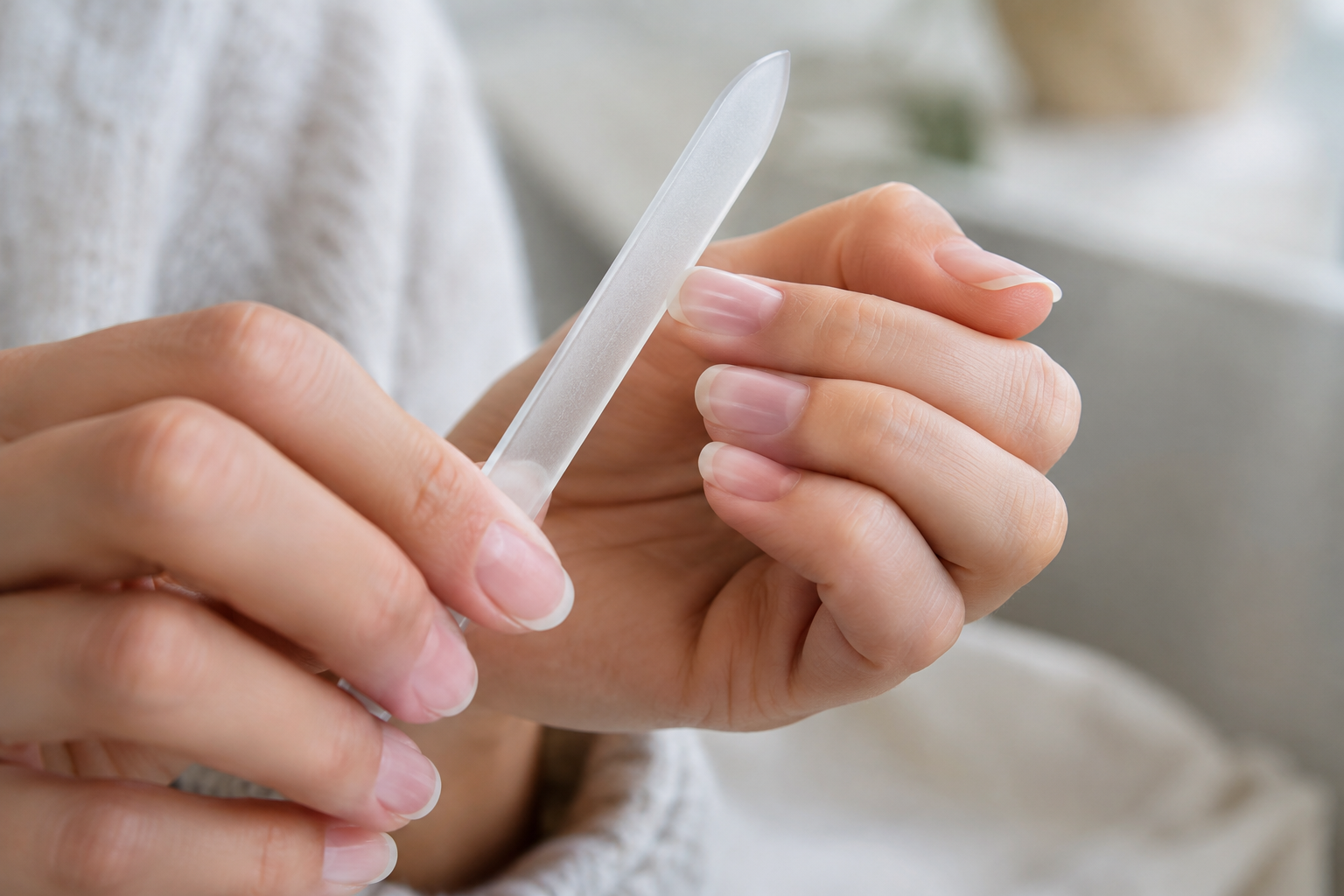
Nails should be filed in a single, consistent direction rather than sawed back and forth, using light pressure and working from the outer edge inward on each side of the nail. This one-directional approach is the single biggest factor in preventing the kind of splitting and peeling that rough, back-and-forth filing tends to cause over time.
Starting with dry, unpainted nails gives you the most accurate read on the actual shape and length you’re working with. Filing at a slight angle along the free edge, rather than holding the file completely flat, tends to create a smoother, more finished edge. Working in short, controlled strokes and checking your progress often gives you far more control than long, heavy passes that remove too much length at once.
Understanding Nail File Grit and When to Use Each
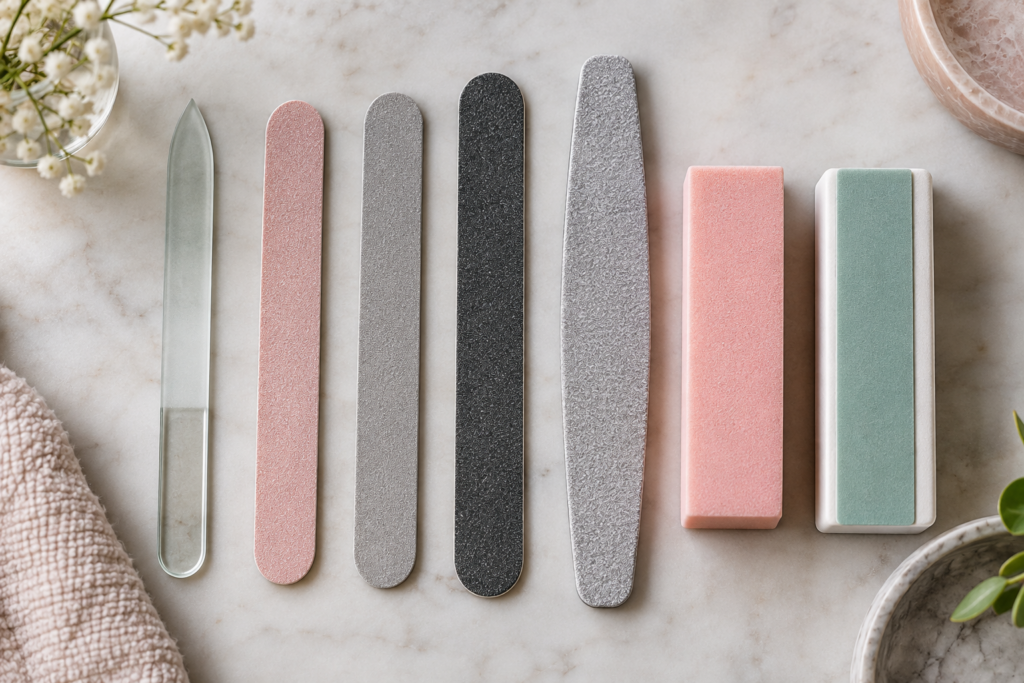
Grit number refers to how coarse or fine a file’s surface is, and different grits genuinely serve different purposes in a filing routine. Lower grit numbers are more abrasive and remove material faster, while higher grit numbers are finer and better suited for smoothing and finishing work.
Coarser files, generally in a lower grit range, work well for shaping and shortening length quickly, particularly useful on thicker natural nails or nail extensions like acrylic or hard gel that can handle more aggressive filing without damage. Finer grit files are better suited for natural, unenhanced nails, since they remove less material with each stroke and are gentler on the nail plate overall. A separate fine-grit buffer, even finer than a standard file, is typically used as a final smoothing step after shaping is complete.
What Grit File Should You Use for Natural Nails?
Natural nails generally do best with a finer grit file, since coarser, more abrasive grits can cause excess friction and heat that weakens and damages the nail plate over time. A moderate to fine grit, paired with light pressure and a single filing direction, tends to give natural nails a clean shape without the microscopic damage that overly aggressive filing can cause.
Common Filing Mistakes That Damage Your Nails
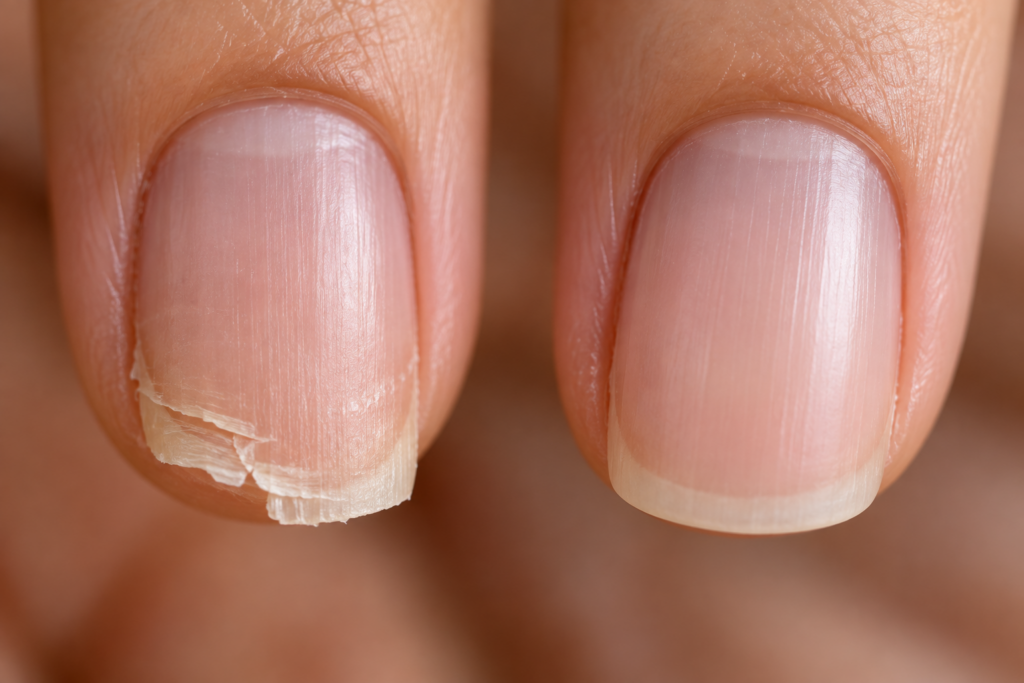
A handful of recurring habits explain most of the peeling, splitting, and weakness people associate with “bad” nails, when the real issue is often filing technique rather than the nails themselves.
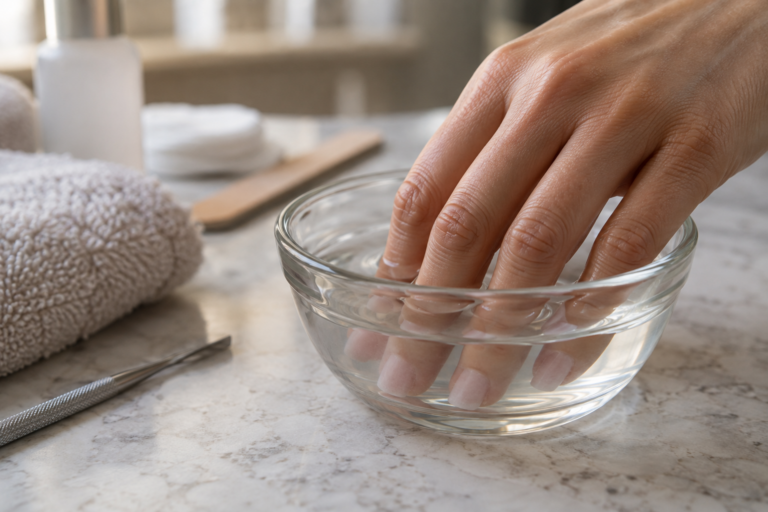
Sawing back and forth is the most common and most damaging habit, since this motion creates microscopic tears along the nail’s layered structure that eventually show up as visible splitting or peeling at the free edge. Filing wet nails is another frequent mistake, since water temporarily softens and swells the nail, making it more prone to tearing and less likely to hold an accurate, stable shape once it dries back out.
Pressing too hard while filing generates excess friction and heat, which can weaken the nail plate over repeated sessions even if no single filing session causes obvious damage. Filing too frequently, especially with a coarse file, can also gradually thin the nail plate more than necessary, leaving nails more flexible and prone to bending or breaking than they would be with a lighter, less frequent touch-up routine.
Can Filing Your Nails Too Much Make Them Weaker?
Yes, filing too frequently, too aggressively, or with too coarse a grit can gradually thin the nail plate and generate excess friction and heat, both of which weaken nails over time rather than strengthening them. Sticking to light, infrequent touch-ups with an appropriate grit, rather than heavy daily filing, better supports overall nail strength and health.
How Do You File Nails Without Causing Them to Peel or Split?
Preventing peeling and splitting comes down to filing in one consistent direction rather than sawing back and forth, using light pressure, and choosing a grit appropriate for your nail type, finer for natural nails and coarser only for extensions or very thick nails. Filing dry nails rather than wet ones, and avoiding excessive filing frequency, both further reduce the risk of the kind of microscopic damage that eventually shows up as visible peeling or splitting at the nail’s edge.
Filing the Sides and Edges Correctly
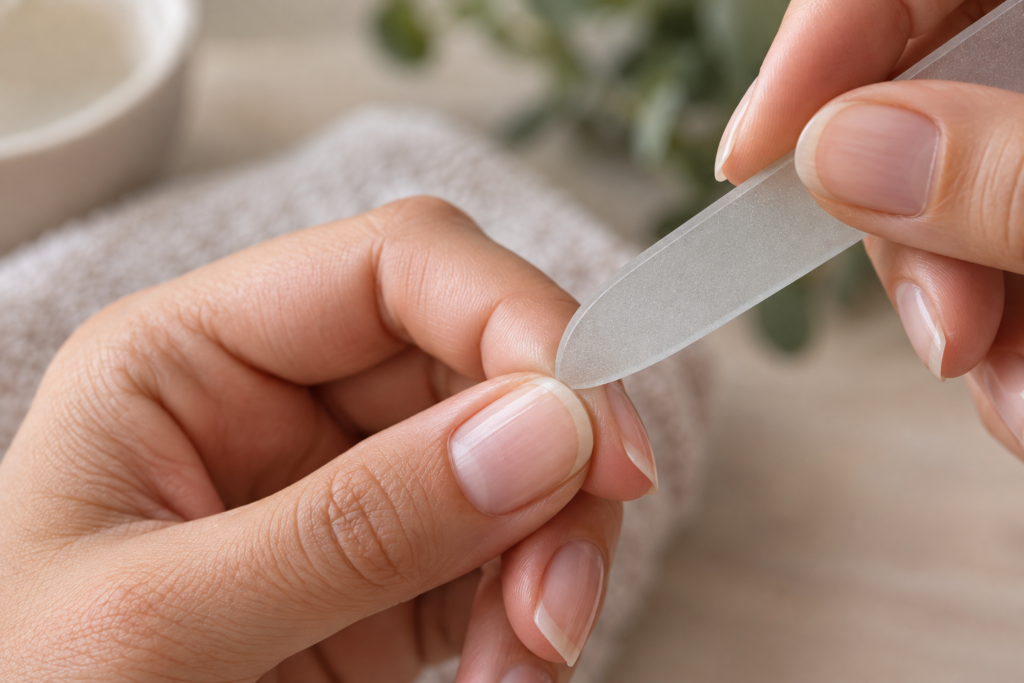
The sides of the nail, sometimes called the sidewalls, deserve careful attention, since over-filing in this area can cause genuine problems beyond just an uneven shape.
Is It Bad to File the Sides of Your Nails?
Filing too aggressively into the sidewalls, the sides of the nail where it meets the skin, can weaken that area and, in some cases, contribute to ingrown nail issues by removing too much of the nail’s natural support structure along the edge. Light, careful filing that shapes the sidewall without digging too deeply into the corner generally avoids this problem, and when in doubt, leaving a bit more length and width at the sides is safer than filing too aggressively and needing to correct an ingrown nail issue later.
Buffing and Finishing After Filing
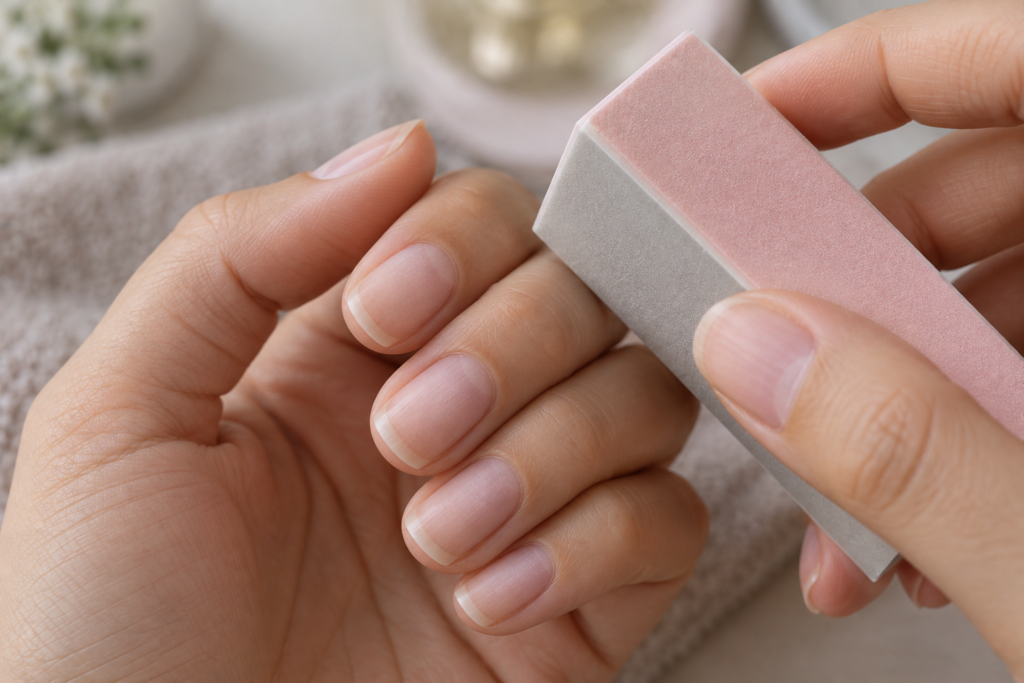
Once the main shape and length are set, a final buffing step smooths out any remaining rough texture or fine ridges left behind by the filing process. Working through progressively finer grits, if your buffer has multiple sides or surfaces, tends to create a noticeably smoother, more polished final edge than stopping right after the initial shaping file.
Buffing should still follow the same gentle, controlled approach as filing itself, light pressure and short strokes rather than heavy, prolonged rubbing in one spot, since over-buffing can thin the nail surface just as filing too aggressively can.
Building Filing Into a Regular At-Home Nail Care Routine
Filing works best as a small, regular habit rather than an occasional deep intervention when nails have already grown out unevenly or started catching on things. A quick touch-up every week or so, just enough to smooth any new growth or minor snags, keeps nails consistently neat without requiring a significant reshaping session each time.
Pairing filing with basic moisturizing, using a cuticle oil or hand cream regularly, supports overall nail health alongside good filing technique, since well-hydrated nails tend to be more flexible and less prone to the kind of brittleness that makes splitting and peeling more likely in the first place.
Frequently Asked Questions
1. How often should you file your nails?
Most people benefit from a light filing touch-up roughly once a week, with more thorough reshaping done alongside a full manicure every few weeks, though individual nail growth rate and personal shape preferences can shift that timeline somewhat.
2. Can you file gel or acrylic nails the same way as natural nails?
Gel and acrylic extensions can generally tolerate a coarser grit and slightly more pressure than natural nails, since they’re more durable overall, though the same single-direction filing motion still applies to avoid creating rough or uneven edges on the enhancement itself.
3. Does filing nails hurt if done correctly?
No, properly filing nails with light pressure and a single consistent direction shouldn’t cause any pain, since you’re only working on the nail plate itself rather than the sensitive skin underneath, and any discomfort usually signals that too much pressure or too coarse a grit is being used.
4. Is it better to use an electric nail file or a manual one at home?
Manual files generally offer more control for at-home use, since electric files spin quickly and can remove material faster than intended without careful technique, making them somewhat riskier for beginners compared to a manual glass or emery file.
5. Can filing help fix ridges or uneven texture on the nail surface?
Yes, gentle buffing after the main shaping file can help smooth out minor surface ridges and uneven texture, though deeper ridges related to nail health or aging typically can’t be fully filed away without thinning the nail excessively, so light buffing rather than aggressive filing is the safer approach.
6. Why do my nails still feel rough even after filing carefully?
Persistent roughness after careful filing often points to a grit that’s too coarse for the final finishing step, or skipping a buffing stage entirely, and switching to a finer grit or adding a light buff after the main shaping pass usually resolves this.
7. Does the direction you file matter for the shape, or only for nail health?
Filing direction genuinely affects both, since a consistent single direction not only protects nail health by preventing microscopic tearing but also gives you more precise, predictable control over the final shape compared to the unpredictable results a back-and-forth motion tends to produce.
8. Can you file your nails too short?
Yes, filing nails shorter than the point where the nail bed ends can expose sensitive skin and create discomfort, so it’s important to leave enough length that the white free edge remains visible beyond where the pink nail bed ends.
9. Is it safe to file nails right after removing gel polish or acrylics?
Nails are often more fragile and dehydrated right after gel or acrylic removal, so it’s generally best to moisturize and let them recover briefly before doing any significant filing, using extra light pressure if touch-ups are needed sooner.
10. Does the type of file you use affect how long a shape lasts?
The file type itself doesn’t significantly affect how long a shape lasts, since that comes down more to natural growth rate and how the nail wears throughout the week, though a cleaner, more precise initial filing with an appropriate grit does tend to hold its intended shape more predictably as it grows out.