How to Remove Acrylic Nails Safely at Home
There’s a strong temptation, when you’re staring at a lifted corner of acrylic or you’re just done with a set, to grab the edge and peel the whole thing off in one satisfying pull. Resist that urge completely. Acrylic removal has a right way and a genuinely damaging way, and the difference between them shows up clearly in how healthy your natural nails look once the acrylic is gone.
This guide covers the proper acetone soak-off method step by step, exactly why prying or peeling causes real damage, the mistakes that slow removal down or make it more damaging than it needs to be, and how to take care of your nails once the acrylic is finally off.
How to Remove Acrylic Nails: The Safe Method
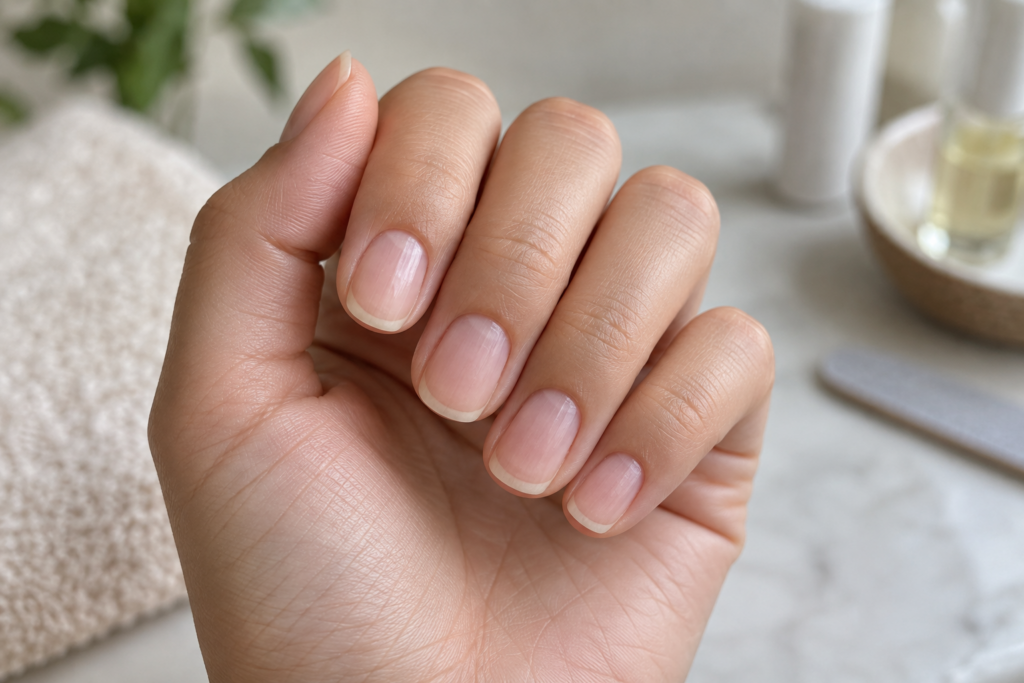
Acrylic nails should be removed by soaking them in pure acetone until the material softens enough to gently lift or scrape away, never by peeling, prying, or forcing them off. This soak-off method takes more patience than ripping acrylic off, but it protects the natural nail plate underneath from the significant thinning and damage that forceful removal causes.
The entire process typically takes twenty to forty-five minutes, depending on how thick the acrylic is and how long it’s been worn, and it’s genuinely worth taking that time rather than rushing toward a faster but far more damaging shortcut.
What You’ll Need
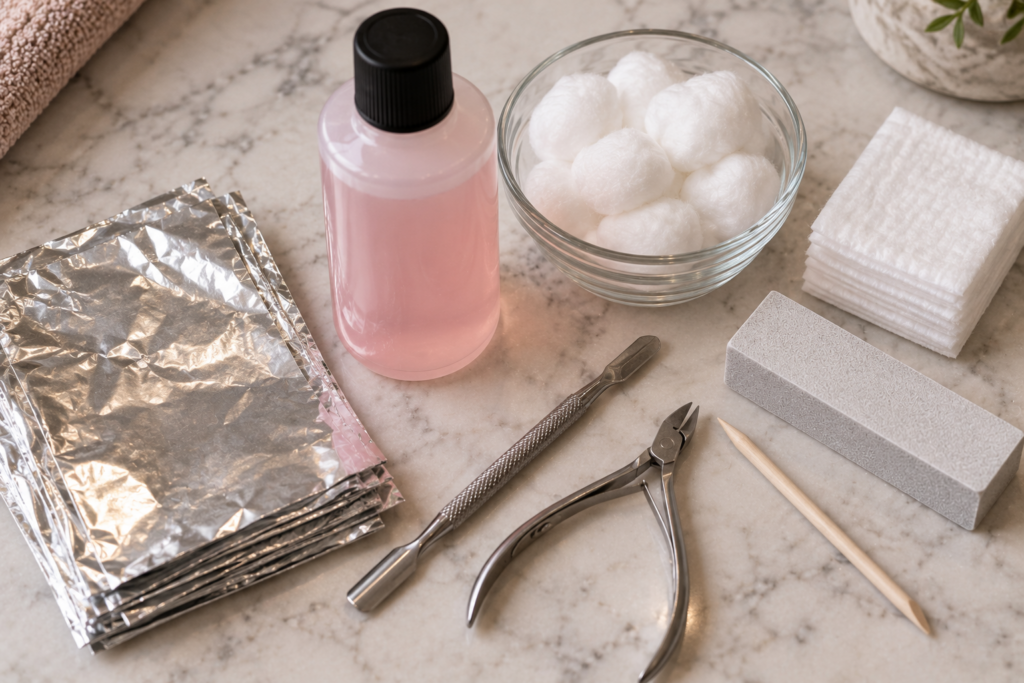
A handful of specific supplies make proper acrylic removal both effective and reasonably comfortable.
Pure, one-hundred percent acetone is essential, since diluted or non-acetone removers work dramatically slower and often don’t fully dissolve acrylic at all. Aluminum foil and cotton balls or pads are needed for the wrap method, which tends to work more effectively and with less mess than simply soaking fingers directly in a bowl. A cuticle pusher or orange stick helps gently scrape away softened acrylic once it’s ready to come off, and a nail file is useful both for prepping the acrylic surface before soaking and for any final smoothing afterward.
Petroleum jelly or a thick hand cream, applied around the skin surrounding each nail before soaking, helps protect skin from the drying effects of prolonged acetone exposure.
Step-by-Step: The Acetone Soak-Off Method

Start by filing down the shiny top layer of the acrylic, just enough to break the sealed surface, which significantly speeds up how quickly acetone can penetrate and start softening the material underneath. Skipping this step often means a noticeably longer soak time.
Apply petroleum jelly or a protective cream around the skin surrounding each nail, avoiding the nail itself, to shield skin from excessive dryness during the soak. Soak a cotton ball or pad in acetone, place it directly over each nail, then wrap the fingertip in a small piece of foil to hold everything snugly in place and help retain warmth, which speeds up the softening process.
Let your nails soak for roughly twenty to thirty minutes, checking periodically after the first fifteen or so. When the acrylic has softened enough, it should feel noticeably looser and start to flake or lift with gentle pressure. Using your cuticle pusher or orange stick, gently push and scrape away the softened acrylic, working carefully rather than digging or forcing at any resistant spots.
If some acrylic remains firmly attached after this first attempt, rewrap that specific nail and continue soaking for another ten to fifteen minutes rather than trying to force it off before it’s fully ready. Once all the acrylic is removed, gently buff away any remaining residue, then immediately follow up with a nourishing cuticle oil or hand cream, since acetone is significantly drying to both skin and nails.
How Long Should You Soak Nails in Acetone to Remove Acrylic?
Most acrylic sets need roughly twenty to thirty minutes of acetone soaking before the material softens enough to safely remove, though thicker acrylic or sets that have been worn for many weeks may need closer to forty-five minutes. Filing down the top sealed layer before soaking, and using the foil-wrap method rather than an open bowl soak, both help speed up this process meaningfully.
Why You Should Never Peel or Pry Acrylics Off

This deserves real emphasis, since it’s genuinely one of the most damaging habits in at-home nail care, and it’s also one of the most common.
Is It Bad to Peel Off Acrylic Nails Instead of Soaking Them?
Yes, peeling or prying acrylic off is significantly damaging, since the acrylic is bonded so strongly to the natural nail that forcing it off typically pulls away layers of the nail plate along with it, leaving nails visibly thin, weak, and sometimes painfully sensitive. This kind of damage can take months to fully grow out and repair, making the extra twenty or thirty minutes of proper soaking a genuinely worthwhile trade-off compared to the damage forceful removal causes.
Common Mistakes That Slow Down or Damage Removal
A few recurring habits either slow the removal process down unnecessarily or increase the risk of damage during the process itself.
Not filing down the acrylic’s top layer before soaking is one of the most common time-wasters, since the sealed surface resists acetone penetration far more than a lightly filed one does. Giving up too early and trying to force off acrylic that hasn’t fully softened is another frequent issue, one that essentially recreates the same damage risk as peeling, just with extra steps in between.
Using a diluted or non-acetone polish remover instead of pure acetone dramatically slows the process, sometimes to the point where it barely works at all, since these formulas simply aren’t strong enough to break down the acrylic material effectively.
Can You Use Non-Acetone Remover to Take Off Acrylic Nails?
Non-acetone remover generally isn’t effective for removing acrylic nails, since it lacks the chemical strength needed to properly break down and soften the hardened acrylic material. Pure, one-hundred percent acetone remains the standard and genuinely necessary product for safely dissolving acrylic during at-home removal.
Caring for Your Nails After Removal
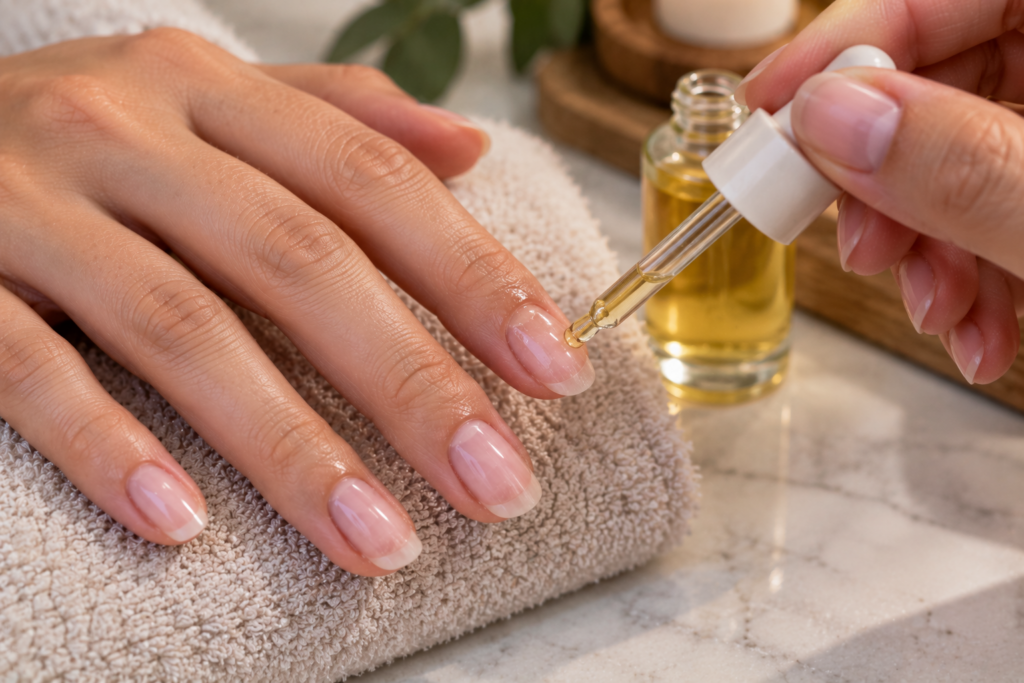
Nails almost always need some recovery time and extra care immediately after an acrylic set comes off, regardless of how carefully the removal itself was done.
Apply cuticle oil or a rich moisturizer generously in the hours and days following removal, since acetone strips natural oils from both the nail and surrounding skin during the soaking process. Keeping nails trimmed relatively short for a short period afterward reduces stress on nails that are often thinner and more flexible than usual right after extended acrylic wear.
Giving nails a brief break before applying a new set, even just a week or two, allows them some time to recover strength and thickness, particularly if the previous set was worn for an extended stretch or if the nails feel noticeably weak or bendy right after removal.
Why Do Nails Feel Thin and Weak After Removing Acrylics?
Nails often feel temporarily thinner and weaker after acrylic removal because extended acrylic wear, combined with the acetone soaking process itself, both draw moisture out of the nail plate and can leave it in a more fragile, flexible state than usual. This is typically temporary, and nails generally regain their normal strength and thickness within a few weeks with proper moisturizing and a short break from additional enhancement products.
Frequently Asked Questions
1. Can you remove acrylic nails without using any acetone at all?
Removing acrylic without acetone is genuinely difficult and generally not recommended, since alternative methods tend to require far more filing and physical force, both of which increase the risk of damaging the natural nail plate compared to a proper acetone soak.
2. Is it safe to soak your entire hand in acetone, or just the nails?
It’s generally best to limit acetone exposure specifically to the nails using the foil-wrap method rather than soaking the entire hand, since prolonged, broader skin contact with acetone can cause excessive dryness and irritation beyond what’s actually necessary for removal.
3. Can you speed up acrylic removal with warm water instead of just acetone?
Some people find that warming the acetone slightly, or working in a warm room, can help speed up the softening process somewhat, though warm water alone without acetone isn’t effective for actually dissolving the acrylic material itself.
4. Does removing acrylic nails yourself save significant money compared to going to a salon?
Yes, at-home removal genuinely saves the cost of a separate salon removal service, though it requires the right supplies and a willingness to take the process slowly and carefully to avoid the kind of damage that rushing tends to cause.
5. Can you apply gel polish immediately after removing acrylic nails?
It’s generally better to give nails a brief recovery period with moisturizing care before applying a new enhancement, since nails are often more fragile immediately after acrylic removal and benefit from a short break to regain strength and hydration first.
6. Why does my skin feel dry and irritated after removing acrylic nails?
Acetone is a strong solvent that strips natural oils from both nails and surrounding skin, which is why dryness and mild irritation are common after a soak-off session, and applying cuticle oil or hand cream immediately afterward helps counteract this effect.
7. How can you tell if acrylic is ready to come off during soaking, or if it needs more time?
Acrylic that’s ready to remove generally feels noticeably softened and may start to flake, lift, or come away with gentle pressure from a cuticle pusher, while acrylic that still feels hard and resistant needs additional soaking time before attempting removal.
8. Does removing acrylic nails yourself risk damaging the natural nail more than a professional removal would?
At-home removal can be just as safe as a professional service when done properly, following the full acetone soak-off process without rushing, though a professional generally has more experience recognizing exactly when acrylic is fully softened and ready to remove safely.
9. Can you reuse the same acrylic nails after removing them, or do they need to be replaced?
Removed acrylic tips or extensions generally aren’t reused, since the soaking process that safely removes them from the natural nail also breaks down and damages the acrylic material itself, making it unsuitable for reapplication.
10. Is it normal for nails to look slightly discolored right after acrylic removal?
Some temporary yellowing or discoloration can occur after wearing acrylic for an extended period, often related to trapped moisture or minor staining beneath the enhancement, and this typically fades on its own within a few weeks as healthy new nail growth replaces the affected area.